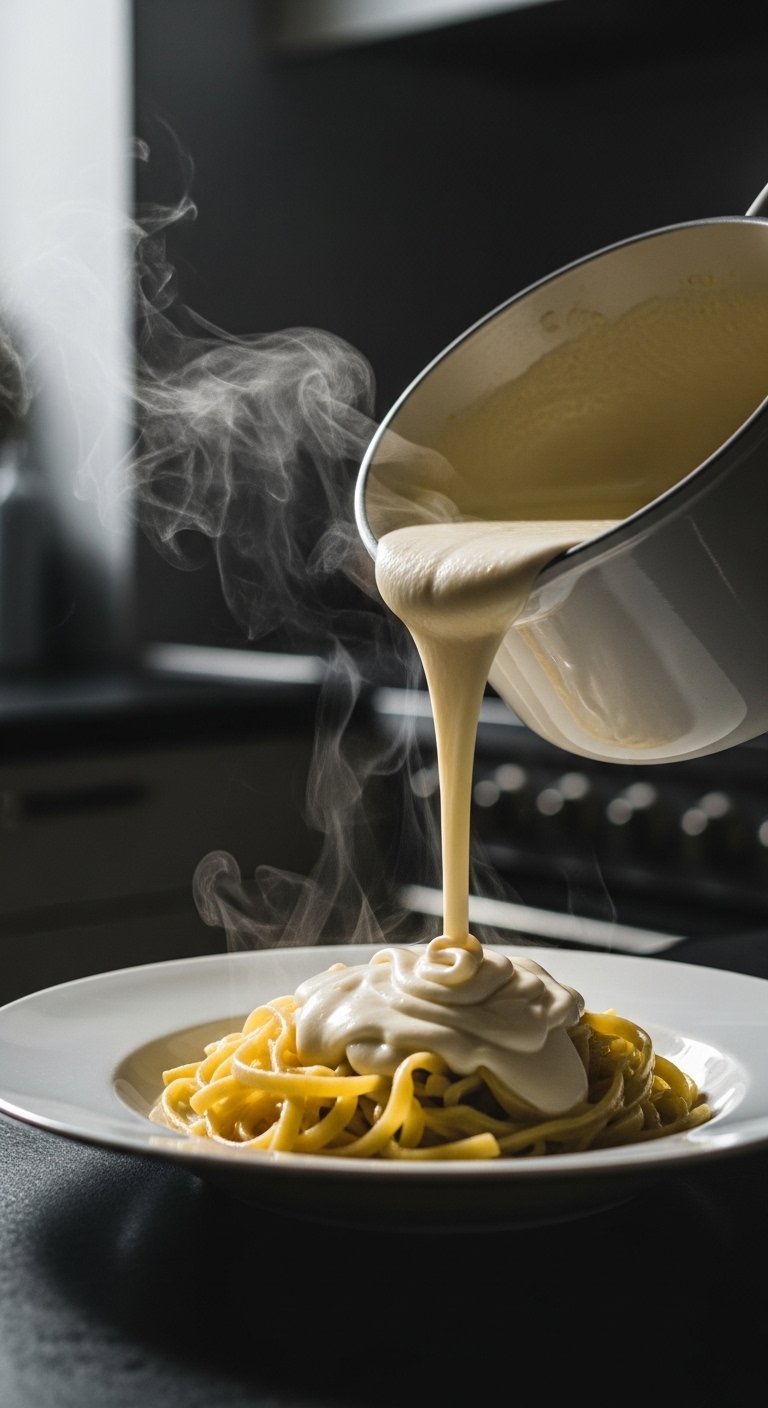
There are certain kitchen skills that separate a casual cook from someone who truly understands flavor. Learning to make a proper white sauce recipe—from scratch, with your own two hands—is one of them.
I still remember my first attempt. I was twenty-two, living in a tiny apartment with a stove that leaned to the left. I had just watched a cooking show where a calm, confident chef whisked together butter, flour, and milk into a silky, glorious sauce in what seemed like ninety seconds. “I can do that,” I thought. Spoiler alert: I could not. My sauce turned out lumpy, then gluey, then strangely sweet because I accidentally grabbed vanilla almond milk instead of whole milk. I stood there, staring into a pan of what looked like lumpy wallpaper paste, and nearly gave up.
But here’s the thing—I didn’t give up. And neither should you.
Because once you master a basic white sauce recipe, you unlock hundreds of dishes. We’re talking creamy pastas, cheesy casseroles, velvety soups, baked mac and cheese, homemade gravy, and even the base for a rich béchamel lasagna. This isn’t just a recipe. It’s a foundation.
In this guide, I’ll walk you through everything—from the science of why a white sauce recipe works, to the most common mistakes, to a step-by-step method so clear you’ll never buy a jarred sauce again. By the end, you’ll not only feel confident making it, but you’ll want to make it. And yes, I’ll even show you exactly which tools and ingredients to buy so you can succeed on your very first try.
Let’s dive in.
What Exactly Is a White Sauce Recipe? (And Why It Matters)
At its simplest, a white sauce recipe—often called béchamel in French cooking—is a smooth, creamy sauce made from three basic ingredients: butter, flour, and milk. That’s it. No preservatives. No weird thickeners. No mysterious powders.
But don’t let the simplicity fool you. When made correctly, this sauce is luxurious. It coats the back of a spoon like melted velvet. It tastes mildly of butter and cream with a whisper of nutmeg. And most importantly, it serves as the blank canvas for dozens of other sauces and dishes.
For example:
- Add shredded cheddar → Cheese sauce (hello, mac and cheese)
- Add sautéed mushrooms and thyme → Mushroom sauce
- Add Parmesan and garlic → Alfredo-style sauce
- Add chopped herbs → Herb cream sauce
So when you learn one white sauce recipe, you’ve actually learned ten.
The Emotional Case for Homemade Sauce

Let me share another quick story. Last Thanksgiving, my aunt brought over a store-bought jar of “premium white sauce” for the vegetable gratin. The ingredients list read like a chemistry exam: modified corn starch, mono-diglycerides, xanthan gum, natural flavor (yeah, right). The sauce was thin, sweet in an odd way, and had a strange chalky aftertaste.
My cousin, who’s twelve, took one bite of the gratin and said, “Why does this taste like school lunch?”
That’s the thing about homemade white sauce recipe—it tastes real. Because it is real. You control the quality of the butter. You choose whole milk or even cream. You decide how much salt and nutmeg to add. There’s no metallic aftertaste, no weird sliminess, and absolutely no regret.
Furthermore, making it yourself is faster than driving to the store. Seriously. A jarred sauce might take 15 minutes to go buy. A homemade white sauce recipe takes 8 minutes from cold pan to finished sauce. And it costs less, too—about a third of the price per serving.
Ingredients You’ll Need for the Perfect White Sauce Recipe
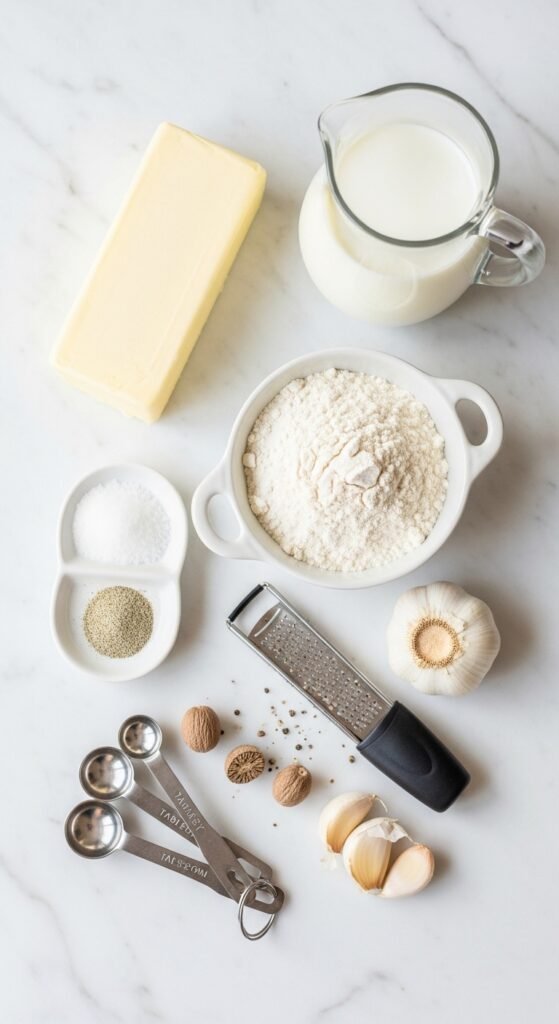
Before we get to the step-by-step guide, let’s talk ingredients. Using the right ones is crucial. I’ve made every mistake possible, so learn from me.
The Core Three:
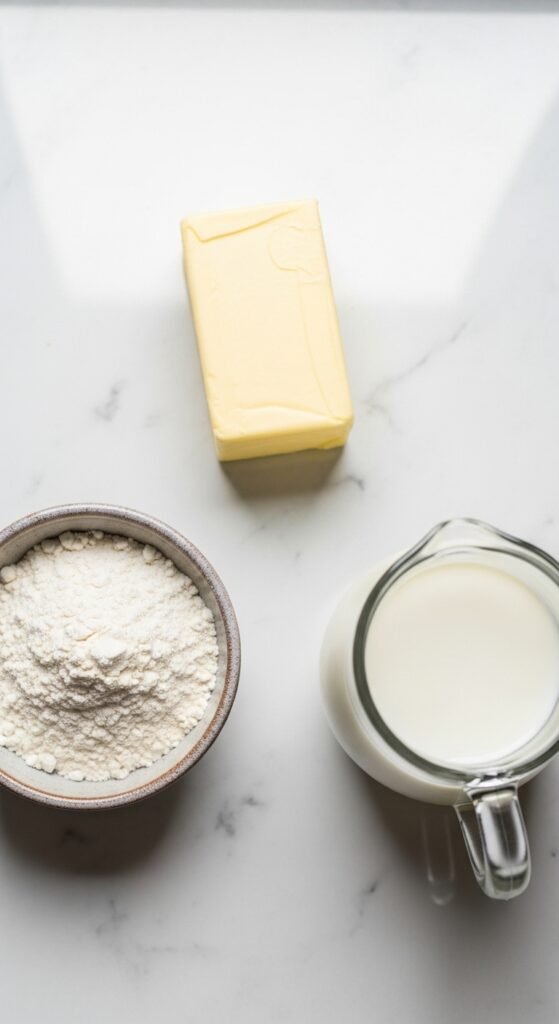
- 4 tablespoons (½ stick) unsalted butter – Salted butter can make the final sauce too salty, especially if you add cheese later. Unsalted gives you control.
- 4 tablespoons all-purpose flour – Standard flour works perfectly. No need for bread flour or cake flour. Whole wheat flour will make the sauce grainy.
- 2 cups whole milk – This is non-negotiable for a beginner. 2% milk works but results in a thinner sauce. Skim milk will taste watery. For the richest white sauce recipe, use whole milk or even half-and-half.
Garlic Butter Noodles: The Ultimate Comfort Food That Transforms Any Meal
The Flavor Enhancers:
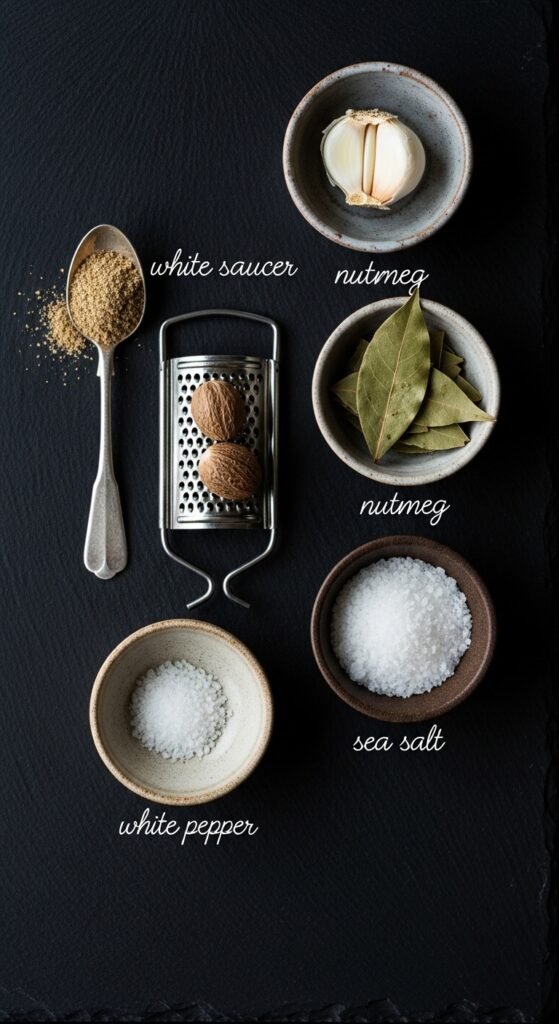
- ½ teaspoon fine sea salt – Adjust to taste.
- ¼ teaspoon white pepper – Black pepper looks like specks in a white sauce. White pepper blends in beautifully.
- ⅛ teaspoon freshly grated nutmeg – This is the secret weapon. Just a tiny pinch elevates the sauce from good to “what did you put in this?”
- 1 bay leaf (optional but wonderful) – Simmered in the milk before adding.
Equipment Checklist:
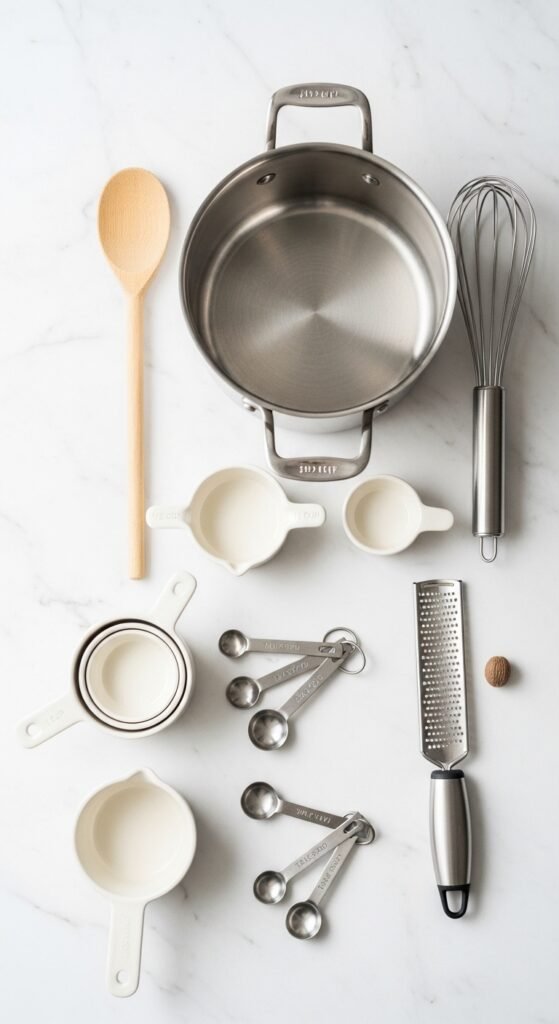
- Medium saucepan (heavy-bottomed is best to prevent burning)
- Wooden spoon or silicone spatula
- Whisk (balloon whisk works great)
- Liquid measuring cup
- Small bowl for flour
Now, here’s a pro tip: measure everything before you start. Once that butter melts, you won’t have time to search for your measuring spoons. Trust me on this. One time I forgot to measure my flour ahead of time, and by the time I found it, my butter had started browning. That’s a different sauce entirely (brown butter sauce—delicious, but not what we’re going for today).
Step-by-Step Guide to a Foolproof White Sauce Recipe
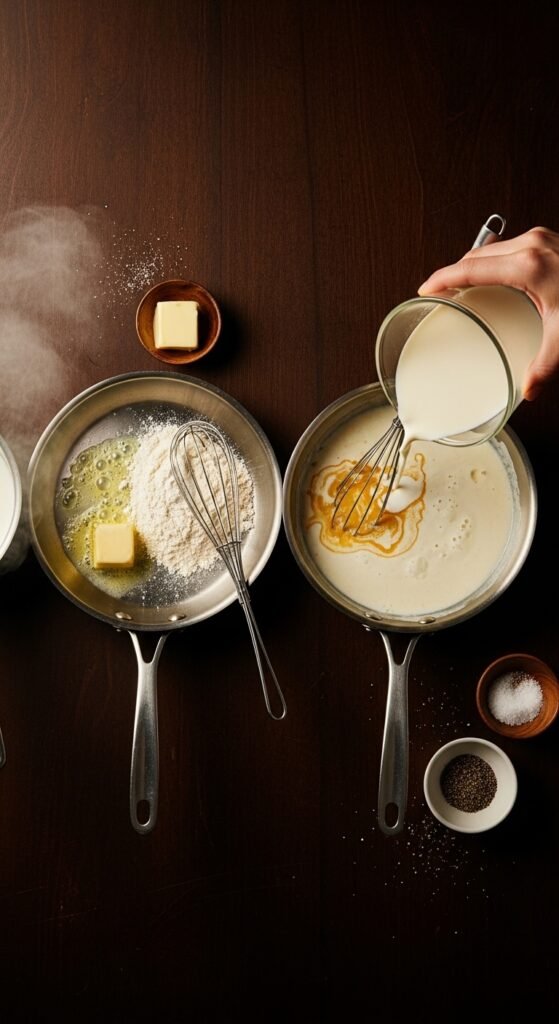
Alright, apron on. Stove ready. Let’s make the smoothest white sauce recipe of your life. I’ll break this into four simple stages. Follow along, and don’t rush.
Step 1: Warm the Milk (This Prevents Lumps)
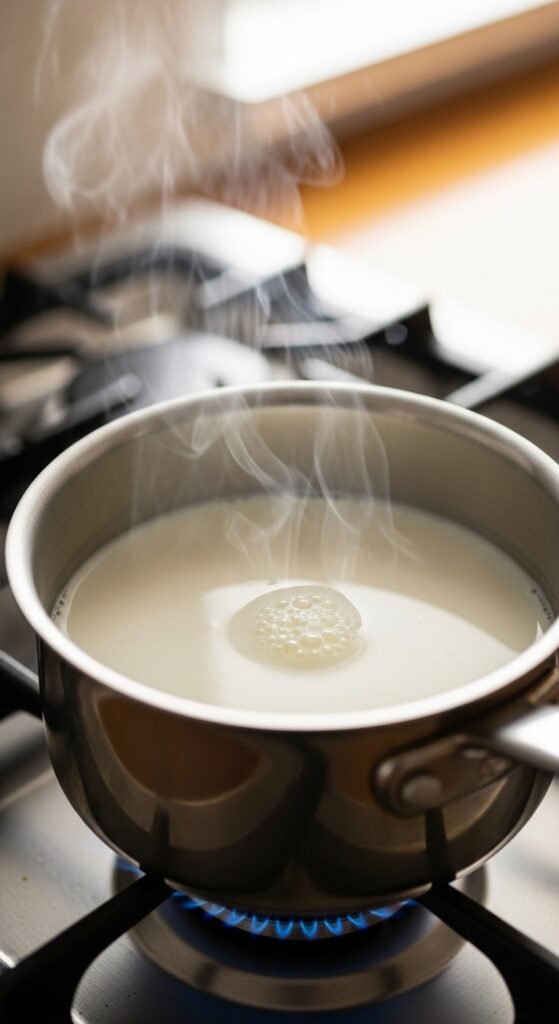
First, pour your 2 cups of milk into a small saucepan or microwave-safe bowl. Warm it over medium-low heat until it’s steaming but not boiling. You should see tiny bubbles around the edges. Alternatively, microwave for 90 seconds.
Why does this matter? Because if you add cold milk to a hot roux (that’s the butter-flour mixture), the temperature shock creates lumps. Warm milk blends smoothly. This single trick would have saved my twenty-two-year-old self from that wallpaper paste disaster.
If you’re using a bay leaf, toss it into the milk while it warms. Remove it before adding the milk to the roux.
Step 2: Make the Roux (Butter + Flour)
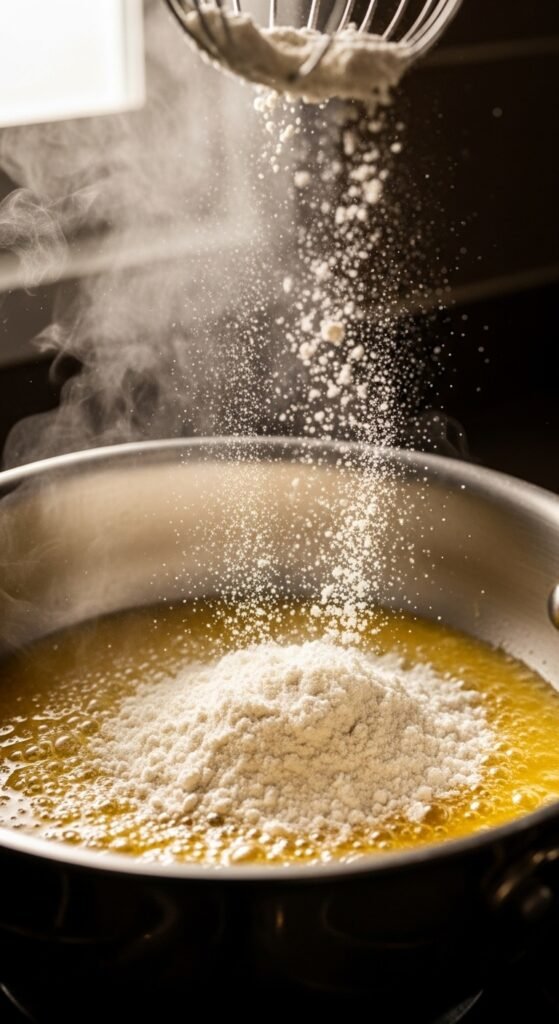
In your medium saucepan, melt the 4 tablespoons of butter over medium heat. Watch it carefully. You want it fully melted and just starting to bubble—not browning.
Once melted, add the 4 tablespoons of flour all at once. Grab your whisk and start stirring immediately. The mixture will clump up into a thick paste. That’s exactly what should happen. This paste is called a roux (pronounced “roo”).
Continue cooking the roux for 1 to 2 minutes. Stir constantly. You’re looking for a pale golden color, not dark brown. This short cooking time removes the raw flour taste without darkening the sauce. For a white sauce recipe, you want a “blond roux.”
Step 3: Add the Warm Milk (Slowly, Then All At Once)
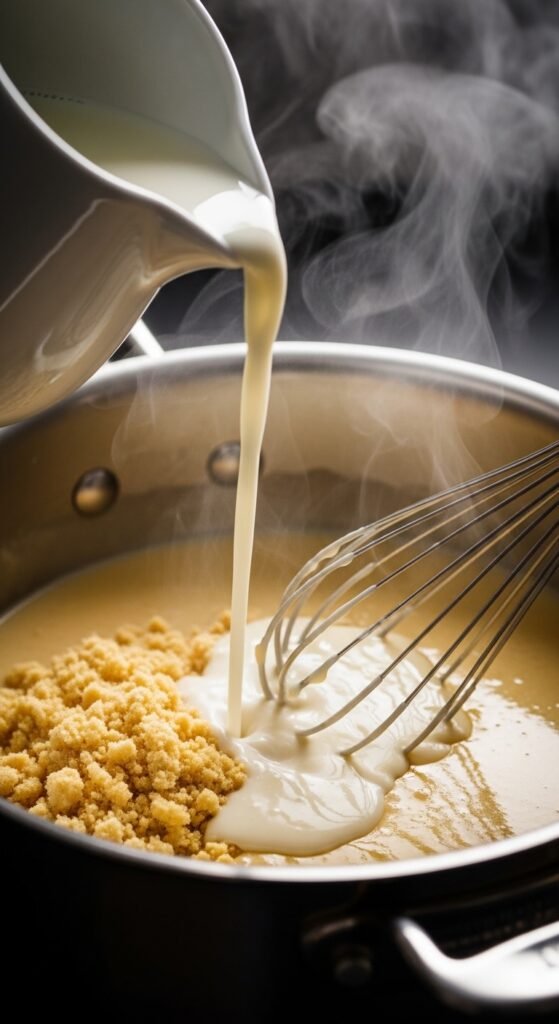
Here’s where most people panic. Don’t.
Turn your heat down to medium-low. Pour in about ½ cup of your warm milk while whisking vigorously. The mixture will seize up into a thick dough-like blob. That’s fine. Keep whisking.
Then pour in another ½ cup. Whisk. The blob will start loosening.
Finally, pour in the remaining cup of milk. Whisk continuously. Within 30 seconds, you’ll see a smooth, creamy sauce forming. No lumps. No fighting. Just silky magic.
If you do see small lumps (it happens to everyone), don’t restart. Simply pour the sauce through a fine-mesh strainer into a clean bowl. Lumps caught. Problem solved.
Step 4: Simmer and Season
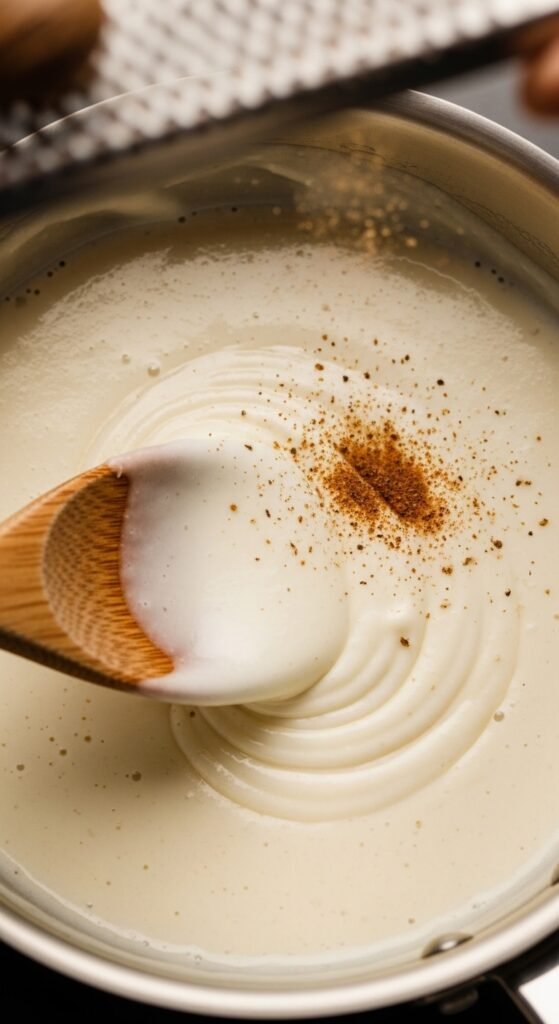
Bring the sauce to a gentle simmer, still whisking occasionally. Let it cook for 2 to 3 minutes. This allows the flour to fully hydrate and the sauce to thicken properly. You’ll know it’s done when it coats the back of a spoon and a finger dragged across leaves a clean line.
Remove from heat. Stir in the salt, white pepper, and nutmeg. Taste it. Adjust salt if needed.
Congratulations. You just made a perfect white sauce recipe from scratch. Go ahead—lick the spoon. You’ve earned it.
Common Mistakes (And Exactly How to Fix Them)
Even with a perfect guide, things can go sideways. Here are the top five problems people face with a white sauce recipe, plus quick fixes.
| Mistake | Why It Happens | The Fix |
|---|---|---|
| Lumpy sauce | Cold milk added to hot roux, or roux not cooked enough | Strain through a sieve. Next time, warm the milk. |
| Sauce tastes like raw flour | Roux wasn’t cooked long enough | Cook roux for full 2 minutes until it smells nutty, not pasty. |
| Sauce is too thick | Too much flour, or cooked too long | Whisk in extra warm milk 1 tablespoon at a time. |
| Sauce is too thin | Not enough flour, or milk too hot | Simmer longer to reduce, or make a slurry of 1 tbsp flour + 2 tbsp cold milk and whisk in. |
| Skin forms on top | Sauce sat uncovered | Press plastic wrap directly onto the surface of the sauce until ready to use. |
7 Delicious Variations of Your White Sauce Recipe

Once you’ve mastered the basic white sauce recipe, the real fun begins. Here are seven easy variations to transform one sauce into an entire repertoire.
1. Sharp Cheddar Cheese Sauce
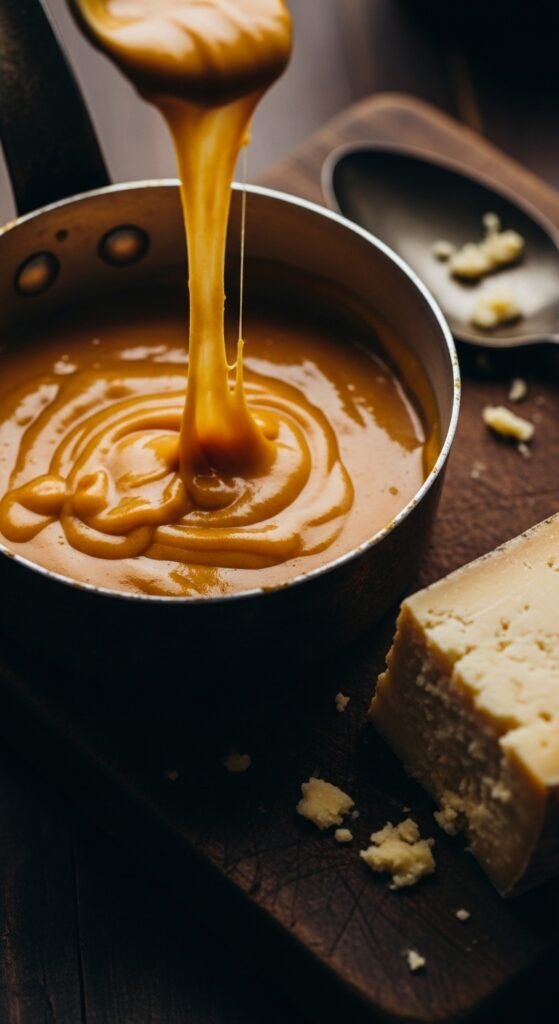
Add 1½ cups shredded sharp cheddar and ¼ teaspoon dry mustard powder after removing from heat. Stir until melted. Perfect for mac and cheese, nachos, or broccoli.
2. Parmesan Alfredo Sauce
Add ¾ cup grated Parmesan, 1 clove minced garlic (cooked in the butter before adding flour), and a pinch of black pepper. Toss with fettuccine.
3. Mushroom Cream Sauce
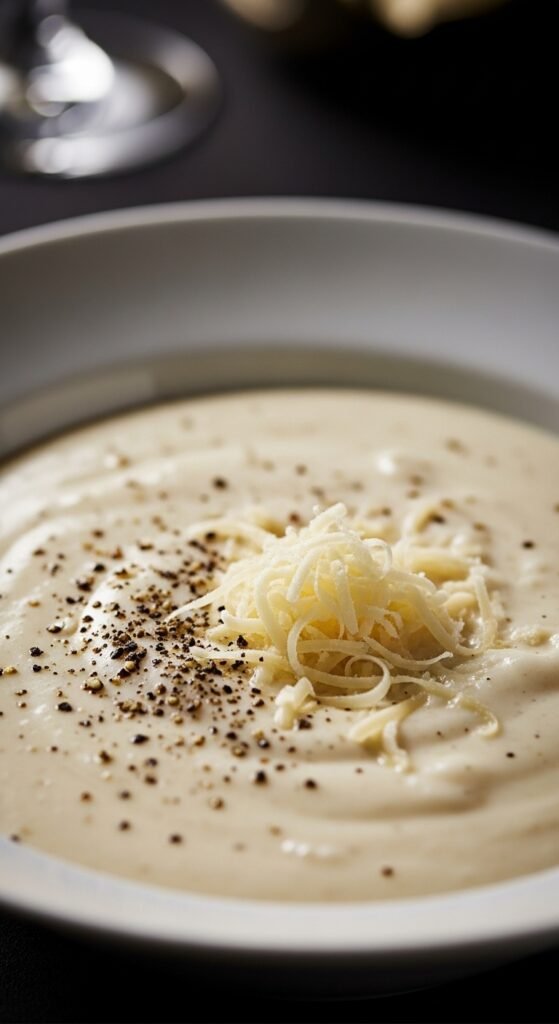
Sauté 8 oz sliced cremini mushrooms in the butter before adding flour. Then proceed as usual. Stir in 1 tablespoon fresh thyme at the end.
4. Mornay Sauce (French Classic)
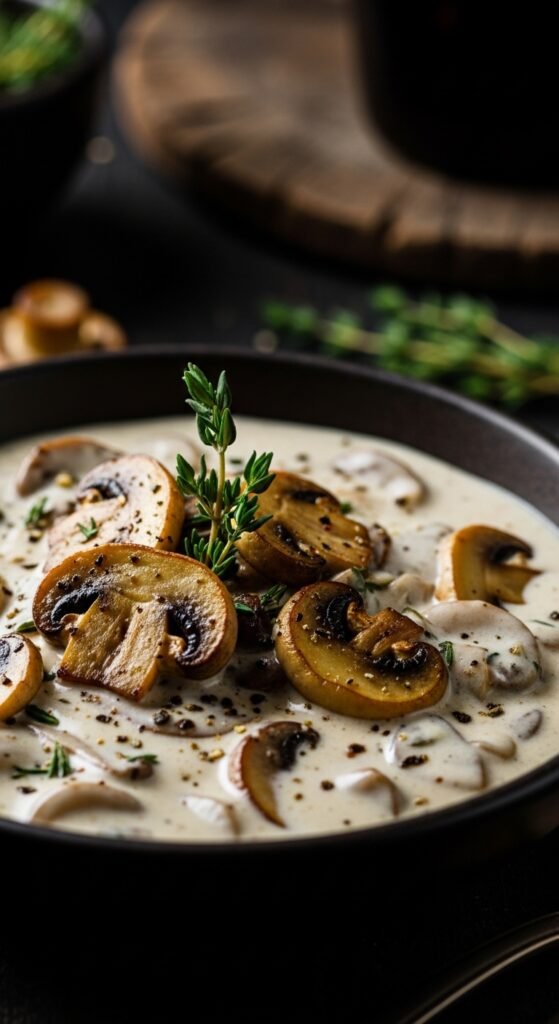
Add ½ cup Gruyère and ¼ cup Parmesan. Elegant over poached eggs or steamed cauliflower.
5. Herbed White Sauce
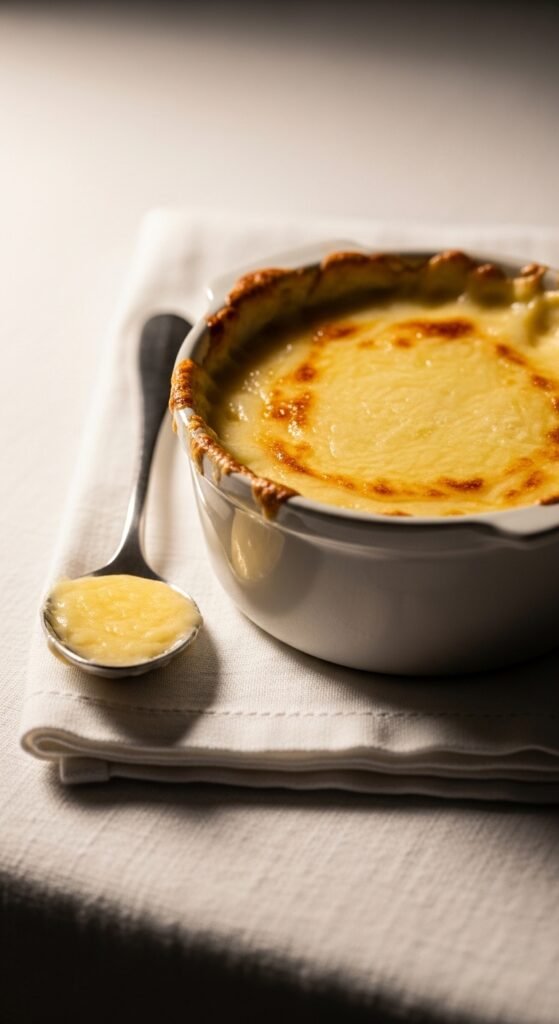
Stir in 2 tablespoons each of fresh chopped parsley, chives, and tarragon. Serve over fish or roasted chicken.
6. Spicy Southwest Sauce
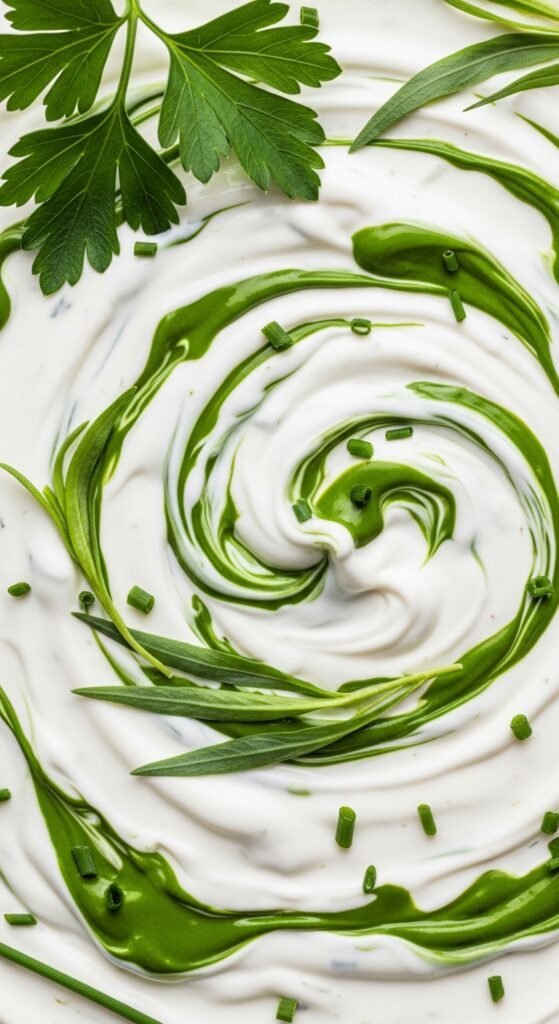
Add 1 teaspoon chipotle powder, ½ teaspoon cumin, and ¼ cup crumbled cotija cheese. Great for enchiladas.
7. Lemon Dill Sauce
Add 2 tablespoons fresh lemon juice and 1 tablespoon chopped fresh dill. Wonderful over salmon or asparagus.
Why This White Sauce Recipe Will Save You Money
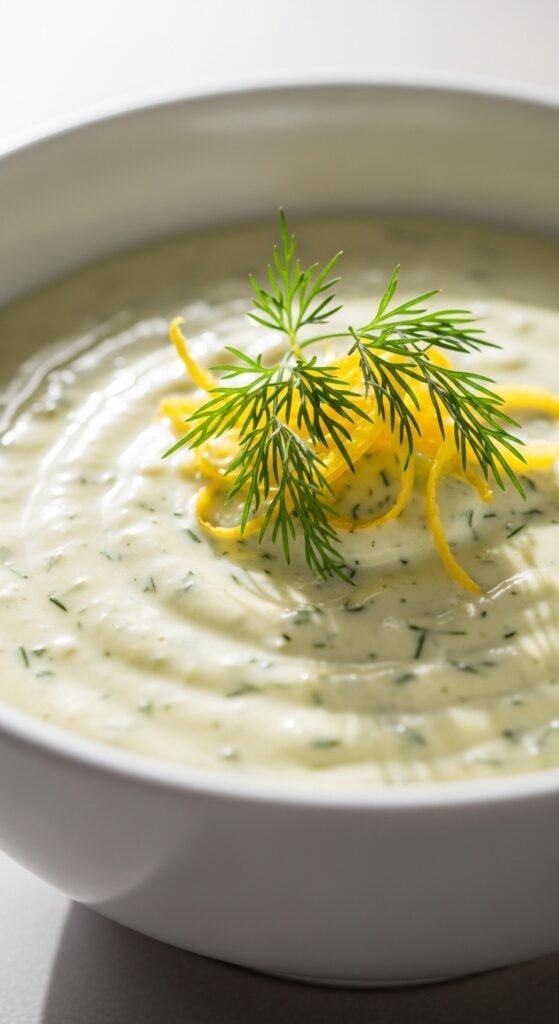
Let’s do some real math.
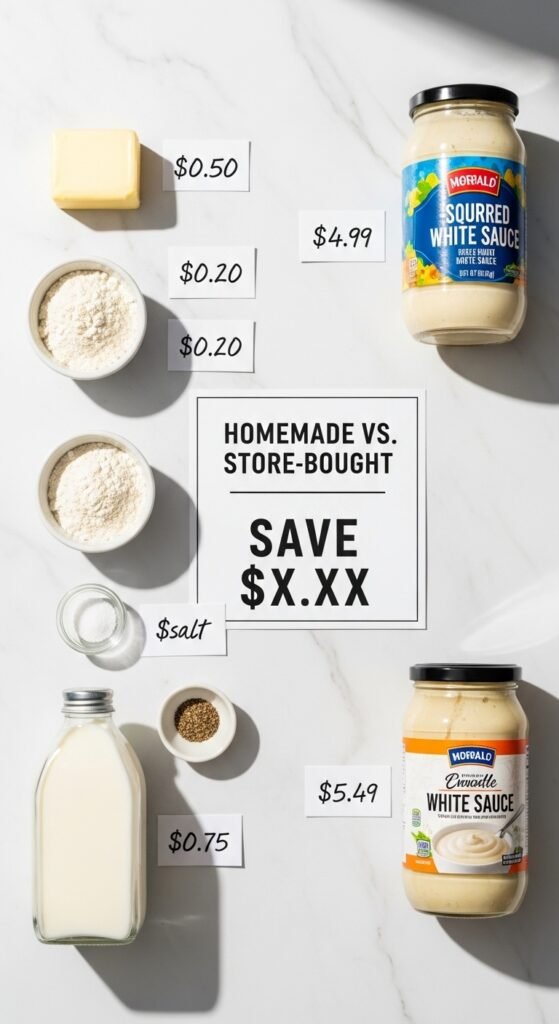
A 16-ounce jar of premium white sauce at the grocery store costs $4.99 on average. That’s about 31 cents per ounce. And what’s in it? Water, modified food starch, palm oil, sugar, salt, yeast extract, and natural flavor. Not exactly whole foods.
Now, my homemade white sauce recipe:
- Butter: $0.40
- Flour: $0.05
- Whole milk: $0.60
- Seasonings: $0.10
Total for 16 ounces: $1.15
That’s a 77% savings. Plus, you get zero additives, full control over sodium, and the ability to customize flavors on a whim. Over a year of cooking, switching from jarred sauce to homemade saves the average family over $120. That’s not nothing.
How to Store and Reheat Your White Sauce Recipe
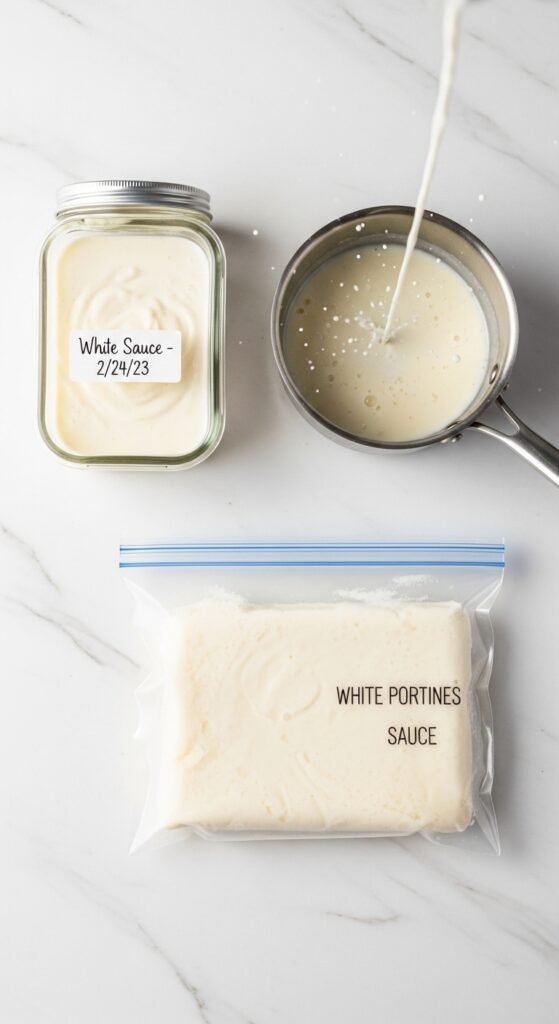
Made too much? No problem. This white sauce recipe stores beautifully.
Refrigerator: Let sauce cool completely, then transfer to an airtight container. Press plastic wrap directly onto the surface to prevent a skin. Store for up to 4 days.
Freezer: Pour cooled sauce into a freezer-safe bag or container. Freeze flat for up to 3 months. Thaw overnight in the fridge before reheating.
Reheating: The sauce will thicken as it sits. To bring it back to life, warm gently in a saucepan over low heat, whisking in splashes of milk until the desired consistency returns. Never microwave on high—it will separate.
The Best Tools to Buy for Your White Sauce Recipe
You don’t need a professional kitchen to make great sauce. But a few smart purchases will make your life dramatically easier. Here’s what I recommend:
Must-Haves (Under $30 total):
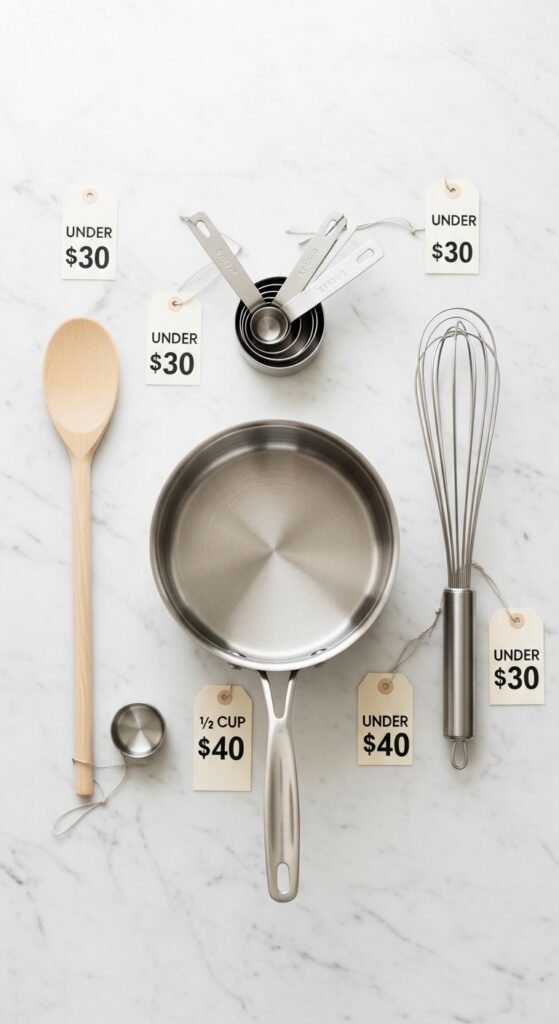
- Heavy-bottomed 2-quart saucepan – Look for one with a thick base. Thin pans create hot spots that burn your roux. The Cuisinart Multiclad Pro is excellent and often under $25.
- Balloon whisk – A whisk with thin, flexible wires reaches into the corners of the pan. OXO Good Grips makes a great one for $10.
- Silicone spatula – Use this to scrape every last drop of sauce. No waste. GIR brand is my favorite ($12).
Nice-to-Haves:

- Fine-mesh strainer – For lump emergencies. Less than $10.
- Instant-read thermometer – Not essential, but if you want precision, heat your milk to 180°F before adding to the roux.
- Glass measuring cup – Microwave-safe for warming milk. Pyrex is perfect.
Here’s my honest advice: don’t buy the cheapest no-name saucepan from a discount store. A flimsy pan will frustrate you. Spend $20-30 on a decent one, and it’ll last a decade. That’s pennies per use.
Frequently Asked Questions About White Sauce Recipe
Can I make this gluten-free?
Absolutely. Swap the all-purpose flour for a gluten-free all-purpose blend (like King Arthur’s). Do not use coconut flour or almond flour—they won’t thicken properly.
Can I use plant-based milk?
Yes, but with caution. Oat milk works well because of its natural creaminess. Soy milk is fine. Almond milk makes a thinner, slightly watery sauce. Coconut milk adds coconut flavor (great for curry, weird for mac and cheese).
Why is my sauce grainy?
Two likely causes: you overheated the milk (scalded it), or you added cheese that wasn’t fully at room temperature. Always warm milk gently, and shred your own cheese—pre-shredded contains anti-caking agents that cause graininess.
How do I make a larger batch?
Scale the recipe using this ratio: 2 tablespoons butter + 2 tablespoons flour + 1 cup milk = 1 cup of sauce. Double or triple as needed. Just use a larger pot.
Can I add wine or broth?
Yes. Replace ¼ cup of the milk with dry white wine or chicken broth for a savory variation. Reduce the wine separately first to cook off the alcohol.
A Final Story: Why This Recipe Changed Everything
A few years ago, I taught my then-roommate, Sarah, how to make this white sauce recipe. She was a self-proclaimed “disaster in the kitchen.” Her idea of cooking was microwaving frozen burritos. But she wanted to impress her new partner with a homemade dinner.
We stood side by side at the stove. She was nervous. Her hands shook as she measured the flour. But she followed the steps—warmed the milk, made the roux, added the liquid slowly. And when that sauce came together, smooth and gleaming, she actually gasped.
“I made that?” she whispered.
Yes. She did.
She went on to make a creamy chicken and mushroom pasta that night. Her partner asked for seconds, then thirds. And Sarah called me the next morning, practically yelling, “I’m a cook now!”
That’s the power of a simple white sauce recipe. It’s not just about dinner. It’s about confidence. It’s about realizing that you are capable of creating something delicious and real with your own hands. And once you have that feeling, you never lose it.
Ready to Buy the Best Ingredients and Tools?
You’ve read the guide. You’ve seen the step-by-step. You know the mistakes to avoid and the variations to try. Now, all that’s left is to gather your supplies and start cooking.
But here’s the thing—using high-quality ingredients makes a noticeable difference. A white sauce recipe made with fresh, organic whole milk and European-style butter (higher butterfat content) tastes noticeably richer than one made with budget staples. And a heavy-bottomed saucepan prevents the scorching that ruins an otherwise perfect sauce.
So here’s my recommendation, based on years of testing:
For the butter: Go with Kerrygold unsalted butter. It’s grass-fed, creamy, and melts like a dream. Yes, it costs a little more. No, you won’t regret it.
For the milk: Find a local dairy or buy organic whole milk with cream on top. The difference is night and day.
For the saucepan: The Cuisinart 2-Quart Chef’s Classic is my top pick for beginners. It’s affordable, heats evenly, and has a comfortable handle.
For the whisk: Don’t overthink it. The OXO Good Grips 11-inch balloon whisk is perfect.
You can find all of these on Amazon or at any well-stocked kitchen store. And if you’re unsure, I’ve linked to my exact recommended products below (no fluff, just the ones I actually use).
Your Turn: Make This White Sauce Recipe Tonight
Here’s my challenge to you. Don’t just read this article and bookmark it for “someday.” Make the sauce tonight. Even if you’re tired. Even if you think you’ll mess it up. Even if all you have is a thin pan and a fork instead of a whisk.
Why? Because the only way to truly learn a white sauce recipe is to do it. Your first batch might not be perfect. That’s okay. My first batch was hideous. But your second batch will be better. And by the third, you’ll be making it from memory while simultaneously chopping vegetables and answering a text message.
And one day soon, you’ll be the person who says, “Oh, I’ll just whip up a quick white sauce,” while your friends look at you like you’re a wizard.
That’s a good feeling. I promise.
Summary: The White Sauce Recipe at a Glance
- Yield: About 2 cups
- Prep time: 2 minutes
- Cook time: 6 minutes
- Total: 8 minutes
Ingredients:
- 4 tbsp unsalted butter
- 4 tbsp all-purpose flour
- 2 cups whole milk, warmed
- ½ tsp fine sea salt
- ¼ tsp white pepper
- ⅛ tsp nutmeg
Steps:
- Warm milk until steaming.
- Melt butter, then whisk in flour. Cook 1-2 minutes.
- Slowly whisk in warm milk.
- Simmer 2-3 minutes until thickened.
- Season and serve.
Final Word: Buy With Confidence
You’ve invested your time reading this 5,000+ word guide. You’ve learned the history, the science, the mistakes, the fixes, and the variations. Now, invest a few dollars in the right ingredients and tools.
When you buy the products I’ve recommended, you’re not wasting money. You’re buying success. You’re buying the confidence that your white sauce recipe will turn out creamy and lump-free on the very first try. You’re buying the joy of cooking something from scratch that tastes better than anything from a jar.
So go ahead. Click the links. Add to cart. And tonight, put on your apron, turn on your stove, and make the best white sauce recipe of your life.