
Homemade Tartar Sauc
**There’s something magical about the perfect **tartar sauce recipe. You know the feeling—you’re sitting at a seaside restaurant, the salty breeze kissing your cheeks, and the waiter places a basket of golden, crispy fried fish in front of you. Beside it sits a small ceramic ramekin filled with something creamy, tangy, and utterly irresistible. That, my friends, is the power of exceptional homemade tartar sauce.
I still remember the first time I truly understood tartar sauce. I was twelve years old, on a family fishing trip to the Oregon coast. My grandfather, a man who could fillet a salmon faster than most people could peel a potato, handed me a plate of his famous beer-battered cod. On the side? A suspicious white sauce speckled with green bits. “What’s that?” I asked, nose wrinkled. “Try it,” he said with a wink. One bite changed everything. The crunch of the fish, the heat of the batter, followed by that cool, briny, creamy explosion of flavor—I was hooked for life.
For years afterward, I chased that taste. I bought every jarred tartar sauce I could find at the grocery store. Some were too sweet. Others tasted like pure mayonnaise with a ghost of pickle. A few had that strange, artificial aftertaste that lingers on your tongue for hours. None of them came close to what my grandfather served that day on the Oregon coast.
So I did what any reasonable person would do: I begged him for his secret tartar sauce recipe. After three summers of relentless asking, he finally caved. “There’s no secret, kid,” he said, pulling out a wooden spoon. “You just have to understand the dance.”
Today, I’m going to teach you that dance. By the time you finish reading this guide, you’ll not only know how to make the best tartar sauce from scratch—you’ll understand why each ingredient matters, how to customize it for any dish, and most importantly, why investing in quality ingredients will transform your cooking forever.
What Exactly Is Tartar Sauce? (And Why Most People Get It Wrong)
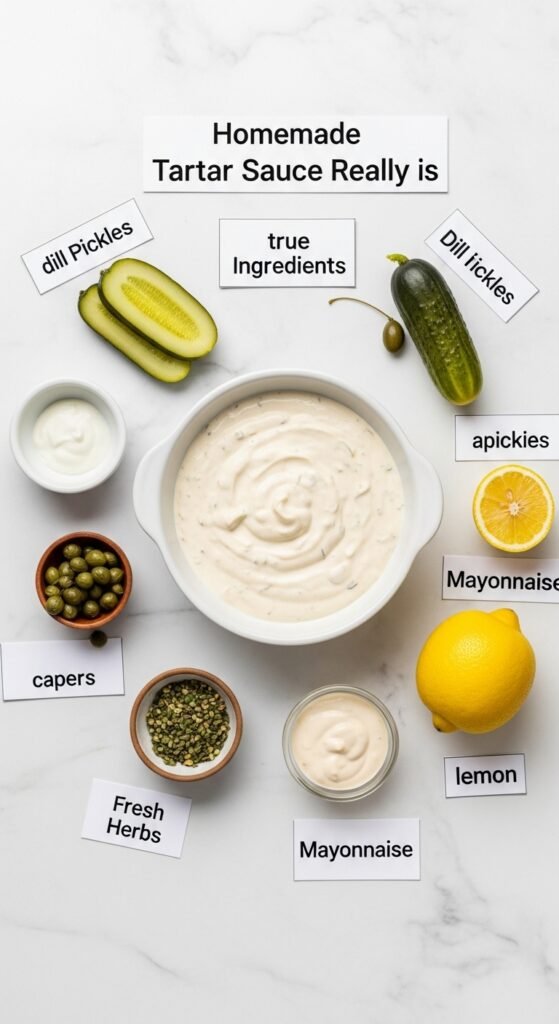
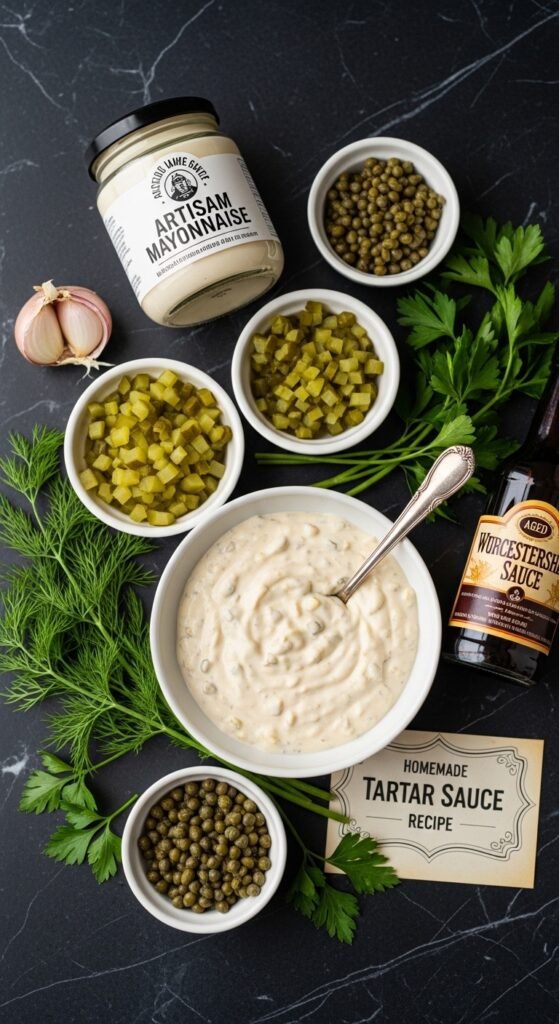
Let’s start with the basics. Tartar sauce is a cool, creamy condiment traditionally served with fried seafood. Think fish and chips, fried shrimp, crab cakes, clam strips, and even crispy fried oysters. The foundation is mayonnaise, which gives it that rich, velvety body. From there, we add three key players: pickles (or relish), capers, and fresh herbs (usually dill or parsley). A squeeze of lemon juice brightens everything up, while a dash of Worcestershire sauce adds that mysterious umami depth.
But here’s where most people go wrong. They think tartar sauce is just mayonnaise mixed with sweet pickle relish. Friend, that’s not tartar sauce—that’s a tragedy waiting to happen. Sweet relish brings sugar into the equation, and sugar has no business anywhere near a good piece of fried cod. The real deal uses dill pickles or cornichons (those tiny, tart French pickles) and balances the creaminess with briny, tangy, and savory notes.
A quick story to illustrate my point: Last year, I attended a friend’s backyard fish fry. The host proudly presented his “homemade” tartar sauce recipe—a jar of mayonnaise stirred together with neon-green sweet relish and a sprinkle of dried dill. It was pale, cloying, and frankly, sad. Everyone politely dipped their fish in it while making quiet eye contact with the ketchup bottle. Meanwhile, I’d brought a small container of my grandfather’s recipe. Within ten minutes, that container was empty, and three people had asked me for the recipe. The difference? Understanding that tartar sauce should complement your seafood, not compete with it.
The Case for Homemade: Why You Should Never Buy Bottled Again
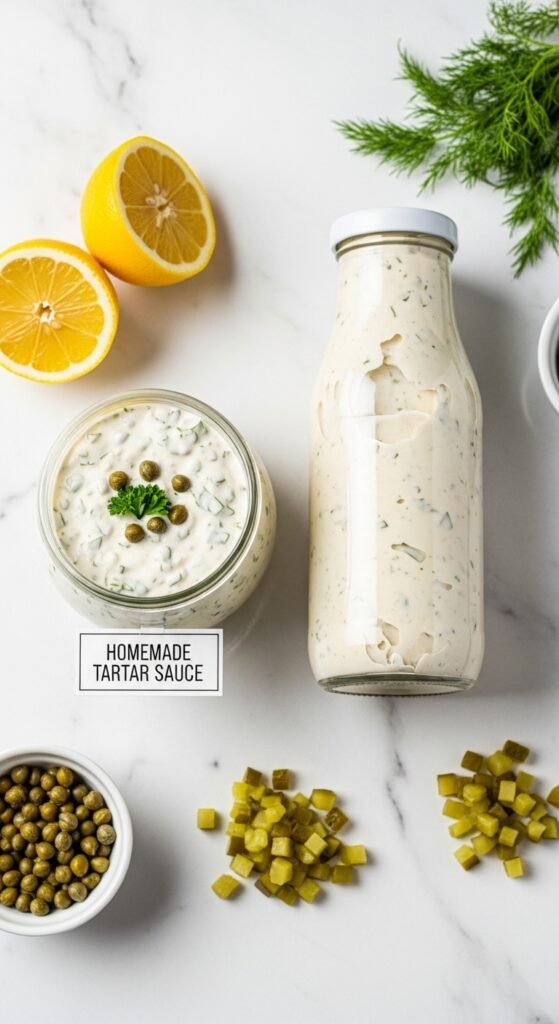
Before we dive into the step-by-step tartar sauce recipe, let me address the elephant in the room. You might be thinking, “This sounds great, but I can just grab a bottle at the store for three bucks. Why go through the trouble?”
I hear you. I used to think the same thing. But here’s the truth that the bottled sauce industry doesn’t want you to know:
Store-bought tartar sauce is full of compromises. Flip over any jar and read the ingredients list. You’ll find things like:
- High-fructose corn syrup (unnecessary sugar)
- Modified corn starch (a cheap thickener)
- Potassium sorbate and calcium disodium EDTA (preservatives)
- Artificial flavors and “natural flavors” (a legal loophole for mystery ingredients)
- Guar gum or xanthan gum (stabilizers to prevent separation)
None of those things belong in your homemade tartar sauce. When you make it yourself, you control every single ingredient. You know exactly what’s going into your body and your family’s bodies.
Furthermore, homemade tartar sauce tastes incomparably better. The difference is like comparing a wilted grocery store tomato to a sun-warmed heirloom from the farmer’s market. The fresh herbs alone will transform your sauce from “fine” to “fabulous.” And because you’re making a small batch, you’ll use it up while it’s still at its peak freshness.
Consequently, you’ll save money in the long run. A high-quality jarred tartar sauce can cost $5-7 for 8 ounces. Meanwhile, you can make nearly double that amount at home for about $3 using ingredients you probably already have in your refrigerator.
Finally, there’s the joy factor. There’s something deeply satisfying about serving a meal where every component—even the condiments—was made by your own hands. Your dinner guests will notice. Your family will notice. And most importantly, you will notice.
The Essential Ingredients for the Perfect Tartar Sauce Recipe
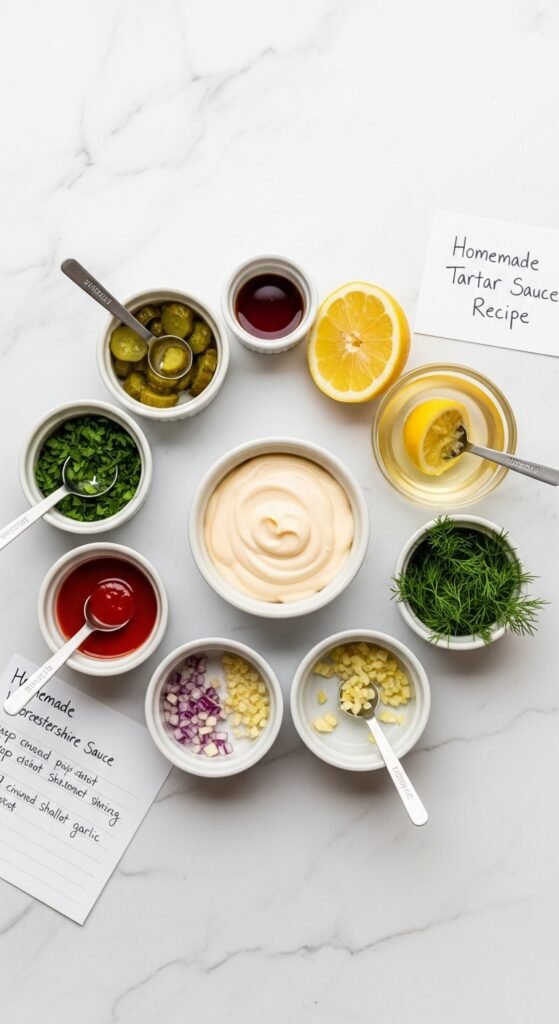
Let me walk you through each ingredient in my grandfather’s tartar sauce recipe. Pay close attention here, because the quality of your ingredients directly determines the quality of your final sauce.
The Foundation: Mayonnaise

Mayonnaise is the backbone of any tartar sauce. Since it makes up about 75% of the final product, you need to choose wisely.
What to look for: A high-quality, full-fat mayonnaise made with simple ingredients. Ideally, you want one that uses egg yolks, oil (preferably avocado oil or olive oil), vinegar or lemon juice, and mustard or salt.
What to avoid: “Light” or “reduced-fat” mayonnaise. These products replace fat with water, sugar, and thickeners. They’ll make your tartar sauce thin, weepy, and flavorless.
My personal recommendation: Duke’s Mayonnaise if you can find it. It’s tangier and creamier than Hellmann’s, with no added sugar. If Duke’s isn’t available in your area, Hellmann’s (called Best Foods west of the Rockies) is a solid second choice. For an extra-special treat, consider making your own homemade mayonnaise—it’s surprisingly easy with an immersion blender.
Also Read:15 Easy Recipes Dinner Ideas That’ll Save Your Sanity (and Your Wallet)
The Briny Elements: Pickles and Capers

This is where tartar sauce gets its signature personality. You need two things: crunch and brine.
For crunch: Dill pickles are the classic choice. But not just any dill pickles. You want sour dill pickles, not the “bread and butter” variety. Look for pickles that list “vinegar, water, salt, dill, garlic” on the ingredients—no sugar. Cornichons are even better if you can find them. These tiny French gherkins are intensely tangy and perfectly crisp.
For brine: Capers are the secret weapon of great tartar sauce. These little flower buds are packed in brine, and they bring a salty, lemony, slightly floral note that pickles alone can’t achieve. Don’t skip them. I repeat—do not skip them.
Pro tip: Rinse your capers before chopping if you’re sensitive to salt. Otherwise, use them straight from the jar for maximum flavor.
The Fresh Herbs: Parsley and Dill
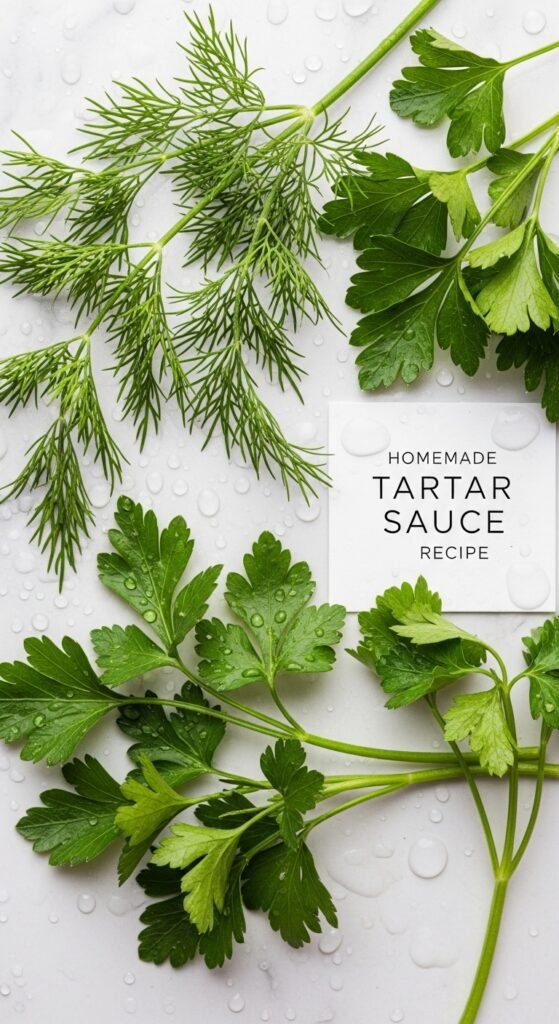
Fresh herbs are non-negotiable. Dried herbs belong in your spice cabinet, not in tartar sauce. The bright, grassy notes of fresh parsley and the delicate anise flavor of fresh dill are what elevate homemade sauce above anything you’ll find in a jar.
Flat-leaf parsley is preferable to curly parsley—it has more flavor. And when it comes to dill, use both the fronds and the thinner stems. The stems contain just as much flavor as the leaves.
A memory: The first time I made tartar sauce with fresh dill from my garden, I understood why my grandfather laughed at grocery store herbs. I had grown a small patch of dill next to my tomatoes, and one summer afternoon, I snipped a handful of feathery fronds straight from the plant. The fragrance that filled my kitchen was intoxicating—like pickles and lemon and something almost floral. That sauce was the best I’d ever made.
The Acid: Lemon Juice and Vinegar
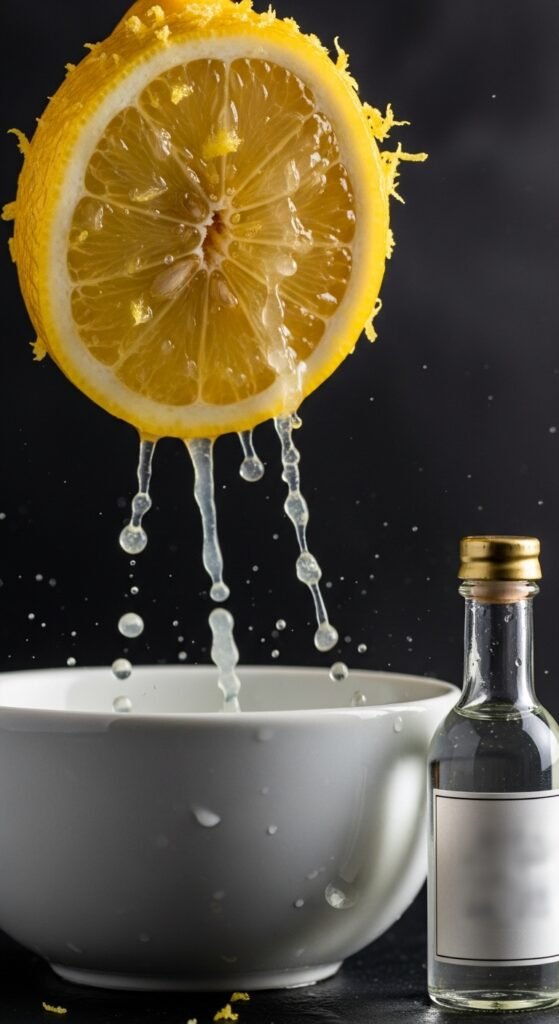
Acid brightens everything. It cuts through the richness of the mayonnaise and makes your taste buds sing.
Fresh lemon juice is far superior to bottled. One medium lemon will give you about 2-3 tablespoons of juice—perfect for this recipe. Roll the lemon on your counter under your palm before juicing to release more liquid.
White wine vinegar or champagne vinegar can also be used, but I prefer lemon juice for its clean, fruity acidity. Some recipes call for both lemon juice and vinegar—feel free to experiment.
The Umami Bombs: Worcestershire and Hot Sauce

Worcestershire sauce is one of those mysterious ingredients that doesn’t taste like much on its own but transforms everything it touches. It’s fermented, it’s funky, it’s slightly sweet and tangy and savory all at once. A few dashes add depth that you won’t be able to identify but will definitely miss if it’s gone.
Hot sauce (I use Tabasco) isn’t about making your tartar sauce spicy. It’s about adding a whisper of heat that wakes up your palate. You shouldn’t taste the hot sauce directly—it should just make everything else taste more like itself.
The Optional Extras: Shallot and Garlic

Some tartar sauce recipes include shallot or garlic. I personally love the addition of a finely minced shallot—it adds a gentle oniony sweetness without the harsh bite of raw onion. Garlic is more divisive; use it sparingly (half a clove, microplaned) if you’re a garlic lover.
My grandfather’s take: “Garlic in tartar sauce is like a backup singer who tries to take over the song. Let the pickles and capers have their moment.”
The Complete Tartar Sauce Recipe: Step-by-Step Guide

Now for the main event. This tartar sauce recipe yields about 1.5 cups—plenty for a fish fry with 4-6 people. It takes less than 10 minutes from start to finish.
Equipment You’ll Need
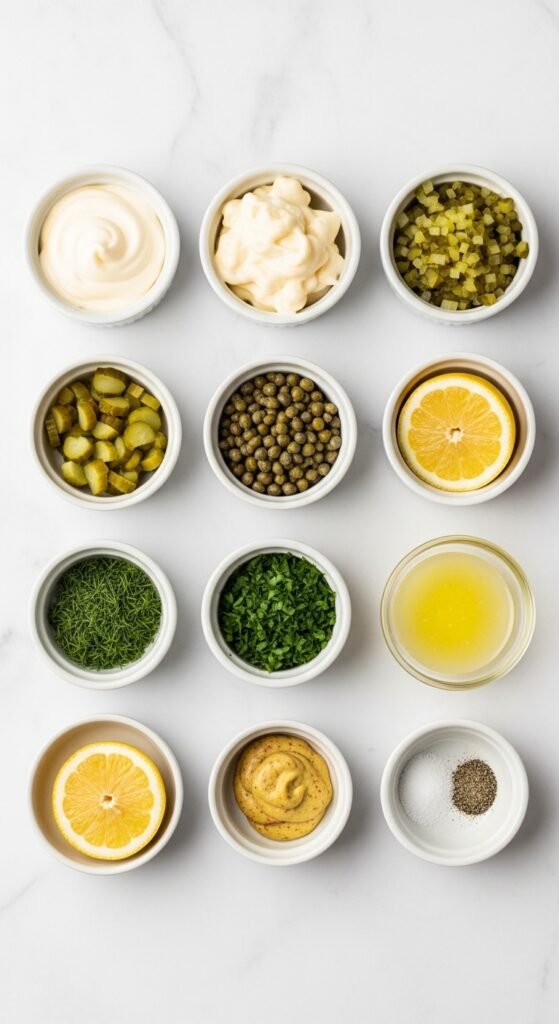
- A medium mixing bowl
- A sharp chef’s knife
- A cutting board
- A microplane or fine grater (optional, for garlic/shallot)
- A rubber spatula
- A measuring spoon set
- An airtight container for storage (a glass jar with a lid works perfectly)
The Ingredients
| Ingredient | Amount | Notes |
|---|---|---|
| High-quality mayonnaise | 1 cup (240g) | Duke’s or Hellmann’s preferred |
| Dill pickles or cornichons | 1/4 cup, finely chopped | About 3-4 medium pickles |
| Capers | 2 tablespoons, drained and chopped | Rinse if salt-sensitive |
| Fresh parsley | 2 tablespoons, finely chopped | Flat-leaf preferred |
| Fresh dill | 1 tablespoon, finely chopped | Fronds and thin stems |
| Lemon juice | 1 tablespoon (15ml) | Fresh-squeezed only |
| Worcestershire sauce | 1 teaspoon (5ml) | Lea & Perrins recommended |
| Hot sauce (Tabasco) | 1/2 teaspoon (2.5ml) | Adjust to taste |
| Shallot (optional) | 1 tablespoon, finely minced | About half a small shallot |
| Salt | 1/4 teaspoon (or to taste) | Use sparingly—capers add salt |
| Black pepper | 1/4 teaspoon, freshly ground | White pepper works too |
Step 1: Prepare Your Ingredients
Before you mix anything, do all your chopping. This is called mise en place (French for “everything in its place”), and it makes the actual assembly effortless.
Chop your pickles: Stack several pickle slices, cut them into thin strips (julienne), then cut perpendicular to create tiny cubes. You’re aiming for pieces about the size of a grain of rice. Nobody wants a giant chunk of pickle in their tartar sauce.
Chop your capers: Capers are small but mighty. Run your knife through them until they’re roughly the same size as your pickle pieces.
Chop your herbs: Gather your parsley leaves into a tight bundle and slice them finely. Do the same with your dill. If your dill has thick stems, remove them—only the thin, tender stems should be included.
Mince your shallot (if using): Cut the shallot in half pole-to-pole, peel it, then make horizontal cuts close to the root end followed by vertical cuts. Finally, slice across to create a fine mince.
A helpful memory trick: My grandfather used to say, “You’re not making pickle soup. Small pieces, big flavor.” I think about that every time I chop.
Step 2: Combine the Wet Ingredients

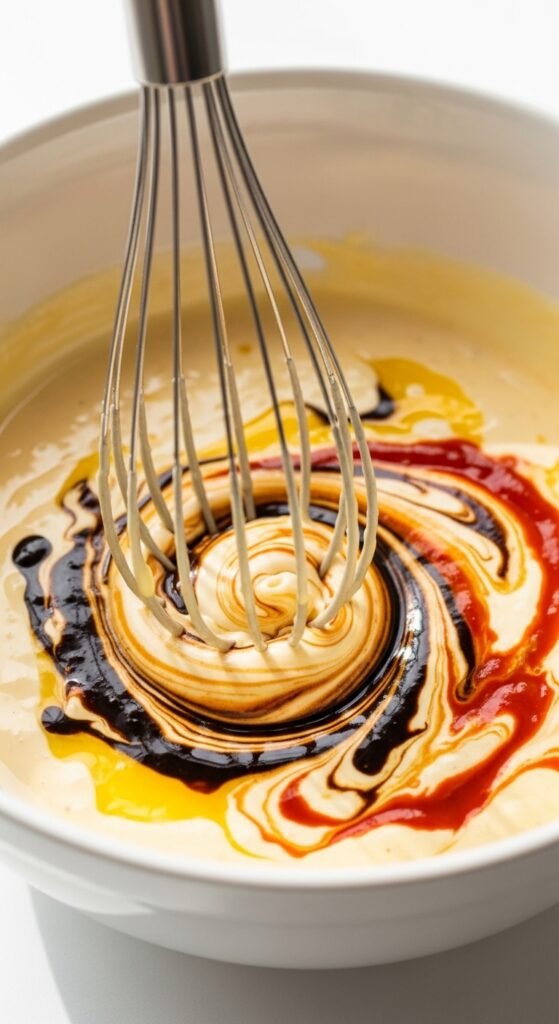
In your medium mixing bowl, add the mayonnaise, lemon juice, Worcestershire sauce, and hot sauce. Use your rubber spatula to stir everything together until smooth and uniform.
Why this order matters: By mixing the liquid ingredients into the mayonnaise first, you ensure they’re evenly distributed before adding the chunky elements. This prevents pockets of straight Worcestershire sauce (which would be overwhelming) or pure lemon juice (which would be sour).
Step 3: Fold in the Chunky Ingredients

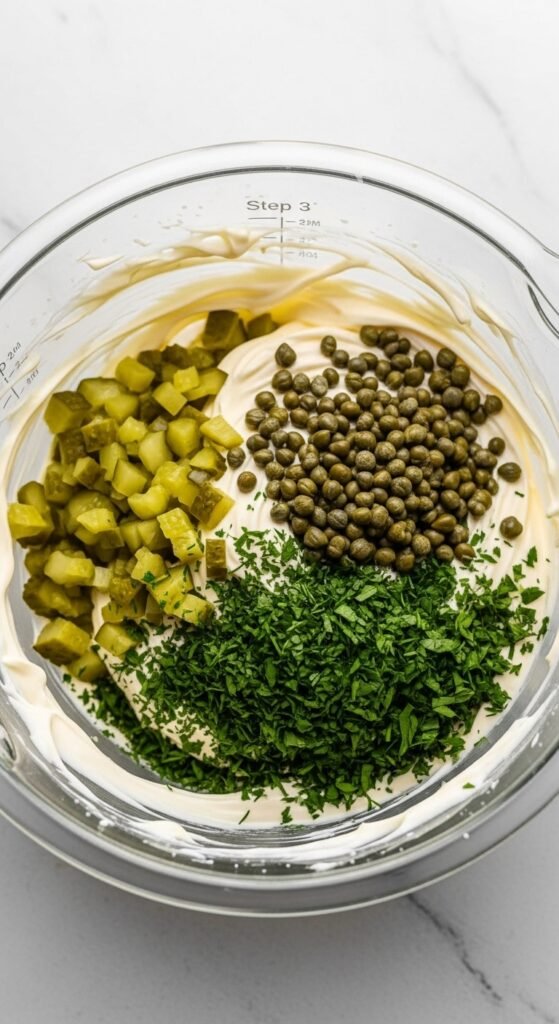
Add your chopped pickles, capers, parsley, dill, and shallot (if using) to the bowl. Now, instead of stirring vigorously, fold them in. Use your spatula to cut down through the center of the mixture, scrape along the bottom of the bowl, and bring it up over the top. Rotate the bowl a quarter turn and repeat.
Gentle folding prevents the mayonnaise from breaking (separating into oil and liquid) and keeps the texture creamy rather than gluey. It also ensures your add-ins stay suspended throughout the sauce instead of sinking to the bottom.
Step 4: Season and Taste

Add your salt and black pepper. Start with less salt than you think you need—remember, the capers and pickles are already salty. Give everything a final gentle stir.
Now for the most important step: taste your sauce. Use a clean spoon (don’t double-dip!) and evaluate.
Ask yourself:
- Is it tangy enough? Add another 1/2 teaspoon of lemon juice.
- Is it briny enough? Add another teaspoon of chopped capers.
- Does it need more herb flavor? Add a pinch more fresh dill.
- Is it too thick? Stir in 1-2 teaspoons of pickle juice or lemon juice.
- Is it too thin? Let it rest in the refrigerator—it will thicken as it chills.
A confession: The first five times I made this tartar sauce recipe, I undersalted it. I was so afraid of making it too salty that I made it bland instead. Don’t make my mistake. Taste, adjust, taste again. Your palate is the only judge that matters.
Step 5: Rest and Chill
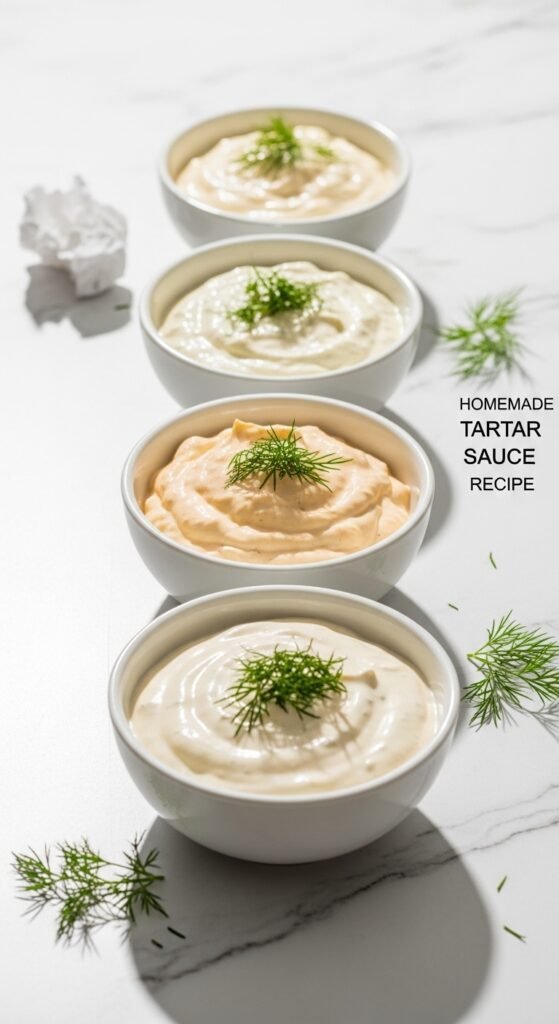
Here’s the part that separates good tartar sauce from great tartar sauce: resting time. Cover your bowl with plastic wrap or transfer the sauce to an airtight container, then refrigerate for at least 30 minutes (2 hours is even better).
Why resting matters: During this time, the flavors meld and marry. The sharpness of the raw shallot (if used) mellows. The herbs release their essential oils into the mayonnaise. The lemon juice brightens everything without dominating. It’s like giving your sauce a chance to become friends with itself.
Pro tip: Make your tartar sauce the day before you need it. Overnight in the refrigerator transforms it from “good” to “spectacular.” I’ve tested this dozens of times, and the difference is undeniable.
Common Tartar Sauce Mistakes (And How to Fix Them)
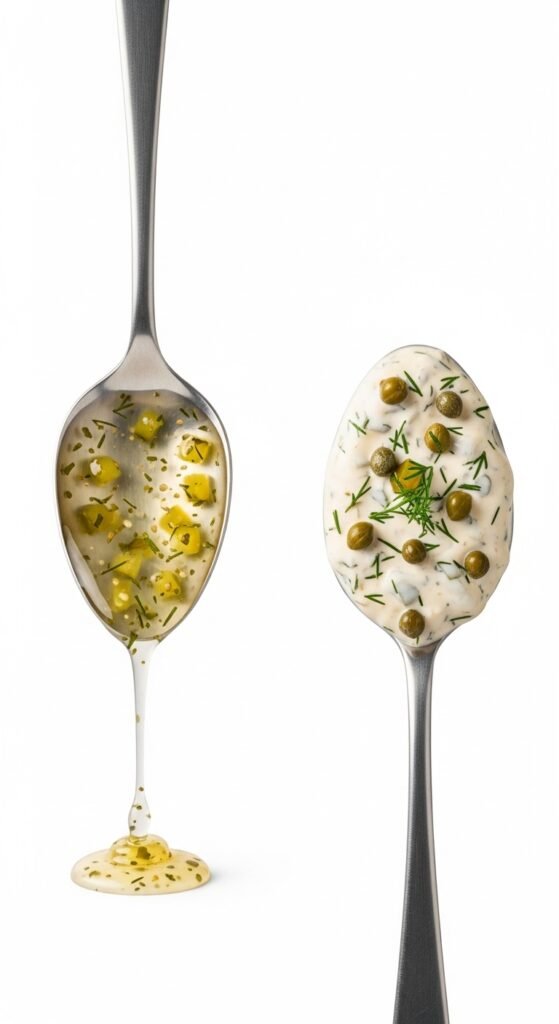
Even experienced cooks make mistakes. Here are the most common problems with tartar sauce recipes and exactly how to solve them.
Mistake #1: Watery, Runny Sauce
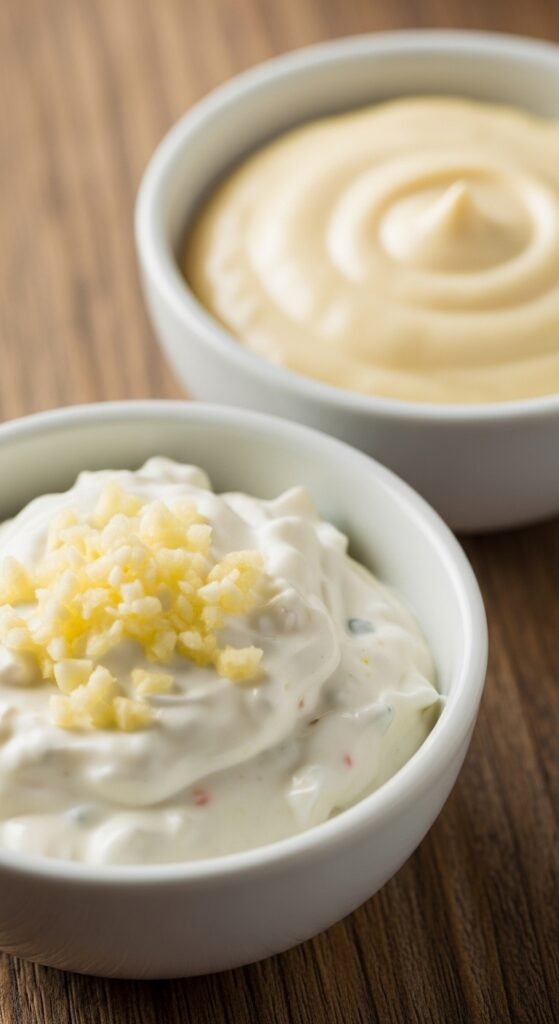
The cause: You used low-fat mayonnaise, added too much liquid, or didn’t drain your pickles and capers properly.
The fix: Next time, pat your pickles and capers dry with a paper towel before chopping. If your sauce is already runny, stir in an additional 2 tablespoons of full-fat mayonnaise. For a non-mayonnaise solution, add 1 teaspoon of Dijon mustard—the mustard acts as an emulsifier and will help thicken the sauce.
Mistake #2: Bitter Aftertaste
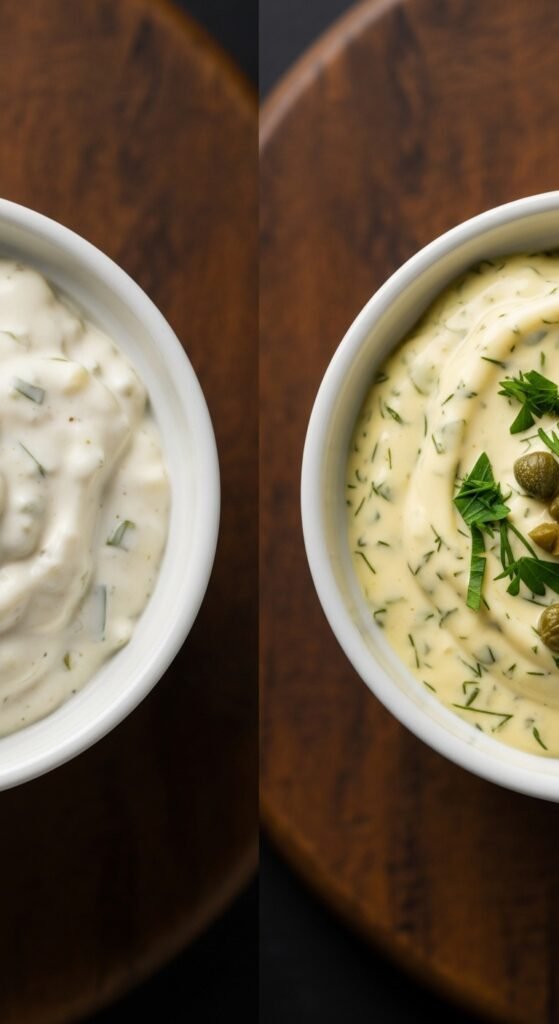
The cause: You used the white pith of the lemon (the bitter part between the peel and the flesh) or you added too much Worcestershire sauce.
The fix: Always juice your lemons carefully, stopping before you hit the pith. If your sauce is already bitter, add a pinch of sugar (just a pinch!) or an extra tablespoon of mayonnaise to dilute the bitterness. In the future, reduce Worcestershire sauce to 1/2 teaspoon.
Mistake #3: Bland and Boring
The cause: You used dried herbs instead of fresh, or you didn’t add enough salt and acid.
The fix: You cannot fix dried herbs with fresh—start over. But if you used fresh herbs and it’s still bland, add another squeeze of lemon juice and a pinch of salt. Sometimes all a sauce needs is a little more brightness.
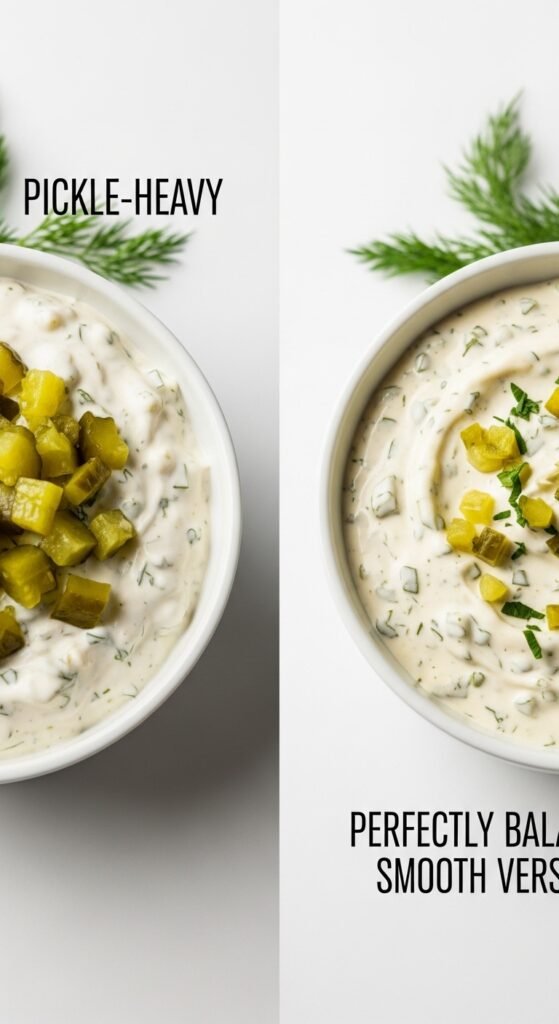
Mistake #4: Overpowering Pickle Flavor
The cause: Your pickle pieces are too large, or you used sweet pickles.
The fix: Unfortunately, you can’t remove pickle chunks once they’re in. For future batches, chop your pickles much finer. If you accidentally used sweet pickles, balance the sweetness with an extra 1/2 teaspoon of capers and 1/4 teaspoon of white wine vinegar.
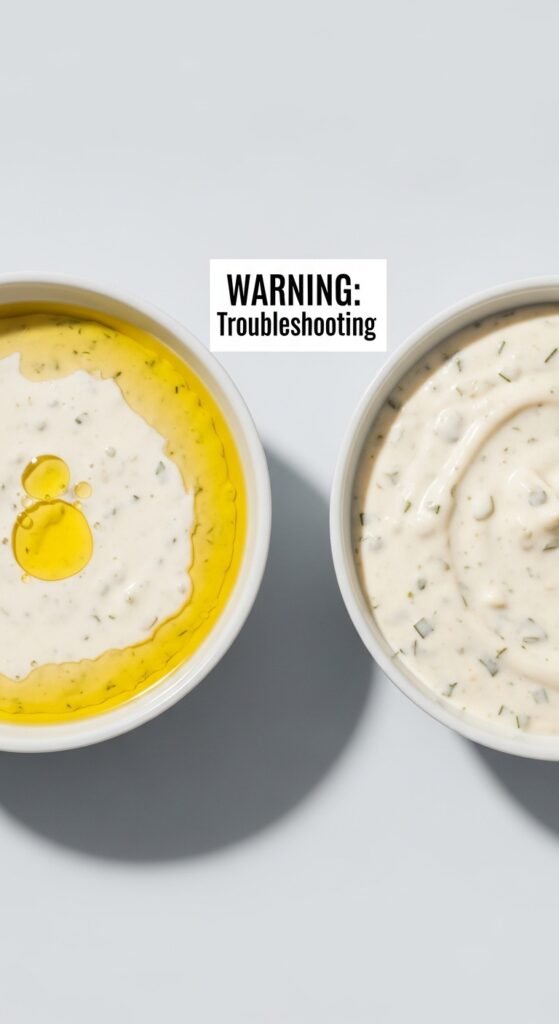
Mistake #5: Sauce Separated (Oil Floating on Top)
The cause: You stirred too aggressively, your mayonnaise was old, or your sauce got too warm.
The fix: Tartar sauce that separates is still safe to eat—it just looks unappealing. Stir in 1 teaspoon of Dijon mustard and 1 tablespoon of warm water, then whisk vigorously. The mustard will help re-emulsify the sauce. Going forward, always use fresh mayonnaise and keep your sauce chilled until serving.
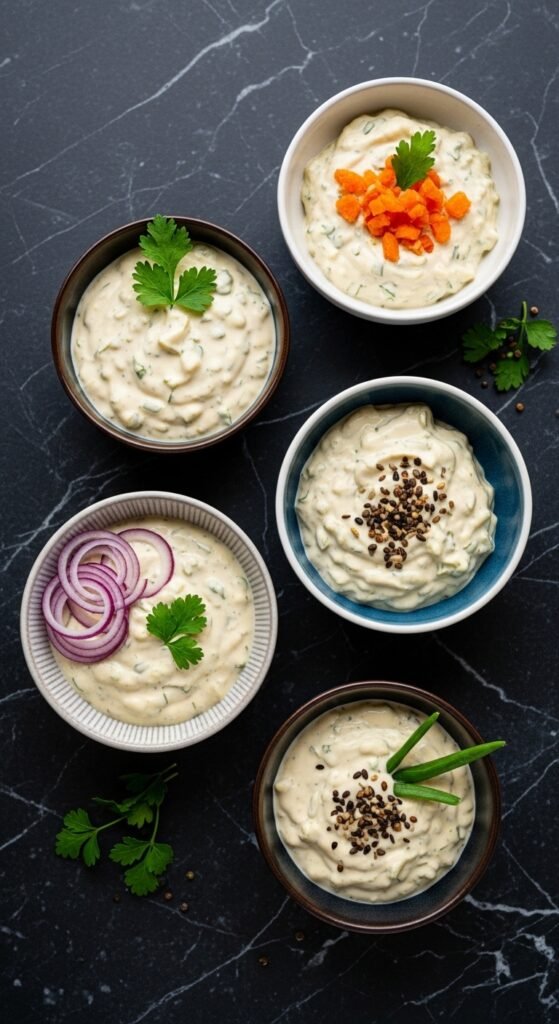
Delicious Variations: Customize Your Tartar Sauce Recipe

Once you’ve mastered the classic tartar sauce recipe, the world is your oyster (literally). Here are five variations I’ve developed over years of experimentation.
The Dill-Lover’s Tartar Sauce

Increase fresh dill to 3 tablespoons and add 1 teaspoon of dill pickle juice (straight from the jar). This version is aggressively herbaceous and pairs perfectly with salmon cakes or grilled trout.
The Smoky Tartar Sauce

Add 1/2 teaspoon of smoked paprika and 1 teaspoon of liquid smoke. This variation is incredible with fried catfish or hushpuppies. The smokiness mimics the flavor of outdoor cooking, even in January.
The Smoky Tartar Sauce
Replace Tabasco with 1 tablespoon of pickled jalapeño brine (from a jar of pickled jalapeños) and add 1 tablespoon of finely chopped pickled jalapeños. This version has a gentle warmth that builds with each bite. Perfect for fried shrimp po’boys.
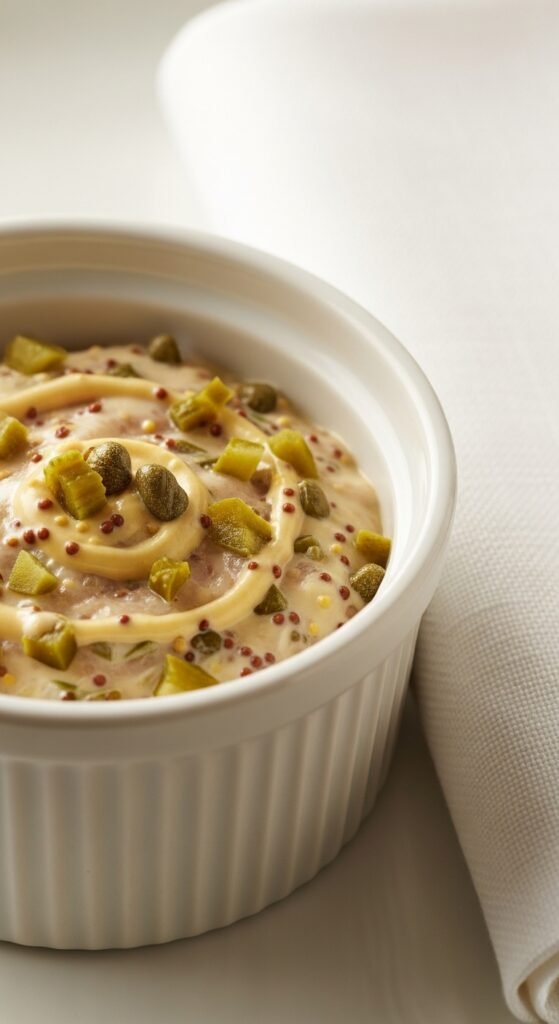
The French-Inspired Rémoulade-Tartar Hybrid
Add 1 tablespoon of Dijon mustard, 1 teaspoon of anchovy paste (trust me on this), and 1 tablespoon of chopped tarragon. Replace the dill with chervil if you can find it. This sophisticated version belongs next to crab cakes or cold poached salmon.
The Everything Bagel Tartar Sauce
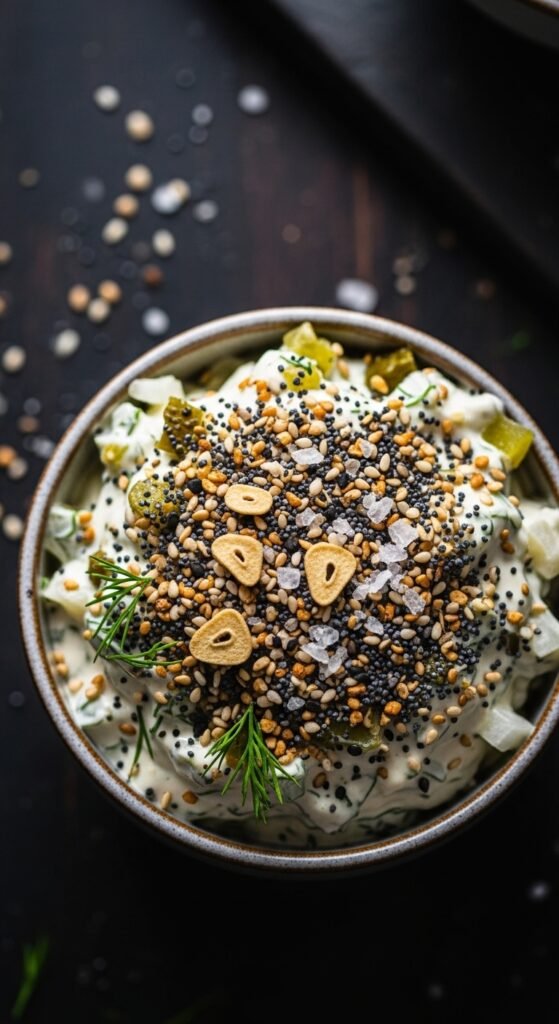
Add 1 tablespoon of everything bagel seasoning (the kind with sesame seeds, poppy seeds, dried garlic, dried onion, and salt). This sounds weird but works shockingly well with fried clam strips or onion rings.
A story about experimentation: Last Thanksgiving, my uncle—a man who claims to hate “fancy sauces”—accidentally tried my Everything Bagel tartar sauce on his fried turkey. He ate three servings before asking what it was. When I told him, he stared at his plate for a full ten seconds, then asked for the recipe. Never say never.
What to Serve with Your Homemade Tartar Sauce
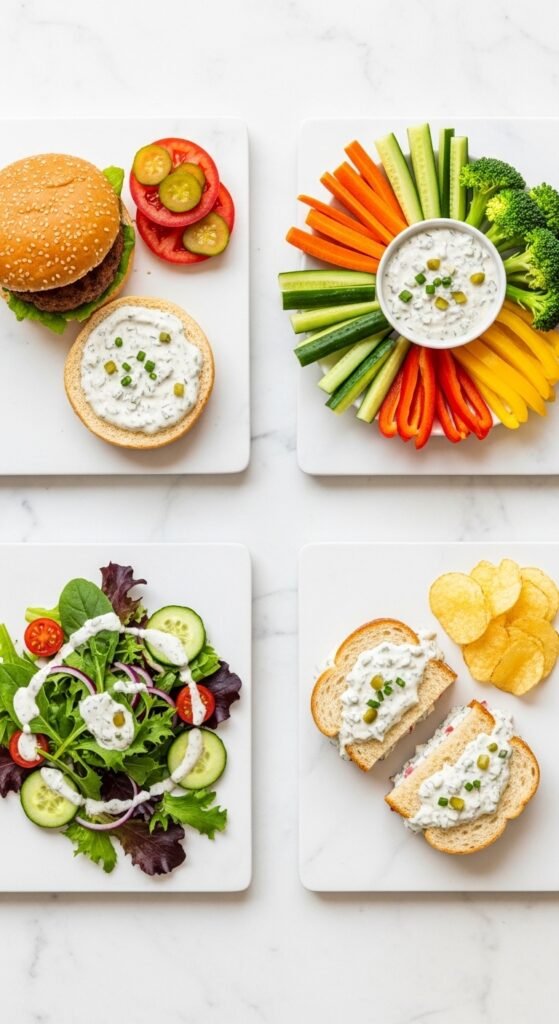
Now that you’ve mastered this tartar sauce recipe, let’s talk about what to put it on. The possibilities extend far beyond fried fish.
Classic Seafood Pairings
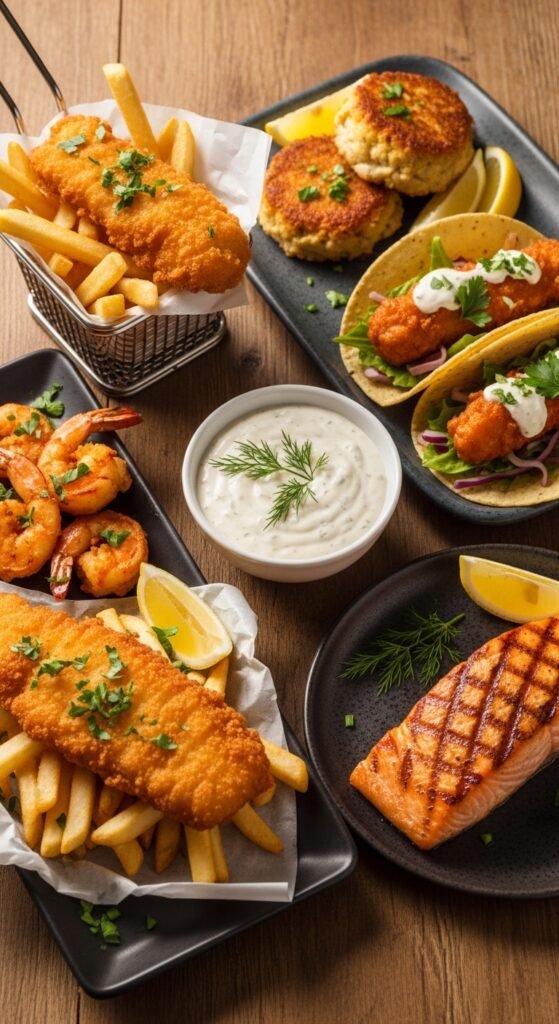
- Beer-battered fish and chips (the iconic pairing)
- Fried shrimp (popcorn shrimp or jumbo butterfly)
- Crab cakes (especially Maryland-style with lump crab)
- Fried clams (whole-belly or strips)
- Fried oysters (a true Southern delicacy)
- Grilled salmon (serve the sauce cold alongside)
- Lobster rolls (use it as a binder instead of straight mayo)
- Calamari (fried or grilled)
Unexpected Uses You’ll Love
- On burgers (especially fried chicken or fish burgers)
- In deviled eggs (replace half the mayo with tartar sauce)
- As a baked potato topping (with chives and bacon)
- On roasted vegetables (asparagus and broccoli are fantastic)
- In tuna salad (replace half the mayo for a tangy twist)
- On breakfast sandwiches (try it on an egg and cheese biscuit)
- As a dip for french fries (much better than ketchup)
- On a Reuben sandwich (replace Russian dressing)
My personal favorite: Spread tartar sauce on both sides of a grilled cheese sandwich before cooking. The mayo-based sauce creates an impossibly crispy, golden-brown crust while adding a tangy surprise inside. You’re welcome.
How to Store Your Tartar Sauce (And How Long It Lasts)

Homemade tartar sauce doesn’t contain preservatives, so it won’t last as long as the bottled stuff. That’s a feature, not a bug—you’ll eat it faster because it tastes better.
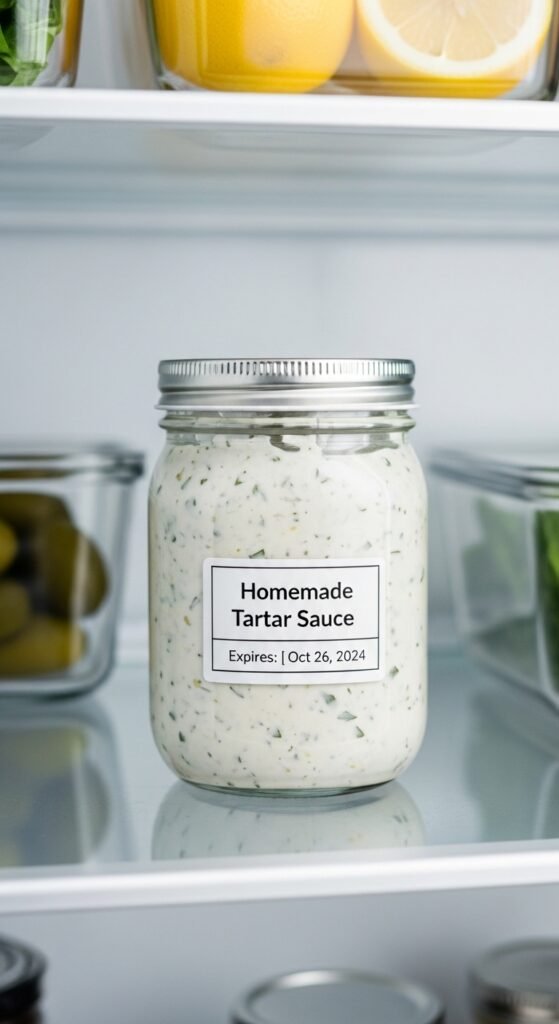
Storage method: Transfer your sauce to a glass jar or airtight plastic container. Press a piece of plastic wrap directly onto the surface of the sauce before sealing the lid. This prevents a skin from forming.
Refrigerator life: 5-7 days maximum. The mayonnaise base is stable, but the fresh herbs will start to brown and lose flavor after about a week. If you see any sign of mold, separation that won’t re-emulsify, or an off smell—toss it.
Can you freeze tartar sauce? No. Freezing breaks the mayonnaise emulsion completely. Thawed tartar sauce will be grainy, watery, and unappetizing. Make small batches instead of freezing.
Pro tip: Write the date you made it on a piece of masking tape and stick it to your container. I can’t tell you how many times I’ve opened my refrigerator to find mystery sauce containers from “sometime last month.”
Why You Should Buy High-Quality Ingredients (With Confidence)
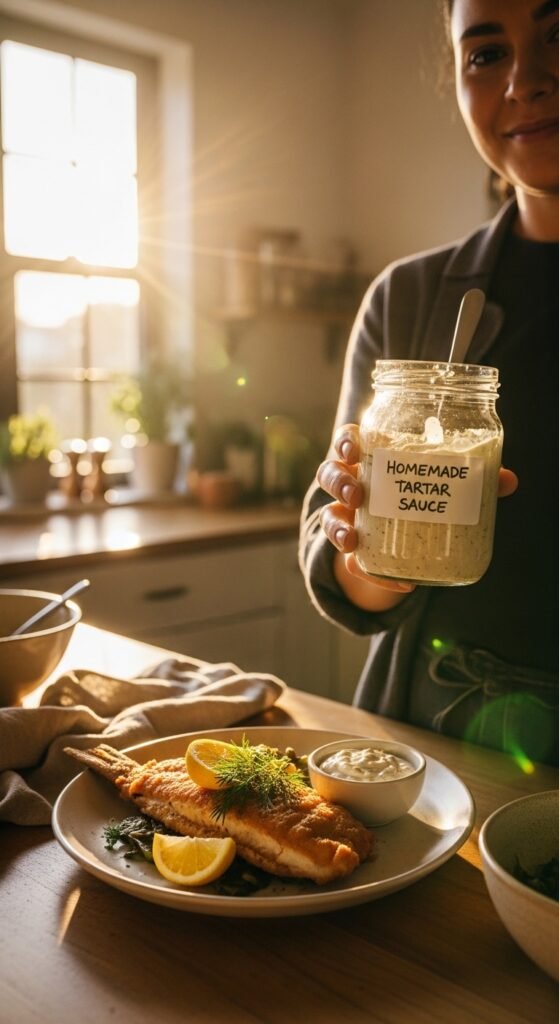
Throughout this article, I’ve mentioned specific brands and products. Let me be direct with you: investing in quality ingredients will change your cooking forever.
When you buy high-quality mayonnaise like Duke’s, you’re paying for real egg yolks and oil instead of water, sugar, and modified food starch. When you buy Lea & Perrins Worcestershire sauce, you’re getting a fermented product that’s been aged for 18 months in wooden barrels. When you buy fresh herbs instead of dried, you’re getting essential oils that dried herbs can never replicate.
I understand the hesitation. High-quality ingredients cost more upfront. A jar of Duke’s might be $5 where store-brand mayonnaise is $2. Fresh dill might be $2 a bunch where dried dill is $3 for a jar that lasts a year.
But here’s what I’ve learned: The per-serving cost difference is pennies. That $5 jar of Duke’s makes six batches of tartar sauce—less than $1 per batch for the best possible foundation. The $2 bunch of fresh dill makes four batches—50 cents per batch. When you do the math, you’re paying an extra dollar or two to elevate an entire meal from “fine” to “memorable.”
Furthermore, when you use high-quality ingredients, you waste less food. How many times have you made something with cheap ingredients, hated it, and thrown it away? How many jars of mediocre tartar sauce are sitting in your refrigerator door right now, half-empty and forgotten? Good ingredients inspire you to cook. They make you excited to eat. They turn a Tuesday night dinner into something special.
Consequently, you’ll actually save money over time. When your homemade tartar sauce tastes incredible, you’ll choose to eat at home more often. Restaurant tartar sauce (when they even serve it) is almost always the cheap bottled variety. A single restaurant meal for two people costs more than all the ingredients you need to make tartar sauce for an entire year.
So here’s my challenge to you: Buy the good stuff. Just once. Buy Duke’s mayonnaise. Buy fresh dill and fresh parsley. Buy cornichons instead of regular pickles. Spend the extra $5. Then make this tartar sauce recipe and taste the difference for yourself.
I promise you’ll never go back.
Frequently Asked Questions About Tartar Sauce
Why is it called tartar sauce if it doesn’t contain any tartar?
Great question! The name likely comes from the Tatars, a Turkic ethnic group from Central Asia. According to culinary historians, French soldiers encountered Tatars eating a sauce made with yogurt and herbs in the 18th century. When the recipe traveled to France, mayonnaise replaced the yogurt, and the name stuck. So no, there’s no dental plaque in your sauce.
Can I make dairy-free or vegan tartar sauce?
Absolutely. Use vegan mayonnaise (Hellmann’s makes an excellent one, as does Sir Kensington’s). Everything else in this tartar sauce recipe is naturally dairy-free. The result is just as creamy and delicious as the original.
How do I make low-fat tartar sauce?
I’ll be honest with you: low-fat tartar sauce isn’t great. The fat in mayonnaise carries flavor and provides texture. Without it, you get a thin, sad sauce. If you must reduce fat, try using Greek yogurt for half the mayonnaise. It won’t be the same, but it will be acceptable.
My tartar sauce is too thick. How do I thin it?
Stir in pickle juice or lemon juice one teaspoon at a time until you reach your desired consistency. Cold water also works in a pinch, but you’ll lose some flavor.
Can I make tartar sauce without capers?
You can, but you shouldn’t. Capers provide a unique briny, floral note that pickles can’t replicate. If you absolutely cannot find capers, substitute with green olives (finely chopped) plus an extra 1/2 teaspoon of white wine vinegar. It won’t be the same, but it will be close.
Why does restaurant tartar sauce taste different?
Most restaurants use tartar sauce from a food service bucket (think Sysco or US Foods). If you’re getting better flavor at a restaurant, they’re either making it in-house or adding something special. Common restaurant additions include horseradish, sour cream, hard-boiled egg yolk, or even a splash of clam juice.
Final Thoughts: Your Journey to Perfect Tartar Sauce Starts Now
There’s a reason I started this article with a memory from my childhood. Food isn’t just about sustenance—it’s about connection. It’s about the people we love, the places we’ve been, and the moments that stick with us.
My grandfather passed away five years ago. I don’t have his fishing boat anymore. I don’t have his weathered hands showing me how to fillet a salmon. But I have his tartar sauce recipe. Every time I make it, I’m twelve years old again on that dock in Oregon. Every time I taste it, I hear his voice: “You just have to understand the dance.”
Now it’s your turn. You have the recipe. You have the techniques. You have the confidence that comes from knowing why each ingredient matters. All that’s left is to step into your kitchen and make it happen.
Here’s what I want you to do right now:
- Add the ingredients to your shopping list. High-quality mayonnaise, fresh dill, fresh parsley, pickles (cornichons if possible), capers, a lemon, Worcestershire sauce, and Tabasco.
- Set aside 10 minutes this week. That’s all it takes. Ten minutes for sauce that will transform multiple meals.
- Make it your own. Taste as you go. Adjust to your preferences. Write notes on this recipe so next time it’s even better.
- Share it. Invite friends over for a fish fry. Bring a jar to your next potluck. Give small containers as holiday gifts. Good food is meant to be shared.