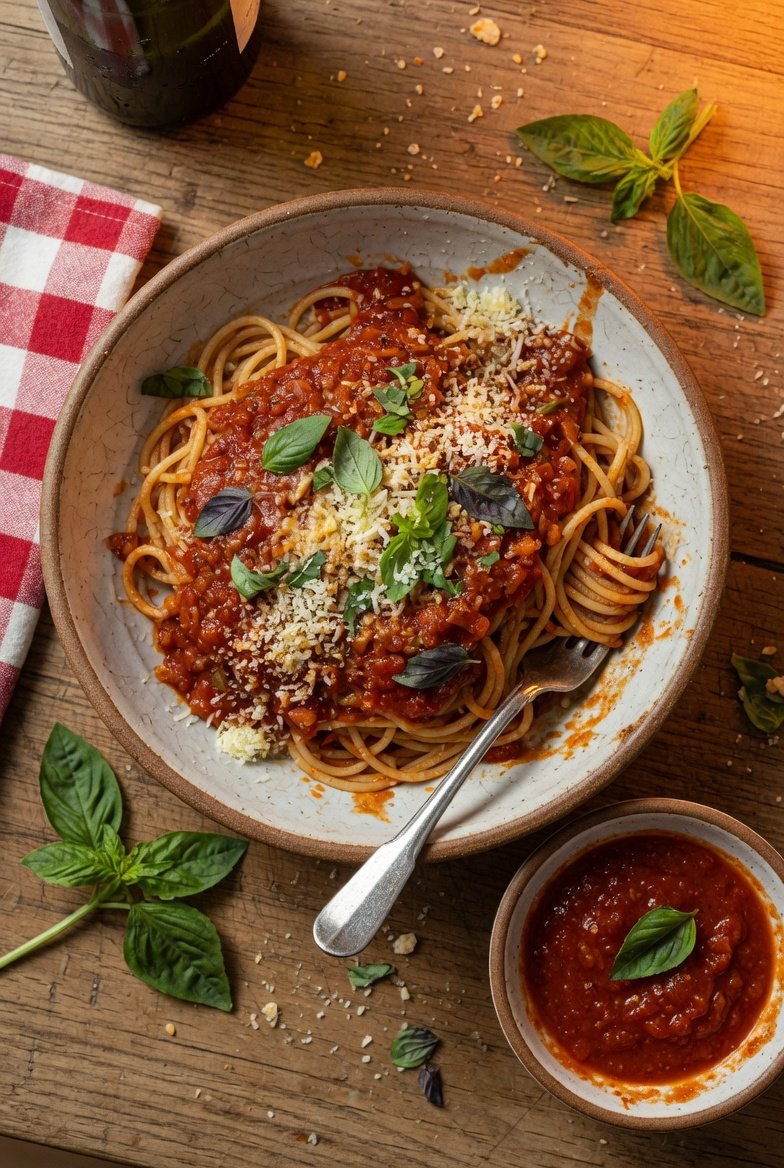
Let me take you back to a rainy Tuesday evening about five years ago. I was starving, broke, and staring into an almost-empty fridge. All I had was a half-onion, three sad-looking garlic cloves, a can of crushed tomatoes, and a box of dried spaghetti. My stomach growled like an angry dog. I thought, “How hard can red sauce pasta be?”
Well, I burned the garlic, splattered tomato sauce all over my white stove, and ended up with a watery, bitter mess. I ate it anyway because hunger has no pride. But that failure became my obsession. Over the next few months, I practiced homemade red sauce pasta recipes until I cracked the code. And today, I’m sharing everything I learned—so you never have to suffer through sad, bland pasta again.
Whether you are a college student surviving on instant noodles, a busy parent feeding picky eaters, or someone who simply loves classic Italian red sauce, this guide is for you. By the time you finish reading, you will not only know how to make the best red sauce pasta recipe from scratch, but you will also feel confident enough to buy the right ingredients, tools, and even a few secret weapons to elevate your dish.
So grab a cup of tea (or wine), and let’s dive into the saucy, garlicky, utterly comforting world of red sauce pasta.
What Exactly Is Red Sauce Pasta? Let’s Break It Down
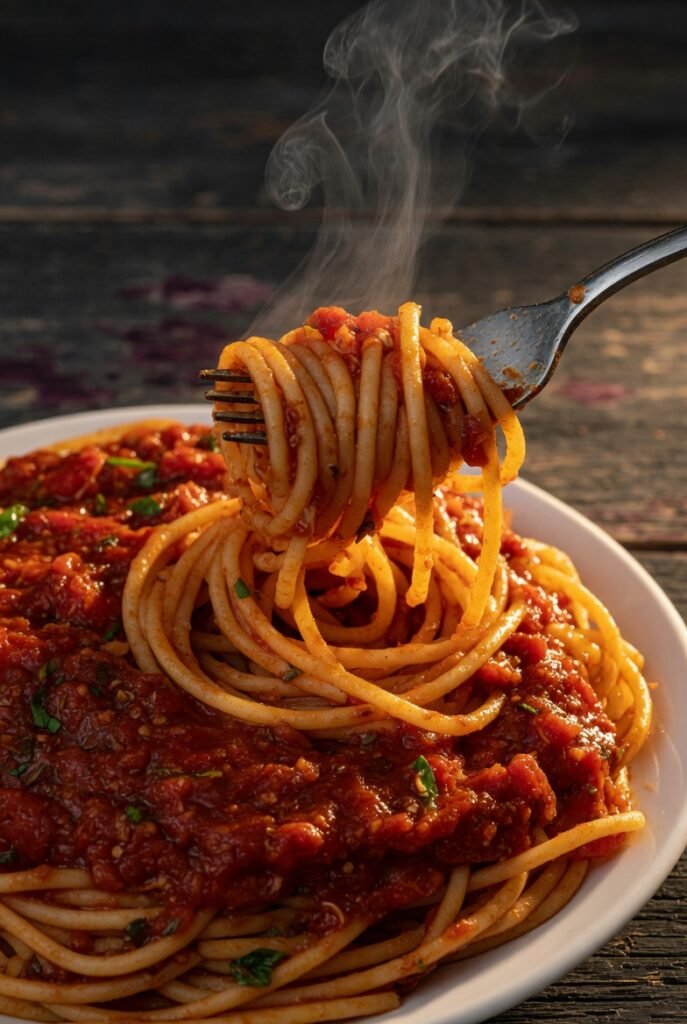
Before we start cooking, let’s talk about what red sauce pasta actually means. In simple terms, it’s any pasta dish where the primary sauce is tomato-based. But not all red sauces are created equal.
You have your quick marinara sauce (ready in 20 minutes), your slow-simmered ragù (cooks for hours), your spicy arrabbiata (hello, chili flakes), and your creamy pink sauce (a blend of red and white). In India, red sauce pasta is often a beloved Indo-Italian fusion dish loaded with boiled veggies, oregano, and chili flakes.
For this article, I’ll focus on three crowd-pleasing red sauce pasta recipes:
- Classic Marinara Spaghetti – Simple, fresh, and fast.
- Creamy Tomato Pasta – Rich, smooth, and indulgent.
- Spicy Arrabbiata with Penne – For those who like heat.
And don’t worry—I’ll walk you through each step-by-step guide like a friend standing right next to you in the kitchen.
Why You Should Fall in Love with Red Sauce Pasta (If You Aren’t Already)
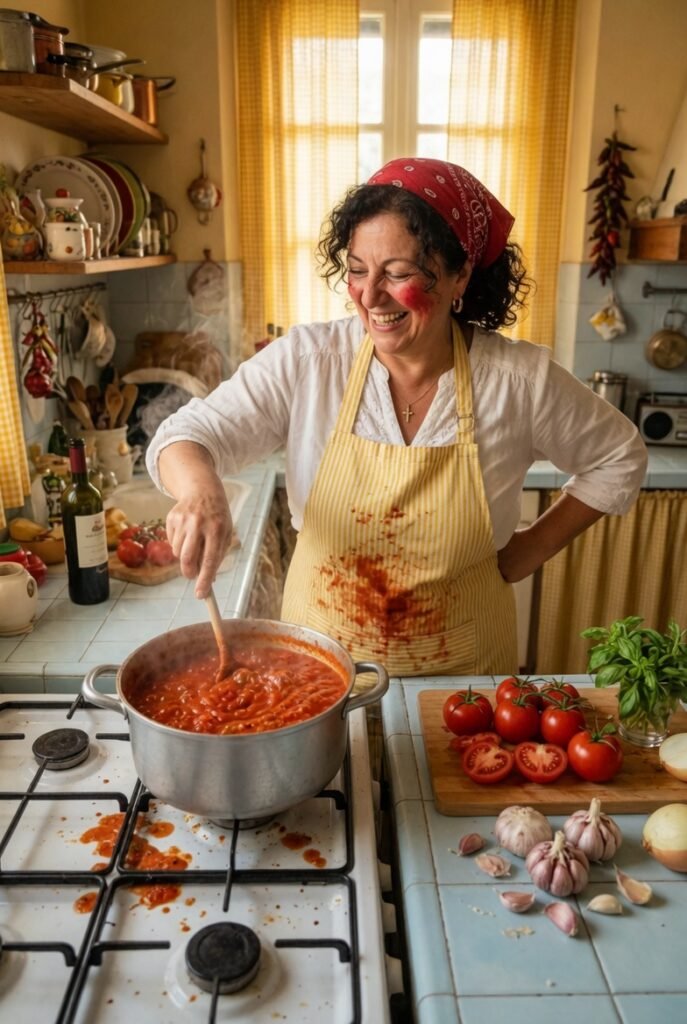
Let me be honest. I used to buy those glass jars of store-bought pasta sauce because I thought making my own was too hard. But once I tasted my first successful homemade red sauce, I never looked back. Here’s why you shouldn’t either:
- It’s cheaper. A jar of premium sauce costs $5–$8. A can of crushed tomatoes? $1.50. You do the math.
- It’s healthier. No added sugar, preservatives, or weird thickeners. Just real food.
- It tastes infinitely better. Seriously. The difference between fresh sauce and jarred sauce is like a hug versus a handshake.
- It’s customizable. Want extra garlic? Go ahead. Love basil? Toss it in. Hate onions? Skip them. You’re the boss.
Plus, red sauce pasta is a one-pan wonder (if you cook smartly). It’s forgiving, freezer-friendly, and makes you look like a gourmet chef even on a Tuesday night.
The Anatomy of a Perfect Red Sauce Pasta Recipe
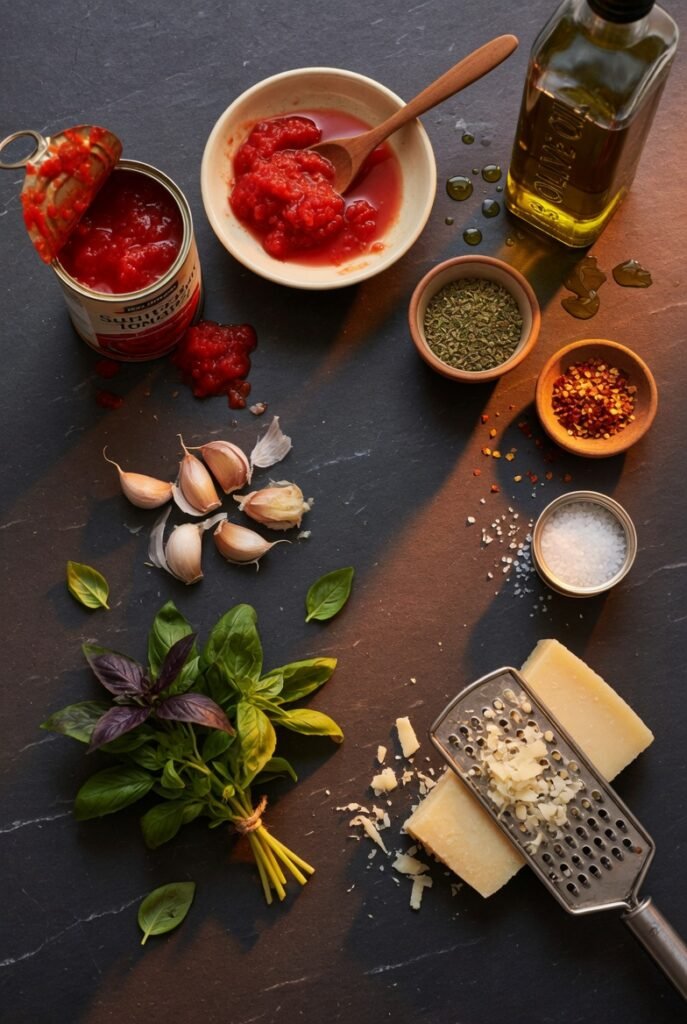
To build a great sauce, you need great building blocks. Let me break down each component so you understand why they matter. I’ll also tell you where to buy the best versions of each.
1. The Tomatoes – Heart of the Red Sauce
This is non-negotiable. Your red sauce pasta recipe lives or dies by tomato quality.
- Fresh ripe tomatoes: Best in summer. Use Roma or San Marzano.
- Canned whole peeled tomatoes: My everyday hero. Look for San Marzano DOP if you want to splurge.
- Crushed tomatoes: Great for quick sauces.
- Tomato paste: Adds depth and richness. Don’t skip it.
Pro tip from my failed rainy night: Never use ketchup or tomato soup as a substitute. Just… don’t.
2. Aromatics – The Flavor Foundation
- Garlic: Fresh cloves only. Powder is for emergencies.
- Onion: Yellow or red? Yellow for sweetness, red for a sharper bite.
- Carrots & Celery: For a traditional soffritto (Italian flavor base).
3. Herbs & Spices
- Dried oregano & basil: Classic Italian duo.
- Red chili flakes: For heat.
- Fresh basil: For brightness at the end.
- Black pepper & salt: Always.
4. The Pasta
- Spaghetti or linguine for thin sauces.
- Penne or rigatoni for chunky sauces (they trap sauce inside).
- Gluten-free pasta works beautifully too.
5. The Finishers
- Extra virgin olive oil – Use good quality. It’s not just for cooking; it’s for flavor.
- Parmesan or Pecorino Romano – Grate it fresh. Pre-shredded contains anti-caking agents that ruin meltability.
- Butter – A knob at the end makes sauce velvety.
- Pasta water – Liquid gold. Always save a cup before draining.
Essential Tools You Need (And a Few You Don’t)
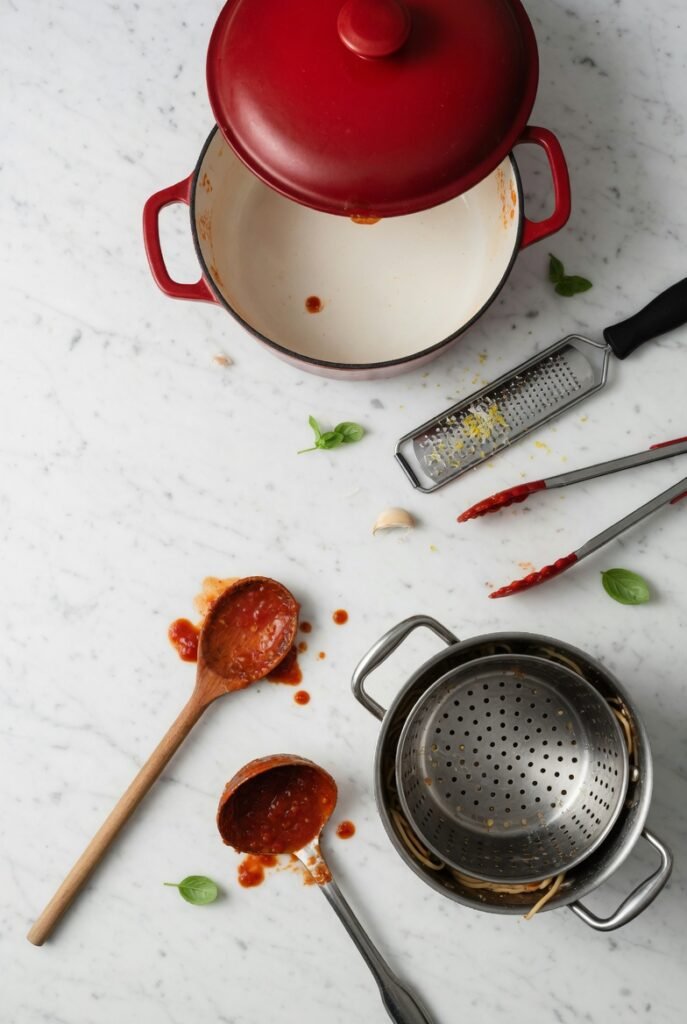
You don’t need a fancy kitchen. Here’s what I actually use for red sauce pasta recipes:
- A large heavy-bottomed pan or Dutch oven (even heat = no burning)
- A wooden spoon (metal scratches non-stick)
- A garlic press (saves time and tears)
- A chef’s knife and cutting board
- A pasta pot with a colander insert (or just a regular pot)
- Measuring spoons (eyeballing works once you’re experienced)
Nice-to-have but optional:
- Immersion blender (for creamy sauces)
- Microplane (for zesting cheese)
- Mortar and pestle (for crushing garlic and herbs together)
Anecdote time: I once tried to make red sauce pasta at a friend’s beach house with no knife—just a credit card to “slice” garlic. It took 20 minutes, and I nearly cut myself. Learn from my stupidity: buy a decent knife.
Step-by-Step Guide #1: Classic Marinara Spaghetti (Ready in 25 Minutes)
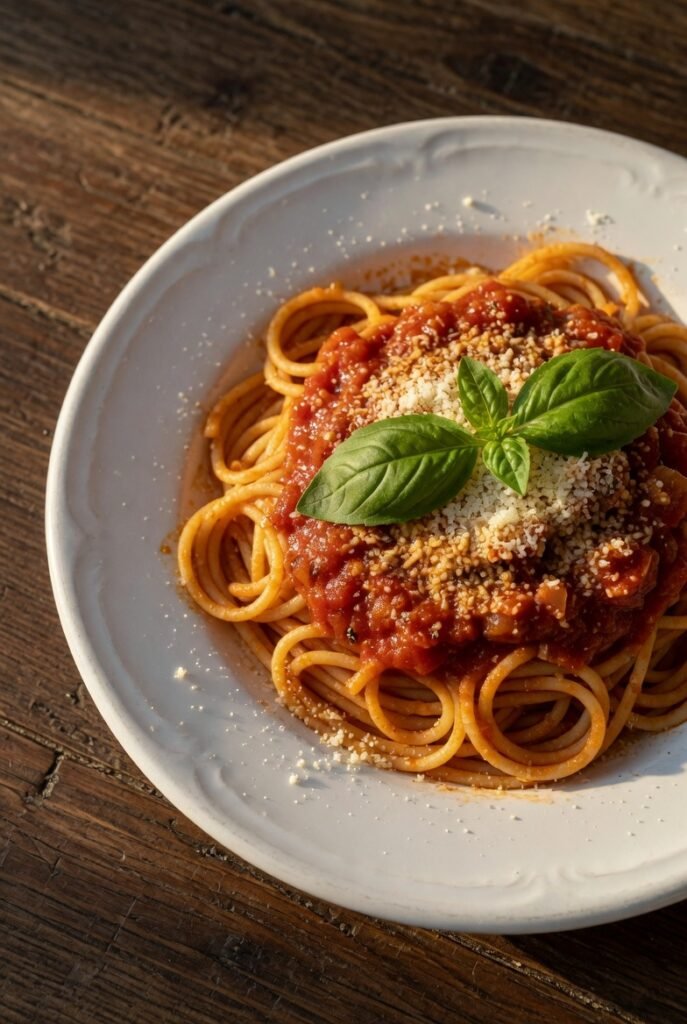
This is the red sauce pasta recipe I make when I need comfort fast. It’s simple, honest, and delicious.
Ingredients:
- 400g spaghetti
- 2 tbsp extra virgin olive oil
- 4 cloves garlic, thinly sliced
- 1 small onion, finely chopped (optional)
- 1 can (800g) whole peeled tomatoes (San Marzano if possible)
- 1 tsp dried oregano
- 1 tsp red chili flakes (optional)
- Salt to taste
- Fresh basil leaves (a handful)
- Grated Parmesan for serving
Instructions:
Step 1: Start the pasta water.
Fill a large pot with water (4–5 quarts). Add 1.5 tablespoons of salt—it should taste like the sea. Bring to a rolling boil.
Step 2: Prepare the sauce.
While water heats, warm olive oil in a pan over medium heat. Add garlic (and onion if using). Sauté until fragrant but NOT brown—about 1–2 minutes. Burnt garlic = bitter sauce. Trust me, I’ve wept over burnt garlic.
Step 3: Add tomatoes.
Pour in the canned tomatoes with their juices. Use your spoon to break them into chunks. Add oregano, chili flakes, and a pinch of salt. Bring to a simmer.
Step 4: Cook pasta.
Drop spaghetti into boiling water. Cook 1 minute less than package says (it will finish cooking in the sauce).
Step 5: Combine.
Reserve 1 cup of pasta water. Drain pasta and add it to the sauce pan. Toss vigorously. Add splashes of pasta water until the sauce coats each strand like a silky blanket.
Step 6: Finish and serve.
Turn off heat. Tear fresh basil leaves over the top. Add a drizzle of raw olive oil. Serve immediately with a mountain of Parmesan.
Why this works: The pasta water’s starch emulsifies with the oil and tomatoes, creating a restaurant-quality sauce without cream.
Step-by-Step Guide #2: Creamy Tomato Red Sauce Pasta (Restaurant Style)
Sometimes you want that velvety, luxurious red sauce pasta that feels like a hug in a bowl. This one uses a simple trick: a splash of cream or a spoonful of cashew paste.
Ingredients:
- 350g penne or fettuccine
- 2 tbsp butter
- 3 cloves garlic, minced
- 1 can (400g) tomato puree or crushed tomatoes
- 1/4 cup heavy cream (or 2 tbsp cashew paste soaked in water)
- 1/2 tsp sugar (balances acidity)
- 1/2 cup grated Parmesan
- Fresh parsley or basil
- Salt and pepper
Instructions:
Step 1: Boil pasta. Same as before. Salt the water generously.
Step 2: Make the creamy base.
In a pan, melt butter over medium-low heat. Add garlic and cook for 30 seconds. Pour in tomato puree. Simmer for 5 minutes until slightly thickened.
Step 3: Add cream and cheese.
Lower heat. Stir in cream (or cashew paste) and Parmesan. Mix until smooth and pinkish-orange. Add sugar, salt, and pepper.
Step 4: Toss and serve.
Add cooked pasta plus 1/4 cup pasta water. Toss until every piece glistens. Garnish with fresh herbs.
Anecdote: My nephew hates tomatoes but devoured this creamy version. When I told him it had tomato, he said, “No way, this is magic sauce.” That’s the power of creamy red sauce pasta.
Step-by-Step Guide #3: Spicy Arrabbiata Red Sauce Pasta (For Heat Lovers)
Arrabbiata means “angry” in Italian—because of the chili. This red sauce pasta recipe is bold, punchy, and wakes up your taste buds.
Ingredients:
- 400g rigatoni or penne
- 4 tbsp olive oil
- 5 cloves garlic, crushed
- 1 tsp red chili flakes (more if you’re brave)
- 1 can (800g) diced tomatoes
- 1 tbsp tomato paste
- Salt to taste
- Fresh parsley
- Parmesan (optional, but recommended)
Instructions:
Step 1: Infuse the oil. Heat olive oil in a pan. Add garlic and chili flakes. Cook on low for 2 minutes—the oil will turn slightly orange and smell incredible.
Step 2: Build the sauce. Add tomato paste and cook for 1 minute. Then add diced tomatoes and salt. Simmer for 10–12 minutes until oil separates slightly.
Step 3: Combine. Toss with al dente pasta and a splash of pasta water.
Step 4: Serve angry. Garnish with parsley and a final sprinkle of chili flakes. Parmesan optional—some say dairy dulls the heat, but I say live your life.
Common Mistakes That Ruin Red Sauce Pasta (And How to Avoid Them)
I’ve made every mistake possible. Let me save you the trouble.
| Mistake | Why It Happens | Fix |
|---|---|---|
| Watery sauce | Not simmering long enough | Simmer uncovered for 10–15 minutes to reduce |
| Acidic or bitter taste | No sugar or overcooked garlic | Add a pinch of sugar or grated carrot |
| Pasta sticks together | Not enough water or no stirring | Use a large pot and stir occasionally |
| Sauce doesn’t coat pasta | Skipped pasta water | Always reserve 1 cup before draining |
| Burnt bottom | Heat too high | Cook sauce on medium-low, stir often |
How to Buy the Best Ingredients for Red Sauce Pasta with Confidence
Now, here’s where I convince you to upgrade your pantry. Because good ingredients make good sauce. Great ingredients make unforgettable sauce.
✅ Tomatoes – Buy These:
- Mutti (Italy) – Rich, thick, no seeds.
- Pomi (boxed strained tomatoes) – No metallic taste.
- Cento San Marzano – Worth every penny.
✅ Pasta – Look for:
- De Cecco or La Molisana – Bronze-die cut for rough texture that grips sauce.
- Barilla – Readily available and reliable.
- Jovial (gluten-free) – Best GF option.
✅ Olive Oil – Don’t cheap out:
- California Olive Ranch (everyday use)
- Partanna (Sicilian, robust flavor)
✅ Cheese – Always block, never pre-grated:
- BelGioioso Parmesan
- Locatelli Pecorino Romano
Where to buy: Most of these are on Amazon, Whole Foods, or your local Italian deli. For Indian readers, check out Modern Bazaar, Nature’s Basket, or Amazon India for imported brands. Local tomatoes work beautifully too—just use ripe ones.
Meal Prep & Storage: Make Red Sauce Pasta Once, Eat All Week
I love cooking big batches on Sunday. Here’s how to store your red sauce pasta recipes:
- Sauce only: Fridge for 5 days, freezer for 3 months. Cool completely before freezing in zip-top bags or glass jars.
- Pasta with sauce: Fridge for 3 days. Reheat with a splash of water or milk.
- Pro tip: Cook pasta separately if you plan to store. Combine only when serving to avoid mushiness.
Frequently Asked Questions About Red Sauce Pasta
**Q: Can I make *red sauce pasta* without onions and garlic?**
A: Yes! Use extra carrots, celery, and fennel. Or try a simple tomato-basil sauce.
**Q: Is *red sauce pasta* healthy?**
A: Absolutely. Tomatoes provide lycopene (great for heart health). Use whole wheat pasta and control salt. Avoid heavy cream if you want lighter calories.
Q: Can I use fresh tomatoes instead of canned?
A: Yes! Blanch, peel, and deseed about 1.5 kg of ripe tomatoes. Simmer longer to reduce water content.
Q: My sauce is too tangy. Help!
A: Add a pinch of baking soda (neutralizes acid) OR a teaspoon of sugar/honey OR a grated carrot (natural sweetness).
Final Thoughts & A Personal Invitation
Cooking red sauce pasta changed my relationship with food. It taught me that simple doesn’t mean boring. It showed me that patience—like simmering tomatoes for an extra ten minutes—rewards you with depth. And most importantly, it reminded me that the best meals are shared.
So here’s my request: Don’t just read this article. Cook one of these red sauce pasta recipes this week. Burn the garlic if you must. Splatter sauce on your stove. Laugh at yourself. And then sit down with a plate of your own creation and feel proud.
You’ve got this.
Ready to Buy? Here’s What I Recommend You Add to Your Cart Right Now
To make the best red sauce pasta at home, here’s a confident shopping list:
- Canned San Marzano tomatoes (Mutti or Cento) – [Check price on Amazon]
- Bronze-die cut spaghetti or penne (De Cecco) – [Check price]
- A good garlic press (Kuhn Rikon) – Saves so much time
- Microplane zester – For fluffy Parmesan
- Red chili flakes & dried oregano (Simply Organic brand)
- Extra virgin olive oil (California Olive Ranch)
Why buy through this guide? These are the exact tools and ingredients I use daily. They turn a good red sauce pasta into a great one. You won’t regret investing in quality.
Read About: The Ultimate White Sauce Recipe: A Creamy, Foolproof Guide to Sauce Perfection
Want More? Try These Variations
- Vegan red sauce pasta: Use cashew cream instead of dairy. Add lentils or tofu.
- Protein-packed: Brown Italian sausage or add chickpeas.
- Hidden veggies: Blend zucchini or bell peppers into the sauce (kids never know).
- One-pot red sauce pasta: Sauté, add dry pasta, add liquid, cook covered for 15 minutes. Done.
Let’s Wrap This Up (With a Full Belly)
You started this article not sure how to make red sauce pasta without burning it. Now you have three complete red sauce pasta recipes, a troubleshooting guide, a shopping list, and enough stories to keep you smiling.
Cooking is not about perfection. It’s about presence. So play your favorite music, pour some wine, and let the smell of garlic and tomatoes fill your home.
And when someone asks, “Wow, did you make this sauce from scratch?” you can smile and say, “Yeah. It’s my specialty.”