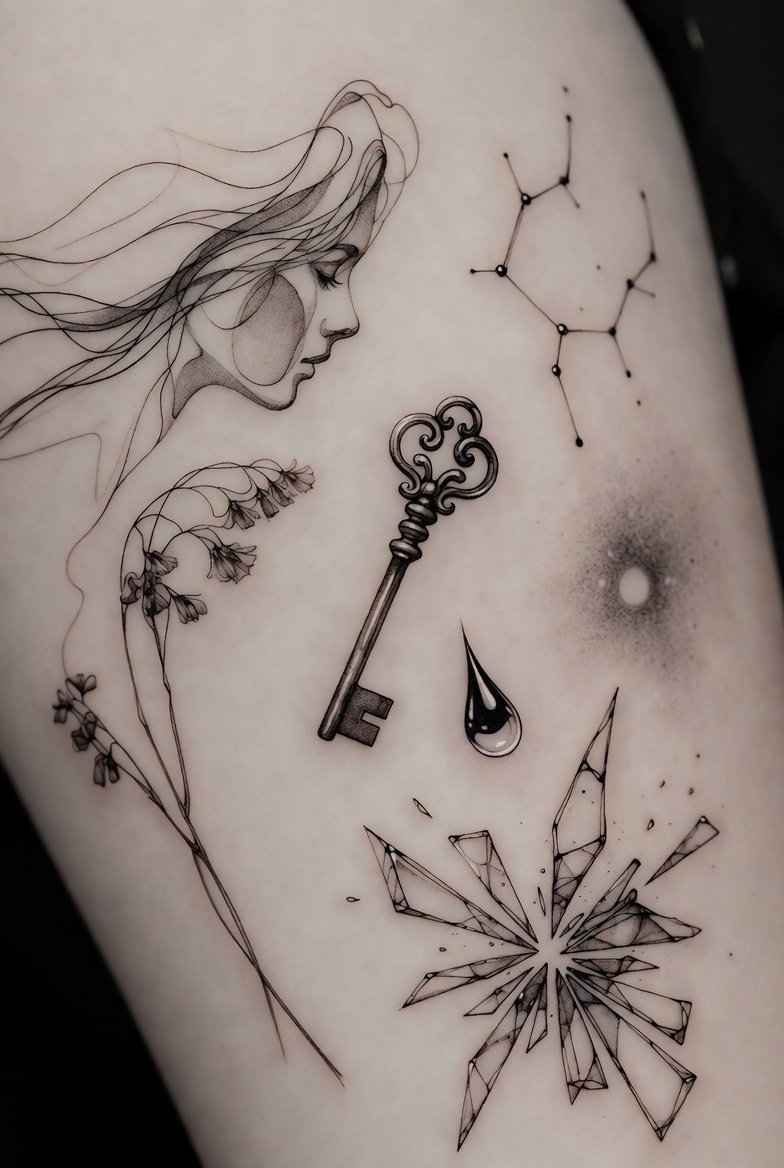
Choosing a tattoo is deeply personal, but finding a style that feels both elegant and enduring can be overwhelming. Fine line tattoos offer a solution—they strip away heavy shading and bold outlines, leaving behind whisper-thin details that age gracefully on the skin. Unlike traditional designs, these delicate pieces rely on precision and negative space, making them perfect for first-timers or collectors who want subtle self-expression. Whether you crave a minimalist symbol or a tiny botanical sketch, the following ideas will spark your imagination without screaming for attention.
1. Single-Continuous Line Portrait
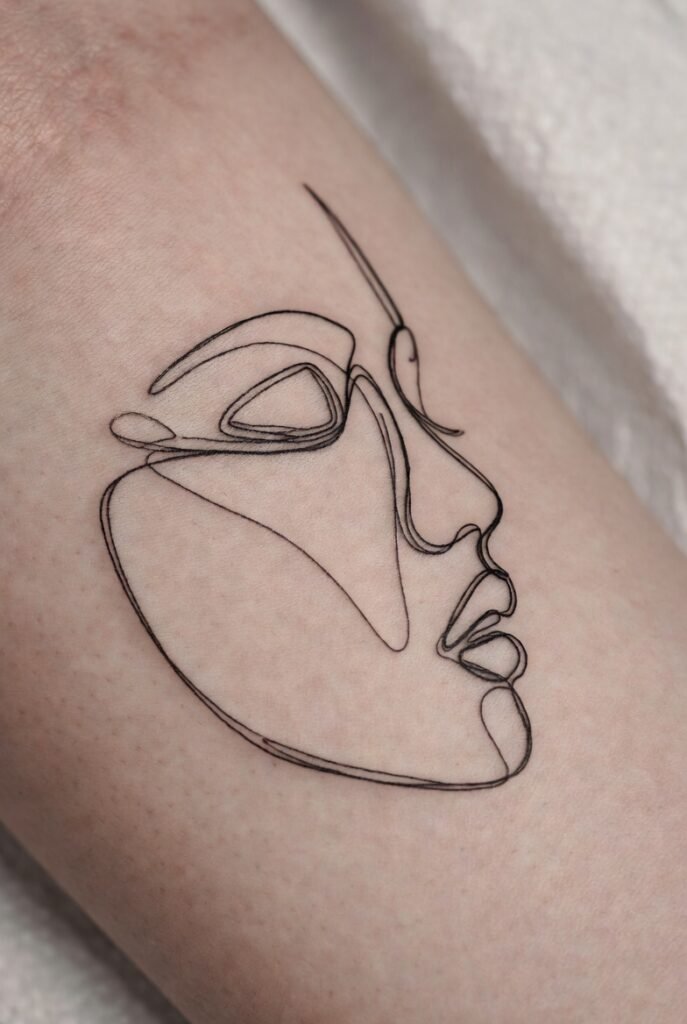
A single-line portrait captures a face or figure using one unbroken stroke, creating an airy, modern feel. This style tricks the eye into seeing depth without any shading, relying entirely on the flow of the fine needle. Many people choose a loved one’s profile or even their own side silhouette, turning skin into a sketchbook page. Because the line never lifts, the design feels spontaneous yet intentional—like a quick, honest drawing frozen in time.
Healing such a tattoo is faster than heavier work, and the thin black ink settles into a soft charcoal gray over years. Artists often place this on the inner forearm or ribcage, where the curve of the body adds life to the line. You don’t need a photorealistic result; the beauty lives in the imperfections of the stroke. For a meaningful twist, ask your artist to trace a real photo’s outline freehand, preserving quirks that make the face recognizable but dreamlike.
2. Dried Botanicals with Drooping Stems
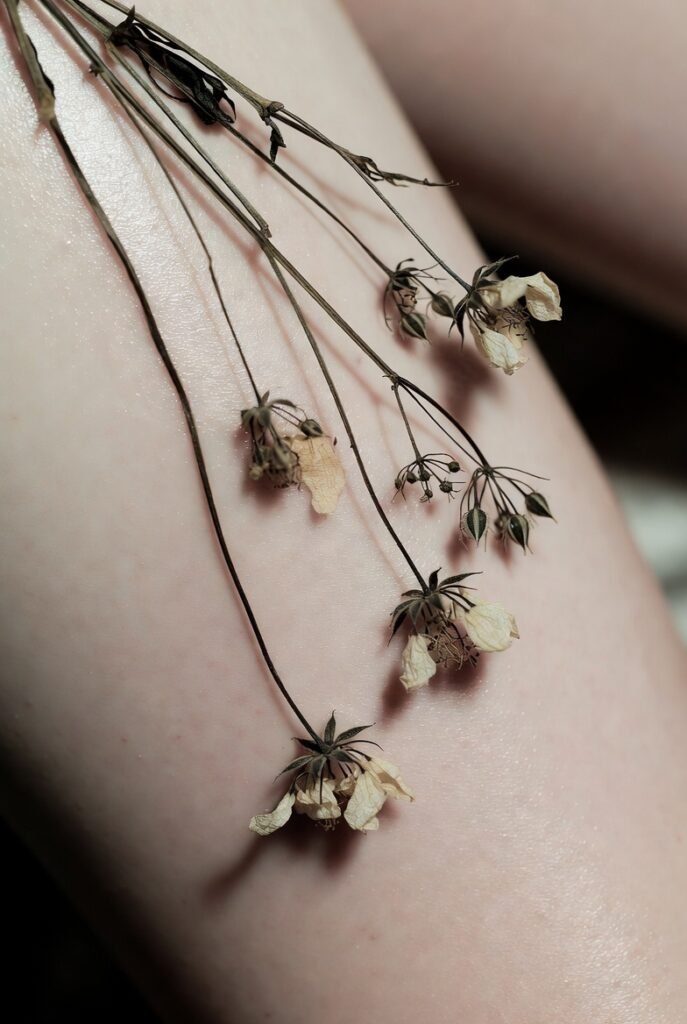
Instead of blooming flowers, dried plants offer a melancholic yet grounded aesthetic—think wilted lavender, a single falling leaf, or a drooping fern frond. The fine line technique excels here because each vein and seed pod gets rendered with surgical precision, yet the overall shape sags naturally. This idea resonates with people who have survived loss or simply love wabi-sabi beauty, the Japanese art of finding elegance in impermanence. You can cluster three stems behind an ear or trail one along the collarbone.
The lack of color keeps the tattoo versatile, but some add a tiny washed gray droplet to mimic dew or resin. Because the lines are so sparse, the design doesn’t blur into a blob over time—each dry petal remains distinct. Consider placing it on the shoulder blade, where the bone’s edge mirrors the curve of a dying stem. It’s a quiet conversation starter, far removed from bold traditional rose tattoos.
3. Micro-Constellation with Connected Dots
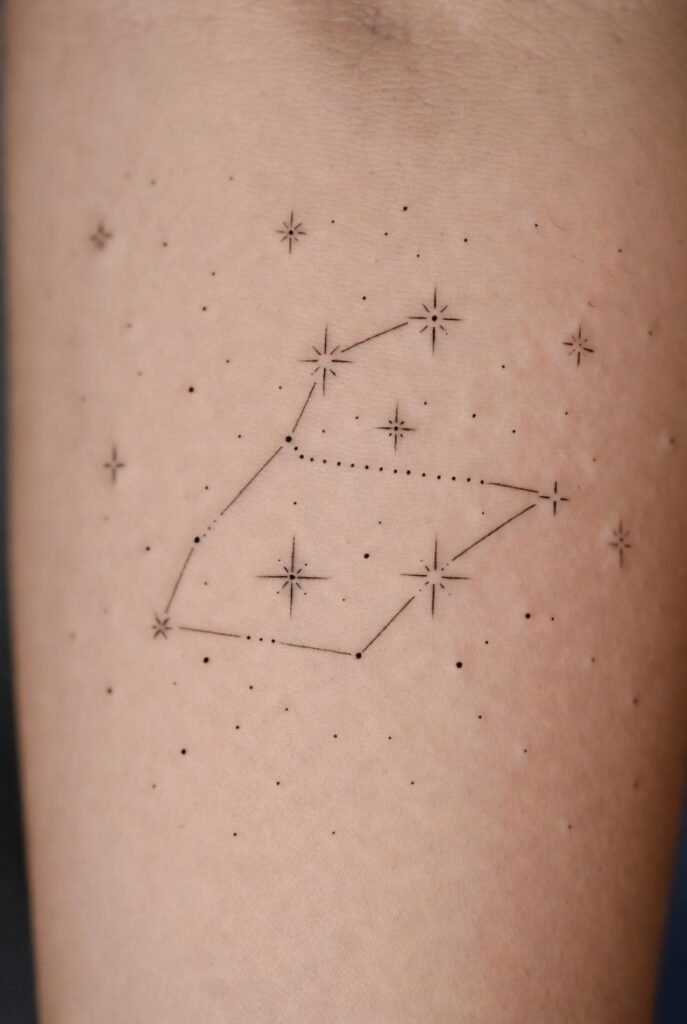
Astronomy lovers adore constellation tattoos, but fine line versions take it further by connecting tiny dots with hairline strokes. You can map your zodiac sign, a loved one’s star chart from a special date, or even a fictional pattern that only means something to you. Each star is a single dot, no bigger than a freckle, and the lines between them are so faint they almost disappear in low light. This creates a secret map that feels intimate rather than decorative.
Many clients place this behind the ear or on the wrist bone, where the dots peek out from under a watch strap. Unlike thick geometric constellations, this version breathes with your skin’s texture—moles or freckles can become part of the design. Ask your artist to use a single-needle setup for the faintest possible marks. Over years, the dots may soften slightly, which only adds to the celestial, fading-star effect.
4. Abstract Organic Shapes
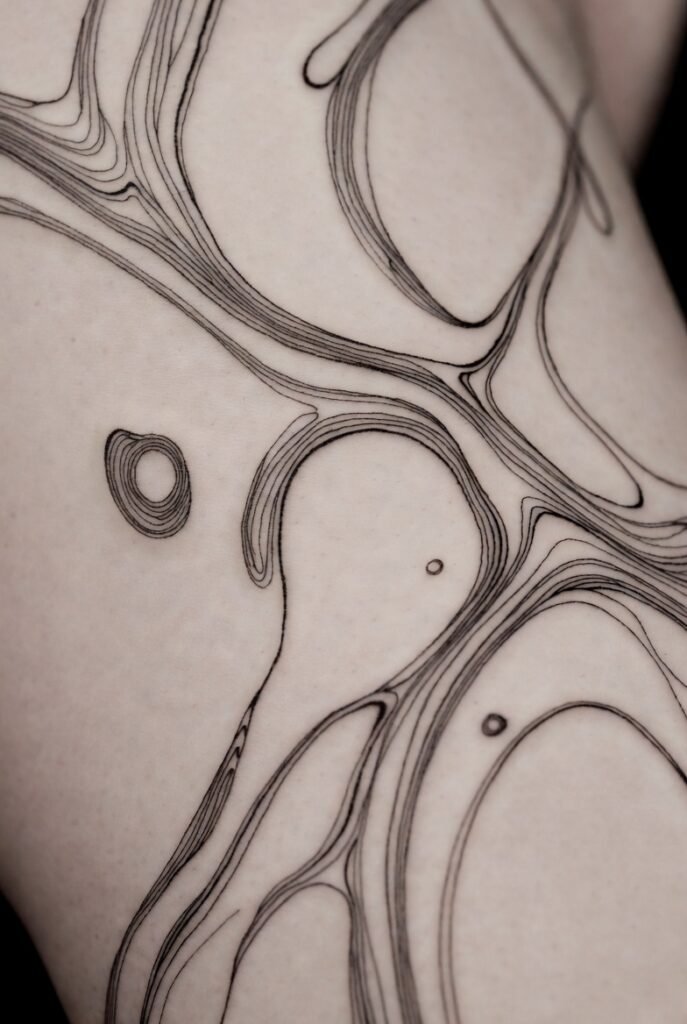
Not every fine line tattoo needs to represent a real object. Abstract organic blobs—think stretched drops, wavy puddles, or fragmented rings—look stunning when executed with a trembling, hand-drawn quality. The key is asymmetry and open space: a shape that implies movement, like a splash frozen mid-air or a pebble’s ripple. These designs work beautifully as standalone pieces on the ankle or as gap-fillers between existing tattoos. Because there’s no “wrong” interpretation, you’ll never tire of its mystery.
Artists often use a stippling technique alongside clean lines to add shadow without bulk. Imagine a crescent-like form that dissolves into scattered dots at its tail—that’s the kind of ethereal effect you can achieve. Some people coordinate these shapes with scars or birthmarks, turning natural body marks into part of the abstract composition. Since no two are alike, you’ll walk away with a truly custom mark that feels like a signature.
5. Tiny Architectural Column
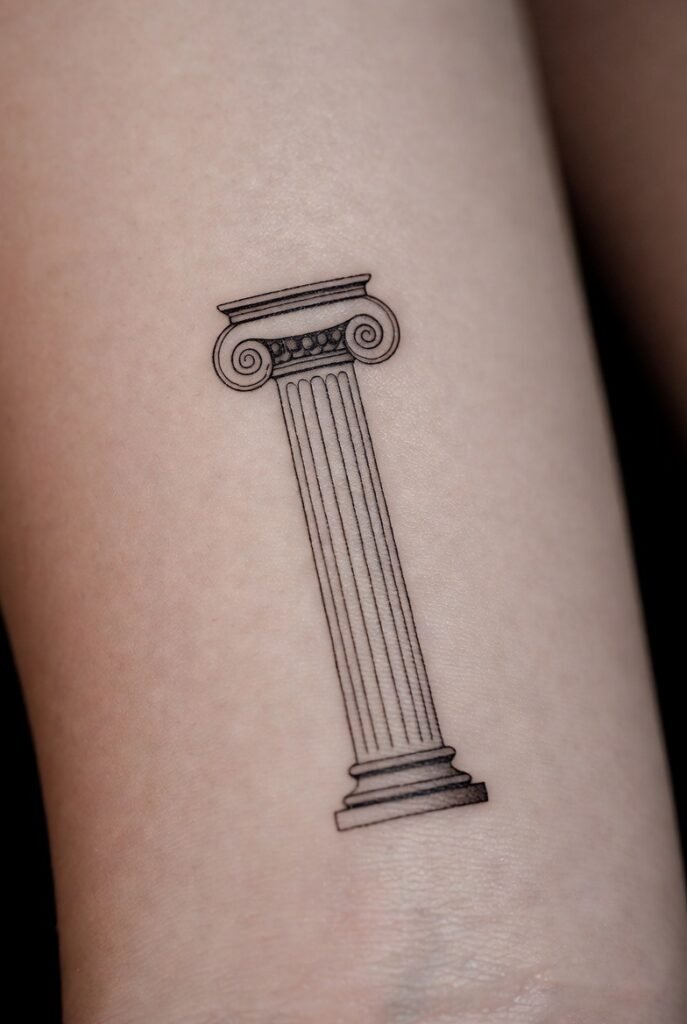
A single Ionic or Corinthian column, drawn no taller than two inches, brings classical gravitas to a tiny canvas. The fine line approach allows every fluting groove and capital scroll to remain crisp, even at miniature scale. You might choose this to represent strength, a love for history, or as a tribute to a city you call home. Place it vertically on the sternum, horizontally along the back of the neck, or even upside down near the elbow ditch for a surreal twist.
Unlike massive traditional architectural tattoos, this version hides like a secret easter egg. The negative space between the columns’ details acts as a visual rest stop, keeping the piece airy. Ask your artist to use a tight magnified lens to carve those tiny spirals on the capital. Because the design is so compact, healing takes less than a week, and the thin scars settle into a lovely permanent etching.
Read Also: 15 Ethereal Beauty Ideas to Transform Your Look into Dreamlike Art
6. Broken Glass Shards
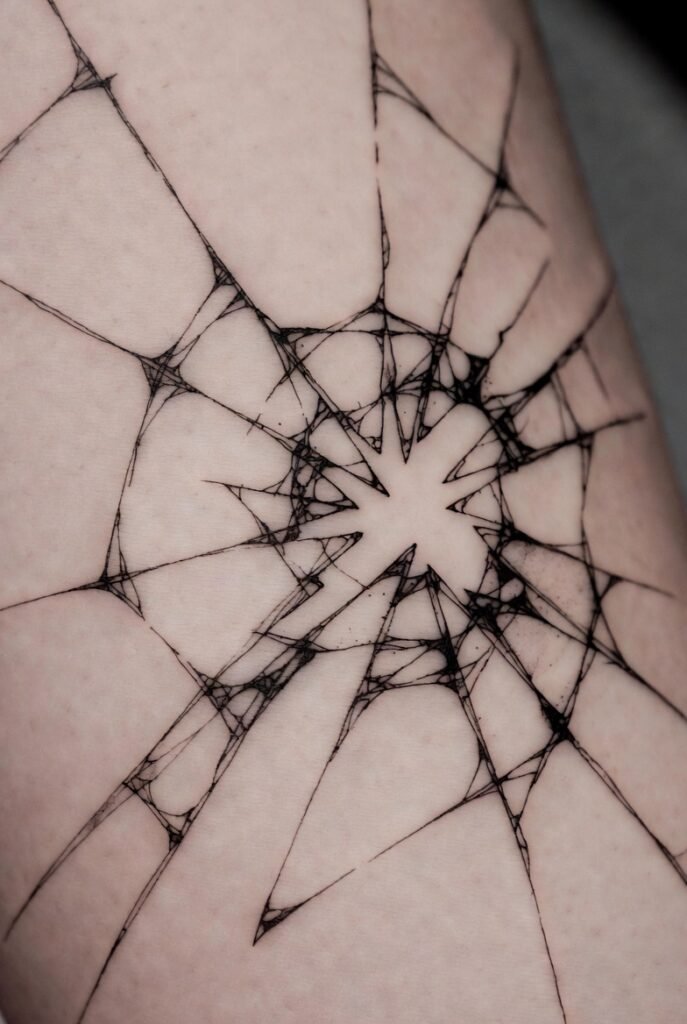
Capture a moment of shattering with jagged glass fragments floating across your skin. Each shard is defined by two or three razor-thin lines, with a few floating transparent edges implied rather than drawn. This concept works for anyone who has rebuilt after hard times—it’s not about the break, but the beauty of the fragments. The fine line style keeps it from looking violent; instead, the shards seem to hover like cracked ice on a window.
You can scatter three to five pieces randomly along the outer thigh or collarbone, letting them follow natural body contours. Add microscopic glint lines (tiny straight dashes) to suggest reflections. The lack of solid fill means the skin’s own tone becomes the “glass” itself, so the tattoo changes as you tan or pale. It’s a poetic, non-literal way to wear your resilience without clichéd birds or anchors.
7. Hand-Held Object from Childhood
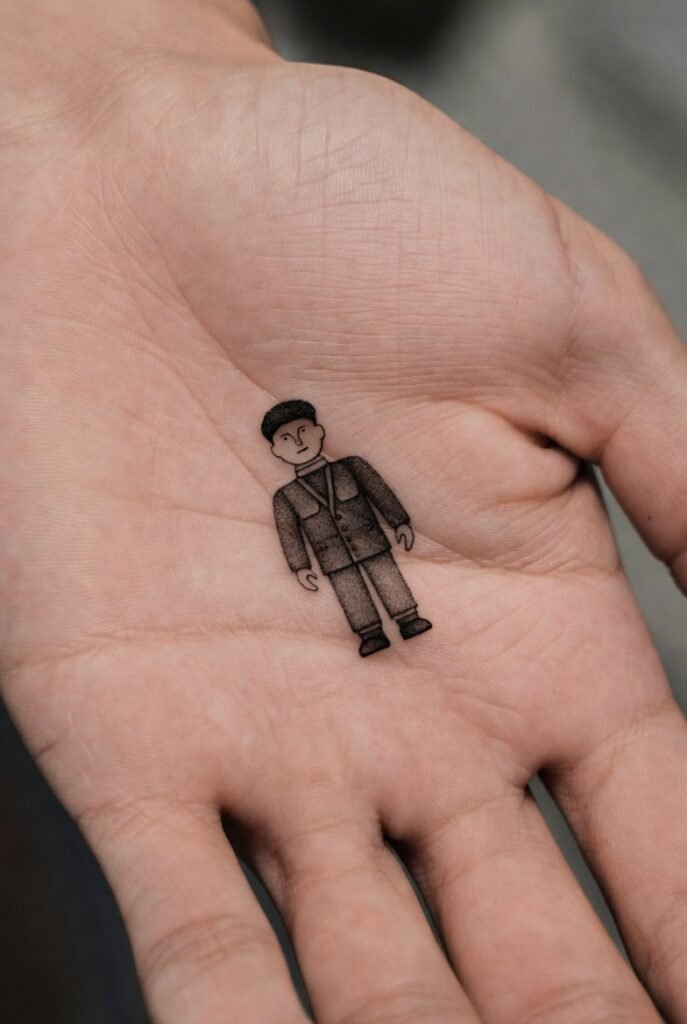
Think of a specific small object you held constantly as a child—a wooden spool, a particular key, a chipped marble, or even a cassette tape’s inner reel. Rendering it in fine line forces the artist to focus on silhouette and key details only, like the thread grooves on the spool or the tape’s transparent window. Nostalgia hits differently when the drawing is minimal; your brain fills in the texture and weight. Place it somewhere you can touch, like the inner wrist or below the knee.
Because the object is highly personal, no one else will “read” it immediately, which adds a layer of privacy. The thin outlines keep the shape readable even if the object is complex (like an old rotary dial). You don’t need a full background—just the object floating on clean skin. Over time, the faint lines become a ghost of the memory, which feels perfectly appropriate for childhood artifacts.
8. Woven Thread or Ribbon
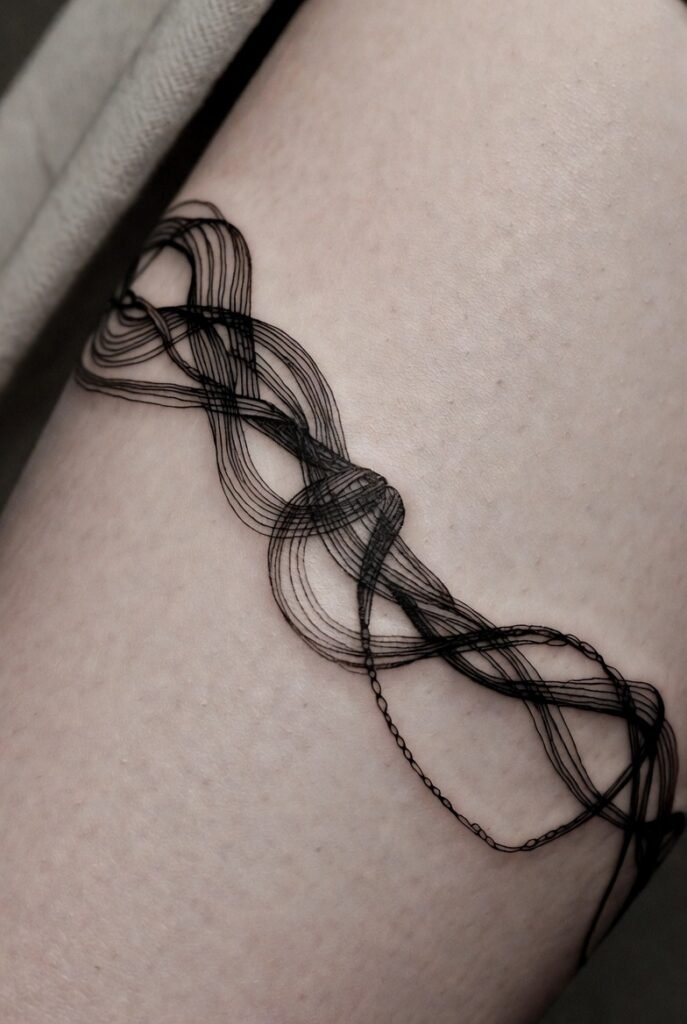
A single woven ribbon twisting in a loose figure-eight or draping over a joint looks deceptively simple. The fine line technique captures each thread’s crossover with tiny parallel strokes, creating a textile illusion on skin. You can choose a straight ribbon with a trailing end or a loop that wraps around a finger or ankle. This idea works for siblings, partners, or anyone who values connection—the weave represents interlocking lives.
Artists often use a stippled shadow underneath the ribbon to make it pop off the skin without heavy black. Keep the ribbon’s edges clean and un-shaded for that delicate embroidery effect. Placement on the side of the hand or along the Achilles tendon makes the ribbon move as you do. Avoid adding color; a single black ribbon feels timeless and can match any future tattoos nearby.
9. Miniature Wave with Foam Dots
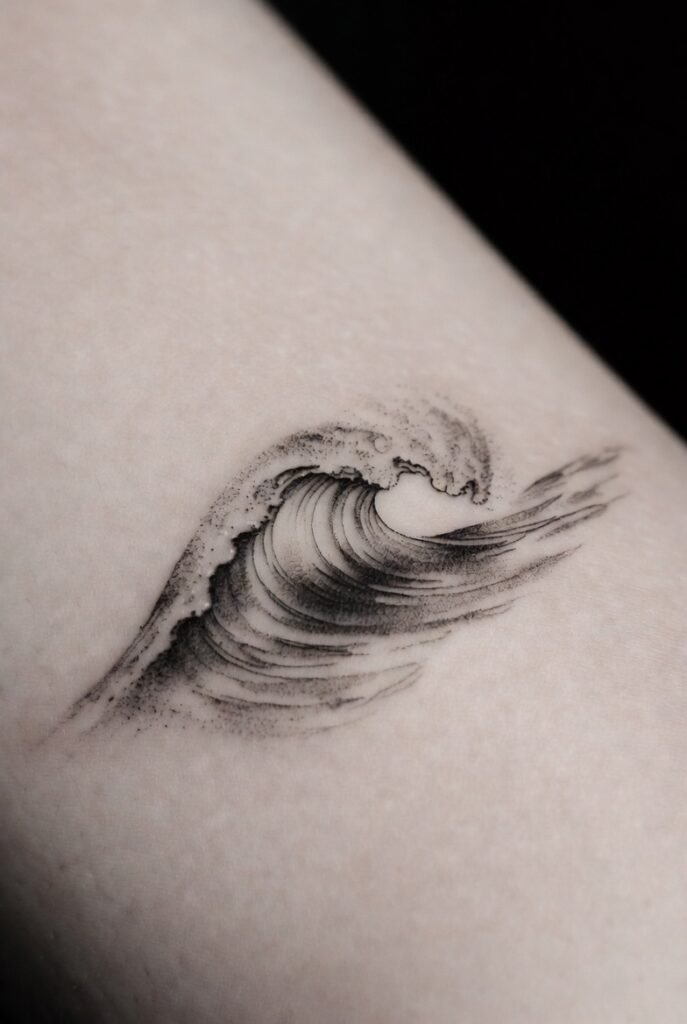
A single breaking wave drawn in fine line style captures ocean energy without the bulk of traditional Japanese or realistic waves. Instead of thick crests, the artist uses hairline curves to suggest the swell and a scatter of tiny dots to imply foam spray. This design feels light and airy, perfect for surfers, sailors, or anyone who finds peace near water. The wave can be as small as one inch, curling around a finger joint or sitting quietly behind the ear.
Because there is no heavy shading, the wave’s motion comes purely from line direction and spacing. The foam dots are applied with a single-needle stipple technique, so they resemble sea salt crystals more than solid ink. Over time, the dots may soften, but the main wave lines hold their shape. Pair it with a tiny crescent moon or leave it solitary—either way, it whispers rather than roars.
10. Floating Key with No Lock
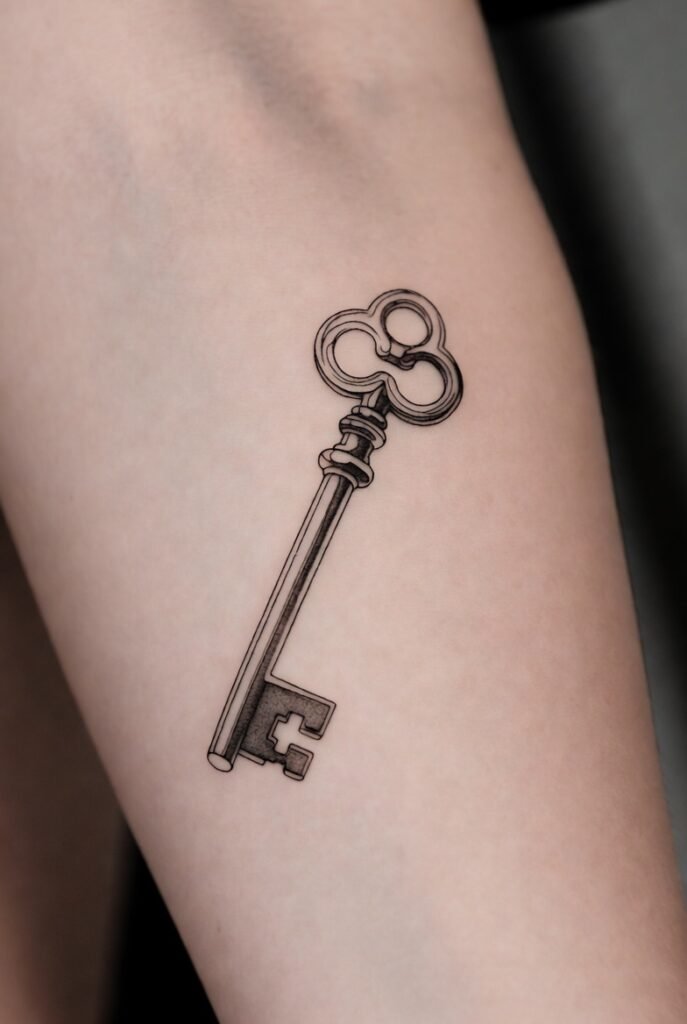
A solitary skeleton key drawn in ultra-thin lines suggests mystery, opportunity, or a door you haven’t found yet. The fine line approach lets the artist render the key’s bit (the jagged teeth) and bow (the handle loop) with surgical precision, often leaving the handle open as a simple circle or trefoil. There is no lock, no chain, no context—just the key floating on skin. This ambiguity invites personal meaning: freedom, hidden potential, or a secret you keep.
Place this on the inner ankle, along the side of a finger, or tucked near the clavicle. The lack of shading keeps the tattoo delicate enough for a first-timer but interesting enough for collectors. Many people add a tiny star or dot near the key’s tip to imply a keyhole without drawing one. Because the lines are so minimal, the tattoo heals in days and won’t spread into an unrecognizable blob over years. It’s a quiet talisman.
11. Single Strand of Spider Silk
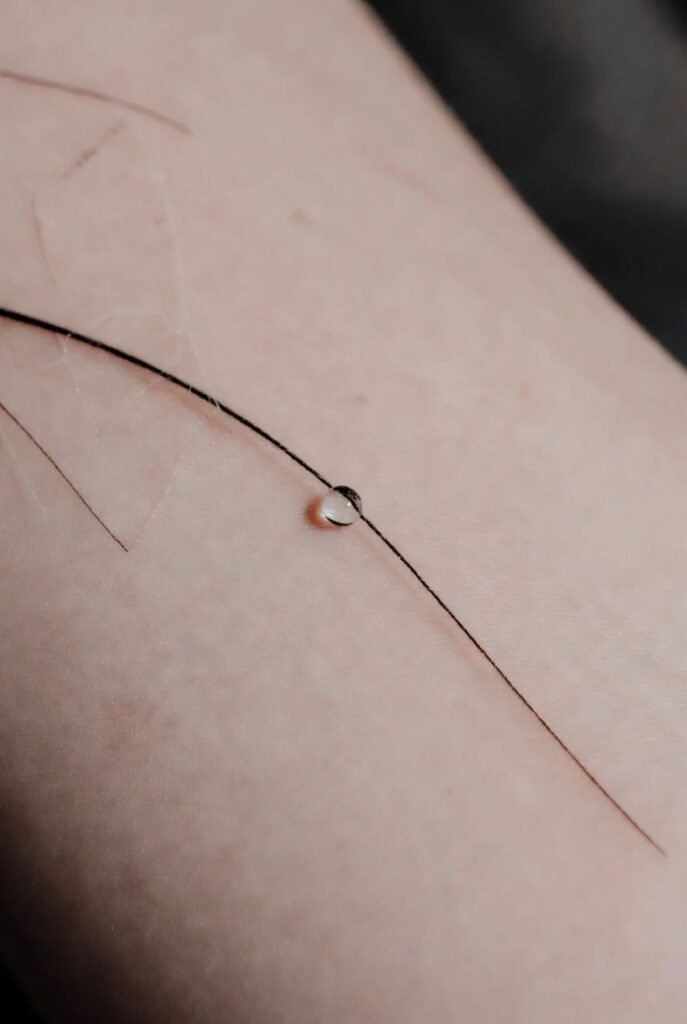
Instead of a spider, tattoo just a thin, wavering strand of silk caught between two points on your body—for example, from the side of your wrist to the base of your thumb, or from one rib to another. The line should tremble slightly, with tiny anchor dots at each end where the silk attaches. This idea celebrates patience, fragility, and the beauty of everyday architecture that we usually brush away. It’s almost invisible from a distance, rewarding close looks.
The challenge is convincing the artist to keep it truly sparse—no spider, no dewdrops, no web structure. Just one floating thread. Use a single pass of the finest needle, and let the skin’s own texture interrupt the line slightly for realism. Over months, the line may fade into a soft grey that mimics real silk. People often pair this with another fine line piece nearby, but it stands strongest alone: a tiny ode to the unnoticed.
12. Broken Outline of a Mountain Range
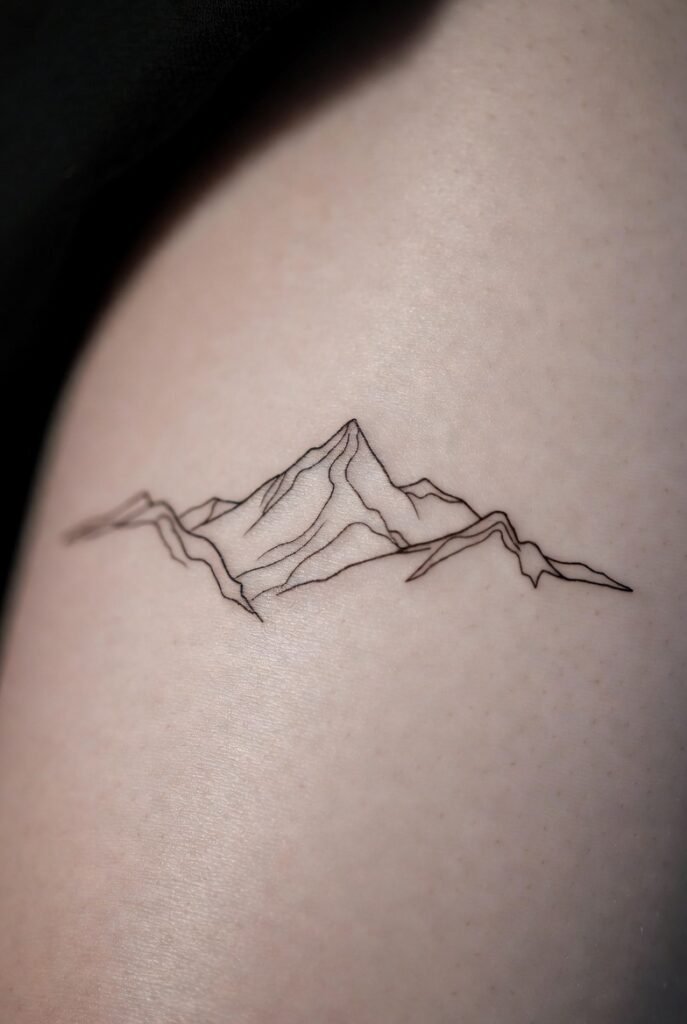
A mountain silhouette drawn with dashed or broken lines feels more like a sketch than a final drawing. Each peak is suggested by a line that starts solid, then breaks into gaps, then returns—as if the mountain is fading in and out of fog or memory. The fine line technique allows these gaps to be clean and intentional, not accidental blowouts. This works beautifully for hikers, climbers, or anyone who has summited a personal challenge.
You can fit a whole range across the back of the neck or along the outside of a forearm. The broken sections create natural negative space that prevents the tattoo from feeling heavy or domineering. Some people request that the gaps line up with freckles or scars, integrating body map into design. Unlike solid black mountain tattoos that darken with age, this version stays airy and shifts slightly as your skin moves and stretches.
13. Tiny Eye with No Pupil
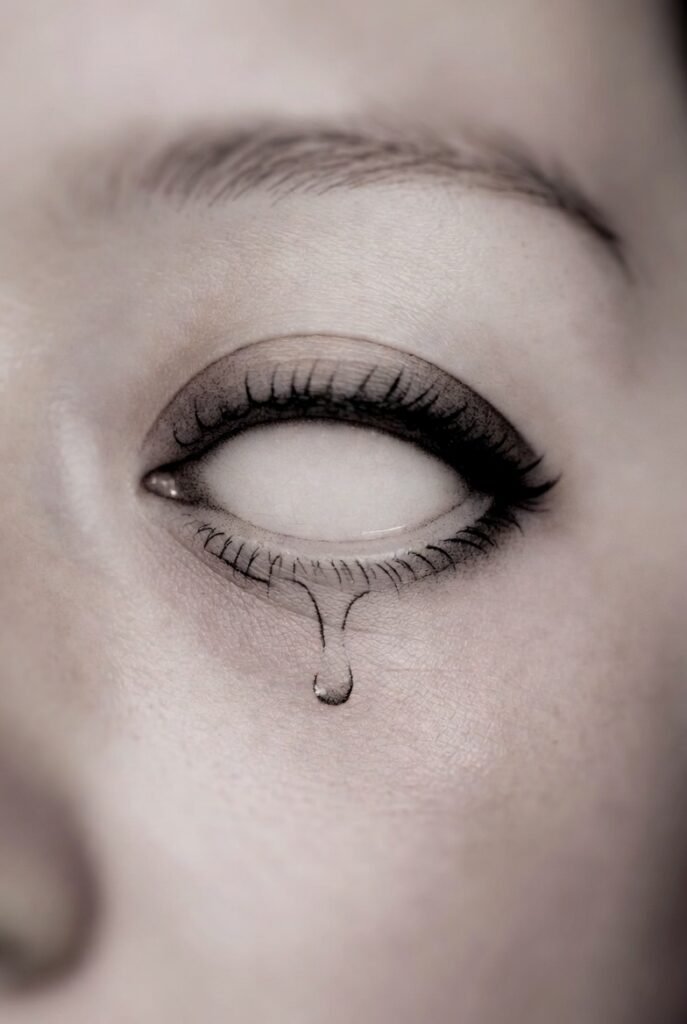
A human eye rendered in fine line but missing the pupil creates an uncanny, dreamlike symbol of perception without judgment. The eyelid crease, lash line, and even a hint of iris texture are drawn with micro-thin strokes, but the center remains blank—just skin tone. This design appeals to artists, philosophers, or anyone interested in the act of seeing rather than being seen. The empty pupil feels like a paused thought.
Because the eye is small (half an inch to an inch), the lack of a dark pupil keeps the tattoo from looking unfinished. Instead, it reads as intentional minimalism. Place it on the back of the hand, behind the ear, or over the heart. Some clients add a single tear line trailing downward, also drawn in fine line, but the purest version has no tears, no eyelashes beyond a few strokes. Over time, the blank center becomes a mirror for whatever you need it to be that day.
14. Torn Paper Edge
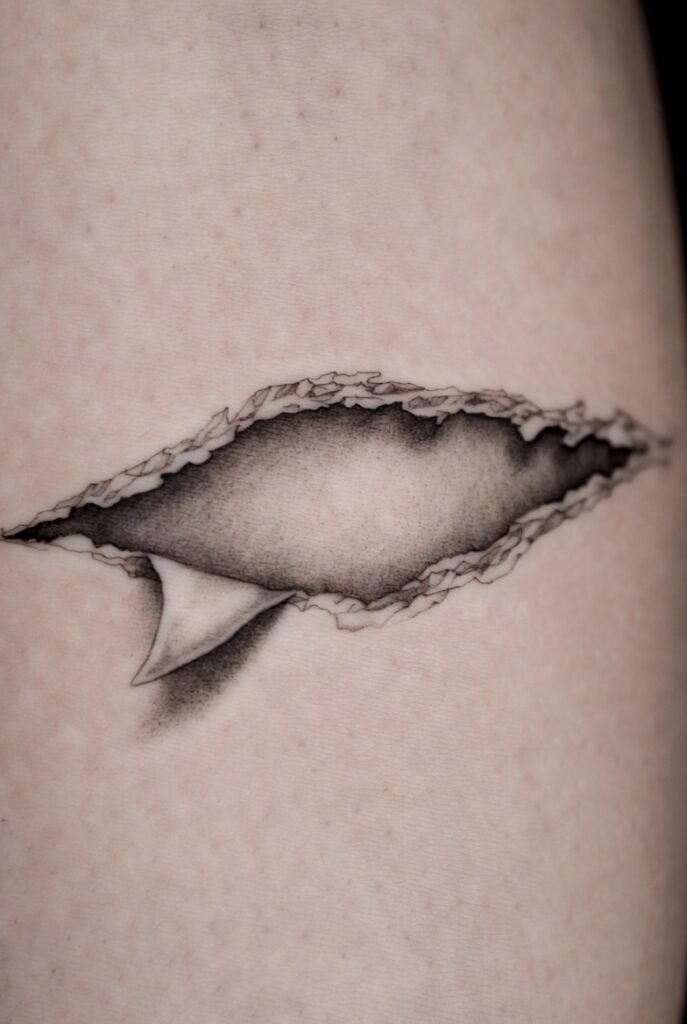
Imagine a jagged torn paper edge running horizontally across your skin, as if a photograph has been ripped away. The fine line artist draws only the torn fibers and a shadow line beneath, suggesting thickness without rendering a full sheet. This idea works as a border for other tattoos or as a standalone fragment on the shoulder or thigh. It represents incompleteness, hidden stories, or the beauty of a break.
The torn edge should have tiny frayed threads (micro-lines perpendicular to the main tear) to sell the illusion. No ink fills the “paper” itself—your skin becomes the page. This interacts brilliantly with birthmarks or scars, which become part of the “image” behind the tear. Keep the design under two inches wide for that delicate feel. Because there is no solid fill, healing is fast, and the edge remains crisp for years.
15. Single Drop of Liquid
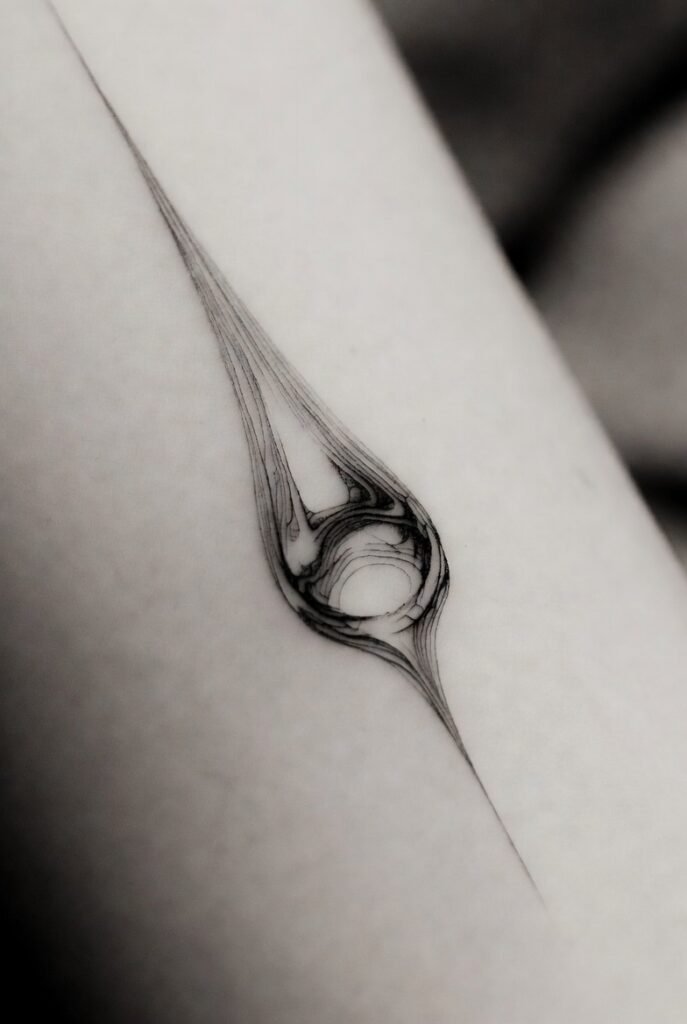
A solitary droplet—water, ink, or tear—drawn with a fine outer line and a tiny highlight dot inside is the ultimate exercise in minimalism. The droplet should be no larger than a lentil, placed somewhere unexpected like the curve of the ear, the webbing between fingers, or the inner elbow. Unlike a teardrop tattoo with heavy cultural meanings, this droplet has no assigned emotion. It simply exists, catching light like a magnifying glass on skin.
The magic lies in the highlight: a single un-inked dot that suggests a reflection. The outer line varies in thickness naturally, thicker at the bottom where gravity pools the liquid. Use a grey wash for the line instead of pure black to mimic water’s transparency. Over time, this tiny tattoo becomes a private focal point—people will notice it but rarely ask, assuming it’s a real drop. That ambiguity is the entire point.
16. Floating Dust Motes
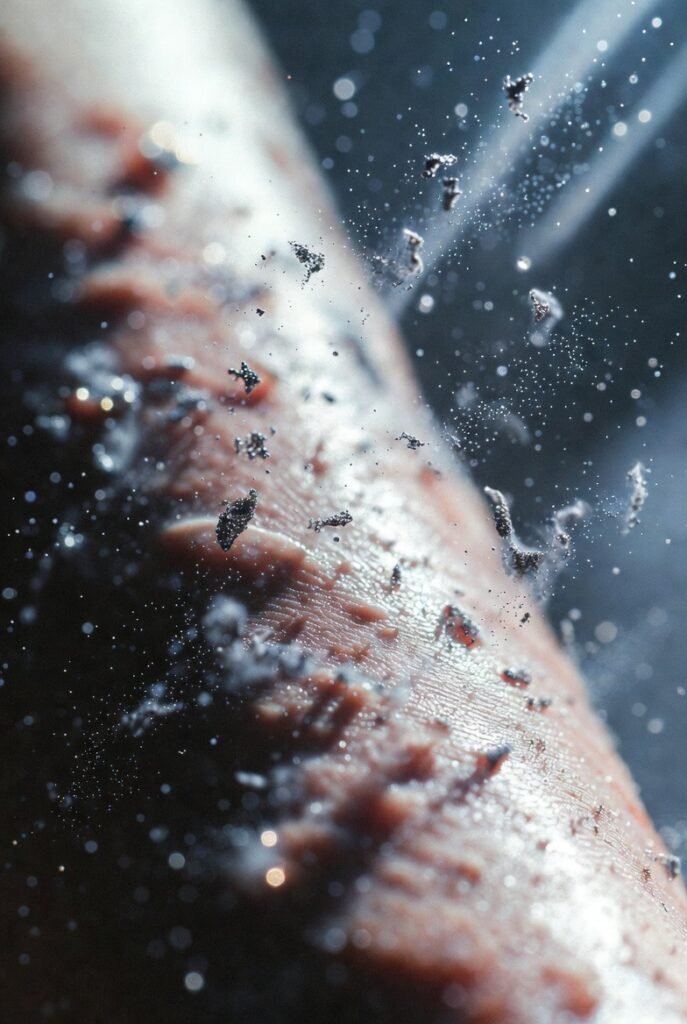
End your fine line collection with three to five dust motes, each a tiny irregular circle with a softer, blurred edge. Unlike stars, these are not pointy or symmetrical—they look like specks floating in a sunbeam. The artist achieves the soft edge by using a diluted grey ink and a light hand, barely touching the skin. Scatter them randomly across a shoulder, a thigh, or the ribs, with no connecting lines or patterns.
These motes represent presence without weight: memories, possibilities, or simply the beauty of air. Because they are so faint, you can add more over the years as a living document of time passing. No two motes should be the same size or shape; some might be tiny dots, others soft ovals. The lack of bold outlines means they will fade gracefully, becoming almost invisible after a decade—which feels poetic rather than disappointing.
Conclusion
Fine line tattoos prove that more ink is not more meaning. Each of these 16 fine line tattoo ideas offers a way to wear your story softly—no shouting, no heavy shading, just deliberate, delicate marks that age with you. Whether you choose a broken mountain range, a floating key, or a single strand of silk, the real art lies in what you leave out. The skin breathes through the negative space, and the design becomes a collaboration between needle and time. Take these concepts to an artist who specializes in single-needle work, and let them help you scale, place, and personalize until the tattoo feels like a quiet extension of your own thoughts.