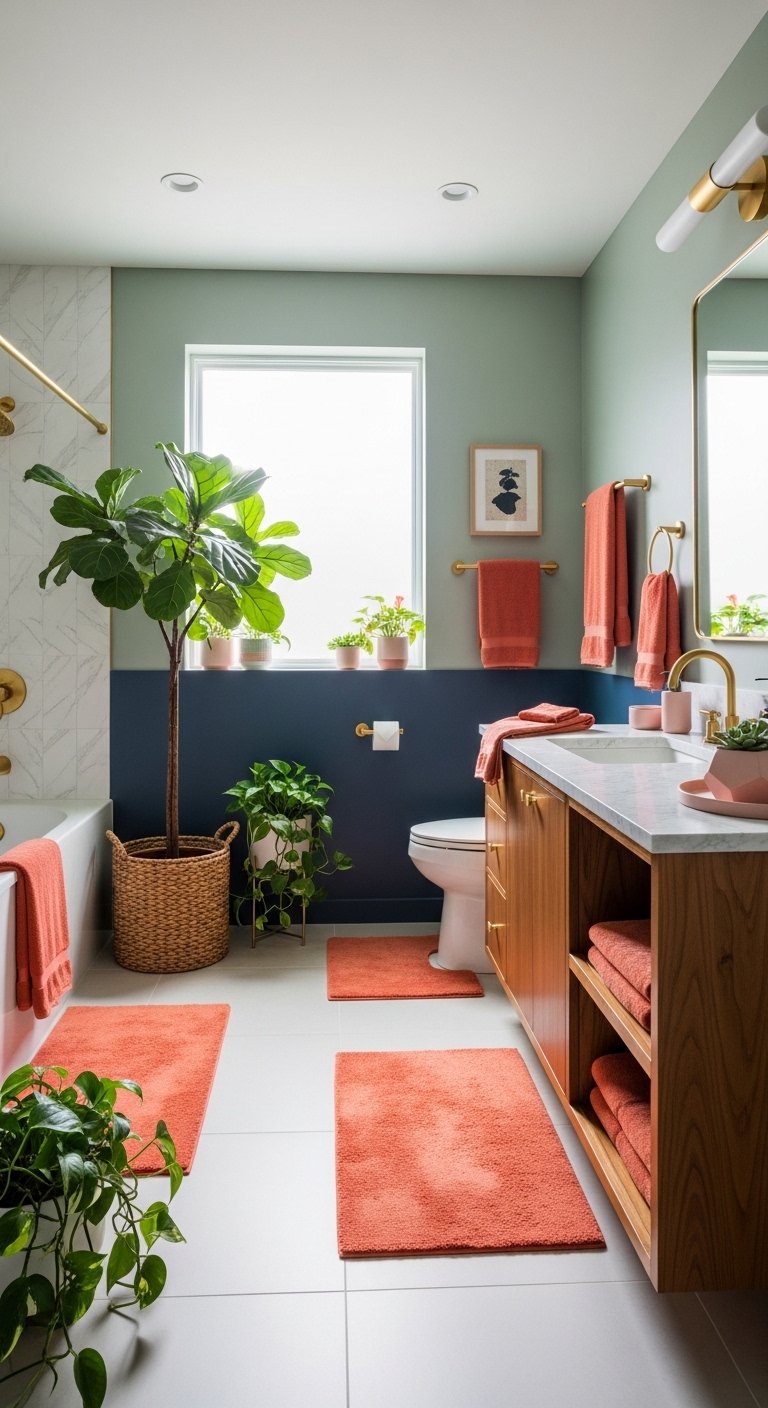
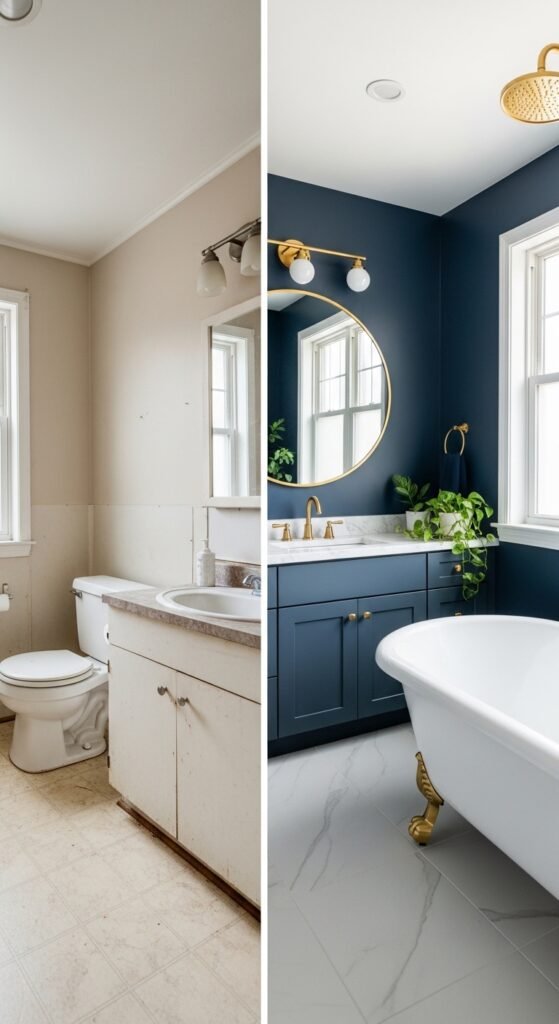
Let me start with a quick story. Last year, my friend Sarah texted me a photo of her bathroom. The walls were covered in what she called “builder-grade beige” – that sad, nondescript color that screams “I have zero personality.” She was embarrassed to have guests use that bathroom. Fast forward three months, after she chose one of our 20 trending bathroom colors, she sent me another photo. This time, she was practically dancing in front of her deep navy blue vanity with warm white walls. “I actually want to brush my teeth now,” she joked.
That’s the power of the right bathroom color. It can transform a purely functional space into your favorite room in the house.
I’ve spent countless hours researching, testing, and analyzing what makes a bathroom color truly work. After consulting with interior designers, paint manufacturers, and homeowners who’ve recently renovated, I’ve compiled this comprehensive guide to the 20 trending bathroom colors you need to know about right now.
Whether you’re planning a full renovation or just a weekend refresh, this guide will walk you through every shade, explain why it works, and help you make a confident purchase decision. Let’s dive in.
Why Bathroom Colors Matter More Than You Think
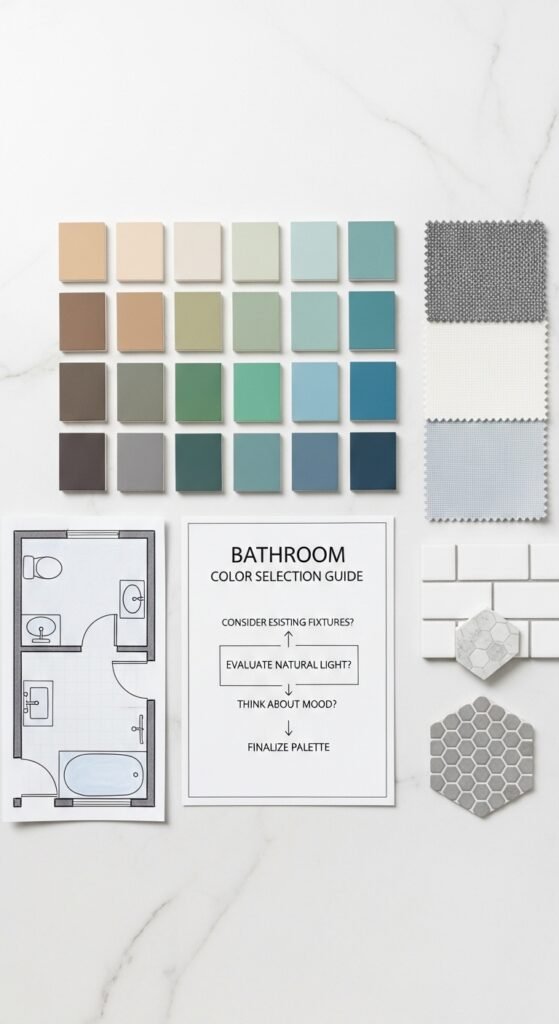
Before we jump into the specific shades, let me explain why choosing the right bathroom color is absolutely crucial. The bathroom is unique among your home’s spaces. It deals with humidity, artificial lighting (often harsh overhead lights), natural light (sometimes none at all), and it’s typically the smallest room you spend time in.
A poorly chosen color can make your bathroom feel cramped, cold, or dated. But a trending bathroom color that works with your space? It can make a tiny powder room feel expansive, transform a windowless space into a serene retreat, and actually increase your home’s resale value.
According to a 2025 real estate study, bathrooms with updated, on-trend color schemes sold 12% faster than those with outdated palettes. That’s not just about aesthetics – that’s about smart financial sense.
How to Choose the Right Trending Bathroom Color for Your Space
Here’s my step-by-step guide to selecting your perfect shade:
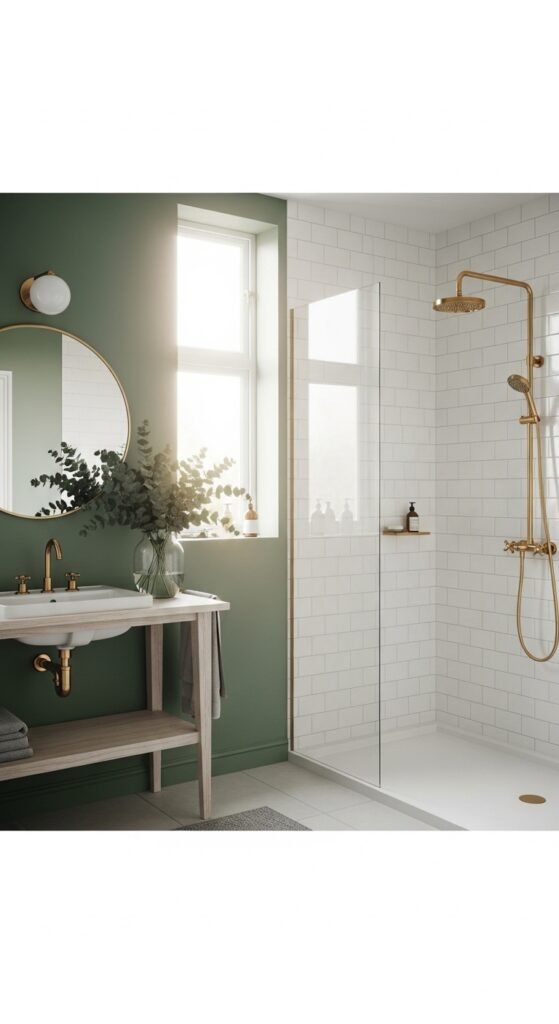
Step 1: Assess your lighting. Natural light changes throughout the day. Hold paint swatches against your bathroom walls at morning, noon, and evening. Artificial light also matters – if you have warm LED bulbs, cool colors might look muddy.
Step 2: Consider your bathroom’s size. Small bathrooms can handle dark colors (contrary to popular belief), but you need to know the trade-offs. Light colors reflect light and create openness. Dark colors add drama and hide imperfections.
Step 3: Look at your fixed elements. Your tile, countertop, and fixtures are already there (unless you’re doing a full gut renovation). Your chosen bathroom color trends must complement these permanent features.
Step 4: Test before you commit. Buy sample sizes. Paint large swatches (at least 12×12 inches). Live with them for 48 hours. This small investment of time and money prevents expensive mistakes.
Step 5: Trust your gut. After all the analysis, the color that makes you smile when you walk in? That’s your winner.
Now, let me introduce you to the 20 trending bathroom colors that designers and homeowners can’t stop talking about.
1. Sage Green
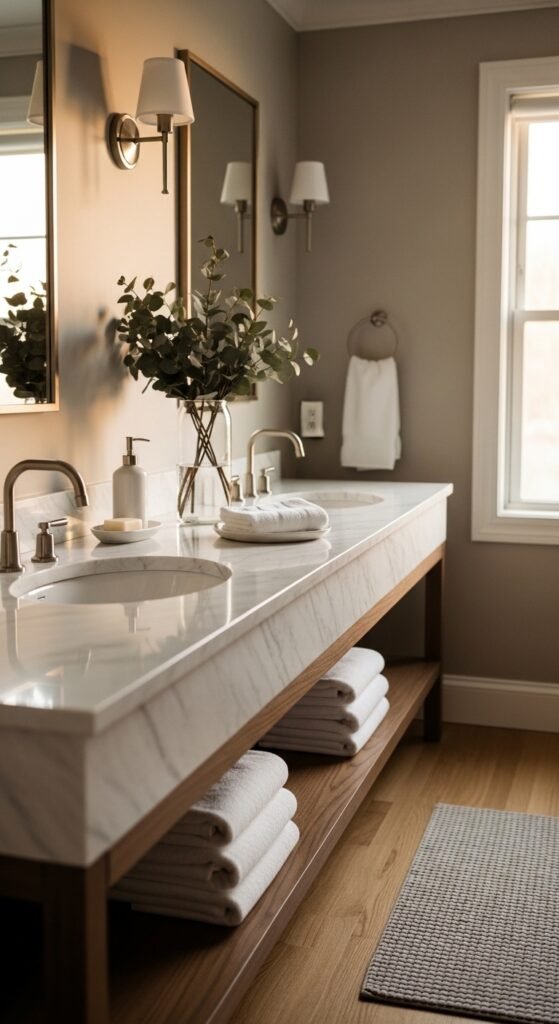
If I had to pick just one winner from our 20 trending bathroom colors, Sage Green would take the crown. This soft, muted green has dominated bathroom design for the past two years, and it shows no signs of slowing down.
Why does Sage Green work so beautifully in bathrooms? First, it connects to nature – and there’s something inherently calming about natural elements in a space dedicated to washing away the day’s stress. Second, it pairs effortlessly with almost everything: white marble, oak wood, black fixtures, brass hardware – you name it.
Real-world example: My neighbor Mark painted his windowless guest bathroom in Sage Green. He was terrified it would look like a cave. Instead, the color absorbed just enough light to feel cozy without feeling cramped. He paired it with bright white trim and a large mirror, and now guests compliment that bathroom constantly.
Best paired with: White subway tile, natural wood accents, matte black fixtures
Confidence-buying tip: Benjamin Moore’s “October Mist” and Sherwin-Williams’ “Evergreen Fog” are top-rated Sage Green options with excellent coverage. Order samples of both.
2. Warm Greige
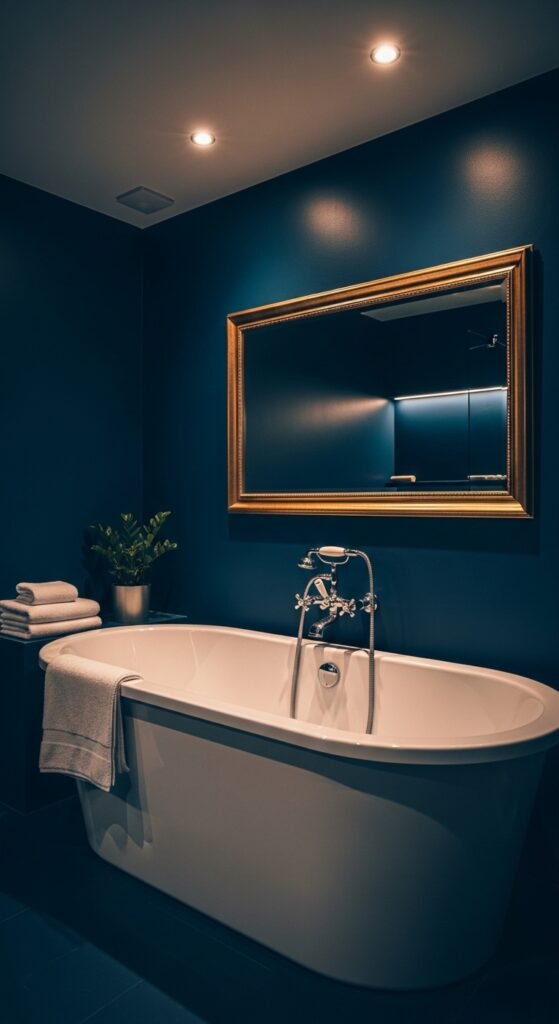
Warm Greige – that perfect marriage of gray and beige – has quietly become a superstar among bathroom color trends. Unlike cool grays that can feel sterile or beiges that look dated, Warm Greige hits that sweet spot of sophisticated neutrality.
Here’s what makes Warm Greige so versatile: It works in every type of bathroom. Large master bath? Yes. Tiny powder room? Absolutely. Bathroom with no windows? Warm Greige will feel welcoming rather than depressing.
Pro tip: Look for Warm Greige with subtle green or violet undertones. Pure Warm Greige can sometimes look flat, but those tiny undertones add depth and interest without screaming for attention.
Best paired with: Crisp white trim, polished nickel fixtures, warm wood vanities
Confidence-buying tip: Sherwin-Williams “Accessible Beige” and Benjamin Moore “Edgecomb Gray” are industry favorites. Purchase the 8-ounce samples and paint them on different walls – the same color can look surprisingly different depending on light exposure.
Also Read: Lucky Charm Rice Crispy Treats: The Magical Dessert That Brings Smiles (and Good Fortune)
3. Deep Navy Blue
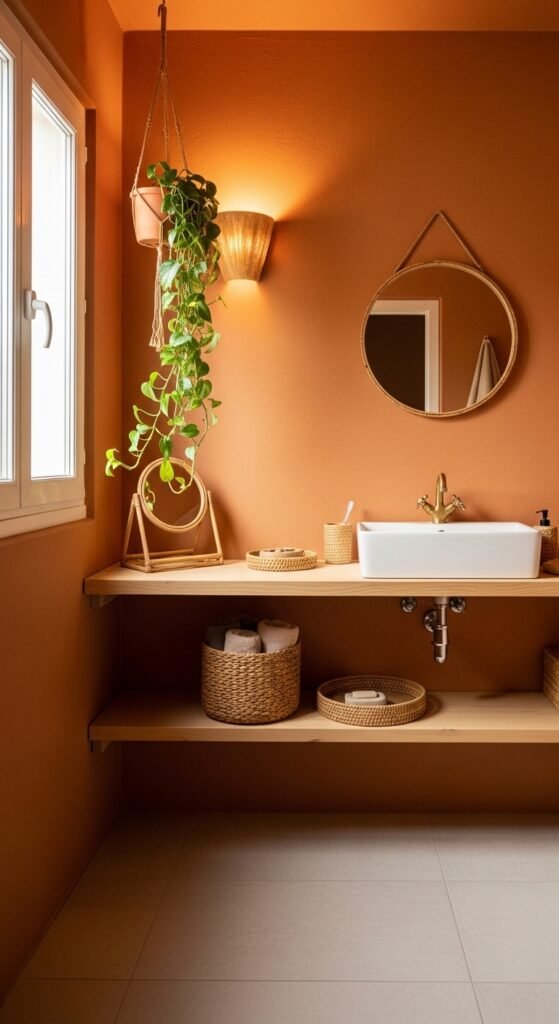
Ready for drama? Deep Navy Blue is your answer. This bold choice from our 20 trending bathroom colors creates instant sophistication and makes a powerful statement.
I’ll never forget visiting a friend’s newly renovated bathroom. The walls were painted in Deep Navy Blue from floor to ceiling. I expected to feel overwhelmed. Instead, I felt wrapped in warmth. The color was so rich and enveloping that it actually made the average-sized bathroom feel like a luxurious cocoon.
Deep Navy Blue works exceptionally well when balanced with plenty of white or light elements. Think white marble countertops, a white freestanding tub, or bright white wainscoting on the lower half of the walls.
Best paired with: Brass or gold fixtures, white marble, light oak flooring
Confidence-buying tip: Farrow & Ball “Hague Blue” is the gold standard, but it’s expensive. Benjamin Moore “Old Navy” offers similar depth at a better price point. For either option, use a high-quality primer first – Deep Navy Blue can be tricky to apply evenly without proper preparation.
4. Terracotta
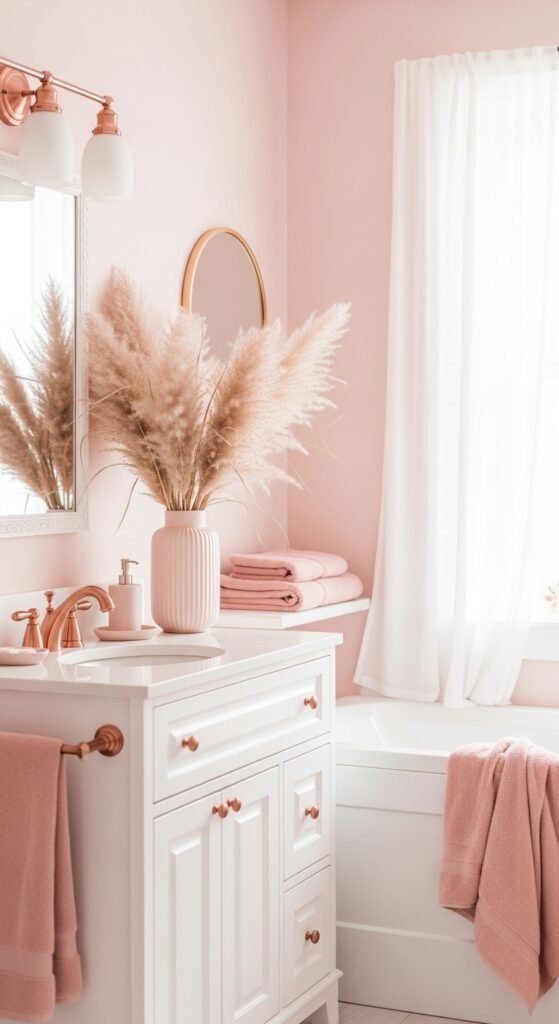
Terracotta has emerged from the 1970s and made a stunning comeback. This earthy, reddish-brown hue brings warmth, personality, and a touch of Mediterranean flair to any bathroom.
What I love about Terracotta is its chameleon-like quality. In morning light, it glows like sunrise. In evening light, it deepens into a cozy, almost spicy shade. It’s one of those bathroom color trends that photographs beautifully but is even better in person.
Cautions: Terracotta is not for everyone. It’s a committed choice. If you tend to change your mind about colors frequently, this might not be your best option. However, if you’re drawn to bold, earthy aesthetics, Terracotta will make you happy every single day.
Best paired with: Cream tiles, unlacquered brass, blue-green accents
Confidence-buying tip: Portola Paints “Adobe” and Sherwin-Williams “Cavern Clay” are excellent choices. Order a sample and live with it for a full week before committing – Terracotta changes dramatically under different lighting conditions.
5. Soft Pink (Blush)
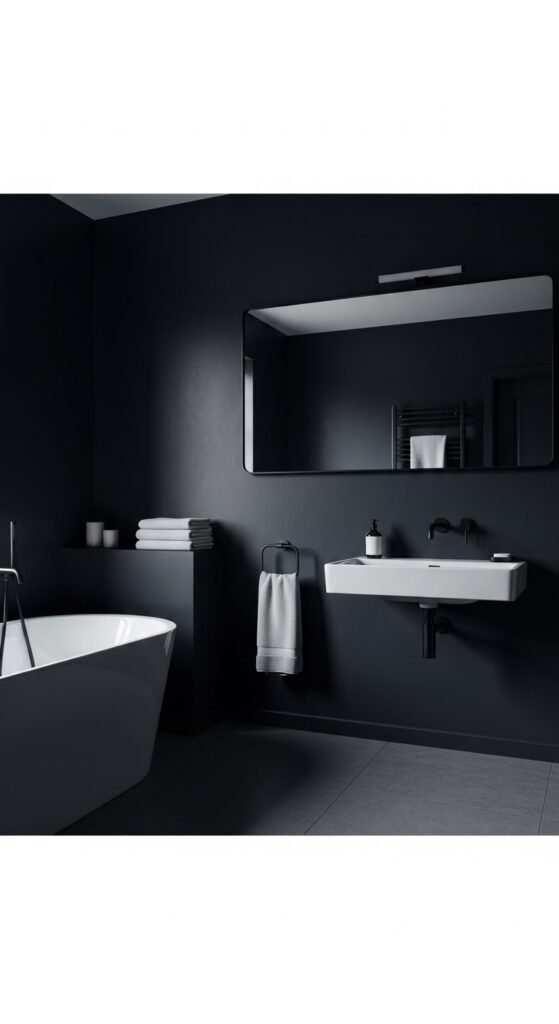
Don’t roll your eyes just yet. Soft Pink – specifically, muted blush tones – have become legitimate contenders among 20 trending bathroom colors. We’re not talking about bubblegum pink or Pepto-Bismol pink. We’re talking about dusty, sophisticated, barely-there pink that reads almost like a neutral.
I toured an open house last spring where the primary bathroom was painted in Soft Pink. The real estate agent apologized for it, assuming buyers would hate it. Instead, every person who walked through commented on how peaceful and beautiful the space felt. That house sold above asking price within four days.
Soft Pink works because it flatters skin tones. When you look in the mirror, the reflected light from blush walls makes everyone look healthier and more radiant. That’s not just opinion – that’s color psychology backed by research.
Best paired with: Matte black fixtures, white marble, warm wood tones
Confidence-buying tip: Farrow & Ball “Sulking Room Pink” (don’t let the name fool you) and Benjamin Moore “First Light” are top-tier options. Buy sample sizes and paint them in the area around your mirror – this is where you’ll notice the skin-flattering effect most.
6. Charcoal Gray
Charcoal Gray is the sophisticated older sibling of standard grays. It’s dark without being black, dramatic without being overwhelming, and modern without feeling cold.
Among bathroom color trends, Charcoal Gray stands out for its ability to hide imperfections. Got less-than-perfect drywall? Some water stains you couldn’t quite eliminate? Charcoal Gray will conceal these flaws while looking intentional and elegant.
Designer secret: Use Charcoal Gray on the bottom half of your walls with a crisp white on top. This two-tone approach adds visual interest and prevents the space from feeling too dark. Alternatively, use Charcoal Gray on just one accent wall behind the toilet or vanity.
Best paired with: White fixtures, chrome hardware, glass shower enclosures
Confidence-buying tip: Benjamin Moore “Kendall Charcoal” and Sherwin-Williams “Peppercorn” are perennial favorites. Because Charcoal Gray is a deep color, plan on applying two to three coats for even coverage. Don’t skimp on paint quality here – cheaper paints won’t provide the depth you’re looking for.
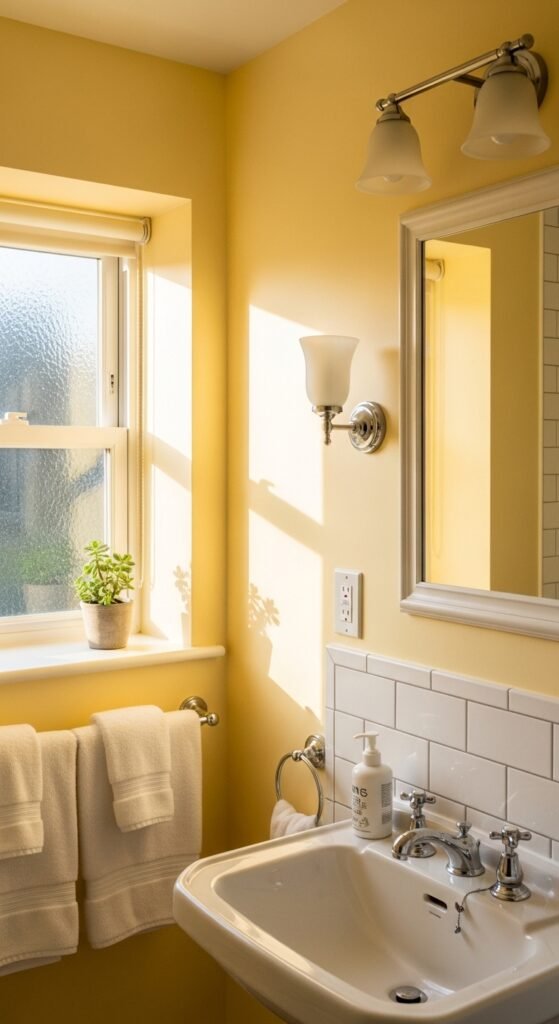
7. Buttery Yellow
Buttery Yellow brings sunshine into your bathroom – literally and figuratively. This cheerful, optimistic shade from our 20 trending bathroom colors works especially well in bathrooms that receive little natural light.
I helped my sister choose colors for her basement bathroom, which had zero windows. She wanted something that wouldn’t feel like a dungeon. We landed on Buttery Yellow, and the transformation was remarkable. The color seemed to generate its own warmth and light. Her kids started fighting over who got to use “the happy bathroom.”
Important distinction: Buttery Yellow is not bright yellow or neon yellow. It’s yellow softened with white and sometimes a touch of brown. Think lemon curd or buttercream frosting, not highlighter marker.
Best paired with: White subway tile, gray accents, unlacquered brass
Confidence-buying tip: Benjamin Moore “Hawthorne Yellow” and Sherwin-Williams “Funny Yellow” (another odd name, great color) are excellent choices. Avoid bargain paints for Buttery Yellow – cheaper paints often lack the pigment density needed for this shade to look its best.
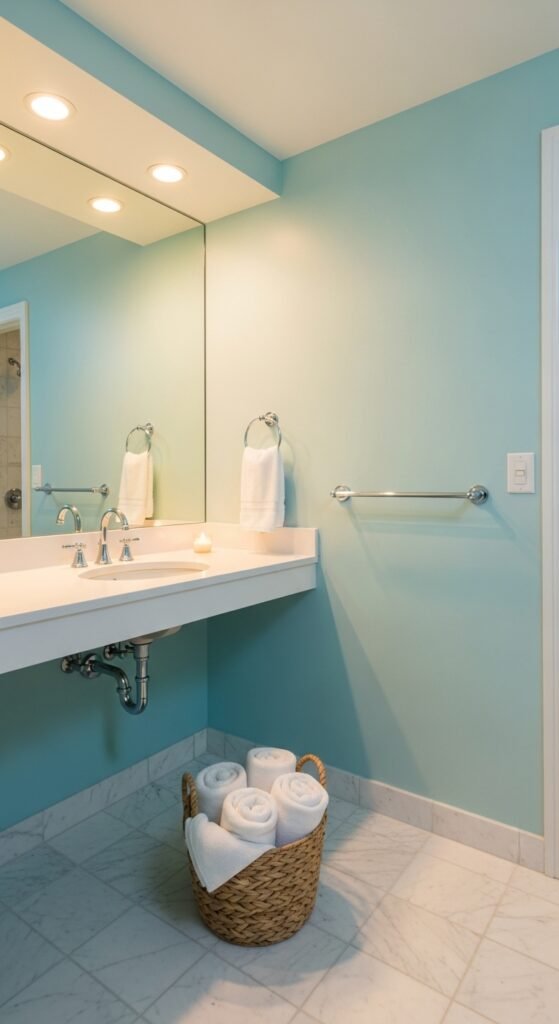
8. Spa Blue
Spa Blue encompasses a range of watery shades – from pale aqua to soft turquoise to misty blue-green. This category of bathroom color trends directly evokes the feeling of high-end spas and luxury resorts.
Here’s why Spa Blue works so well: Color psychology research consistently shows that blue tones lower heart rate and reduce stress. When you combine that with the inherent relaxation functions of a bathroom (bathing, grooming, preparing for sleep), Spa Blue becomes a natural choice.
Real-world application: My dental office recently renovated and painted their patient bathrooms in Spa Blue. The hygienist told me patients actually seem calmer before procedures now. That’s the power of intentional color selection.
Best paired with: White fixtures, natural stone, teak wood accents
Confidence-buying tip: Sherwin-Williams “Sea Salt” (technically a green-blue) and Benjamin Moore “Palladian Blue” are cult favorites. Order large samples – these complex colors look different on every wall and in every light.
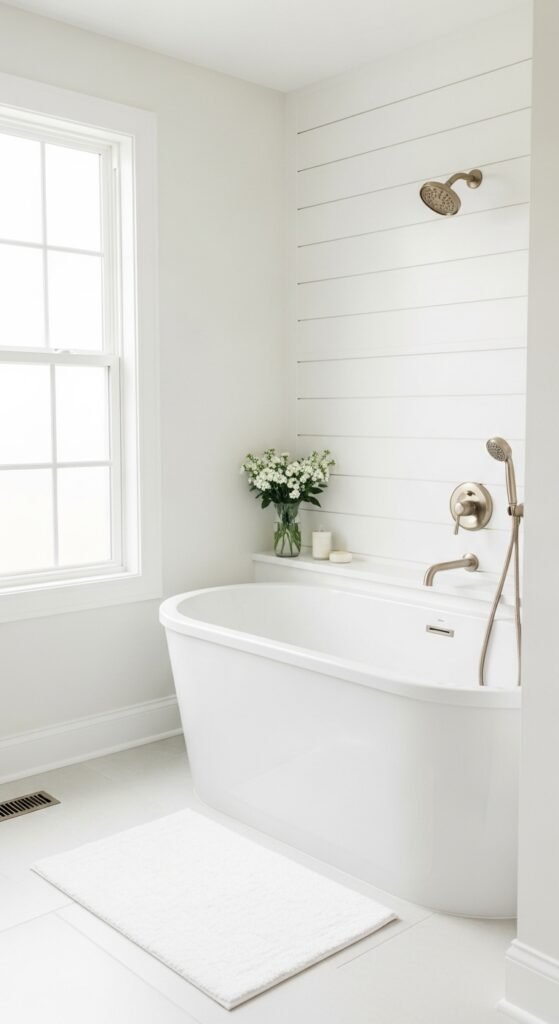
9. Warm White
You might think white is too basic for a list of 20 trending bathroom colors. But Warm White – specifically, white with yellow or beige undertones rather than blue or gray – has become a deliberate design choice rather than a default option.
Warm White creates the perfect backdrop. It allows your tile, fixtures, art, and accessories to shine. It makes small bathrooms feel twice their actual size. And unlike cool whites that can feel clinical, Warm White feels soft, welcoming, and timeless.
The mistake people make: They grab any white off the shelf. But whites have wildly different undertones. A Warm White next to a cool white looks yellow. A cool white next to a Warm White looks blue. You need to be intentional about which white you choose.
Best paired with: Everything – that’s the beauty of Warm White
Confidence-buying tip: Benjamin Moore “White Dove” and Sherwin-Williams “Alabaster” are the two most recommended Warm White shades by professional designers. Buy samples of both and compare them directly in your space.
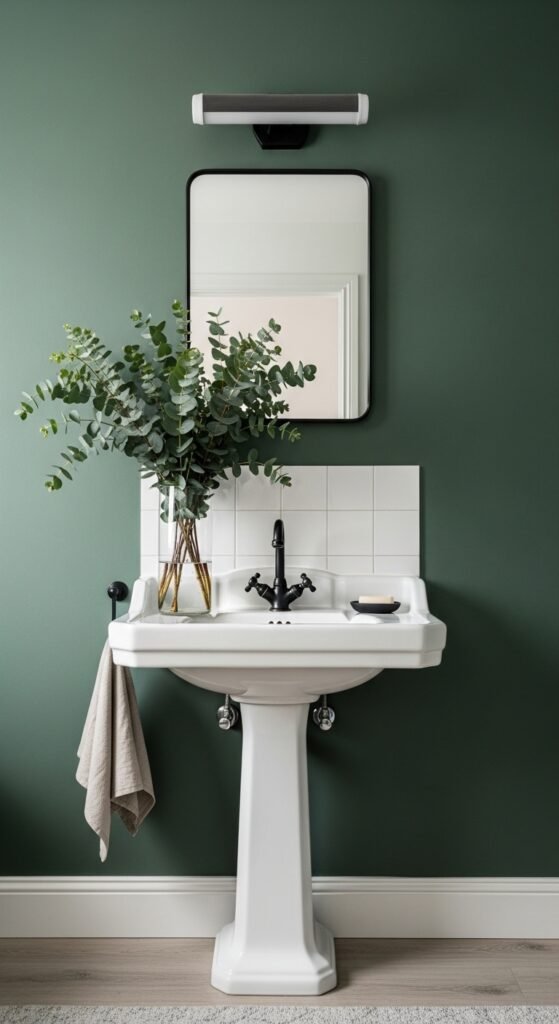
10. Eucalyptus
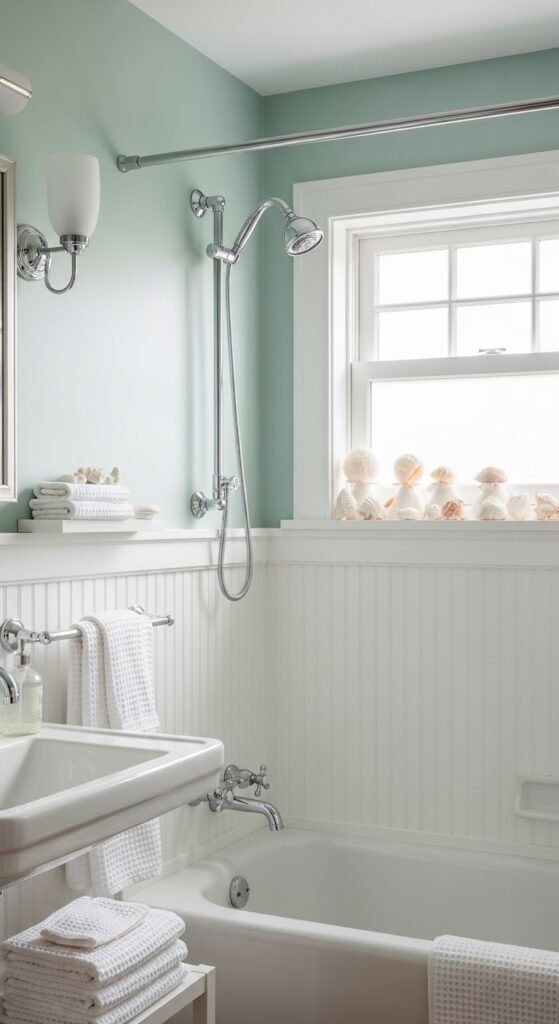
Eucalyptus is Sage Green‘s cooler, more dramatic cousin. This green-blue hybrid brings instant freshness and a subtle coolness to bathrooms of all sizes.
What sets Eucalyptus apart from other greens is its ability to feel simultaneously natural and refined. It doesn’t scream “green” the way brighter shades do. Instead, it whispers sophistication while still providing clear color presence.
Pro tip: Eucalyptus looks phenomenal in bathrooms with plants. The color harmonizes with living greenery while providing contrast against white elements. It’s one of those bathroom color trends that rewards a holistic approach to design.
Best paired with: White oak, polished chrome, cream tiles
Confidence-buying tip: Benjamin Moore “Eucalyptus” (yes, that’s actually the name) and Sherwin-Williams “Juniper” are excellent starting points. Because Eucalyptus is a medium-depth color, test it in your specific lighting before committing.
11. Black (Yes, Really)
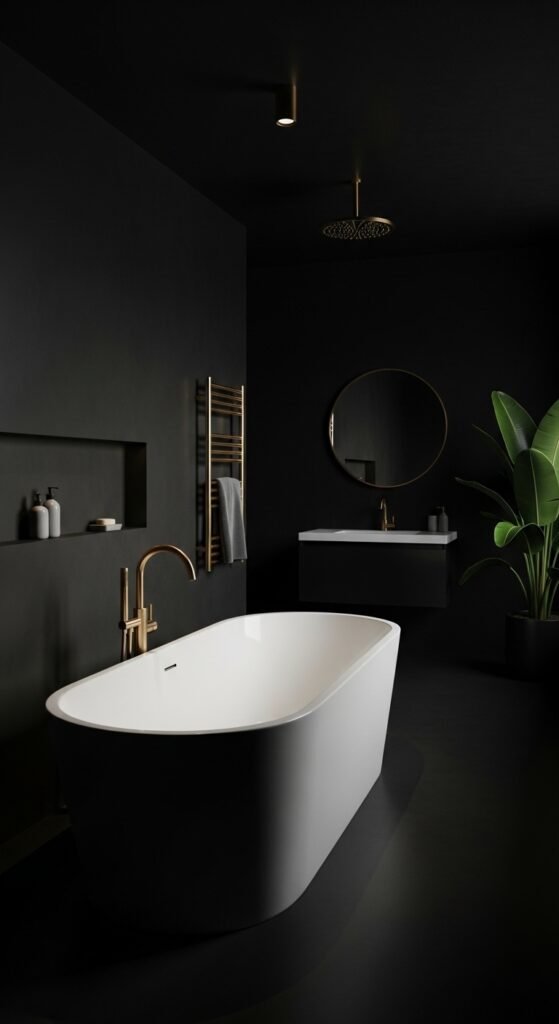
Before you scroll past Black, hear me out. Black bathrooms have exploded in popularity among daring homeowners, and for good reason. When done correctly, a Black bathroom is the epitome of drama, luxury, and modern sophistication.
I visited a Black bathroom during a home tour last year and couldn’t stop thinking about it for weeks. The walls were Black (specifically Farrow & Ball “Off-Black” ), the vanity was Black, even the toilet was Black. But the designer had used multiple sheens – matte on walls, satin on vanity, glossy on accessories – which created depth and prevented the dreaded “black hole” effect.
Crucial advice: Black bathrooms require excellent lighting. You need layered lighting – overhead, task lighting at the mirror, and accent lighting. Without proper illumination, a Black bathroom feels like a cave. With proper lighting, it feels like a five-star hotel.
Best paired with: Brass fixtures, white marble, clear glass
Confidence-buying tip: Farrow & Ball “Off-Black” is the designer favorite, but Benjamin Moore “Onyx” and Sherwin-Williams “Tricorn Black” are excellent alternatives. Purchase high-quality paint specifically formulated for bathrooms – Black shows every imperfection in cheap paint.
12. Dusty Lavender
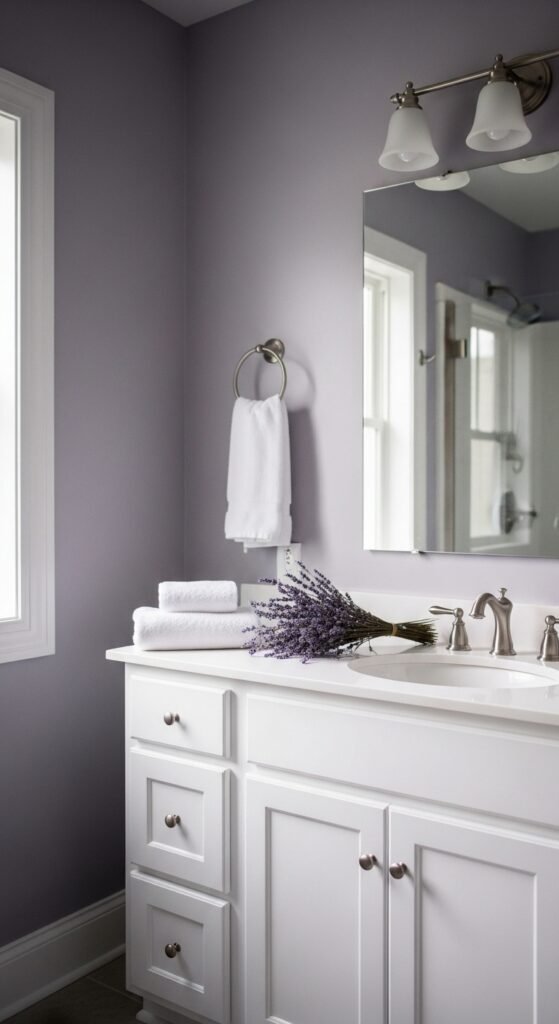
Dusty Lavender represents the more adventurous end of our 20 trending bathroom colors. This soft, muted purple brings unexpected charm and gentle energy to bathroom spaces.
What makes Dusty Lavender work is its subtlety. It’s not vibrant purple. It’s purple that’s been softened with gray until it barely announces itself. From across the room, it might read as a warm gray. Up close, you see the beautiful purple undertones.
Who this works for: People who want color but find bright shades intimidating. Dusty Lavender offers a gentle entry point into colorful bathroom design without overwhelming the senses.
Best paired with: White fixtures, silver hardware, gray accents
Confidence-buying tip: Benjamin Moore “Lavender Mist” and Sherwin-Williams “Mauve Finery” are excellent options. Because Dusty Lavender can pull pink in some lighting, definitely test samples before committing.
13. Clay
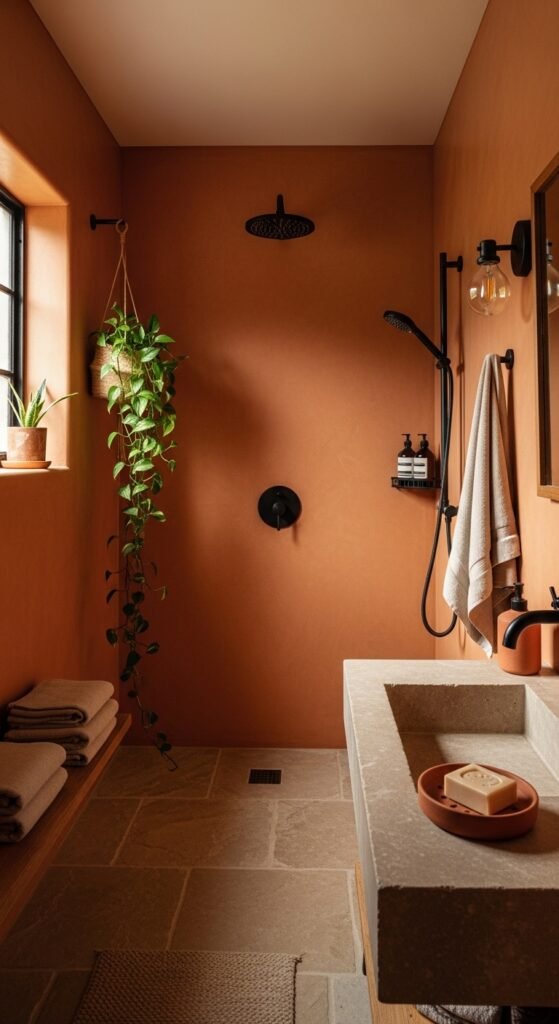
Clay sits somewhere between terracotta and beige – less red than terracotta, more color than beige. This earthy neutral has gained tremendous traction among bathroom color trends for its versatility and warmth.
Think of Clay as the color of sun-dried earth. It brings organic warmth without screaming for attention. It works in traditional bathrooms, modern bathrooms, farmhouse bathrooms, and everything in between.
Real-world example: My cousin renovated her 1920s bungalow’s bathroom and struggled to find a color that respected the home’s history while feeling fresh. She landed on Clay and couldn’t be happier. The color complements the original clawfoot tub while making the space feel completely updated.
Best paired with: White tile, black fixtures, natural wood
Confidence-buying tip: Sherwin-Williams “Canyon Clay” and Benjamin Moore “Potters Clay” are top choices. Order samples and observe how Clay changes throughout the day – it’s one of those chameleon colors that reveals different personalities in different light.
14. Seafoam Green
Seafoam Green brings coastal vibes without the clichés of beach-themed decor. This pale, minty green feels fresh, clean, and effortlessly beautiful in bathroom settings.
Among 20 trending bathroom colors, Seafoam Green stands out for its ability to make small bathrooms feel larger. The pale, reflective nature of this color bounces light around the room while providing more personality than white or beige.
Designer insight: Seafoam Green works beautifully with both cool and warm elements. Pair it with chrome and marble for a crisp, clean look. Pair it with brass and wood for warmth and depth. This versatility makes it an excellent choice if you’re unsure about your overall direction.
Best paired with: White everything, natural jute, glass accents
Confidence-buying tip: Benjamin Moore “Seafoam” and Sherwin-Williams “Sea Salt” (yes, again – it’s that versatile) are excellent. Because Seafoam Green is pale, existing wall imperfections might show through – properly prepare your walls before painting.
15. Espresso Brown
Espresso Brown might surprise you on a list of trending bathroom colors, but dark brown has quietly gained followers among design enthusiasts. This rich, warm dark brown creates coziness that few other colors can match.
Think about it: Espresso Brown is the color of wood, coffee, and dark chocolate. These are universally appealing, comforting associations. When used on bathroom walls, Espresso Brown creates an intimate, grounding atmosphere perfect for unwinding after long days.
Important note: Like Black, Espresso Brown requires thoughtful lighting. Without proper illumination, it can feel heavy. But with good lighting – especially warm, dimmable options – it becomes a warm embrace.
Best paired with: Cream accents, brass fixtures, white marble
Confidence-buying tip: Benjamin Moore “Espresso Bean” and Sherwin-Williams “Caviar” are excellent. Plan on extra coats – dark browns can be challenging to apply evenly without proper technique.
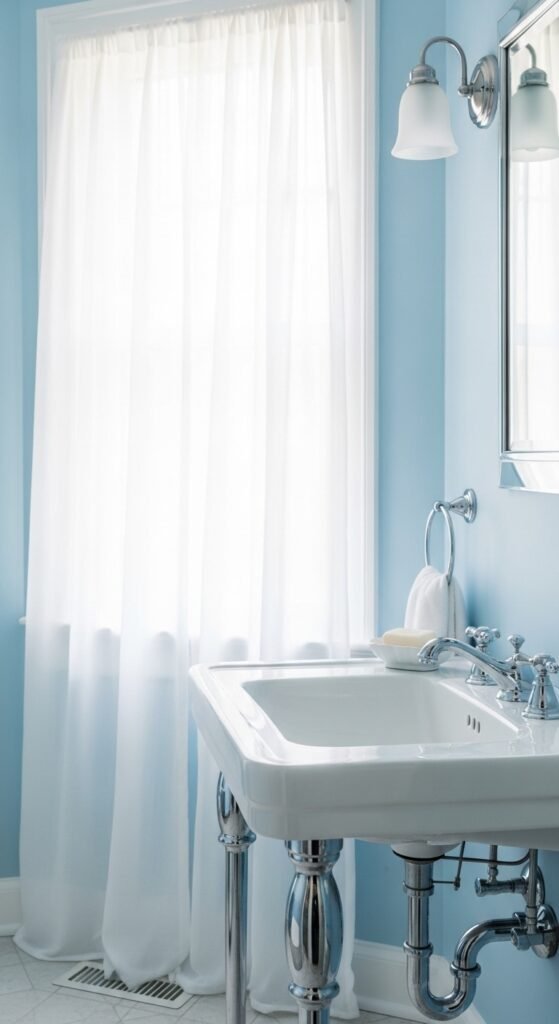
16. Powder Blue
Powder Blue represents the softer side of blue bathroom design. This pale, delicate blue feels like a breath of fresh air – clean, calm, and effortlessly pretty.
What I appreciate about Powder Blue among 20 trending bathroom colors is its timeless quality. Your grandmother might have had a Powder Blue bathroom. Your grandchildren might have one too. Unlike some trend-driven colors that will look dated in five years, Powder Blue has enduring appeal.
Who this works for: Anyone wanting a safe, beautiful color that won’t offend resale value but provides more personality than beige or white.
Best paired with: White trim, chrome fixtures, navy accents
Confidence-buying tip: Benjamin Moore “Heavenly Blue” and Sherwin-Williams “Breathtaking” are excellent. Because Powder Blue is pale, it’s forgiving of imperfect walls – one of the easier colors to apply successfully.
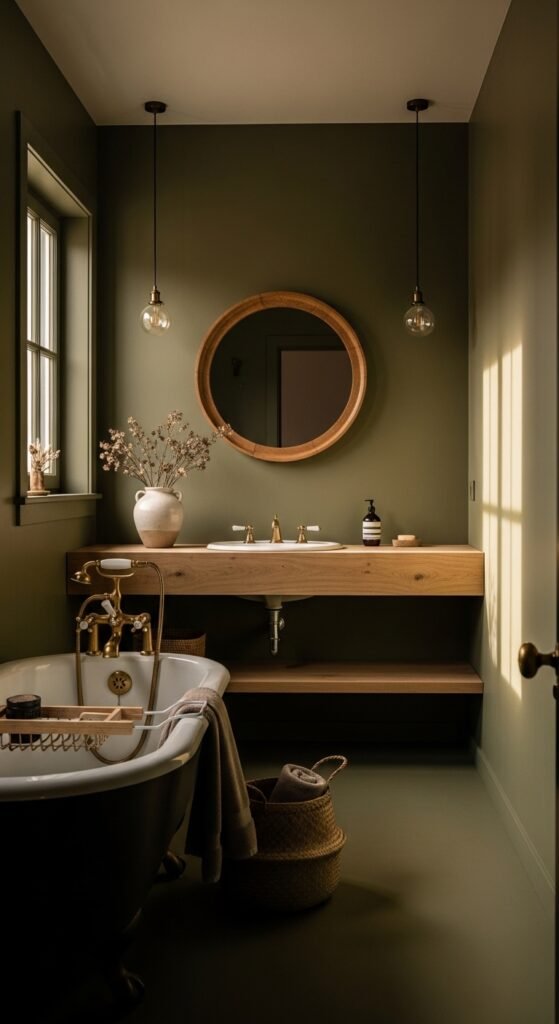
17. Olive Green
Olive Green brings depth and earthiness that other greens simply don’t offer. This yellow-green hybrid feels organic, sophisticated, and unexpectedly versatile in bathroom applications.
I recently photographed a home for a real estate listing where the primary bathroom featured Olive Green walls. The color looked incredible against the white freestanding tub and the brass fixtures. The homeowners told me they’d received more compliments on that bathroom than any other room in their house.
Olive Green works because it’s unexpected but not jarring. People don’t expect to see green in bathrooms, but when they do, it feels fresh and intentional rather than weird.
Best paired with: White tile, brass or gold, natural stone
Confidence-buying tip: Benjamin Moore “Guilford Green” and Sherwin-Williams “Saguaro” are excellent. Sample Olive Green carefully – it can look brown in some lighting and yellow in others. Know what you’re getting before you commit.
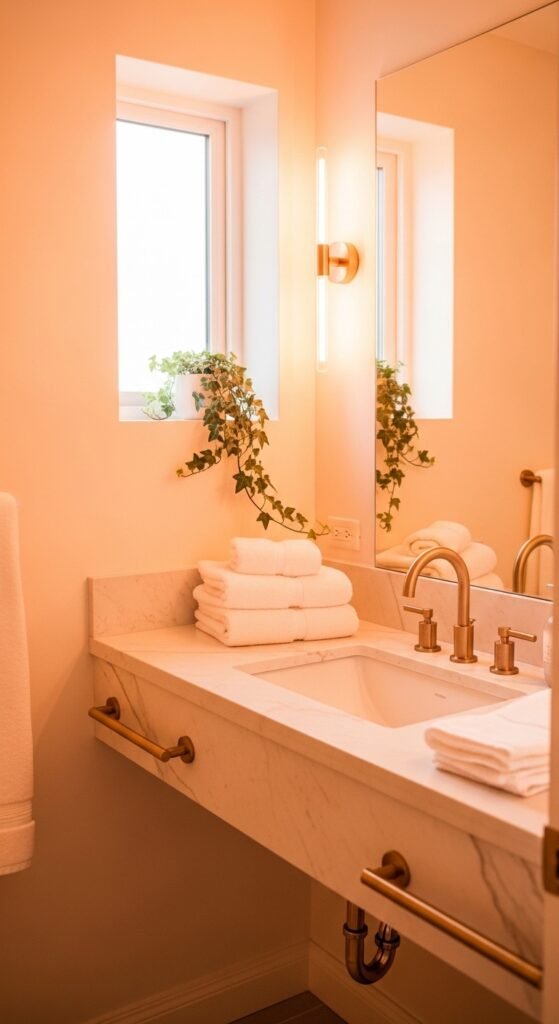
18. Pale Apricot
Pale Apricot brings gentle warmth and subtle energy to bathroom spaces. This soft orange-pink hybrid sits perfectly between peachy and orangey – warm without being aggressive, colorful without being overwhelming.
Among bathroom color trends, Pale Apricot remains underappreciated, which means choosing it makes your space feel unique and personal. You won’t walk into every other open house and see your color on the walls.
Real-world example: A designer I follow on social media transformed her tiny powder room with Pale Apricot. The before photos showed a cramped, forgettable space. The after photos showed a cheerful, memorable room that guests actively wanted to use. The only change was the paint color.
Best paired with: White fixtures, blue accents, natural wood
Confidence-buying tip: Benjamin Moore “Apricot Ice” and Sherwin-Williams “Belladonna Lily” are excellent. Because Pale Apricot is relatively light, it works well in bathrooms with limited natural light.
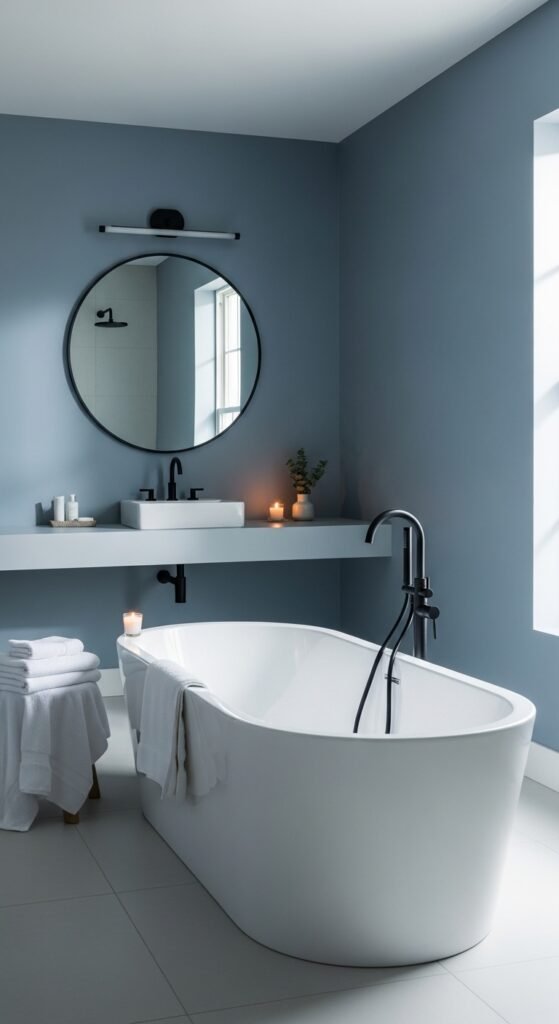
19. Slate Blue
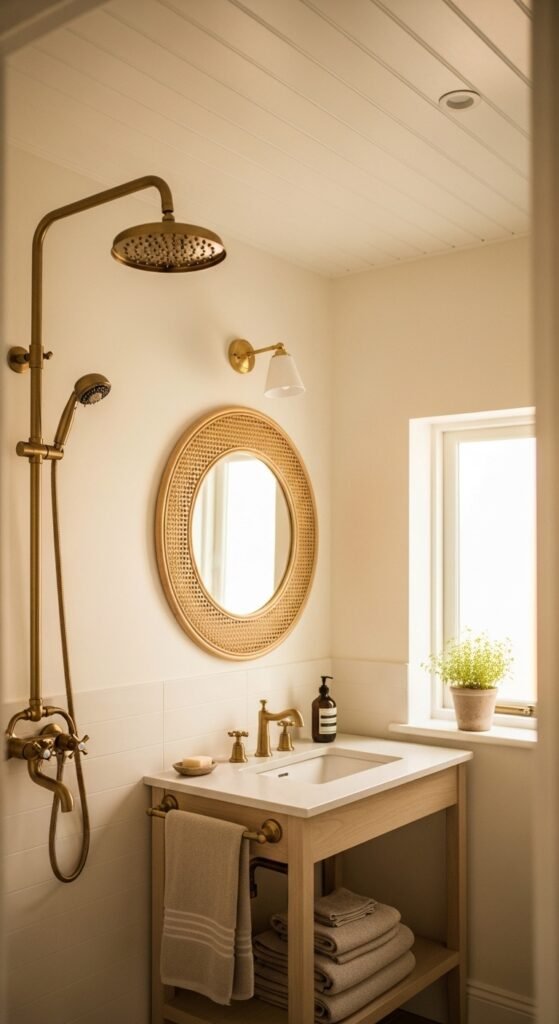
Slate Blue offers the drama of navy with the softness of gray. This blue-gray hybrid provides depth and sophistication without the intensity of true navy.
What makes Slate Blue special among 20 trending bathroom colors is its chameleon nature. In some light, it reads primarily blue. In other light, the gray undertones become more apparent. This complexity keeps the color interesting over time – you notice something new every time you enter the room.
Designer secret: Slate Blue looks phenomenal with warm woods. The contrast between cool blue walls and warm oak or walnut vanities creates visual tension that feels intentional and sophisticated.
Best paired with: Warm wood, white marble, polished nickel
Confidence-buying tip: Benjamin Moore “Slate Blue” and Sherwin-Williams “Storm Cloud” are excellent. Because Slate Blue is medium-dark, plan on two to three coats for even coverage.
20. Cream
We end our 20 trending bathroom colors with Cream – the warmer, richer alternative to white. Cream brings softness, warmth, and timeless elegance to bathrooms of all sizes.
Cream differs from Warm White in its depth. Warm White reads as white with warmth. Cream reads as its own color – unmistakably not white, but still light and airy. This distinction matters because Cream provides more color presence while maintaining the light-reflecting properties that make pale colors so effective in bathrooms.
Who this works for: Absolutely everyone. Cream is perhaps the safest choice on this list while still being intentional and beautiful. You cannot go wrong with Cream.
Best paired with: Literally everything
Confidence-buying tip: Benjamin Moore “Navajo White” and Sherwin-Williams “Creamy” are industry standards. For a slightly richer option, try Benjamin Moore “Lemon Meringue.”
Your Complete Step-by-Step Painting Guide
Now that you’ve seen our 20 trending bathroom colors, let me walk you through exactly how to execute your painting project successfully.
Step 1: Gather your supplies. You’ll need painter’s tape, drop cloths, a roller with extension pole, brushes (angled for cutting in), a paint tray, spackle for hole repair, sandpaper, primer, and your chosen paint. Don’t cheap out on supplies – quality tools make a dramatic difference.
Step 2: Prepare the room. Remove everything from the bathroom. Take down shower curtains, remove toilet paper holders, clear off countertops. Tape off trim, ceilings, and any areas you don’t want painted. Remove outlet covers and light switch plates.
Step 3: Repair and clean. Fill any nail holes or imperfections with spackle. Sand smooth once dry. Clean all walls with a mild detergent to remove soap scum, hairspray residue, and other bathroom buildup. Rinse and allow to dry completely.
Step 4: Prime appropriately. For most situations, a quality primer is essential – especially if you’re making a dramatic color change. For bathrooms, consider a primer with mild mildew resistance. This small investment prevents problems down the road.
Step 5: Cut in the edges. Use your angled brush to paint along trim, ceilings, and corners. This creates clean lines that rollers can’t achieve. Take your time here – careful cutting eliminates the need for messy tape lines.
Step 6: Roll the walls. Load your roller evenly and apply paint in W-shaped patterns for even coverage. Work in small sections. For our 20 trending bathroom colors, especially the darker shades, plan on two to three coats.
Step 7: Allow proper drying time. Don’t rush between coats. Check manufacturer recommendations, but generally allow 2-4 hours between coats. Rushing leads to peeling and uneven coverage.
Step 8: Reinstall and enjoy. Once completely dry (give it 24 hours to be safe), reinstall outlet covers, toilet paper holders, and other items. Step back and admire your transformation.
Bathroom Paint Finishes Explained
Choosing the right finish is almost as important as choosing from our 20 trending bathroom colors. Here’s what you need to know:
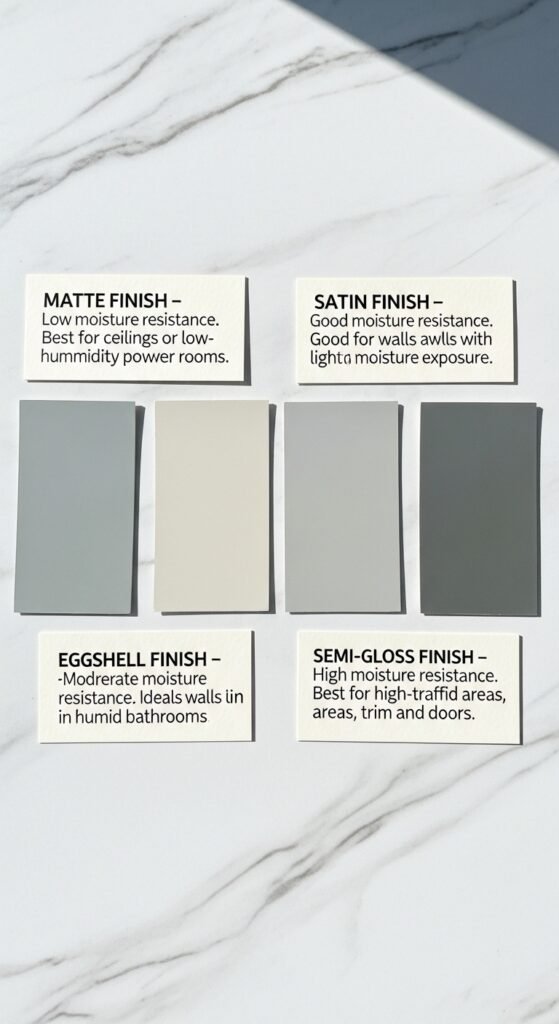
Flat/Matte: Beautiful finish that hides imperfections. Not recommended for bathrooms – difficult to clean and vulnerable to moisture damage.
Eggshell: Slight sheen, easier to clean than matte. Acceptable for powder rooms or bathrooms with excellent ventilation.
Satin: The sweet spot for bathrooms. Easy to clean, resists moisture, provides gentle sheen without being shiny. This is my top recommendation for most bathrooms.
Semi-Gloss: Very shiny, extremely washable. Excellent for trim and ceilings. Can look too shiny on large wall areas.
High-Gloss: Mirror-like shine. Best for accent walls or furniture, not entire bathrooms.
For our 20 trending bathroom colors, I strongly recommend satin finish for walls and semi-gloss for trim. This combination provides durability where you need it while maintaining beautiful aesthetics.
Common Bathroom Color Mistakes to Avoid
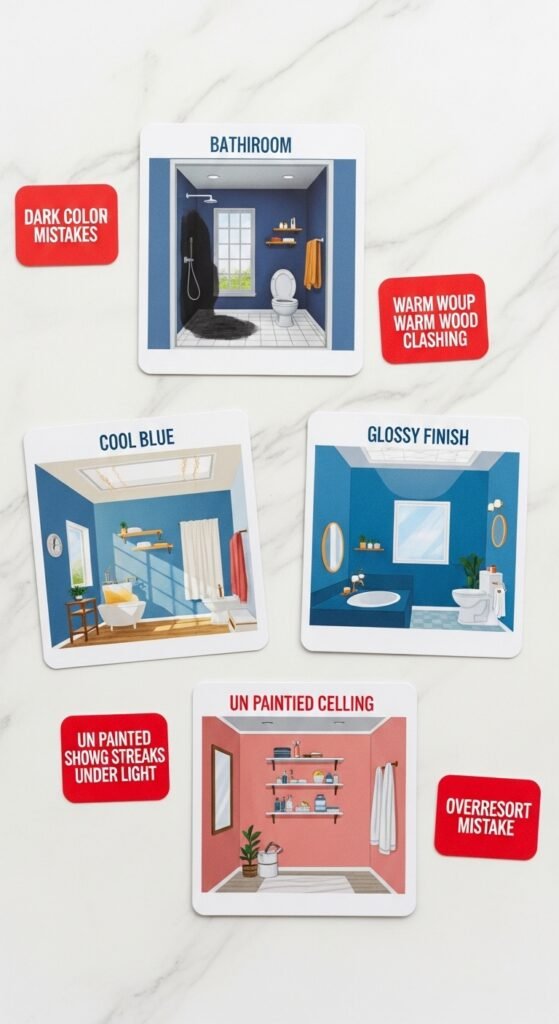
After helping hundreds of people choose from 20 trending bathroom colors, I’ve seen the same mistakes repeatedly. Learn from others’ errors:
Mistake 1: Forgetting about ventilation. Bathrooms produce moisture. Without proper ventilation (working exhaust fan or window), even the best paint will eventually peel or mildew. Address ventilation before painting.
Mistake 2: Ignoring your fixed elements. That beautiful Sage Green might clash horribly with your pink tile. Always hold paint samples against your permanent features before committing.
Mistake 3: Choosing based on a tiny swatch. Paint chips lie. They’re too small to show how colors actually behave. Always buy sample sizes and paint large swatches.
Mistake 4: Forgetting about the ceiling. Your ceiling should coordinate with your wall color. Generally, ceilings should be lighter than walls. Bright white is safe, but consider a lighter version of your wall color for a designer look.
Mistake 5: Following trends blindly. Just because Deep Navy Blue is trending doesn’t mean it’s right for your windowless half-bath. Choose from our 20 trending bathroom colors based on your specific space, not just popularity.
How These Colors Impact Mood and Psychology
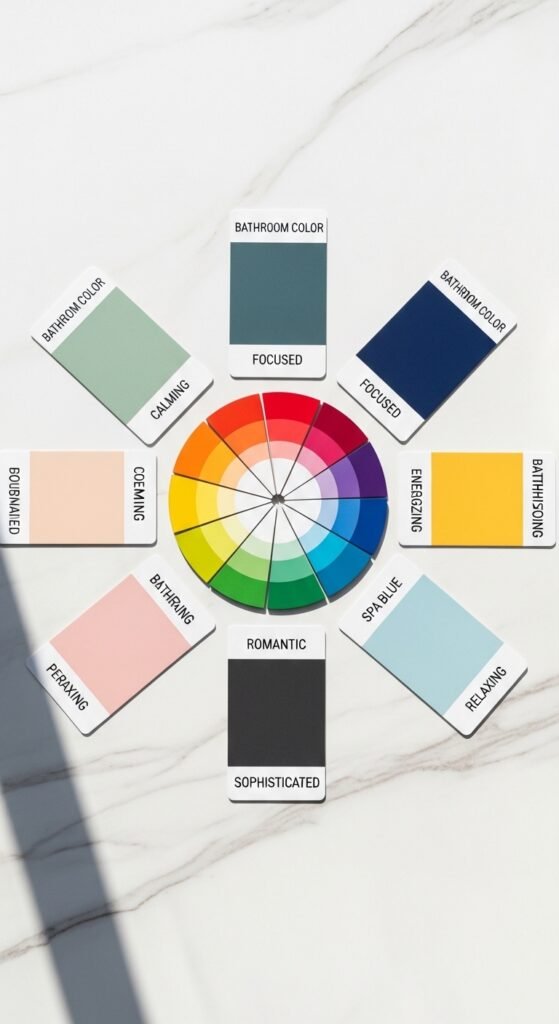
Color psychology isn’t pseudoscience – it’s well-researched and genuinely affects how you feel in your bathroom. Understanding this helps you choose wisely from our 20 trending bathroom colors:
Blues and greens (Sage Green, Spa Blue, Seafoam Green, Slate Blue, Powder Blue): Lower heart rate, reduce stress, promote calm. Excellent for master bathrooms where you unwind before bed.
Warm neutrals (Warm Greige, Warm White, Cream, Clay): Provide stability and comfort. Excellent for shared bathrooms that need to appeal to multiple household members.
Earthy tones (Terracotta, Olive Green, Espresso Brown, Eucalyptus): Create grounding and connection to nature. Excellent for bathrooms where you want to feel centered and present.
Deep darks (Deep Navy Blue, Charcoal Gray, Black): Create drama and sophistication. Excellent for powder rooms or large bathrooms where you want a statement.
Soft brights (Buttery Yellow, Pale Apricot, Dusty Lavender): Boost energy and creativity. Excellent for children’s bathrooms or guest bathrooms where you want cheerful energy.
Why You Should Buy Premium Paint
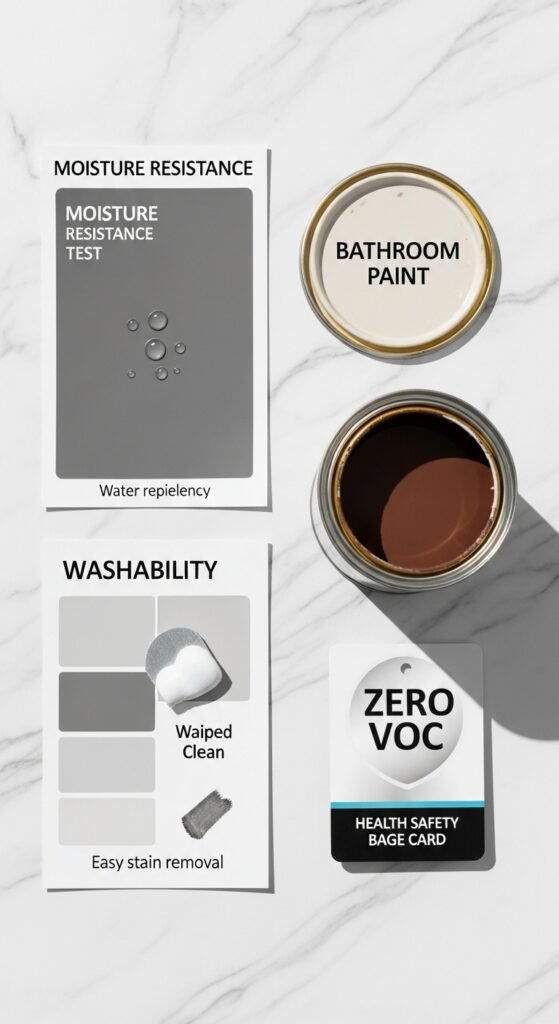
I’ve painted enough rooms to know that paint quality matters enormously. When you invest in our 20 trending bathroom colors, please also invest in quality paint. Here’s why:
Coverage: Premium paints cover in two coats what cheap paints need four coats to achieve. That’s time, effort, and frustration saved.
Durability: Bathroom paint faces humidity, temperature changes, and frequent cleaning. Premium paints resist these challenges for years. Cheap paints fail within months.
Color accuracy: Premium paints deliver the color you selected. Cheap paints often look different than their swatches – sometimes dramatically so.
Application: Premium paints flow smoothly, level properly, and don’t drip excessively. Cheap paints fight you the entire way.
Trusted brands: Benjamin Moore (Aura Bath & Spa line specifically formulated for bathrooms), Sherwin-Williams (Duration Home line), and Farrow & Ball (for those with larger budgets) all offer excellent options for our 20 trending bathroom colors.
Real Results: Before and After Transformations
Let me share three quick transformations using our 20 trending bathroom colors:
Transformation 1: A 1980s bathroom with yellowed tile and beige walls. The homeowner chose Sage Green for walls and Warm White for trim. The dated tile suddenly looked intentional rather than unfortunate. Total cost: $80 for paint. Resale value increase estimate: $3,000.
Transformation 2: A dark, windowless basement bathroom. The homeowner chose Buttery Yellow despite skepticism. The space transformed from depressing to delightful. The homeowner told me she actually looks forward to using that bathroom now. Total cost: $65 for paint.
Transformation 3: A large master bathroom with good bones but boring aesthetics. The homeowner chose Deep Navy Blue for the vanity and Warm White for walls. The contrast created a high-end, custom look that real estate agents now use as a selling point. Total cost: $120 for paint. Estimated value increase: $5,000+.
Final Thoughts and Your Next Steps
You now have everything you need to confidently choose from our 20 trending bathroom colors. You understand why color matters, how to select the right shade for your specific space, and how to execute the project successfully.
Remember Sarah from my opening story? She chose Deep Navy Blue and hasn’t regretted it for a single day. Her bathroom went from embarrassing to enviable with just a few gallons of paint and a weekend of work.
Here’s your action plan:
- Review the 20 trending bathroom colors and identify 2-3 that speak to you
- Visit your local paint store (not a big box hardware store – go somewhere with expertise)
- Purchase sample sizes of your top choices
- Paint large swatches and live with them for 48 hours
- Make your confident choice and buy premium paint
- Follow my step-by-step painting guide
- Enjoy your transformed bathroom
You deserve a bathroom that makes you happy every single day. The right color from our 20 trending bathroom colors can deliver that happiness. Don’t settle for builder-grade beige. Don’t live with colors that drain your energy. Take action this weekend.
Your dream bathroom is just a few brush strokes away.