Let’s be honest for a second. How many times have you walked into your living room, plopped down on the sofa, and stared at a big, blank wall? If you’re like me, the answer is “too many to count.” That empty canvas can feel less like an opportunity and more like a design roadblock. You know the space has potential, but figuring out where to start can be overwhelming.
I remember when I first moved into my apartment; I had a beautiful sofa, a cozy rug, and… nothing else. The walls were so bare that my voice actually echoed. It felt less like a home and more like a waiting room. It wasn’t until I hung my first piece of art—a simple, textured weaving—that the room finally took a deep breath and felt complete. That’s the magic of living room wall decor. It’s the final layer of personality that turns a house into your home.
Whether you are a minimalist, a maximalist, or someone just starting their decorating journey, this guide is for you. We are going to walk through 18 living room wall decor ideas that cover every style and budget. By the end, you won’t just have inspiration; you’ll have a step-by-step game plan and the confidence to finally tackle those empty walls.
Creating a Personal Focal Point with Art
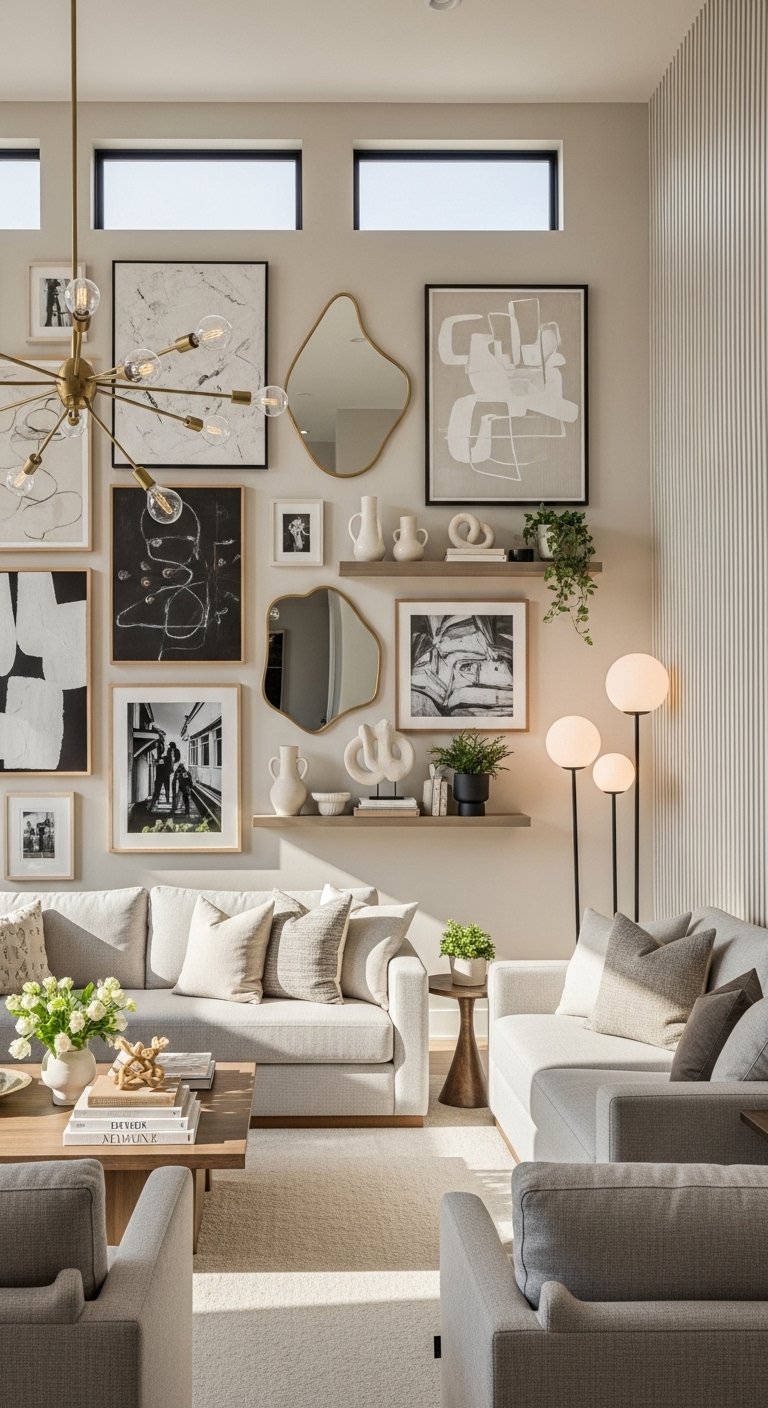
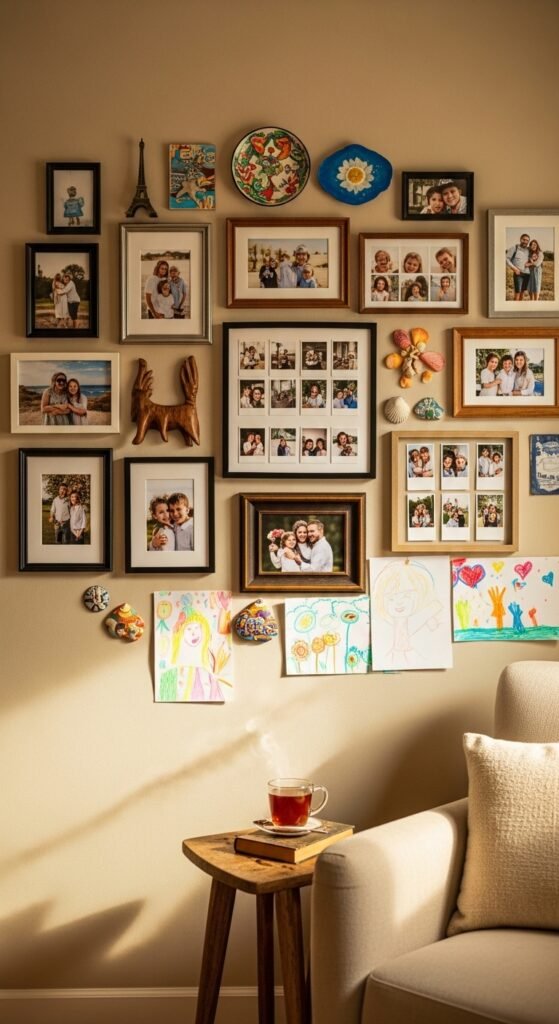
A gallery wall is the classic go-to for a reason—it’s incredibly versatile and deeply personal. It allows you to tell a visual story of your life, travels, and tastes.
I’ll never forget helping a friend curate her first gallery wall. She was nervous about mixing family photos with art prints, worried it would look messy. We started by laying everything on the floor: black-and-white portraits, a vintage map, a small abstract painting, and her kids’ watercolor masterpieces. We played around with the layout until it felt balanced. Once it was on the wall, she actually teared up. It wasn’t just decor; it was her life story looking back at her.
How to do it with confidence:
- Choose your frames: For a cohesive look, stick to frames of the same color (like all black or all white). For an eclectic vibe, mix materials like wood and metal, but keep the color palette of the art consistent.
- Map it out: Before you hammer a single nail, trace each frame onto a piece of kraft paper, cut it out, and tape the paper templates to the wall. This lets you play with spacing (usually 2-3 inches apart) without damaging the paint.
- Include variety: Mix in items other than photos. A small mirror, a textile piece, or a 3D object can add incredible depth.
Maximizing Visual Impact with Scale
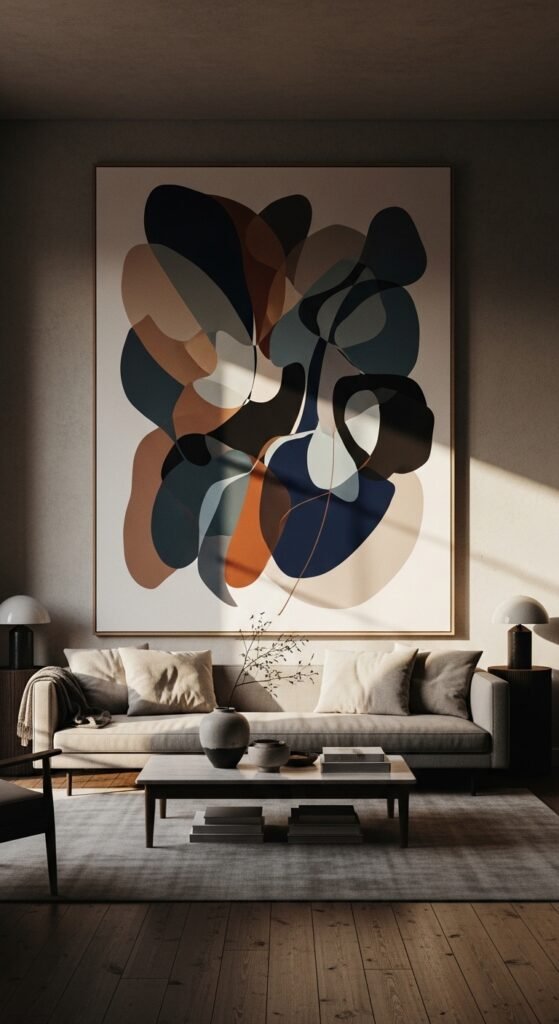
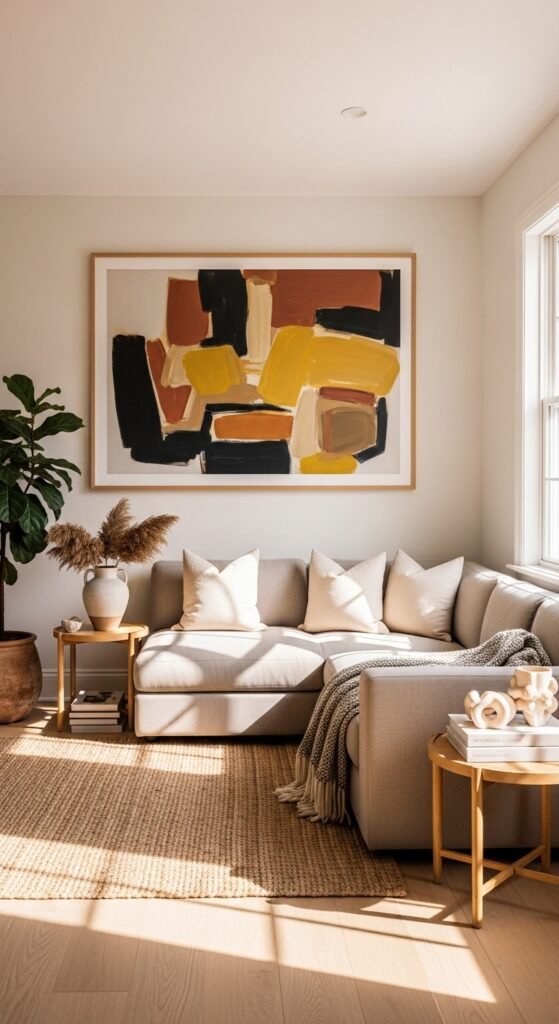
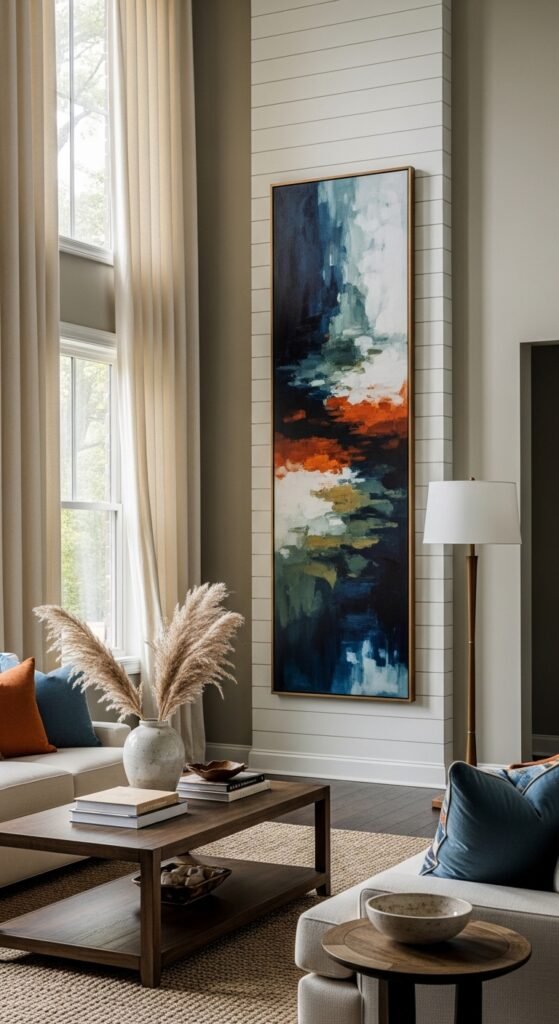
If the thought of hanging 15 separate frames makes you tired, let me introduce you to the magic of oversized art. One large, commanding piece can do the work of an entire gallery wall with significantly less effort. It creates an instant focal point and anchors the entire room.
In my own living room, I have a massive abstract canvas in shades of rust and cream. Before it went up, the room felt nice but disjointed. The moment that heavy piece was hung, everything clicked into place. The sofa finally had a companion. The room looked curated, not cluttered.
- Sizing guide: A common mistake is buying art that’s too small. A good rule of thumb is that your art should take up about two-thirds to three-quarters of the width of your furniture (like the sofa).
- Placement: Hang it so the center of the piece is at eye level—usually about 57 to 60 inches from the floor.
Enhancing Spatial Perception with Reflective Surfaces
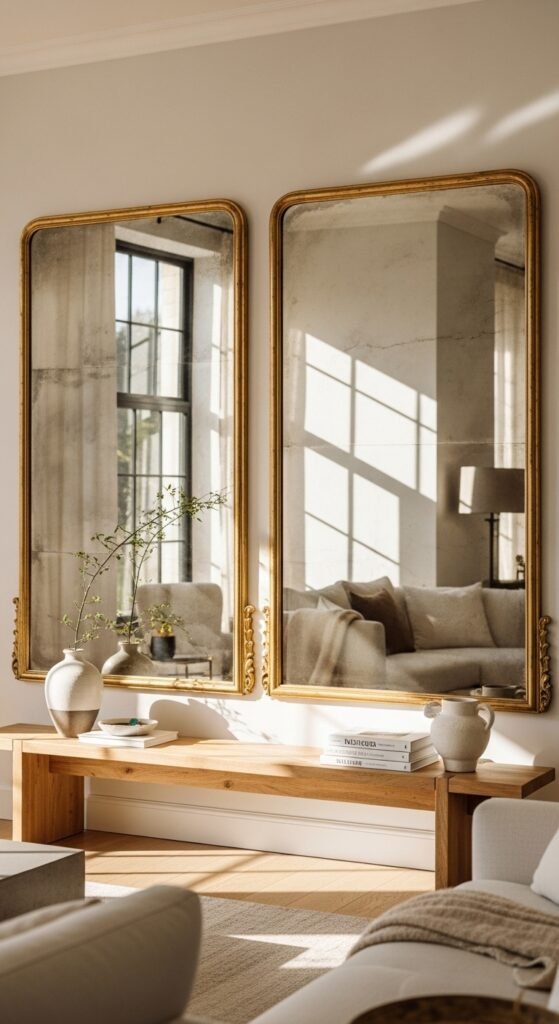
Mirrors are the secret weapon of interior designers everywhere. They are functional, beautiful, and strategically, they act as trick mirrors—literally tricking your eye into seeing more space and light.
I once consulted on a small, dark living room that felt like a cave. The owner was considering knocking down a wall. Instead, we hung a large, ornate mirror directly across from the window. The difference was instant and dramatic. The room doubled in visual size, and the light that bounced off the mirror filled every corner.
- Placement matters: Hang a mirror opposite a window to maximize natural light reflection.
- Style choices: Use a large, leaning mirror for a modern, casual look, or choose an ornate, gilded frame for a touch of vintage glamour.
Utilizing Vertical Space for Display
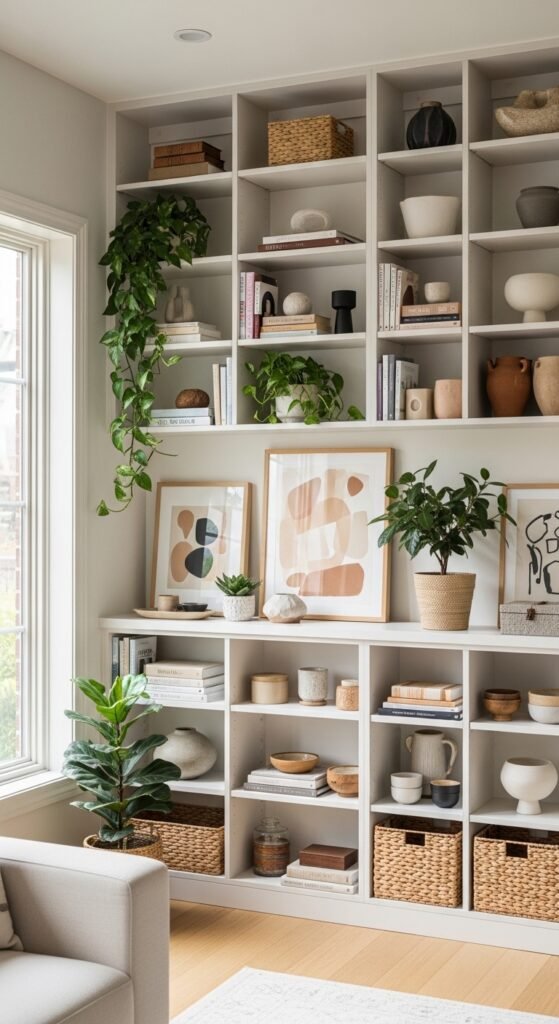
Floating shelves are the ultimate “renters’ friend” and decor lover’s dream. They provide a platform to constantly refresh your look without committing to a permanent nail hole for every single item. They are perfect for displaying a rotating cast of books, plants, and small sculptures.
I have a set of narrow floating shelves above my desk, and I change them with the seasons. In the fall, out come the tiny pumpkins and warm-toned candles. In the spring, I swap in small vases of fresh flowers and pastel-colored ceramics. It keeps the room feeling alive and current.
- Styling tip: Don’t just line things up in a row. Create visual interest by layering. Lean a piece of framed art against the wall, place a small plant in front of a stack of books, and let a trailing plant dangle over the edge.
- Installation: Ensure you mount them into wall studs or use heavy-duty drywall anchors, especially if you plan to display heavy items.
Also Read 14 Backyard Garden Ideas: Transform Your Outdoor Space into a Green Paradise
Adding Architectural Detail and Texture
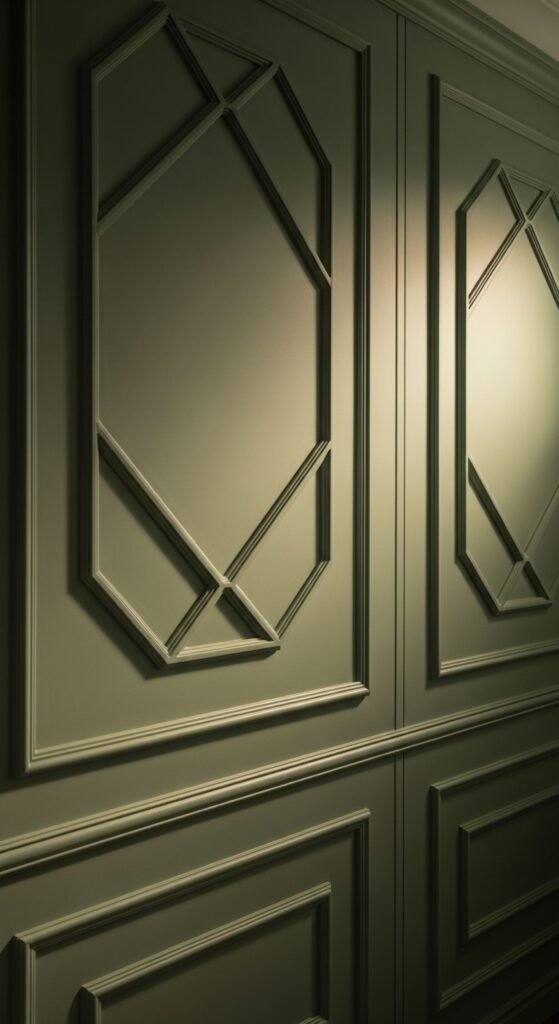
If you want to move beyond hanging things on the wall and actually change the wall itself, textured wall panels are a fantastic option. They add an incredible sense of depth and luxury that paint alone can’t achieve.
A friend of mine recently installed fluted wood panels on the wall behind his TV. Before, it was just a black screen on a white wall. Now, the vertical lines of the wood draw your eye upward, making the ceiling feel higher, and the texture adds a warmth that makes the whole room feel cozier.
- Material options: You can find panels in wood, 3D gypsum, fabric, or even eco-friendly recycled materials.
- Placement: Use them on a single accent wall to create a dramatic backdrop for your sofa or media console.
Experimenting with Color and Pattern
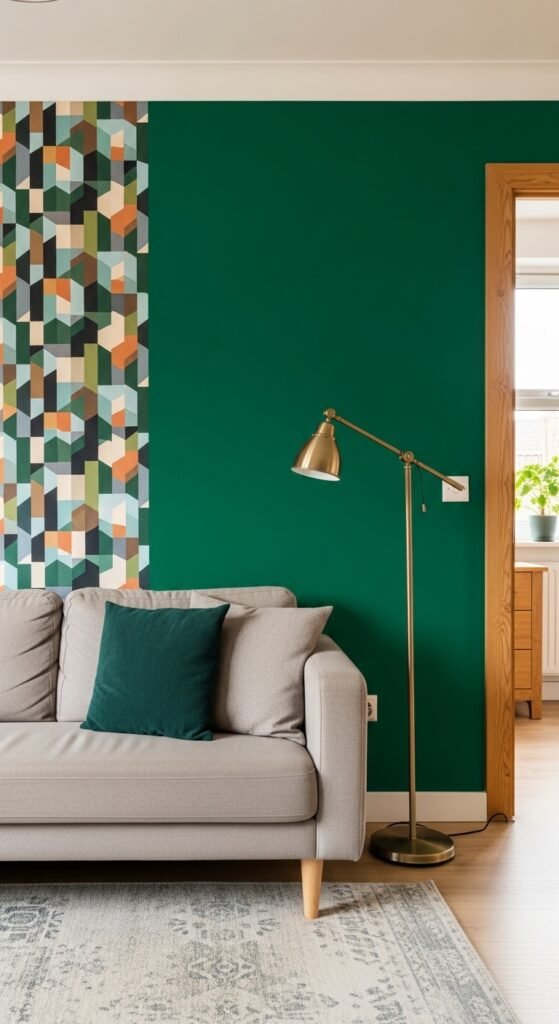
Sometimes, all a room needs is a jolt of personality. A bold accent wall is the perfect way to experiment with color or pattern without overwhelming the space. It’s a low-commitment, high-impact project.
I vividly remember the first time I painted an accent wall. I chose a deep, inky teal for my bedroom, a color that terrified me. But as soon as the roller touched the wall, I knew it was right. That single wall transformed the room from a generic box into a sophisticated retreat.
- Paint: Consider color blocking or painting a geometric shape for a modern twist.
- Wallpaper: Peel-and-stick wallpaper is a godsend for renters. You can get intricate botanical prints or bold geometric patterns that look like a million bucks but are completely removable.
Transforming Ambiance with Large-Scale Imagery
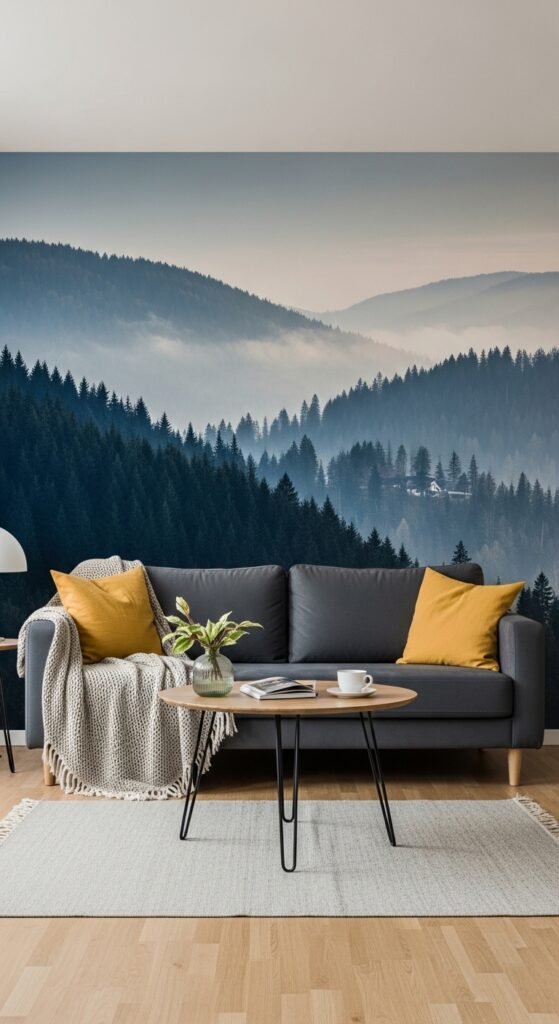
For the ultimate “wow” factor, a wall mural is unbeatable. It turns your wall into a piece of art. Whether it’s a large-scale photograph of a forest, a hand-painted design, or a removable decal, a mural creates an immersive experience.
I once visited a home where the homeowner had applied a massive peel-and-stick mural of a library to the wall of his home office. It was whimsical, personal, and a total conversation starter. He didn’t need any other art in the room; the mural was the show.
- DIY route: Use stencils to create your own pattern if a pre-made mural isn’t your style.
- Commitment-free: Modern peel-and-stick murals are designed for easy DIY application and removal, making them perfect for anyone who likes to change their style frequently.
Introducing Softness and Warmth
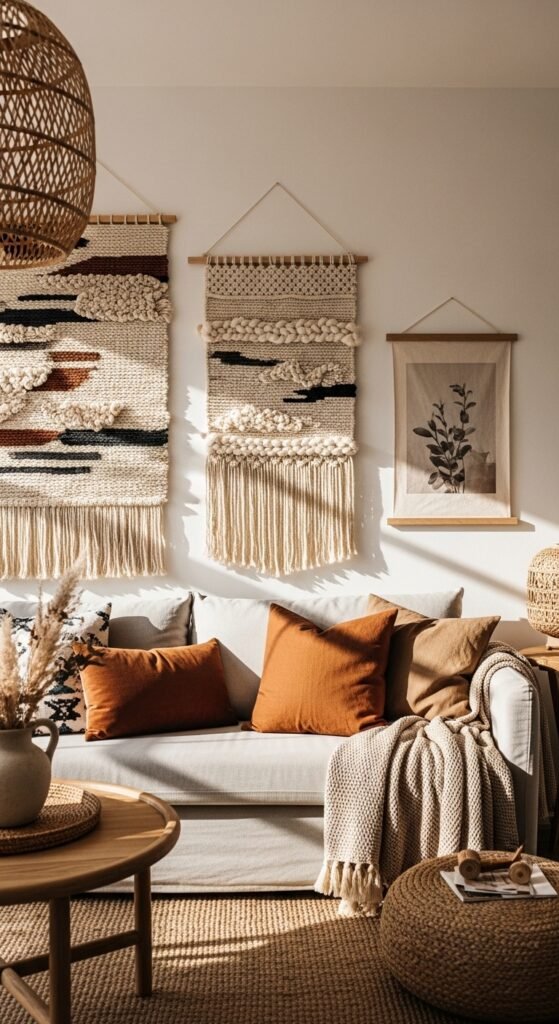
Walls don’t have to be hard surfaces. Softening them with textiles is a wonderful way to add warmth, color, and sound absorption to a room. Think beyond paintings and look at fabric.
I have a large, hand-woven macramé hanging in my entryway. It’s not just decor; it’s a piece of art that adds a bohemian, tactile element. Whenever guests walk in, they can’t help but reach out and touch it.
- Ideas: Hang a large tapestry, a vintage quilt, a woven rug, or a collection of fabric panels.
- Acoustic bonus: In rooms with hard floors and high ceilings, textiles help dampen echo, making the space feel quieter and more intimate.
Creating Depth with Three-Dimensional Forms
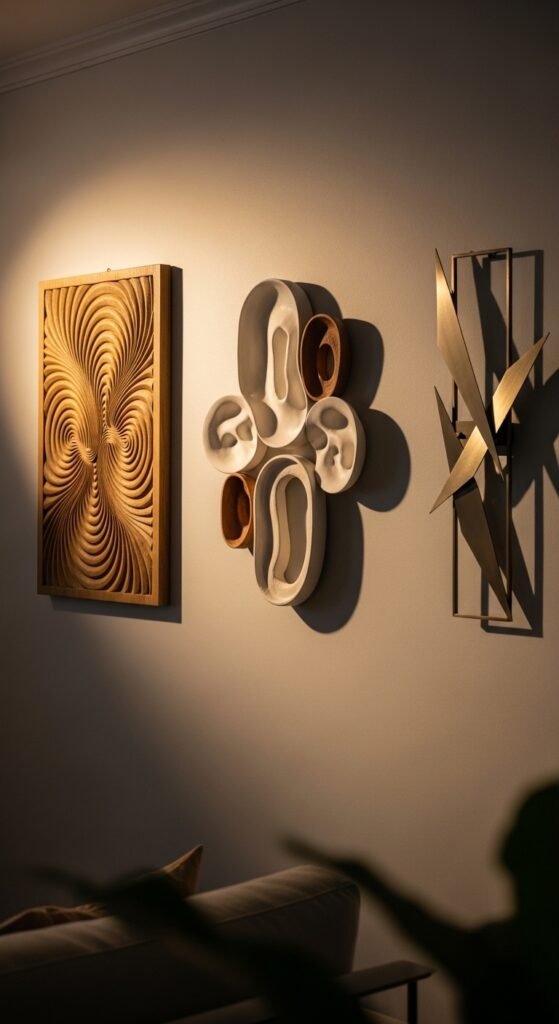
Flat art is wonderful, but adding a three-dimensional element brings a whole new level of intrigue to your walls. Sculptural pieces catch light and shadow throughout the day, making the wall feel dynamic and alive.
A few years ago, I found a beautiful metal sunburst sculpture at a flea market. I hung it alone on a small wall in my hallway, and it completely transformed that tiny space. It’s simple, but the way the light hits the metal spokes creates a constantly changing pattern of shadows.
- What to use: Consider metal wall sculpture, carved wood panels, ceramic plates arranged artistically, or a collection of woven baskets.
- Arrangement: A single, large sculptural piece can stand alone as a focal point, or you can cluster smaller items (like plates) for a collected, gallery-like feel.
Incorporating Biophilic Design Elements
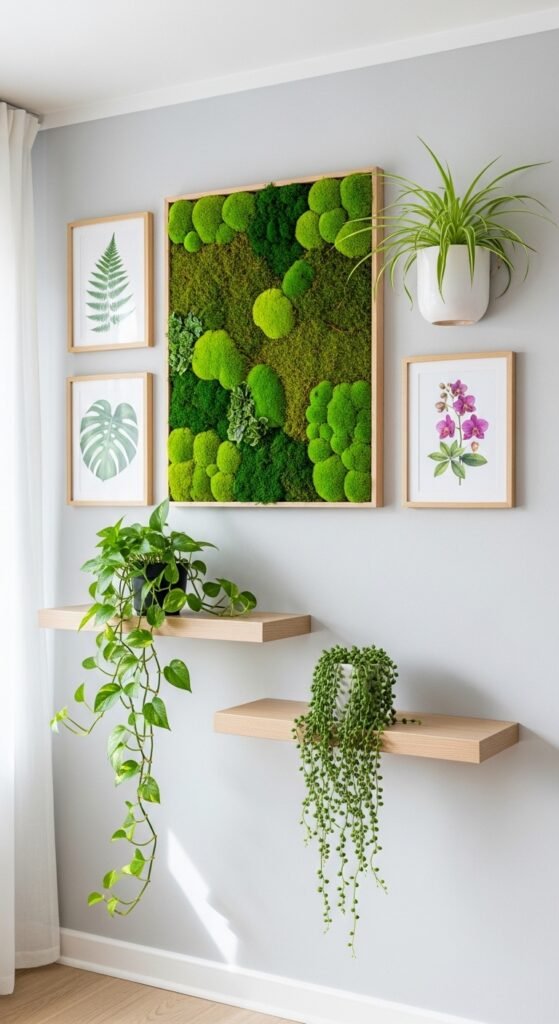
If you want to breathe life into your living room, literally, put plants on your walls. A living wall or a collection of wall-mounted planters adds freshness, color, and a sense of calm that no manufactured decor can replicate.
I’m notoriously bad at keeping plants alive, so I started with a single, easy pothos in a hanging planter. I placed it high on a shelf, and within months, its long, trailing vines created a beautiful, natural green curtain against the white wall. It made the whole room feel more alive.
- Easy options: Start with low-maintenance trailing plants like pothos or philodendron. Use wall-mounted planters, macramé hangers, or floating shelves to create your vertical garden.
- High-impact: For the committed, a full living wall system with built-in irrigation can become a breathtaking, air-purifying feature.
Integrating Technology Seamlessly
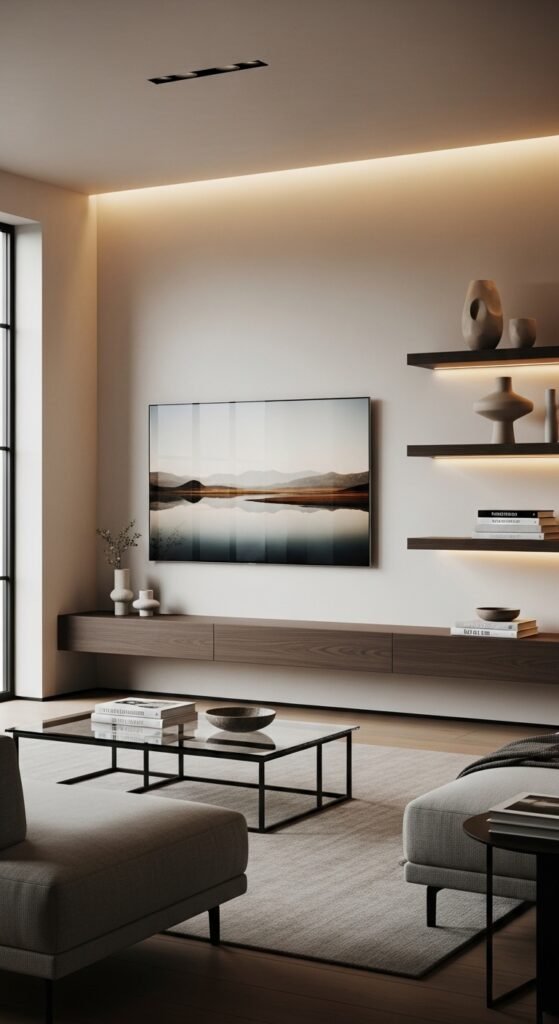
Let’s face it: in many modern homes, the TV is the focal point of the living room. But a big black screen doesn’t have to be an eyesore. You can design your wall decor to integrate the TV seamlessly into the overall aesthetic.
I helped a friend who was mortified by her “big black TV” do this. We created a gallery wall around it. We used frames of varying sizes, mixing in small paintings and photos. Now, when the TV is off, it just looks like another black rectangle within a beautiful, curated collection. Your eye sees the whole wall, not just the screen.
- The gallery wall method: Surround the TV with framed art to draw the eye across the entire surface.
- The built-in look: Mount the TV on the wall and frame it with floating shelves or shallow cabinets to create a custom media wall look that provides storage for consoles and display space for decor.
Layering with Ambient Illumination
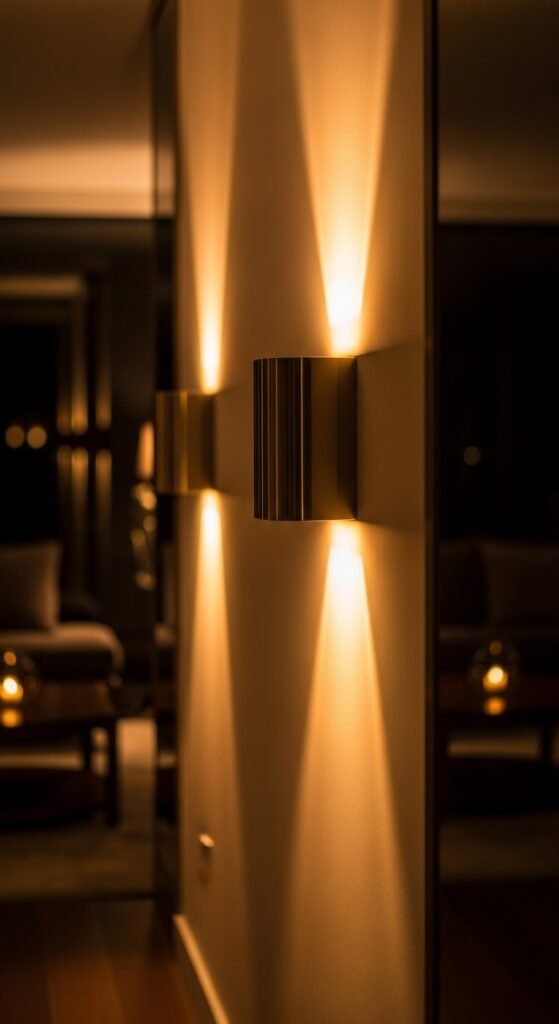
Lighting shouldn’t be an afterthought. Wall-mounted lighting fixtures, like sconces or picture lights, serve a dual purpose: they illuminate the room and act as stylish decor in their own right.
I installed two simple, adjustable black sconces on either side of a large painting in my hallway. At night, they cast a warm, gallery-quality light on the art, and during the day, the fixtures themselves add a touch of modern, architectural interest to the wall.
- Art lighting: Install a picture light above a favorite painting or mirror to make it feel precious and important.
- Ambient lighting: Use wall sconces in a reading nook or along a long hallway to create soft, flattering pools of light.
Blending Utility with Aesthetics
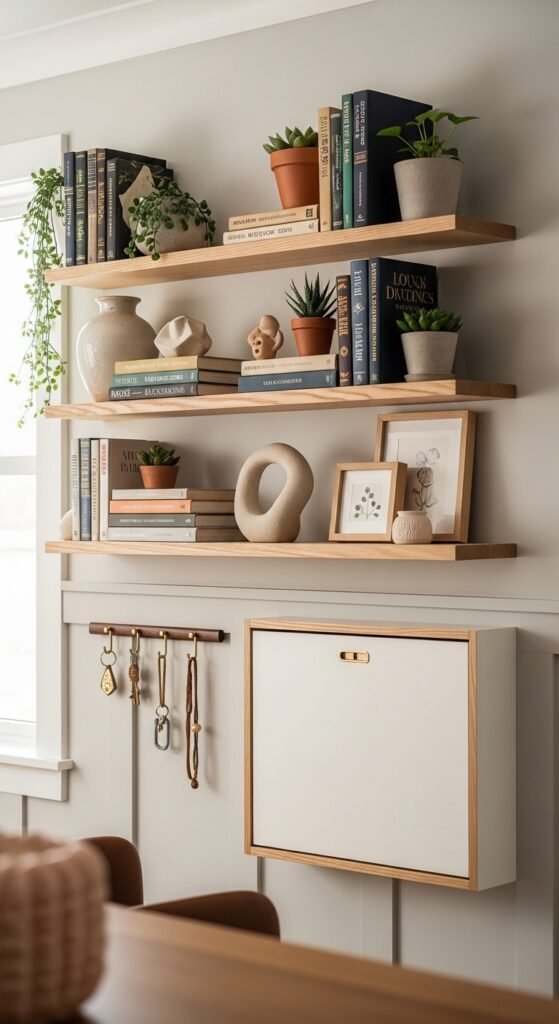
Who says decor can’t be useful? Blending function and aesthetics is a smart way to decorate, especially if you’re short on space or love an organized look.
My home office features a large pegboard painted the same color as the wall. It holds my scissors, washi tape, and notes, but because it’s tidy and color-coordinated, it looks like a designed feature rather than a cluttered mess. It’s stylish organization.
- Pegboards: Perfect for offices, craft rooms, or even kitchens to organize tools while keeping them on display.
- Wall Calendars: A beautiful, large-format calendar can add a graphic element to a kitchen or entryway while keeping the family on schedule.
- Hooks: Decorative hooks can hold coats and bags in an entryway or display hats and bags as art.
Preserving and Displaying Memories
Some of the best decor doesn’t come from a store; it comes from your life. Shadow boxes are the perfect way to protect and display cherished keepsakes, turning them into art.
I have a shadow box on my wall containing my grandmother’s vintage brooches. She passed them down to me, but I never wore them. Now, arranged on velvet in a deep frame, they are a beautiful, daily reminder of her. It’s personal, meaningful, and totally unique.
- What to frame: Concert tickets, travel souvenirs, sea glass, vintage jewelry, or your child’s first pair of shoes.
- Arrangement: Group several shadow boxes together on a wall for a curated, museum-like feel.
Drawing the Eye Upward
If you have a narrow wall, a tight corner, or just want to draw the eye upward, think vertically. A vertical arrangement can make your ceilings feel higher and fill awkward spaces perfectly.
I have a slim strip of wall next to a bookshelf that always felt forgotten. One weekend, I hung three small, matching botanical prints in a straight line from top to bottom. That tiny column of green instantly became a feature, connecting the bookshelf to the ceiling and adding height to the whole room.
- What to hang: A column of small frames, hanging planters at different heights, or a long, vertical textile piece.
- Best spots: Use this trick between windows, beside doorways, or next to tall furniture.
Curating an Eclectic Mix
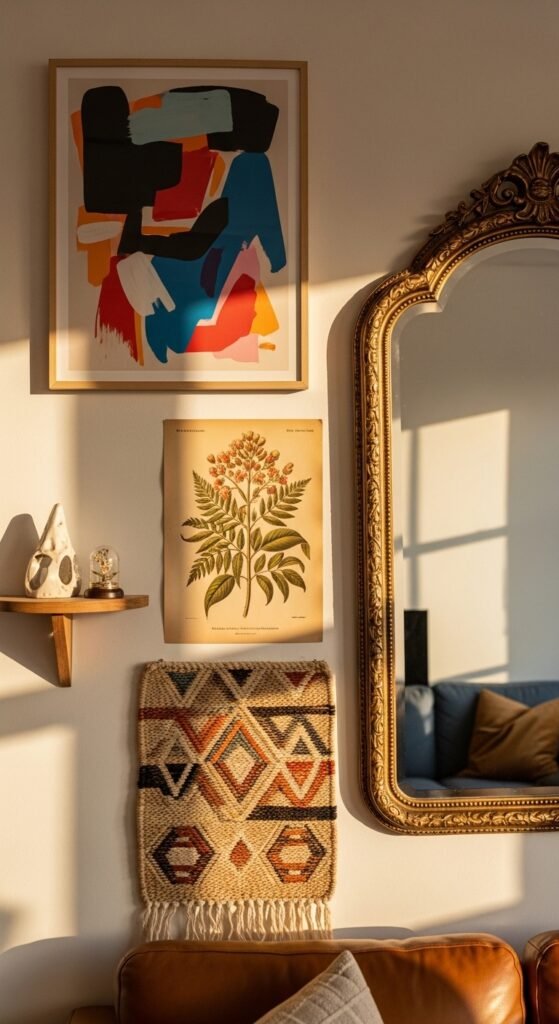
Don’t be afraid to break the “rules.” Some of the most interesting rooms are the ones that feel collected over time, not bought from a catalog. Mixing materials—like wood, metal, glass, and ceramics—adds a rich, layered feel.
In my living room, I have a cool, industrial metal wall sculpture hanging directly above a warm, rustic wooden bench. The contrast is what makes it work. The hard metal against the soft wood, the cool silver against the warm brown. It creates a visual tension that is far more interesting than a perfectly matched set.
- The key: Find a unifying element. It could be a color palette (e.g., all neutral tones) or a theme (e.g., all nature-inspired).
- Think in contrasts: Pair rough with smooth, shiny with matte, and old with new.
Embracing Simplicity and Negative Space
For every maximalist gallery wall, there is a place for serene, minimalist design. Sometimes, the most powerful statement is made by what you don’t put on the wall. A simple, well-chosen piece can bring a sense of peace and clarity to a busy world.
I once spent a month staring at a blank wall in my living room, paralyzed by choice. Finally, in a moment of frustration, I hung a single, large piece of handmade paper with a subtle texture. It was the simplest thing imaginable, but it was perfect. It didn’t demand attention; it just quietly added depth and calm.
- The rule of one: Choose one beautiful, high-quality piece—a line drawing, a monochromatic canvas, or a sculptural object—and let it breathe.
- Negative space: Don’t feel pressured to fill every inch. Leaving empty space around your decor makes it feel intentional and important.
Defining Zones with Molding and Ledges
For a more architectural approach, consider a built-up look. Combining a sofa-back ledge with trim work creates a defined, sophisticated space that is both beautiful and functional.
A designer friend of mine used this trick in a narrow living room to make it feel wider. She installed a shallow ledge at chair-rail height behind the sofa. The ledge became a permanent console table for books and a lamp, and the wall above it, now visually separated, felt taller and more structured.
- How it works: The trim or molding divides the wall, anchoring the room. The deep ledge on top provides a place to display art and objects without needing a separate piece of furniture.
- Add light: Tuck an LED strip under the ledge for a soft, ambient glow that makes the art on the wall above “float.”
Conclusion: Your Walls Are Waiting for Their Story
Decorating your living room walls is one of the most rewarding home projects you can undertake. It’s the final step that transforms a space from “done” to “finished,” from a house to a home. Whether you choose the personal storytelling of a gallery wall, the bold drama of a mural, or the quiet simplicity of a single piece of art, the most important thing is to choose pieces that you love.
Don’t be afraid of the blank wall. See it for what it is: an opportunity. Start with one idea from this list of 18 living room wall decor ideas, gather your supplies, and take the first step. You might be surprised at how much confidence you gain with every piece you hang. Your living room is waiting for its final, personal touch. Go make it yours.