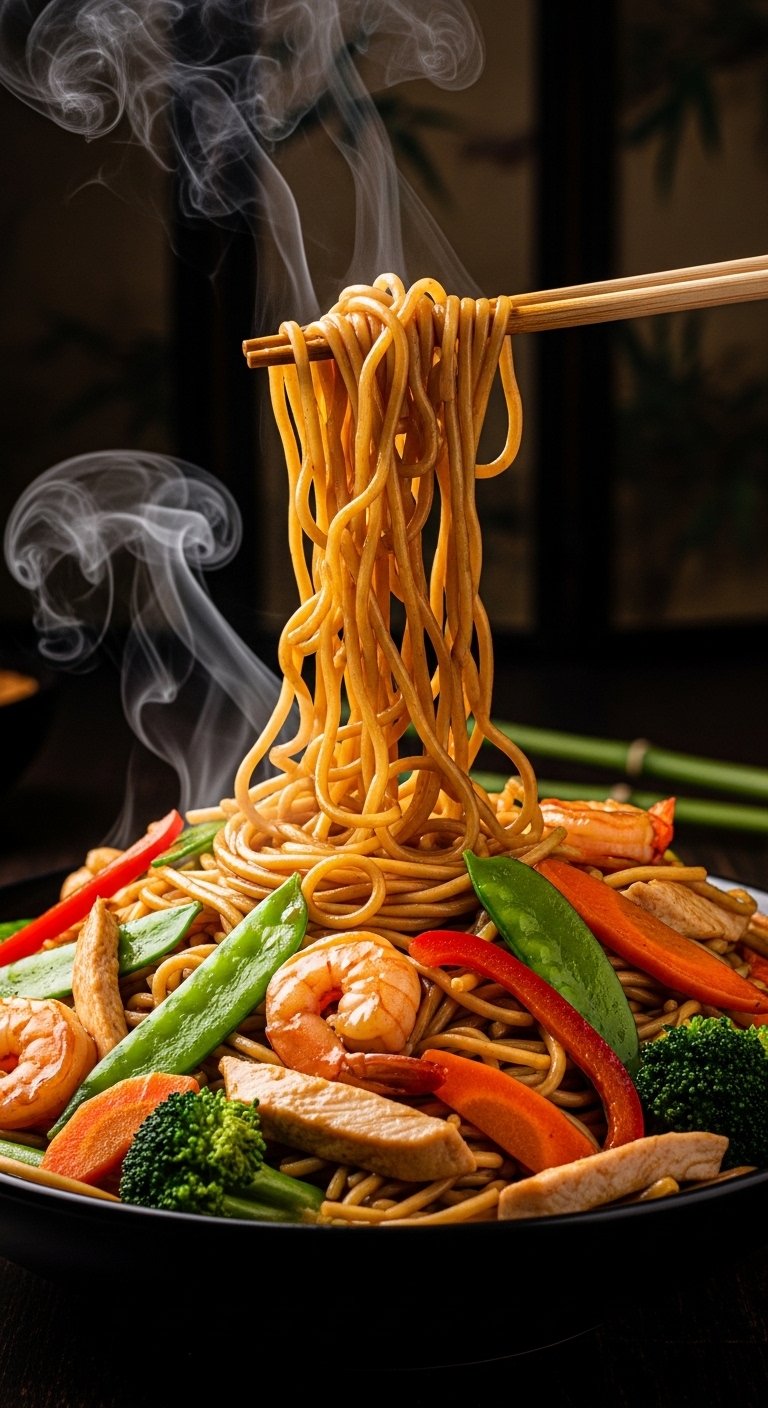
Lo Mein Noodles Recipe That Beats Takeout Every Time
Easy lo mein noodles recipe – just four simple words, but they hold the promise of a dinner that’s quick, satisfying, and bursting with flavor. If you’ve ever found yourself craving that perfect balance of chewy noodles, crisp vegetables, and savory sauce, you’re in the right place. Today, I’m going to walk you through everything you need to know about making restaurant-quality lo mein right in your own kitchen.
Before we dive in, let me share a quick story. A few years ago, I was convinced that lo mein was one of those dishes only a professional chef with a massive wok and a gas flame could pull off. Every time I tried making it at home, my noodles turned into a sticky clump, the sauce was either too salty or too bland, and frankly, it was a mess. Then one evening, after yet another disappointing takeout order (soggy noodles, anyone?), I decided to figure it out once and for all. After countless experiments, failed attempts, and one particularly memorable incident involving noodles stuck to my ceiling, I finally cracked the code. Today, I’m sharing that easy lo mein noodles recipe with you.
Why This Easy Lo Mein Noodles Recipe Will Change Your Dinner Routine

Let’s be honest – we all love takeout, but it adds up quickly. A single order of lo mein can cost anywhere from $10 to $15, and that’s before delivery fees, tips, and taxes. Meanwhile, homemade lo mein costs a fraction of that. More importantly, when you make it yourself, you control exactly what goes into it. No mystery ingredients, no excessive sodium, and no questionable oil quality.
Furthermore, this easy lo mein noodles recipe comes together in under 30 minutes. That’s faster than waiting for delivery on most nights. Consequently, it’s become my go-to for busy weeknights when I want something comforting without spending hours in the kitchen.
What Exactly Is Lo Mein? (And How Is It Different From Chow Mein?)
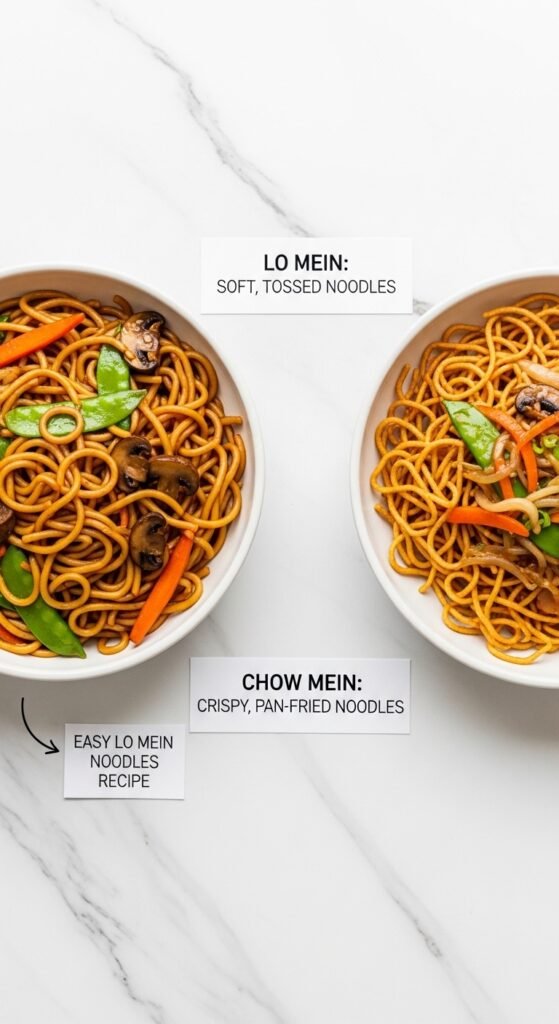
Before we start cooking, let’s clear up a common confusion. Lo mein and chow mein are often used interchangeably, but they’re actually quite different.
Lo mein means “tossed noodles” in Cantonese. The noodles are boiled until tender, then tossed with sauce and other ingredients. The result is soft, silky, and deeply flavorful.
Chow mein, on the other hand, means “stir-fried noodles.” These noodles are fried until crispy on the edges before being mixed with other ingredients.
Therefore, when you’re craving those soft, saucy noodles that soak up all the delicious flavors, you want lo mein. And that’s exactly what this easy lo mein noodles recipe delivers.
The Essential Ingredients for Your Easy Lo Mein Noodles Recipe

Now, let’s talk about what you’ll need. The beauty of lo mein is its flexibility, but there are some non-negotiables that make the dish shine.
For the Noodles

The star of any easy lo mein noodles recipe is, of course, the noodles themselves. Here are your best options:
- Fresh lo mein noodles – These are ideal if you can find them in the refrigerated section of an Asian grocery store or well-stocked supermarket. They have the perfect chew and absorb sauce beautifully.
- Dried egg noodles – A fantastic alternative that’s widely available. Look for thin or medium thickness.
- Spaghetti or linguine – In a pinch, regular pasta works surprisingly well. It won’t have the same springy texture, but it gets the job done.
Pro tip from my kitchen: I once ran out of lo mein noodles while hosting friends for dinner. Panicked, I grabbed a box of linguine from the pantry. To my surprise, everyone raved about the dish, and no one guessed I’d used Italian pasta. So don’t stress if you can’t find authentic noodles – just cook whatever you have.
For the Lo Mein Sauce (This Is Crucial)

The sauce makes or breaks any easy lo mein noodles recipe. Here’s what you’ll need:
- Light soy sauce – Provides saltiness and umami
- Dark soy sauce – Adds color and a slightly sweet, richer flavor (if you don’t have this, use regular soy sauce plus a touch of molasses)
- Oyster sauce – The secret weapon for depth and complexity
- Sesame oil – A little goes a long way; it adds that distinctive Asian aroma
- Brown sugar or honey – Balances the salty elements
- Minced garlic and ginger – Fresh is always better
- White pepper – Traditional in lo mein; black pepper works too
- Cornstarch – Helps thicken the sauce so it clings to the noodles
For the Vegetables and Protein

Here’s where you can get creative. My go-to combination includes:
- Sliced bell peppers (red and yellow for sweetness)
- Shredded carrots (for color and crunch)
- Snow peas or snap peas
- Broccoli florets (cut small so they cook quickly)
- Sliced mushrooms (shiitake or cremini)
For protein, consider:
- Sliced chicken breast
- Shrimp (the small to medium size work best)
- Thinly sliced beef
- Tofu (firm or extra-firm, pressed and cubed)
- Just vegetables – lo mein is fantastic as a vegetarian dish
The Complete Step-by-Step Easy Lo Mein Noodles Recipe
Alright, let’s get cooking. I’ve broken this down into simple steps that anyone can follow. Take a deep breath – you’ve got this.
Step 1: Prepare Your Ingredients (Mise en Place)

I cannot stress this enough. Stir-frying moves quickly, so you won’t have time to chop vegetables or measure sauces once the wok heats up. This was my biggest mistake in those early, disastrous attempts.
Here’s what to do:
- Chop all your vegetables into bite-sized pieces
- Slice your protein into thin, even strips
- Mince your garlic and ginger
- Measure all sauce ingredients into a small bowl
- Whisk the sauce together until the cornstarch dissolves completely
Anecdote time: The night of the ceiling-noodle incident, I thought I could multitask. I had the wok screaming hot, oil shimmering, and then I realized I hadn’t minced the garlic yet. While frantically chopping, the oil started smoking, the fire alarm went off, and my cat ran under the sofa. Don’t be like past me. Prep first. Cook second.
Step 2: Cook Your Noodles

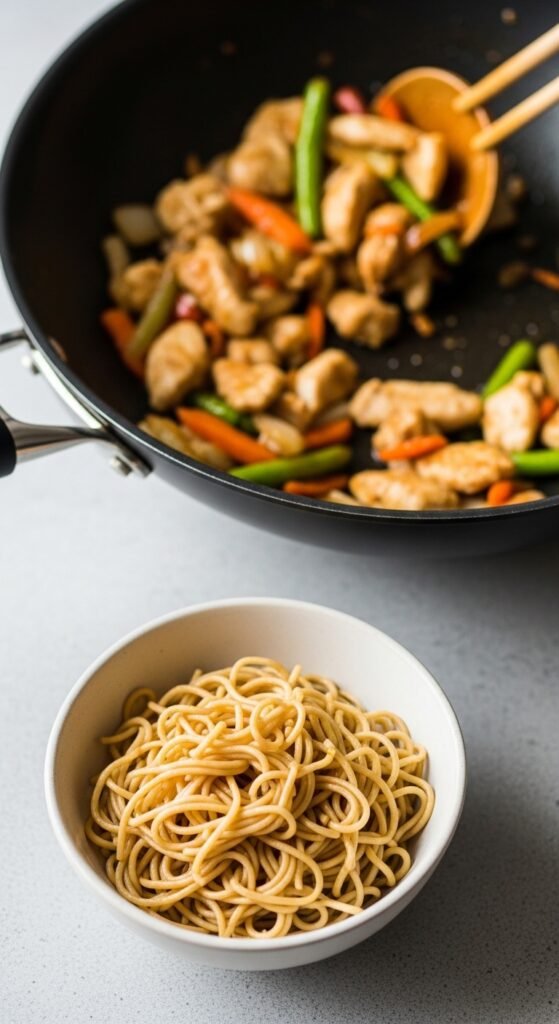
For this easy lo mein noodles recipe, cook the noodles according to package instructions. However, here’s the crucial part: undercook them by about one minute. They’ll continue cooking when you toss them in the wok, and you want them to stay chewy, not mushy.
Once cooked:
- Drain the noodles immediately
- Rinse with cold water to stop the cooking process
- Toss with a tiny splash of sesame oil to prevent sticking
- Set aside
Step 3: Cook Your Protein (If Using)
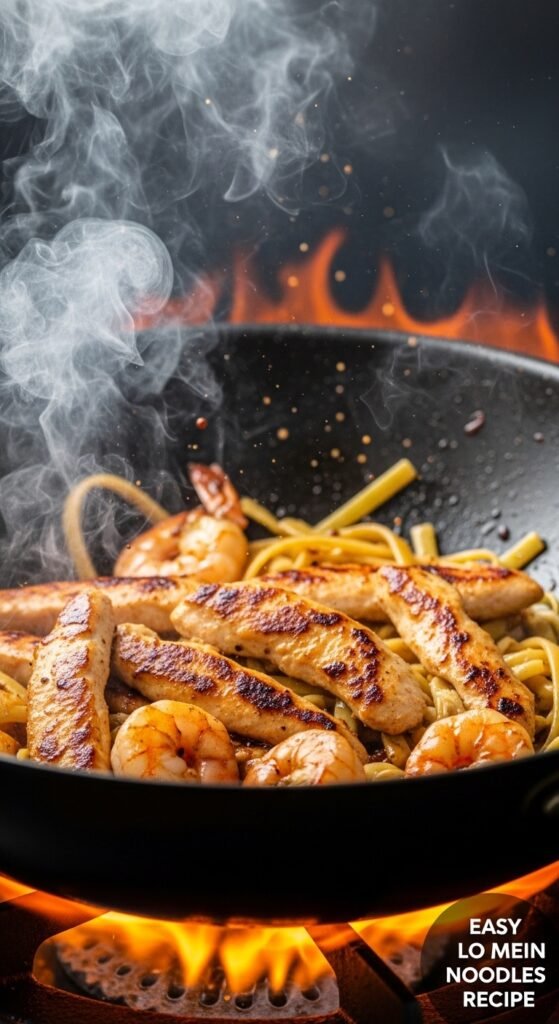
Heat your wok or largest skillet over high heat. Add one tablespoon of oil – avocado oil or vegetable oil works best because they have high smoke points.
Add your protein in a single layer. Don’t overcrowd the pan, or it will steam instead of sear. Cook for 2-3 minutes until browned and cooked through. Remove the protein from the wok and set it aside on a plate.
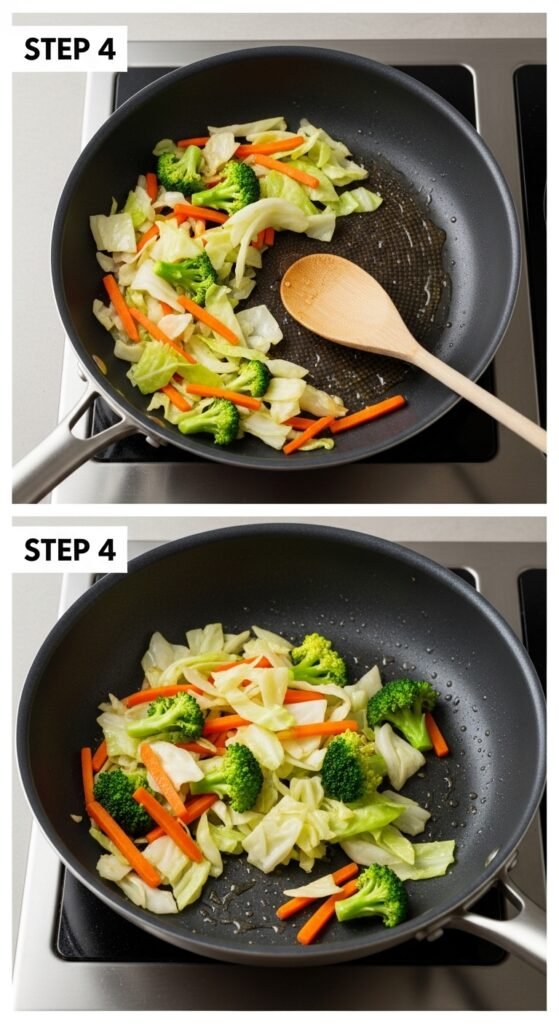
Step 4: Stir-Fry Your Vegetables

In the same wok, add another tablespoon of oil. Toss in your vegetables starting with the ones that take longest to cook. For example:
- Broccoli and carrots go first (about 2 minutes)
- Then bell peppers and mushrooms (1-2 minutes)
- Finally, snow peas and anything delicate (1 minute)
You want the vegetables to be tender-crisp – brightly colored with a little bite left. If they go limp and sad, you’ve cooked them too long.
Step 5: Add Aromatics

Push the vegetables to the sides of the wok, creating a well in the center. Add your minced garlic and ginger to this well. Let them sizzle for about 30 seconds until fragrant. Then mix them into the vegetables.
Why this matters: Garlic and ginger burn quickly. By creating a well, you protect them from the direct high heat of the wok bottom while still cooking them properly.
Step 6: Combine Everything
Return your cooked protein to the wok. Add the noodles. Pour your prepared sauce over everything.
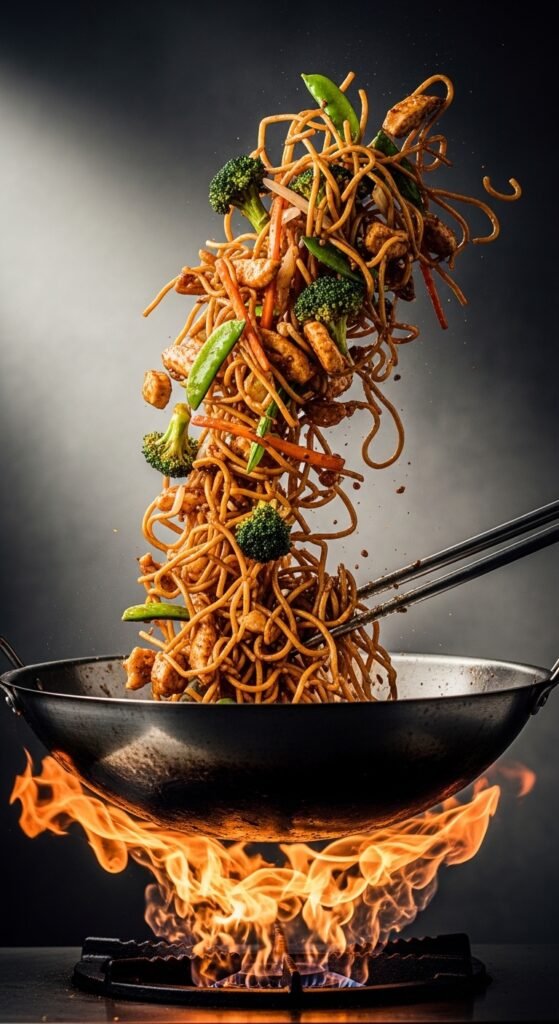
Now, here’s where the magic happens. Using tongs or two large spoons, toss everything together. The motion is more of a “lift and fold” than a stir. You want each noodle to get coated in that glossy, aromatic sauce.
Cook for 1-2 minutes, tossing continuously, until everything is hot and the sauce has thickened slightly.
Step 7: Final Touch

Turn off the heat. Drizzle an extra ½ teaspoon of sesame oil over the top. Give it one final toss. This finishing touch adds incredible aroma.
The Complete Lo Mein Sauce Recipe (Master This, Master Lo Mein)

Since the sauce is so important to any easy lo mein noodles recipe, I’m giving you the exact measurements that have never failed me. This makes enough for about 8 ounces of noodles (dried weight) plus vegetables and protein.
Ingredients:
- 3 tablespoons light soy sauce
- 1 tablespoon dark soy sauce (or substitute with regular soy sauce + ½ teaspoon molasses)
- 2 tablespoons oyster sauce
- 1 tablespoon sesame oil (plus extra for finishing)
- 1 tablespoon brown sugar (packed)
- 2 cloves garlic (minced)
- 1 teaspoon ginger (minced)
- ¼ teaspoon white pepper
- 1 tablespoon cornstarch
- ¼ cup water or low-sodium chicken broth
Instructions:
- Combine everything in a small bowl
- Whisk until cornstarch and sugar dissolve completely
- Set aside near your cooking station
Common sauce mistakes to avoid:
- Using too much soy sauce makes the dish overwhelmingly salty
- Skipping oyster sauce removes that savory depth (but use vegetarian oyster sauce if needed)
- Adding sesame oil during cooking instead of at the end (it loses its flavor when overheated)
Variations of This Easy Lo Mein Noodles Recipe
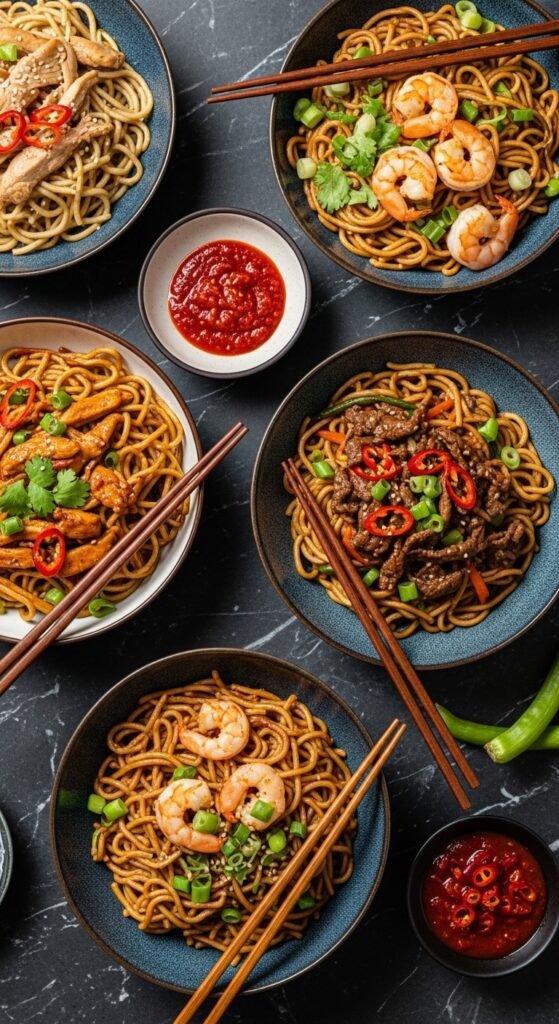
One of the best things about lo mein is its versatility. Here are some of my favorite variations.
Chicken Lo Mein

The most popular version. Use boneless, skinless chicken thighs for extra juiciness. Slice thinly against the grain. Marinate for 10 minutes in 1 tablespoon of soy sauce and 1 teaspoon of cornstarch before cooking.
Shrimp Lo Mein

Use medium shrimp (about 31-40 count per pound). Peel and devein them. Cook for just 1-2 minutes per side until pink and curled. Overcooked shrimp become rubbery.
Beef Lo Mein

Choose flank steak or sirloin. Slice very thinly against the grain. For tender beef, marinate in 1 tablespoon of soy sauce, 1 teaspoon of baking soda, and 1 tablespoon of water for 15 minutes, then rinse before cooking.
Vegetable Lo Mein

Skip the protein and add extra vegetables. I love including baby corn, water chestnuts, and bok choy. For more protein, add edamame or tofu.
Spicy Szechuan Lo Mein

Add 1 tablespoon of chili bean paste (doubanjiang) to the sauce. Finish with a drizzle of chili oil and a sprinkle of crushed Szechuan peppercorns.
Tips and Tricks for the Best Easy Lo Mein Noodles Recipe
After making lo mein more times than I can count, I’ve gathered some wisdom worth sharing.
Noodle Tips
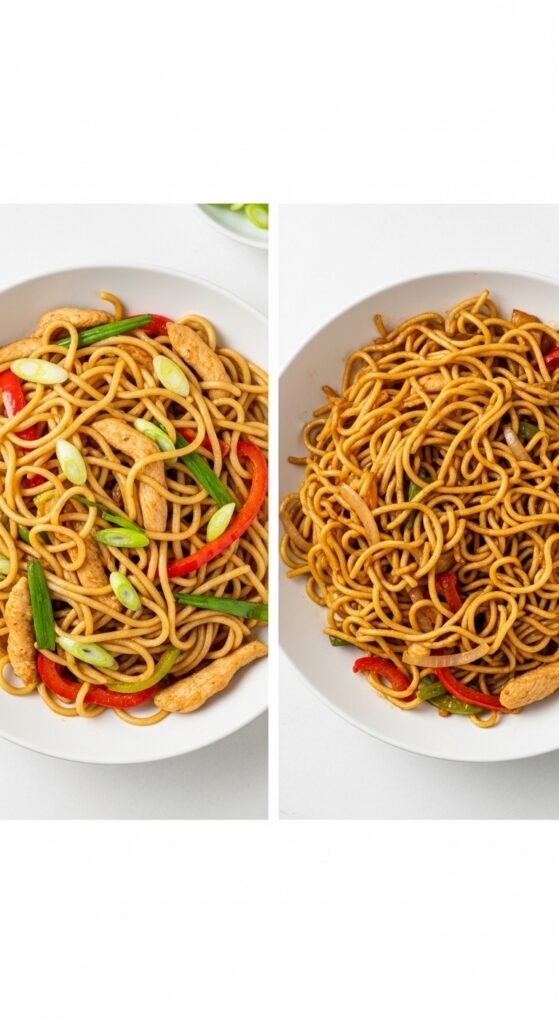
- Don’t overcook your noodles. This is the number one mistake. Slightly undercooked is always better than overcooked.
- Rinse with cold water. This stops cooking and removes excess starch that causes clumping.
- Oil the noodles lightly. After draining, a tiny bit of sesame oil keeps them separate and adds flavor.
Cooking Tips

- High heat is your friend. Lo mein is a stir-fry dish. Low heat makes everything steam and become soggy.
- Work in batches if needed. If your wok or pan is small, cook the protein in two batches. Overcrowding leads to steaming, not searing.
- Have everything within reach. Once cooking starts, you won’t have time to hunt for ingredients.
Sauce Tips

- Taste before adding to the wok. Every brand of soy sauce has different salt levels. Adjust accordingly.
- Add cornstarch just before cooking. If you mix the sauce too early, the cornstarch settles at the bottom. Whisk again before pouring.
- Don’t skip the dark soy sauce. Regular soy sauce alone won’t give you that beautiful mahogany color.
Troubleshooting Common Lo Mein Problems
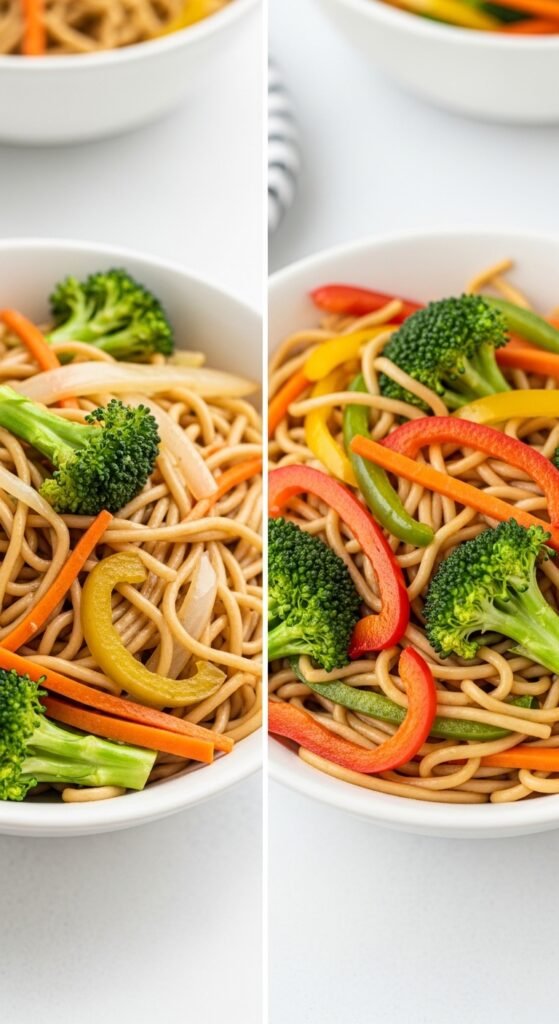
Even with the best easy lo mein noodles recipe, things can go wrong. Here’s how to fix them.
Problem: My noodles are a sticky clump

Solution: You either overcooked them or didn’t rinse them well enough. Next time, undercook by one minute, rinse thoroughly with cold water, and toss with a small amount of oil. For now, try rinsing the clump under warm water and gently separating with your fingers.
Problem: My lo mein is too salty
Solution: This usually means too much soy sauce or using regular soy sauce when the recipe called for light. Balance by adding more noodles or vegetables, or squeeze fresh lime juice over the top. For next time, use low-sodium soy sauce.
Problem: My lo mein is bland

Solution: You likely need more oyster sauce or a pinch of salt. Sometimes the answer is a finishing drizzle of sesame oil or a sprinkle of white pepper.
Problem: My vegetables are mushy
Solution: You cooked them too long or your heat wasn’t high enough. Vegetables should spend no more than 3-4 minutes total in the wok. Next time, cook in smaller batches.
Problem: My sauce is watery

Solution: The cornstarch didn’t activate properly. Make sure your wok is hot enough when you add the sauce. The heat causes the cornstarch to thicken. You can also make a slurry (1 teaspoon cornstarch mixed with 2 teaspoons cold water) and stir it in at the end.
What to Serve with Your Easy Lo Mein Noodles Recipe
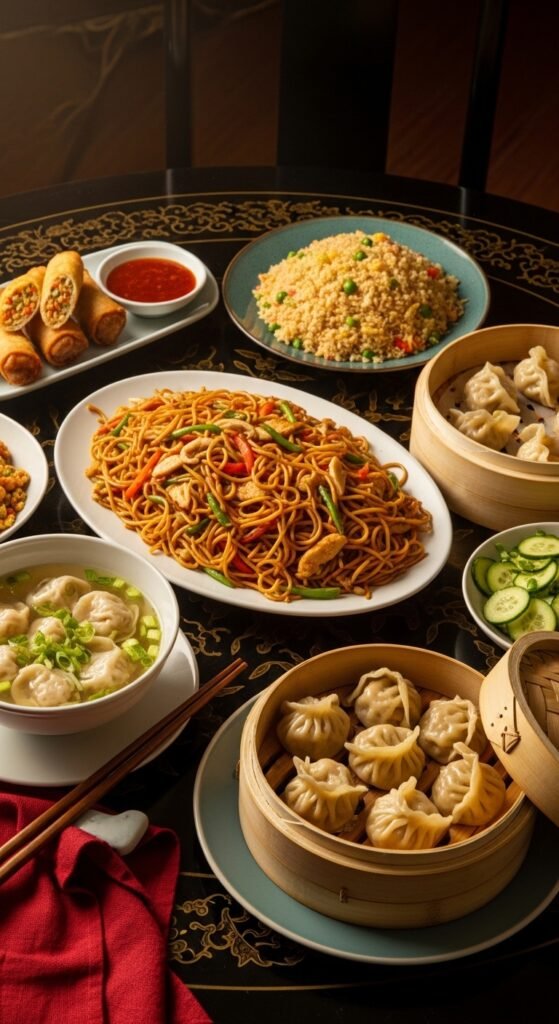
Lo mein is a complete meal on its own, but if you’re feeding a crowd or want a feast, here are some excellent pairings:
- Egg rolls or spring rolls – The crispy texture contrasts beautifully with the soft noodles
- Potstickers or dumplings – Especially with a vinegar-soy dipping sauce
- Hot and sour soup or egg drop soup – A classic Chinese takeout combination
- Cucumber salad – A light, refreshing side that cuts through the richness
- Edamame – Simple steamed soybeans with sea salt
For drinks, jasmine iced tea, a crisp lager, or even a dry Riesling works wonderfully.
How to Store and Reheat Leftovers

If you have leftovers (which rarely happens in my house), here’s how to handle them.
Storage:
- Place cooled lo mein in an airtight container
- Refrigerate for up to 3 days
- Do not freeze – noodles become mushy when thawed
Reheating methods:
- Best method: Reheat in a hot wok or skillet with a splash of water or soy sauce. Toss for 2-3 minutes until hot.
- Good method: Microwave in 30-second bursts, stirring between each. Add a teaspoon of water to create steam.
- Avoid: Reheating in the oven, which dries out the noodles.
Pro tip: Leftover lo mein is actually delicious cold, straight from the fridge. I’ve been known to eat it for breakfast.
Why You Should Buy Quality Ingredients for This Easy Lo Mein Noodles Recipe
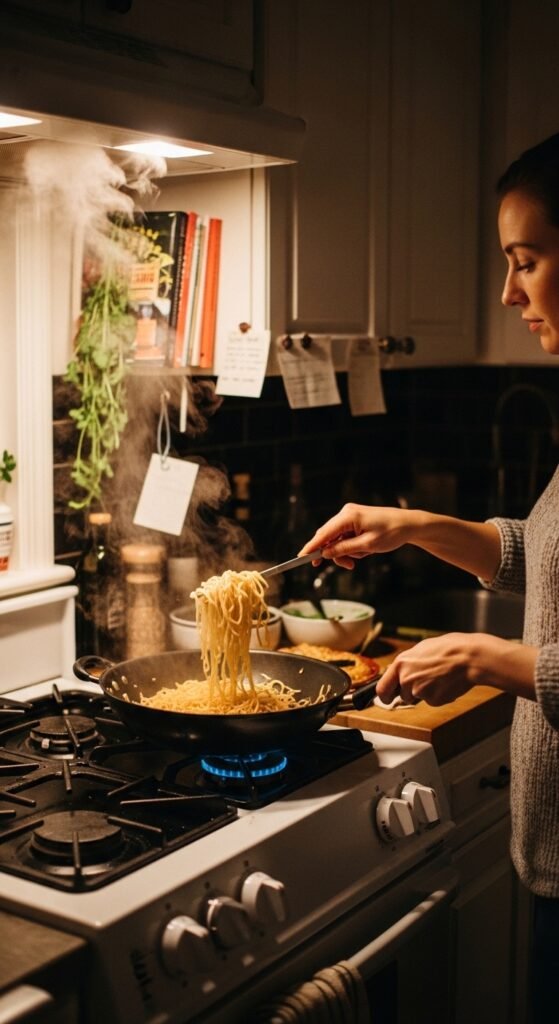
Now, let me talk to you honestly about why investing in good ingredients matters.
When I first started making lo mein, I grabbed whatever was cheapest. The cheapest soy sauce. The bargain bin noodles. The vegetables that were already starting to wilt. And you know what? My lo mein tasted cheap.
The moment I upgraded to quality ingredients, everything changed.
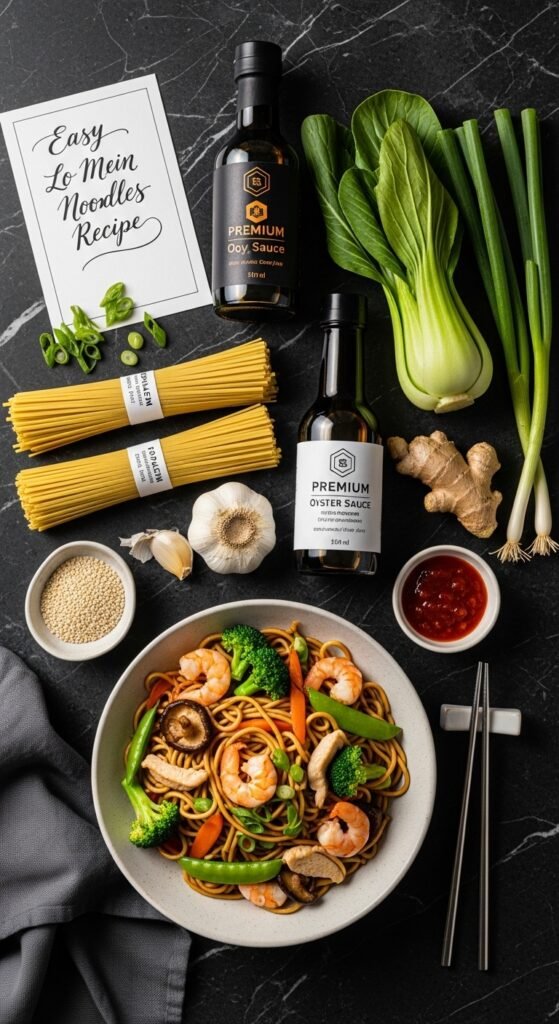
**Premium *soy sauce* (like Pearl River Bridge or Lee Kum Kee)** has more complex flavor. You need less of it, and the result is more balanced.
**Good *sesame oil* (look for toasted sesame oil)** is fragrant and nutty. Cheap sesame oil tastes like nothing.
Fresh vegetables have natural sweetness and crunch. Sad vegetables make sad lo mein.
Oyster sauce varies dramatically by brand. The cheap ones are mostly corn syrup and artificial flavors. The good ones (again, Lee Kum Kee is my go-to) are packed with real oyster extract and umami.
Furthermore, a decent wok or large skillet makes a tremendous difference. You don’t need a $200 carbon steel wok. A $30 cast-iron wok or even a large nonstick skillet works beautifully. But having the right tool allows you to achieve that high-heat sear that defines good stir-fry.
Where to Buy the Best Ingredients for Lo Mein
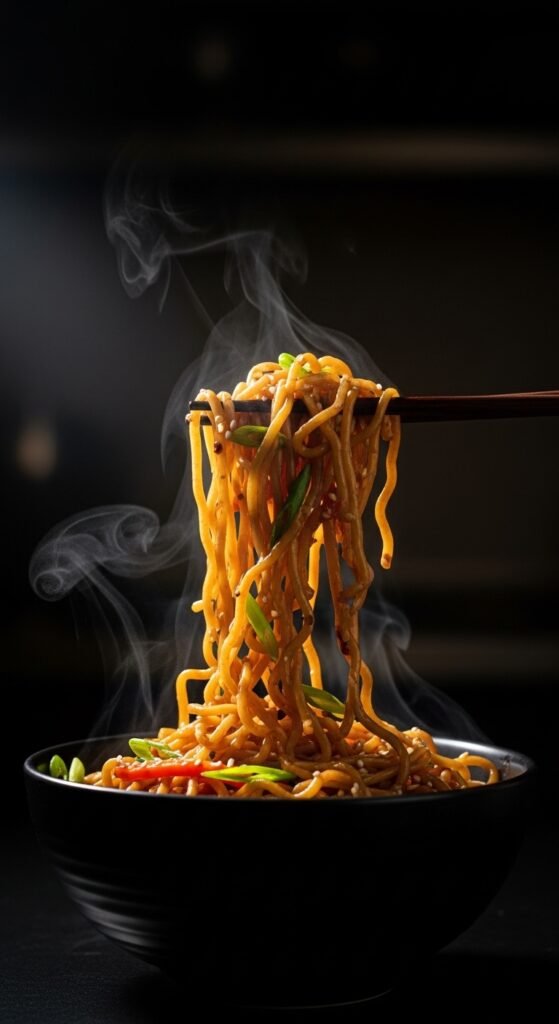
You can find most lo mein ingredients at regular grocery stores these days. However, for the best selection and prices, consider:
Regular supermarkets: Look in the international aisle. You’ll find soy sauce, oyster sauce, sesame oil, and dried noodles.
Asian grocery stores: These are goldmines. You’ll find fresh noodles, multiple brands of every sauce, and vegetables like bok choy and Chinese broccoli at much lower prices.
Online retailers: Amazon and specialty sites sell everything you need. This is especially helpful if you live in an area without Asian markets.
What I recommend buying now:
- A bottle of light soy sauce (Pearl River Bridge or Kikkoman)
- A bottle of dark soy sauce (this will last you forever)
- A jar of oyster sauce (Lee Kum Kee)
- A bottle of toasted sesame oil (Kadoya or Dynasty)
- A bag of dried egg noodles or fresh lo mein noodles from the refrigerated section
With these five items, plus fresh vegetables and protein, you can make restaurant-quality lo mein whenever the craving strikes.
My Personal Easy Lo Mein Noodles Recipe Timeline (For Busy Nights)
Here’s exactly how I make this happen on a Tuesday night when I’m tired and hungry.
5:00 PM – Take protein out of the fridge. While it comes to room temperature, chop vegetables. (10 minutes)
5:10 PM – Mix the sauce. Mince garlic and ginger. (5 minutes)
5:15 PM – Boil water for noodles. While waiting, slice protein. (5 minutes)
5:20 PM – Cook noodles. Drain, rinse, oil, set aside. (8 minutes)
5:28 PM – Heat wok. Cook protein. Remove. (3 minutes)
5:31 PM – Stir-fry vegetables. Add garlic and ginger. (4 minutes)
5:35 PM – Return protein. Add noodles and sauce. Toss. (2 minutes)
5:37 PM – Dinner is served.
Total time from start to sitting down with a bowl: 37 minutes. And most of that was chopping vegetables.
Frequently Asked Questions About This Easy Lo Mein Noodles Recipe
Can I make lo mein gluten-free?
Absolutely. Use gluten-free soy sauce (tamari) or coconut aminos. Ensure your oyster sauce is gluten-free (some brands contain wheat). Use rice noodles or gluten-free spaghetti.
Can I make this vegan?
Yes. Use vegetarian oyster sauce (made from mushrooms) or simply omit it and add an extra tablespoon of soy sauce plus a teaspoon of mushroom powder for umami.
How many calories are in homemade lo mein?
It varies based on ingredients, but a typical serving (with vegetables and chicken) has about 450-550 calories. Takeout lo mein often has 700-900 calories due to extra oil and sodium.
Why is my lo mein brown instead of that beautiful golden color?
You need dark soy sauce. Regular soy sauce alone produces a lighter, less appealing color. Just one tablespoon of dark soy sauce transforms the appearance completely.
Can I prepare this ahead of time?
You can chop vegetables and mix the sauce up to two days ahead. Cook the noodles and protein fresh for best results. However, fully prepared lo mein reheats reasonably well.
A Final Story About This Easy Lo Mein Noodles Recipe
Last month, my niece came to visit. She’s nine years old and, according to her mother, “the pickiest eater on the planet.” Chicken nuggets or bust. Mac and cheese or meltdown.
I decided to make lo mein for dinner, fully expecting her to push it around her plate. I set out the ingredients. She watched me chop vegetables. She helped me whisk the sauce. She was fascinated by the way the noodles spun around the wok.
When we sat down to eat, she took a tiny bite. Then another. Then she asked for more vegetables. Then she asked for the recipe so her mom could make it at home.
That night, her mom texted me: “She just asked for broccoli. Willingly. What did you do?”
I didn’t do anything magical. I just made an easy lo mein noodles recipe that actually tastes good. That’s the power of cooking at home – you can show people, especially kids, that vegetables and noodles and sauce can come together into something genuinely delicious.
Ready to Make the Best Easy Lo Mein Noodles Recipe of Your Life?
You have everything you need now. The step-by-step instructions. The sauce secrets. The troubleshooting tips. The shortcuts for busy nights.
All that’s left is to start cooking.
Here’s my challenge to you: make this easy lo mein noodles recipe this week. Don’t wait for a special occasion. Don’t save it for the weekend. Make it on a random Tuesday when you’re tired and tempted to order takeout.
I promise you – when those glossy, aromatic noodles hit your plate, when you take that first bite and realize you made something better than what you’d get delivered, you’ll never go back.
And when you do, come back and tell me about it. I love hearing lo mein success stories.
Shop With Confidence: What You Need to Buy Right Now
To make this easy lo mein noodles recipe a reality in your kitchen, here’s exactly what I recommend purchasing:
The Sauce Bundle (Buy These Once, Make Dozens of Meals):
- Light Soy Sauce – Kikkoman or Pearl River Bridge
- Dark Soy Sauce – Lee Kum Kee
- Oyster Sauce – Lee Kum Kee (the one with the lady on the label)
- Toasted Sesame Oil – Kadoya
- White Pepper – Any brand
The Noodles:
- Fresh Lo Mein Noodles – Found in the refrigerated section (Twin Marquis is excellent)
- OR Dried Egg Noodles – Maruchan or Dynasty
The Equipment (One-Time Investment):
- Carbon steel wok – Joyce Chen or Yosukata
- OR Large nonstick skillet – Calphalon or T-fal
- Long-handled spatula or wok ladle
- Tongs (for tossing noodles)
The Fresh Ingredients (Buy Weekly):
- Garlic and ginger
- Bell peppers, carrots, snow peas
- Your choice of protein
Every single item on this list is available at major retailers, Asian grocery stores, or online. Don’t overcomplicate it. Start with the basics. Upgrade as you fall in love with making lo mein at home.
Final Thoughts
This easy lo mein noodles recipe has saved me hundreds of dollars, countless disappointing takeout meals, and more than a few hangry evenings. It’s simple enough for a beginner but delicious enough to impress guests.
The secret, as with most cooking, isn’t technique or equipment. It’s just doing it. Making it once. Learning. Making it again. Each time getting a little faster, a little more confident, a little closer to the version you love most.
So go ahead. Boil those noodles. Whisk that sauce. Heat that wok until it shimmers.
Your perfect lo mein is waiting.