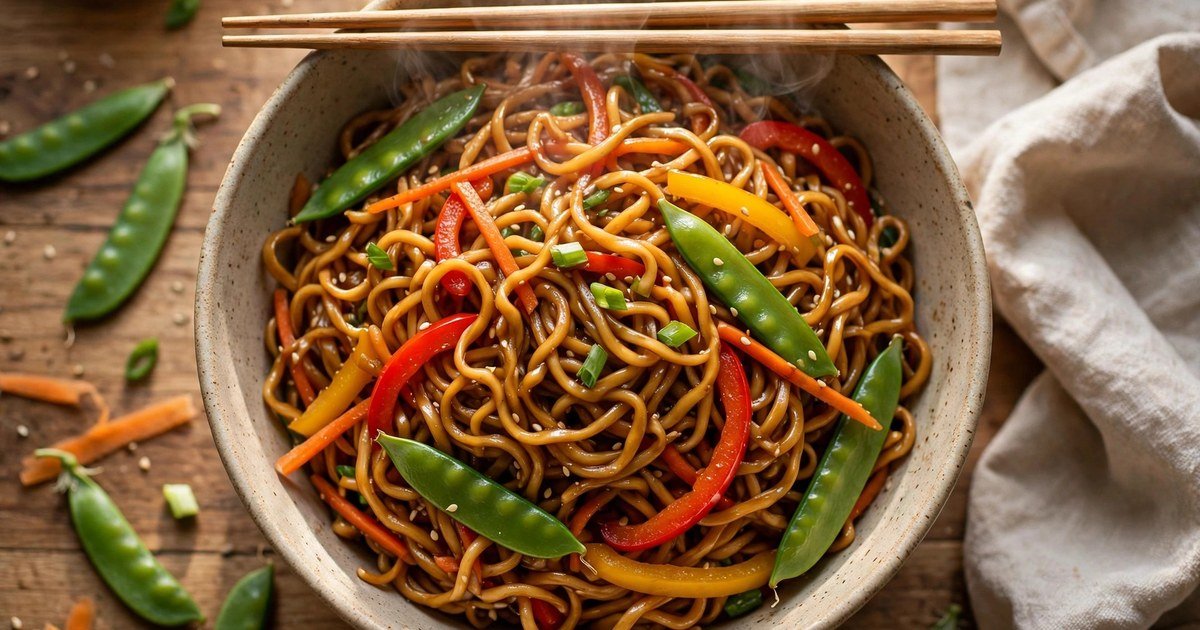
This mein noodles recipe turns a handful of pantry staples into a glossy, savory bowl of noodles that tastes like your favorite takeout order, only fresher and made in your own kitchen. The sauce comes together in one small bowl, the vegetables stay bright and crisp, and the whole dish lands on the table in about twenty minutes.
Once you learn the base recipe below, the same bowl can change shape all week. Swap the protein, trade the vegetables, turn up the heat or keep it mild, and dinner still comes together in one pan, because the six variations in this guide all build on the same sauce and method. If weeknights feel rushed, this is a good place to start, and these easy sheet pan dinner recipes are another calm way to get dinner on the table.
Table of Contents
Mein Noodles Recipe Basics: Sauce, Noodles and Timing
A good bowl starts with the sauce, and this one is deliberately simple. The classic lo mein style pairs soft wheat noodles with a savory, lightly sweet sauce, and the version below follows that same gentle balance. Soy sauce brings salt and depth, oyster sauce adds a soft richness, a little brown sugar rounds the edges, and sesame oil finishes everything with warmth, so whisk the sauce before you heat the pan, because once the noodles go in, the cooking moves fast.
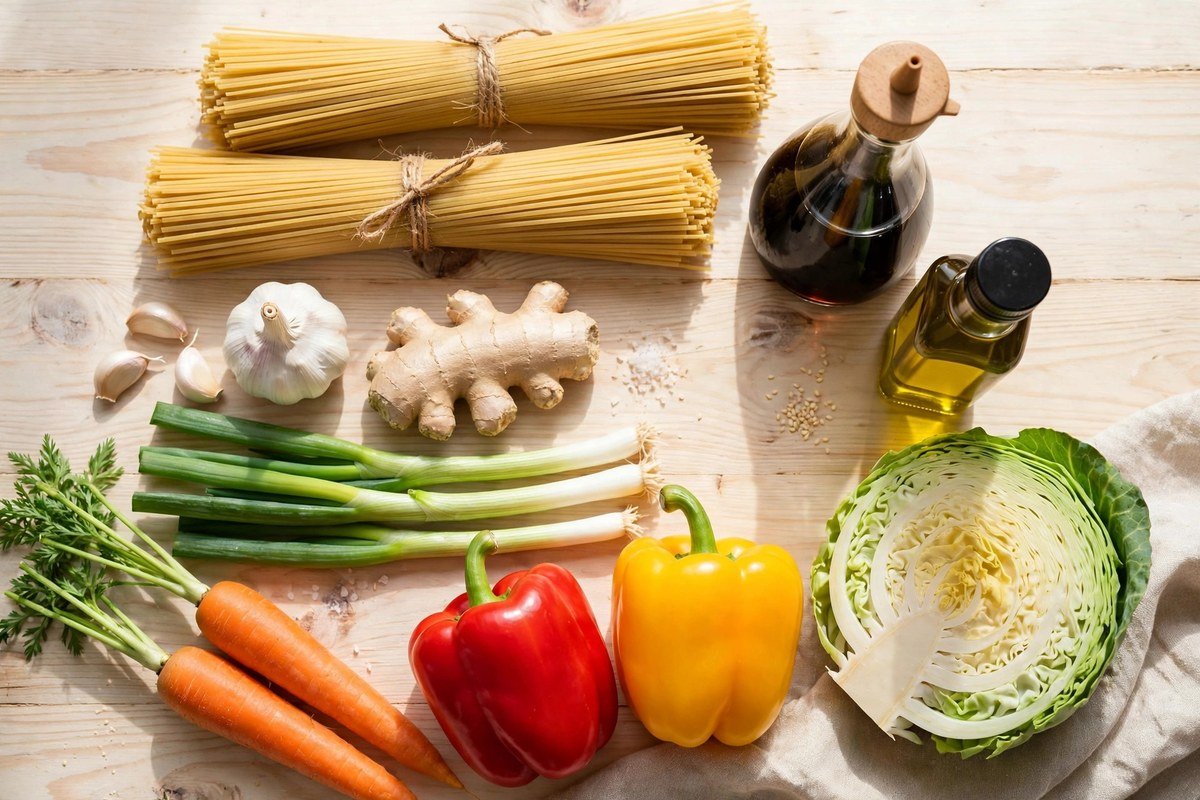
Choose noodles made for tossing: fresh or dried lo mein noodles, spaghetti, or any long, soft wheat noodle. Cook them just until tender, then drain them well. Noodles that sit in hot water too long turn soft and break apart in the pan, while noodles that are slightly firm hold their shape and drink up the sauce, and a quick rinse under warm water with a light toss of sesame oil keeps them from clumping while the vegetables cook.
Timing is what makes this dish feel easy, so prep everything before the pan gets hot: slice the vegetables, mix the sauce, and have the noodles drained and waiting. The actual cooking takes about eight minutes: vegetables first, then noodles and sauce, and finally a fast toss until everything shines, so when the pan is hot and the ingredients are ready, the dish almost cooks itself.
The Classic Mein Noodles Recipe
This is the base recipe every variation in this guide builds on, and it is worth learning on its own first. It serves four, takes about twenty minutes, and uses ingredients most kitchens already keep on hand.

Ingredients
- 8 ounces lo mein noodles, spaghetti, or other long wheat noodles
- 2 tablespoons soy sauce
- 1 tablespoon oyster sauce
- 1 tablespoon brown sugar
- 1 teaspoon sesame oil, plus 1 teaspoon for the noodles
- 1 tablespoon neutral oil, such as vegetable or avocado oil
- 3 cloves garlic, thinly sliced
- 1 tablespoon fresh ginger, grated
- 1 red bell pepper, thinly sliced
- 2 medium carrots, cut into thin matchsticks
- 2 cups shredded cabbage
- 1 cup snow peas or snap peas
- 3 green onions, sliced, whites and greens kept separate
- 1 teaspoon sesame seeds, for serving
Method
- Cook the noodles according to the package directions until just tender. Drain them well, rinse briefly under warm water, and toss with one teaspoon of sesame oil so they do not stick together.
- Whisk the soy sauce, oyster sauce, brown sugar and sesame oil in a small bowl until the sugar dissolves. Set the sauce beside the stove.
- Heat the neutral oil in a large wok or wide skillet over medium-high heat. Add the garlic and ginger and cook for about thirty seconds, just until fragrant.
- Add the bell pepper, carrots, cabbage and snow peas. Cook for three to four minutes, stirring often, until the vegetables are bright and just tender.
- Add the drained noodles and the sauce. Toss everything together for two to three minutes until the noodles are glossy and evenly coated.
- Stir in the white parts of the green onions, then remove the pan from the heat. Serve in warm bowls, scattered with the green onion tops and sesame seeds.
The soft wheat noodles at the heart of this dish are forgiving, which is part of their charm. If the pan looks dry as you toss, add a splash of warm water, a tablespoon at a time, and the sauce will loosen and coat everything again. If the noodles seem pale, a small extra drizzle of soy sauce will deepen the color without making the dish too salty, so taste before you serve and adjust with a pinch of sugar for sweetness or a drop of sesame oil for warmth.
6 Easy Variations on This Mein Noodles Recipe
Once the base recipe feels comfortable, this mein noodles recipe becomes a template you can bend in any direction. Each variation below changes one or two things, so the cooking stays familiar while dinner tastes new.
Chicken Mein Noodles
What it is: The classic base with tender strips of chicken folded in, the closest thing to a takeout favorite and the best place to start if you want a bowl that feels like a real treat.
Who it suits: Families, chicken lovers, and anyone who wants a filling dinner that still comes together quickly on a busy evening.
How to make it: Slice one pound of boneless chicken into thin strips and season with salt and pepper. Cook the chicken in the hot oiled pan for about five minutes until golden, then set it aside. Cook the vegetables in the same pan, then return the chicken with the noodles and sauce and toss to combine.
Pro tip: Slice the chicken against the grain and keep the strips thin, so they stay tender and cook through quickly.
Mistake to avoid: Crowding the pan. Too much chicken at once steams instead of browning, so cook in two batches if the pan feels full.

Shrimp Mein Noodles
What it is: The base recipe with plump shrimp and a squeeze of lime at the end, a lighter bowl that feels a little bit special.
Who it suits: Seafood lovers, date-night dinners at home, and anyone who wants a fast meal that still feels like an occasion.
How to make it: Peel and devein one pound of shrimp, then cook them in the hot pan for about two minutes per side until pink. Set them aside, cook the vegetables and noodles as usual, then fold the shrimp back in at the end with a squeeze of lime.
Pro tip: Pat the shrimp dry before they hit the pan. Dry shrimp sear and turn pink quickly, while wet shrimp release water and cool the pan down.
Mistake to avoid: Adding the shrimp too early. Shrimp cook in minutes, and leaving them in while the noodles toss will turn them rubbery.
Vegetable Garden Mein Noodles
What it is: A meat-free version loaded with whatever vegetables are in the fridge, from broccoli and mushrooms to shredded cabbage and sweet corn, all tossed in the same glossy sauce.
Who it suits: Vegetarian households, garden harvest weeks, and busy nights when the fridge holds more vegetables than a plan.
How to make it: Double the vegetables in the base recipe and add them in order of firmness: broccoli and carrots first, then mushrooms and cabbage, with delicate greens last. Finish with toasted peanuts or cashews for crunch, and if you want more ideas for the season, these cozy cabbage recipes for winter put the same humble vegetable to work in soups, slaws and warm sides.
Pro tip: Cut every vegetable to a similar size so they cook at the same pace and no single piece turns soft while another stays raw.
Mistake to avoid: Adding all the vegetables at once. Firm vegetables need a head start, and delicate ones only need a minute or two at the end.
Spicy Chili Garlic Mein Noodles
What it is: The base recipe with a warm chili kick, built for nights when dinner needs to be fast, bold and ready in twenty minutes.
Who it suits: Spice lovers, tired cooks who still want flavor, and anyone who likes a bowl with a little heat in every bite.
How to make it: Stir one to two teaspoons of chili garlic sauce or chili crisp into the sauce before cooking, and add a pinch of red pepper flakes with the garlic and ginger. Finish with extra green onions and a drizzle of chili oil if you like it hotter.
Pro tip: Start with one teaspoon of chili sauce and taste before adding more. Heat builds as the noodles sit, and you can always add more at the table.
Mistake to avoid: Adding the chili sauce straight to a screaming hot empty pan. It can scorch and turn bitter, so whisk it into the sauce bowl instead.

Beef and Broccoli Mein Noodles
What it is: Thin strips of beef and tender broccoli florets in the same savory sauce, a hearty bowl that eats like a full takeout spread.
Who it suits: Hearty appetites, cold evenings, and anyone who wants a dinner that feels substantial without a long cook time.
How to make it: Slice flank steak very thinly against the grain and toss it with a teaspoon of soy sauce and a teaspoon of cornstarch. Sear the beef for two to three minutes, set it aside, then cook the broccoli and other vegetables before returning the beef with the noodles and sauce for a final toss.
Pro tip: Freeze the steak for twenty minutes before slicing, so it cuts thinly and evenly, which is the whole secret to tender stir-fry beef.
Mistake to avoid: Overcooking the beef after it returns to the pan. It only needs a minute to warm through in the sauce, and longer will make it tough.
Peanut Sesame Mein Noodles
What it is: The base recipe with a creamy peanut and sesame sauce swirled through the noodles, a gentle, nutty bowl that kids tend to love.
Who it suits: Peanut butter fans, picky eaters, packed lunches, and anyone who likes a milder, creamier noodle bowl.
How to make it: Whisk three tablespoons of smooth peanut butter and one tablespoon of warm water into the sauce before cooking, and use half the soy sauce so the bowl stays balanced. Toss the cooked noodles in the sauce as usual, then finish with sesame seeds, chopped peanuts and lime.
Pro tip: Warm the peanut butter slightly before whisking so it blends smoothly into the sauce instead of clumping on the noodles.
Mistake to avoid: Skipping the lime or a splash of rice vinegar. A little acid keeps the peanut sauce from tasting heavy and flat.
Serving, Storing and Reheating
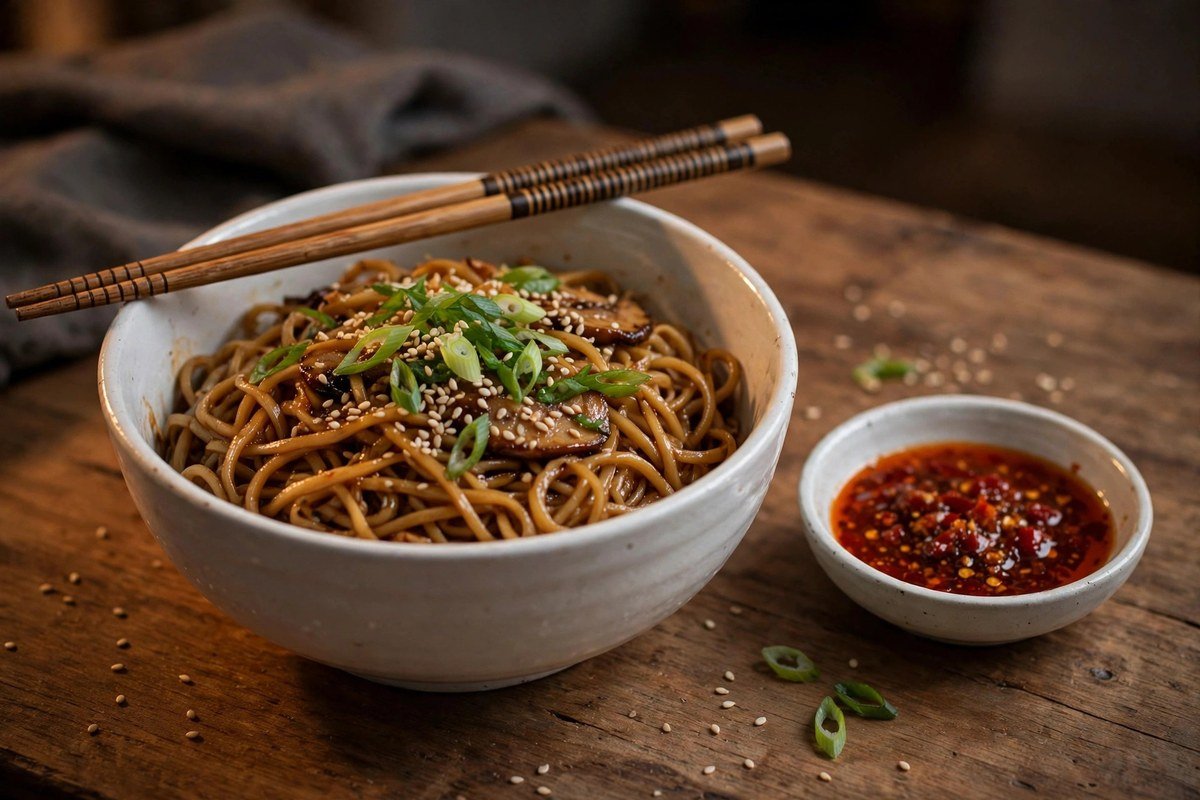
Serve the noodles straight from the pan in wide, warm bowls, with chopsticks or a fork and a small dish of extra chili sauce on the side. A simple cucumber salad, steamed edamame or a light soup makes a kind dinner companion, and the noodles are at their best in the first twenty minutes, while the sauce is still glossy.
Leftovers keep well in a sealed container in the fridge for about three days, and they reheat gently in a wide pan over medium heat with a splash of water to loosen the sauce. The microwave works too, in short bursts with a stir between each one, so the noodles warm evenly without drying out, and cooked noodles are best eaten within a few days, so when in doubt, trust your senses and discard anything that smells off. For another easy weeknight idea, these easy air fryer recipes make a crisp side or a quick main to serve alongside the noodles.
Frequently Asked Questions
Can I make this mein noodles recipe ahead of time?
Yes, with one small change. Cook the noodles, sauce and vegetables separately, store them in sealed containers in the fridge, and toss everything together in a hot pan just before serving, so the noodles stay springy and the sauce stays glossy.
What noodles work best for this dish?
Lo mein noodles are the natural choice, and spaghetti, linguine or any long, soft wheat noodle works well too. Avoid very thin rice noodles, which can break apart when tossed, and cook just until tender, then drain well and toss with a little sesame oil.
How do I keep the noodles from getting sticky?
Cook them just until tender, drain them well, and toss them with a teaspoon of sesame oil while they wait. A quick rinse under warm water also helps, and the noodles should go into a hot pan, not a crowded one.
Can I make this recipe gluten-free?
Yes, with a few swaps. Use gluten-free noodles, tamari instead of soy sauce, and a gluten-free oyster sauce or a little extra tamari with a pinch of sugar, and check the labels on your sauces, since some brands include wheat.
How long do leftovers keep in the fridge?
Leftover noodles keep for about three days in a sealed container in the fridge. Reheat them gently in a pan with a splash of water, or in the microwave in short bursts with a stir between each one, then add fresh green onions to brighten the bowl.
Conclusion
A good mein noodles recipe earns its place in the weekly rotation by asking for very little and giving back a lot: one pan, one sauce, twenty minutes, and a bowl that tastes like the takeout you love. Start with the classic base, then try a variation or two and see which one your table asks for again.
When you are ready to build a fuller table, explore the other recipe guides here for warm soups and crisp sides to serve alongside your noodles. A steaming bowl, a simple side and good company are often all a weeknight dinner really needs.


