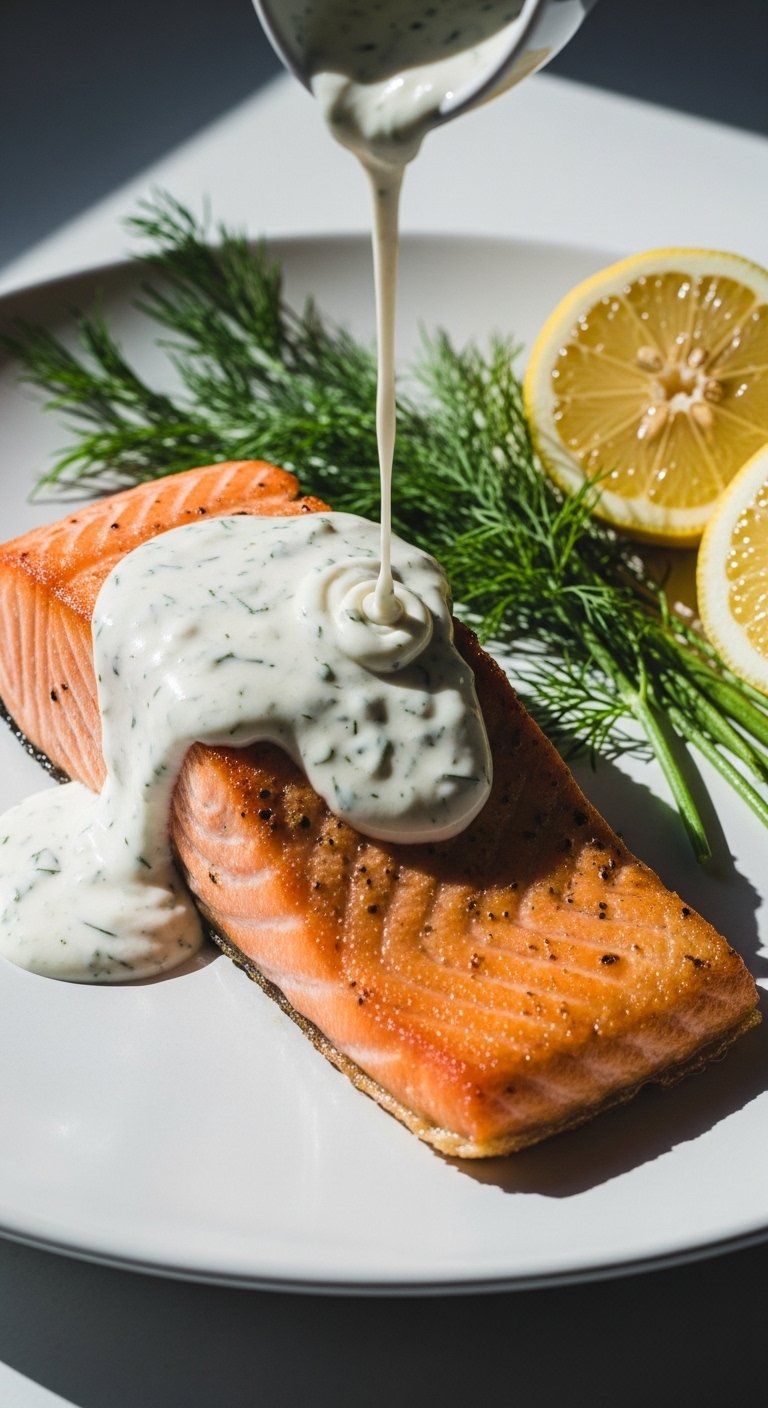
Dill sauce for salmon is one of those magical combinations that seems simple on the surface but delivers extraordinary results every single time. I still remember the first time I truly understood this pairing. It was a rainy Tuesday evening, and I had invited a new neighbor over for dinner. Nervous and eager to impress, I grabbed a beautiful salmon fillet from the market. But I had no idea what to serve with it. My grandmother called just as I was panicking. “Make dill sauce,” she said. “It never fails.” She was right. That night, my neighbor asked for seconds, then for the recipe. Fifteen years later, she still makes that same dill sauce for salmon for her own family.
Today, I am going to teach you everything you need to know about this incredible sauce. We will cover the history, the science, the ingredients, the step-by-step process, and even some exciting variations. By the time you finish reading, you will feel completely confident making dill sauce for salmon in your own kitchen. More importantly, you will understand why this sauce turns a simple piece of fish into a restaurant-quality meal.
Why Dill and Salmon Belong Together
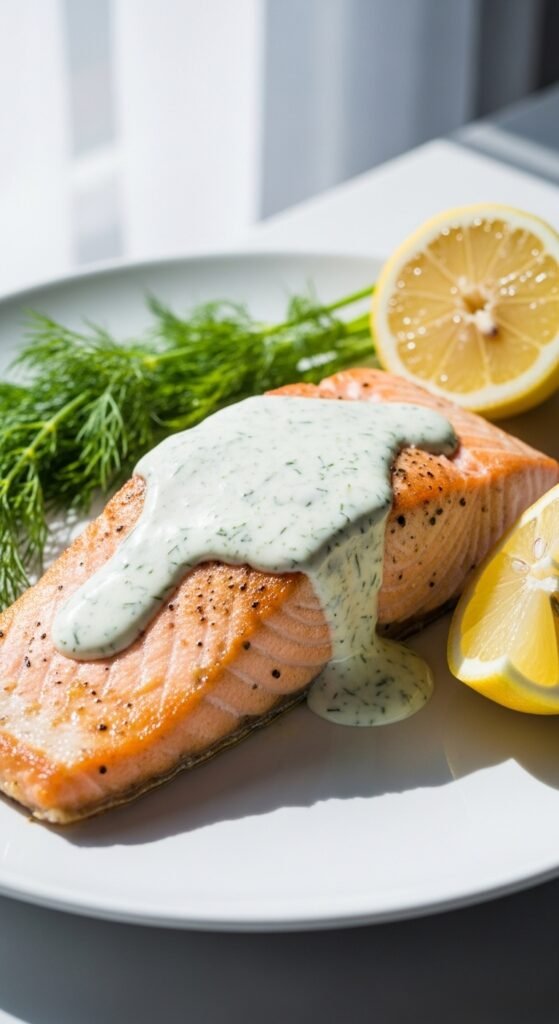
Before we dive into the recipe, let us talk about why this pairing works so beautifully. Salmon has a rich, fatty, almost buttery flavor. It can feel heavy on its own, especially when baked or pan-seared. Dill, on the other hand, brings a bright, fresh, slightly anise-like note that cuts right through that richness. The combination creates balance.
Furthermore, dill sauce for salmon adds moisture. Salmon can dry out quickly if you overcook it even by a minute. A creamy, tangy sauce rescues the dish by coating each bite with silky goodness. Consequently, you do not have to be a professional chef to serve perfect salmon. The sauce covers small mistakes and elevates good cooking to great cooking.
I learned this lesson the hard way. About ten years ago, I hosted a birthday dinner for my husband. I was so focused on side dishes that I left the salmon under the broiler for two extra minutes. The outside looked fine, but the inside had turned chalky and dry. I nearly cried. Then I remembered my grandmother’s dill sauce for salmon. I whisked it together in five minutes, spooned it over the fish, and nobody noticed the dryness. Everyone raved about the meal. That sauce saved my reputation.
The Hidden History of Dill Sauce
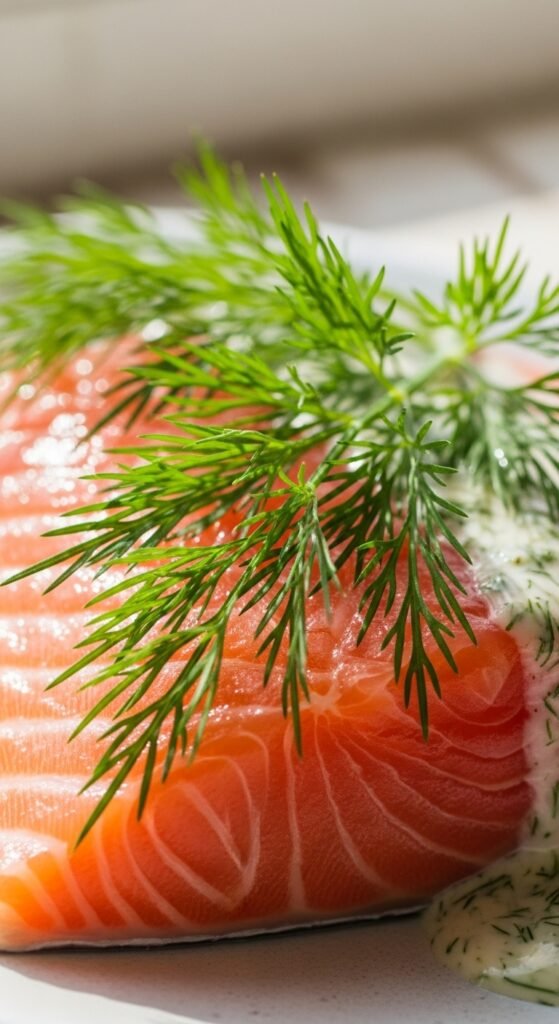
Dill has been used in cooking for thousands of years. Ancient Egyptians valued dill as a medicine and a magic charm. Romans thought dill brought good luck and prosperity. However, the combination of dill with fish became truly popular in Scandinavia and Eastern Europe.
In Sweden, dill sauce for salmon often appears as “gravlaxsås” served with cured salmon. In Poland, “koperek” (dill) is practically a national herb, added to sour cream sauces for freshwater fish. Meanwhile, French chefs incorporated dill into creamy sauces for poached salmon as early as the 1800s.
Interestingly, the classic dill sauce for salmon we know today probably originated in home kitchens, not restaurant kitchens. It uses everyday ingredients like sour cream, mayonnaise, lemon, and fresh dill. No fancy techniques. No hard-to-find components. Just honest cooking that works every time.
The Essential Ingredients for Success
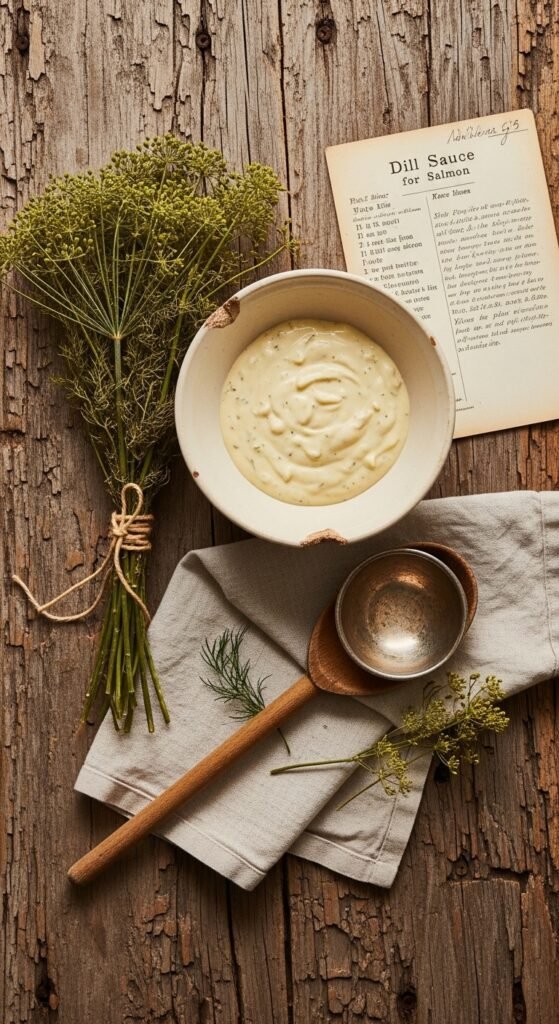
Let me walk you through each component of a perfect dill sauce for salmon. Quality matters, but you do not need anything exotic.
Fresh Dill
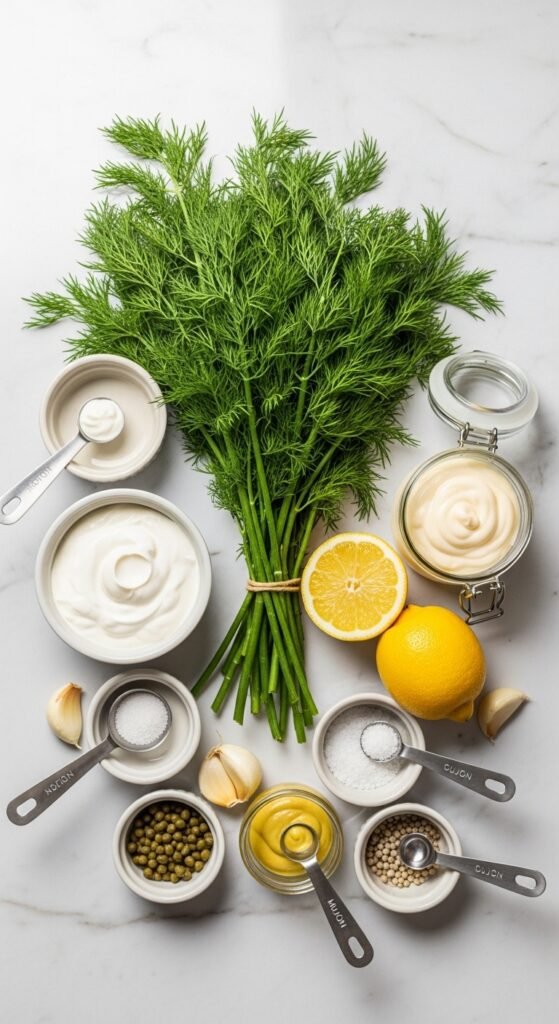
This is the star of the show. Fresh dill has a feathery, delicate appearance and a bright, grassy, slightly lemony flavor. Dried dill tastes like hay compared to fresh. Please do not substitute dried dill unless you have absolutely no other choice. If you must use dried, use one-third the amount called for fresh, and rehydrate it in lemon juice for ten minutes before adding.
When buying fresh dill, look for perky, bright green fronds. Avoid any bunches that look wilted, yellow, or slimy. Store fresh dill in the refrigerator with the stems in a glass of water, covered loosely with a plastic bag. It will last up to a week this way.
Also Read:The Ultimate Guide to a Perfect Stir Fry Chicken Recipe (Restaurant Quality at Home)
Sour Cream

Sour cream provides the creamy, tangy base for dill sauce for salmon. Full-fat sour cream works best because it has a rich texture and does not curdle when mixed with acidic ingredients like lemon juice. Low-fat or non-fat sour cream contains thickeners and stabilizers that can make the sauce feel gummy.
If you cannot find sour cream, plain Greek yogurt makes an excellent substitute. Greek yogurt is thicker and tangier than regular yogurt, so it mimics the texture of sour cream beautifully.
Mayonnaise

Adding mayonnaise to dill sauce for salmon creates a smoother, richer result than sour cream alone. The mayonnaise also helps emulsify the sauce, keeping it from separating. Use the same high-quality, full-fat mayonnaise we discussed in the tartar sauce article. Duke’s, Hellmann’s, or Kewpie all work wonderfully.
Fresh Lemon Juice
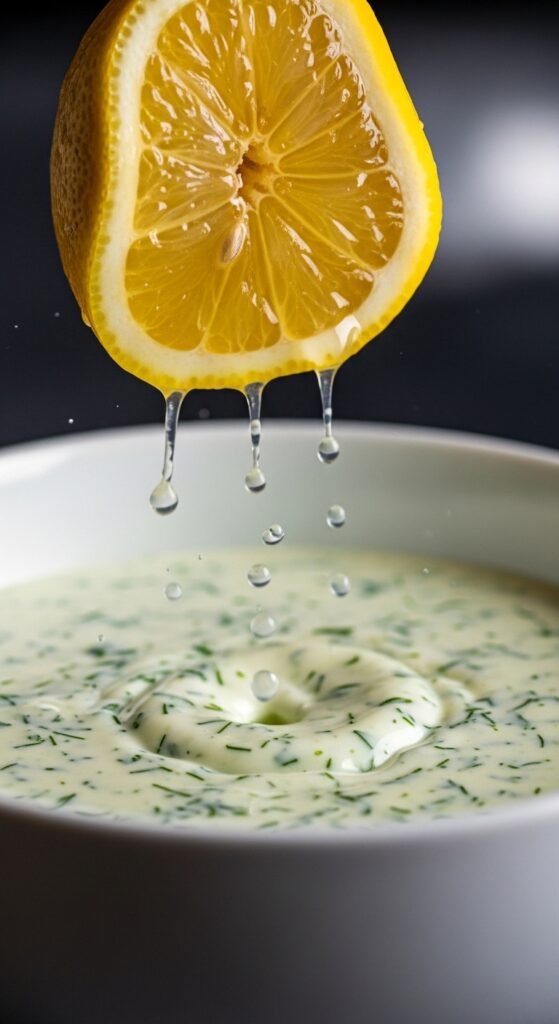
Once again, fresh lemon juice is non-negotiable. Bottled lemon juice lacks the bright, aromatic oils that make fresh lemons so special. You will need both the juice and the zest for this recipe. The zest adds an extra layer of citrus fragrance that takes dill sauce for salmon to the next level.
Garlic

A single clove of fresh garlic, minced or pressed, adds depth without overpowering the dill. Raw garlic can be sharp, so mince it very fine or use a garlic press. Alternatively, you can roast a whole head of garlic and squeeze out the soft, sweet cloves for a milder flavor.
Capers (Optional but Recommended)
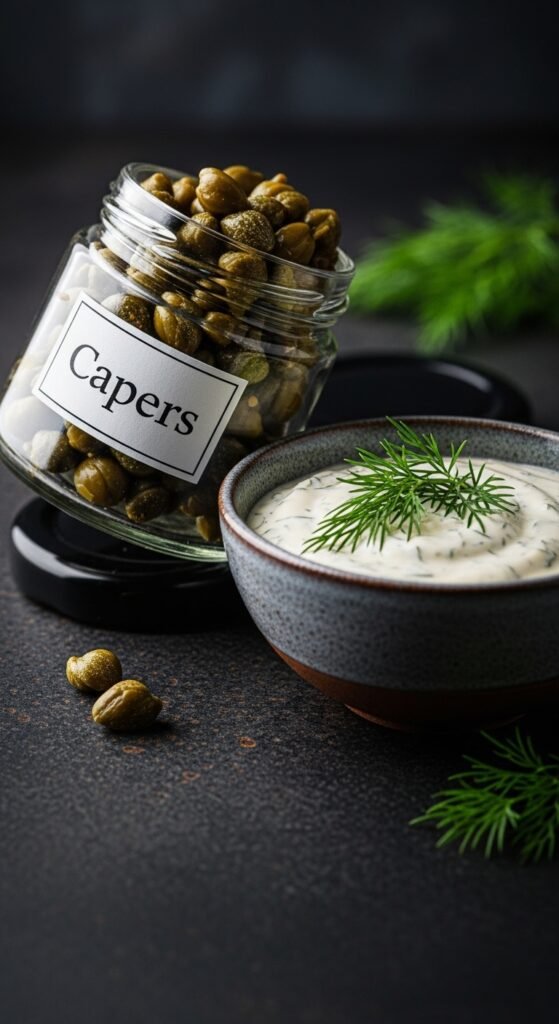
Capers bring a salty, briny punch that complements both dill and salmon perfectly. They are not strictly necessary, but they elevate dill sauce for salmon from good to unforgettable. Rinse and chop them finely before adding.
Dijon Mustard
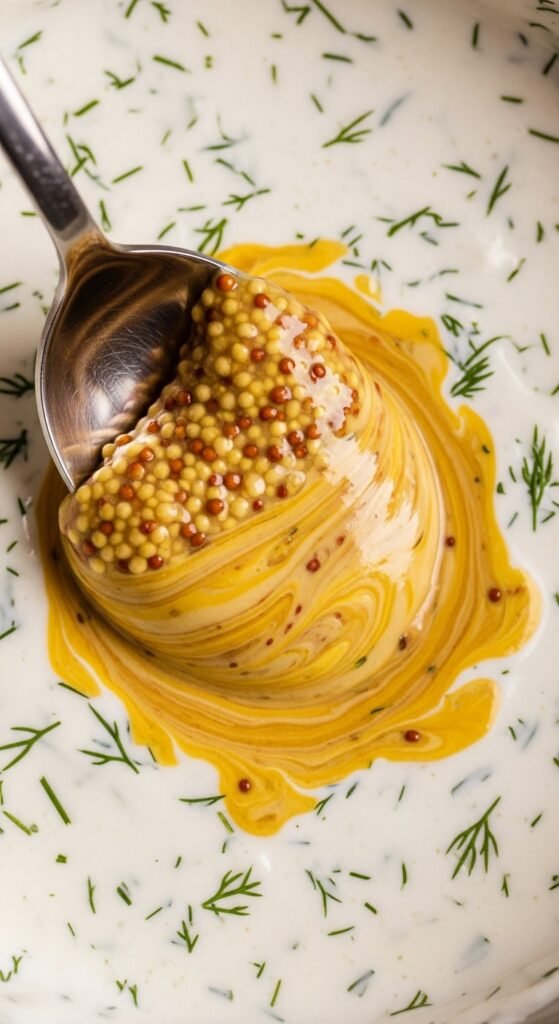
A teaspoon of Dijon mustard adds tanginess and helps emulsify the sauce. It also provides a subtle heat that balances the richness of the sour cream and mayonnaise. Do not use yellow mustard. The flavor is completely different.
Salt and White Pepper

Regular black pepper works fine, but white pepper gives a more elegant look. White pepper has a slightly earthier, milder flavor. More importantly, it disappears into the sauce without leaving dark specks. Either way, season carefully. Remember that capers and mustard already add salt.
Step-by-Step Guide to Perfect Dill Sauce for Salmon
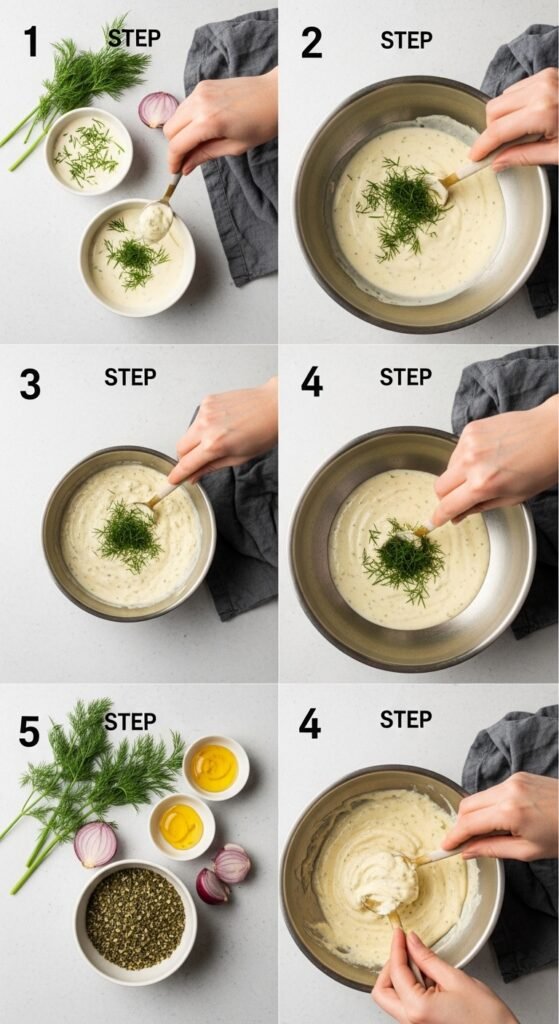
Now let us make the sauce. This recipe takes less than ten minutes from start to finish. Most of that time is chopping and measuring.
Step 1: Gather Your Tools

You will need a medium mixing bowl, a whisk or fork, a cutting board, a sharp knife, a zester or fine grater, a garlic press (optional), measuring spoons, and a rubber spatula. No blenders or food processors needed.
Step 2: Measure Your Base

In your mixing bowl, combine:
- ½ cup sour cream (full-fat)
- ¼ cup mayonnaise
- 1 tablespoon fresh lemon juice
- ½ teaspoon lemon zest
Whisk these together until smooth. The mixture should be thick but pourable.
Step 3: Add Your Flavorings

Add the following ingredients to the bowl:
- ¼ cup fresh dill, finely chopped (measure after chopping, not before)
- 1 small clove garlic, minced or pressed
- 1 tablespoon capers, rinsed and finely chopped (optional)
- 1 teaspoon Dijon mustard
- ¼ teaspoon white pepper (or black pepper)
Whisk again to combine. Take a moment to smell the mixture. The fragrance should be bright, herby, and inviting.
Step 4: Season and Adjust
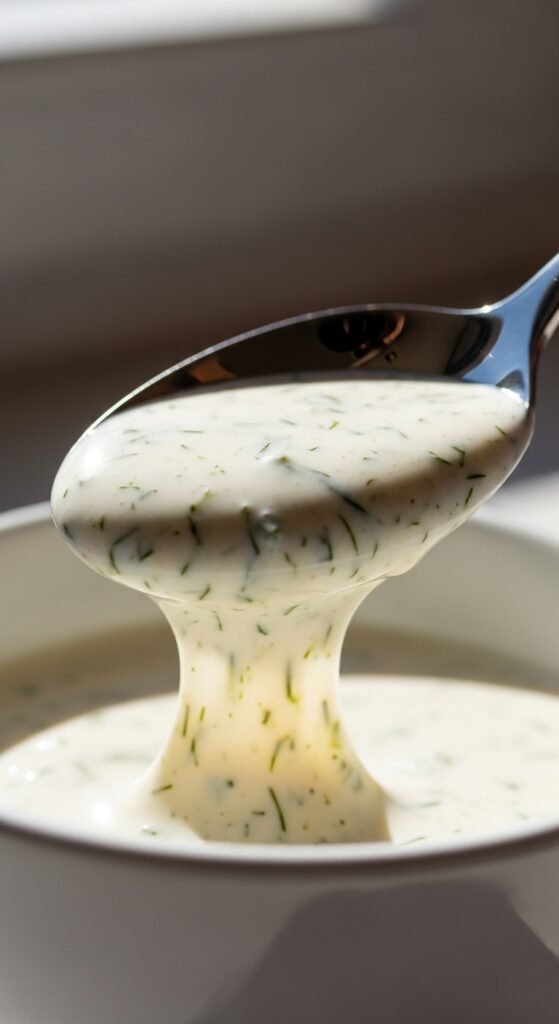
Taste your dill sauce for salmon with a clean spoon. Add salt in small increments, starting with ⅛ teaspoon. Remember that capers and mustard add saltiness already. You might not need any additional salt at all.
Does the sauce taste too thick? Stir in 1 to 2 teaspoons of milk, water, or extra lemon juice until it reaches your desired consistency. Does it taste too sharp? Add another tablespoon of sour cream or mayonnaise to mellow it out.
Step 5: Rest the Sauce

Here is a critical step that many people skip. Dill sauce for salmon tastes significantly better after resting. Cover the bowl with plastic wrap or transfer the sauce to a jar. Refrigerate for at least 30 minutes, but ideally 2 to 4 hours.
Why does resting matter? During that time, the garlic mellows out. The dill releases its essential oils into the creamy base. The lemon brightness integrates rather than sitting on top. A freshly made sauce tastes good. A rested sauce tastes extraordinary.
Step 6: Serve at the Right Temperature
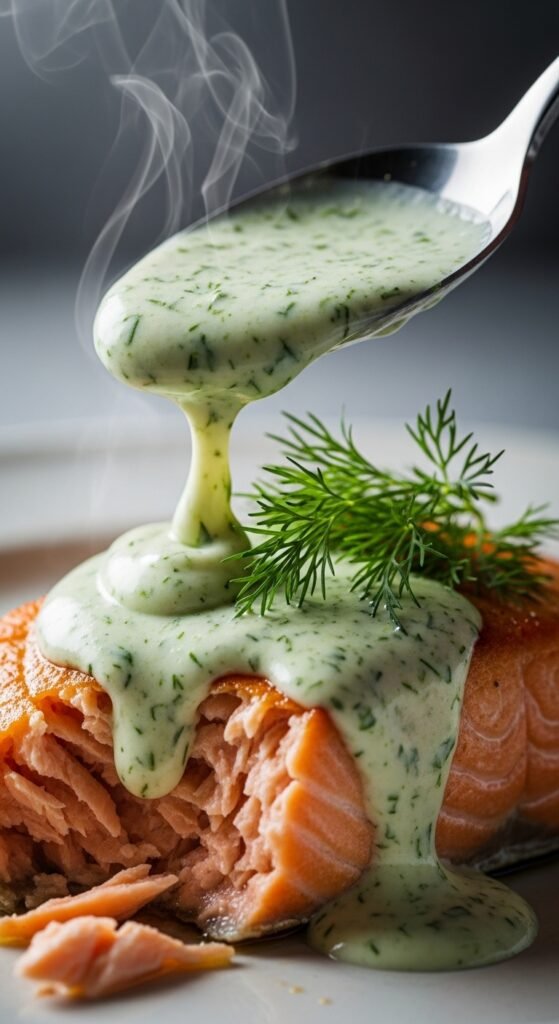
Remove your dill sauce for salmon from the refrigerator about 10 to 15 minutes before serving. Cold sauce can numb your taste buds, making it harder to appreciate the flavors. Room-temperature sauce allows the dill and lemon to shine. Do not warm the sauce on the stove. Heat will cause the sour cream to separate.
How to Cook Salmon to Pair with Your Dill Sauce
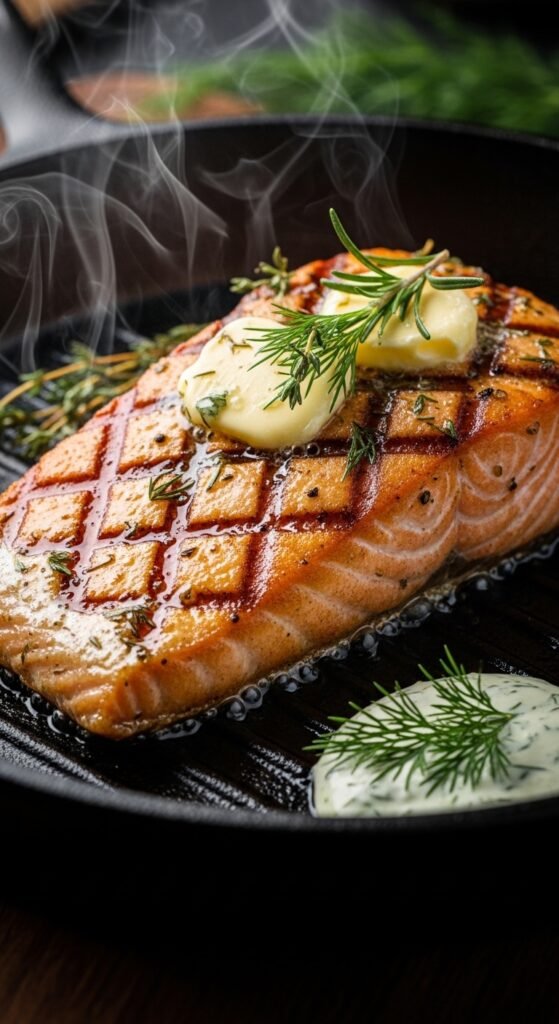
You have made a beautiful sauce. Now you need equally beautiful salmon. Here are three foolproof methods.
Pan-Seared Salmon with Crispy Skin
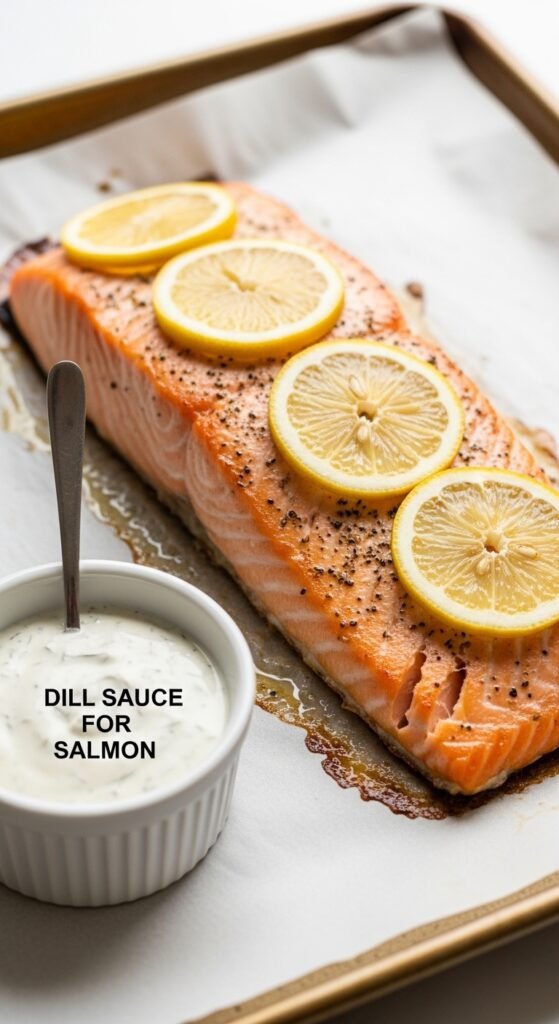
This is my personal favorite method. The crispy skin contrasts wonderfully with the creamy dill sauce for salmon.
- Pat your salmon fillet completely dry with paper towels. Moisture is the enemy of crispiness.
- Score the skin lightly with a sharp knife. This prevents curling.
- Season both sides generously with salt and pepper.
- Heat 1 tablespoon of oil (avocado or vegetable oil, not butter) in a non-stick skillet over medium-high heat.
- Place the salmon skin-side down. Press gently with a spatula for 10 seconds.
- Cook without moving for 4 to 6 minutes, depending on thickness.
- Flip carefully and cook for another 2 to 3 minutes.
- Serve immediately with a generous spoonful of dill sauce for salmon.
Baked Salmon (Easiest Method)

Baking requires almost no attention, leaving you free to focus on side dishes.
- Preheat your oven to 400°F (200°C).
- Line a baking sheet with parchment paper or aluminum foil.
- Place salmon fillets on the sheet, skin-side down.
- Brush with olive oil and season with salt, pepper, and a sprinkle of dried dill (optional).
- Bake for 12 to 15 minutes for a 1-inch thick fillet.
- The salmon is done when it flakes easily with a fork and registers 125°F to 130°F (52°C to 54°C) at the thickest part.
- Top with dill sauce for salmon right before serving.
Poached Salmon (For Tender, Delicate Results)
Poaching creates the most tender, buttery salmon imaginable. It pairs exquisitely with dill sauce for salmon.
- Fill a wide skillet with enough water or fish stock to cover the salmon.
- Add a few slices of lemon, a bay leaf, and a sprig of fresh dill.
- Bring the liquid to a gentle simmer (small bubbles, not rolling boil).
- Slide the salmon into the liquid.
- Poach for 8 to 10 minutes, depending on thickness.
- Remove carefully with a slotted spatula.
- Pat dry and serve with your sauce.
Delicious Variations of Dill Sauce for Salmon
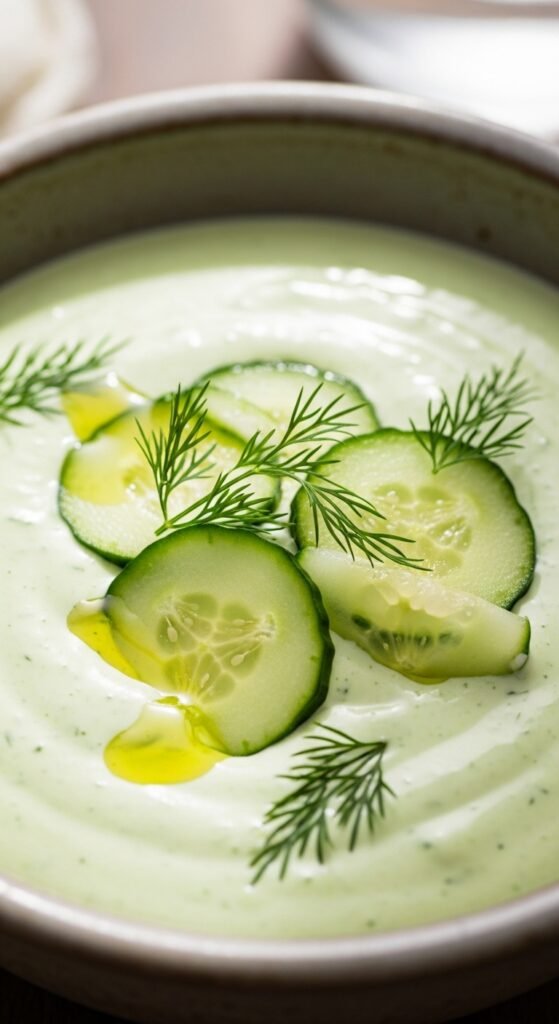
Once you master the basic recipe, feel free to experiment. These variations keep meals exciting.
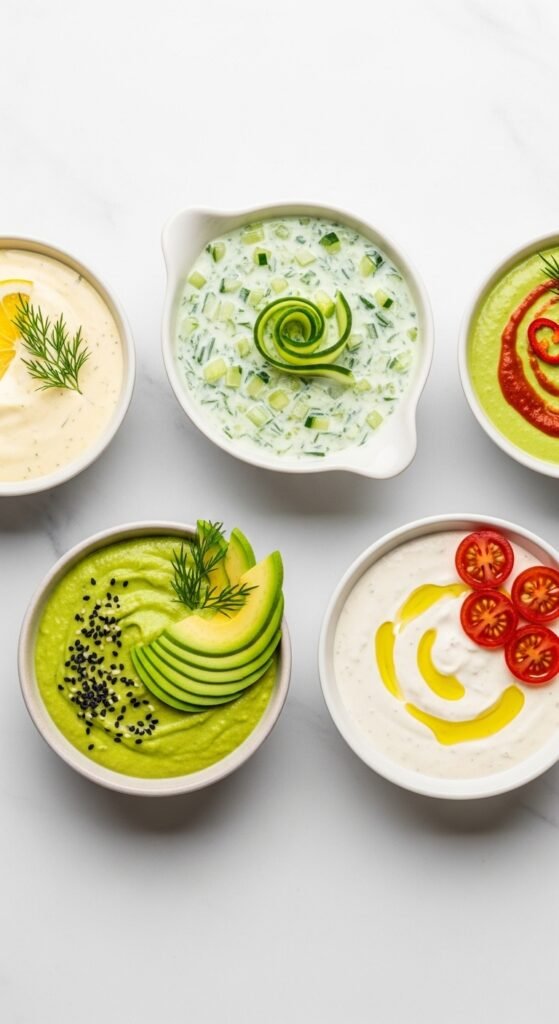
Creamy Lemon-Dill Sauce

Double the lemon juice to 2 tablespoons and add 1 tablespoon of lemon zest. This version tastes brighter and more citrus-forward. It works especially well with grilled or blackened salmon.
Cucumber-Dill Sauce
Peel, seed, and finely dice ½ cup of English cucumber. Squeeze out the excess moisture using a clean kitchen towel. Fold the cucumber into your dill sauce for salmon. This variation tastes refreshing and light, perfect for warm summer evenings.
Spicy Dill Sauce

Add 1 teaspoon of prepared horseradish, ½ teaspoon of hot sauce, and a pinch of cayenne pepper. The heat cuts through the richness of fatty salmon beautifully. Serve with roasted potatoes and a cold beer.
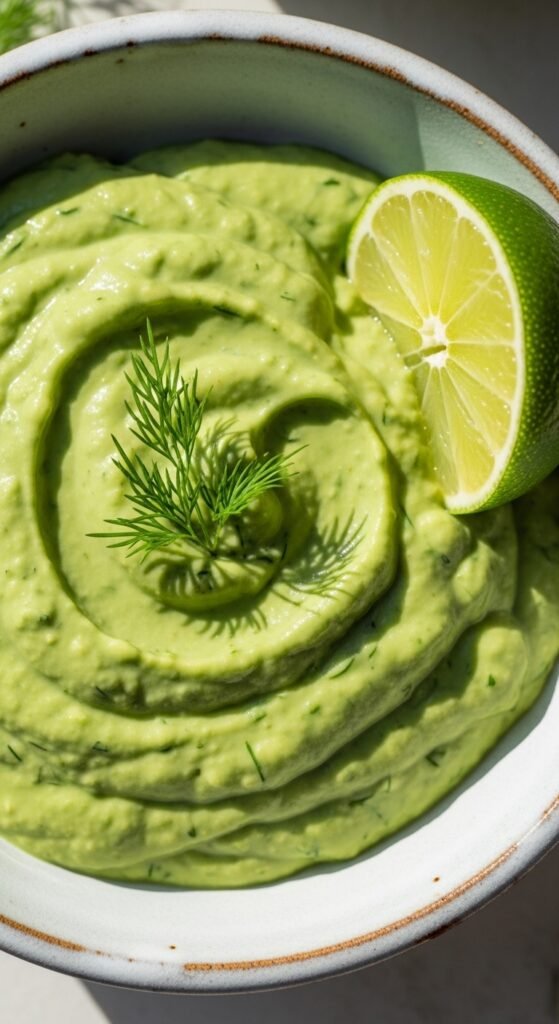
Avocado-Dill Sauce
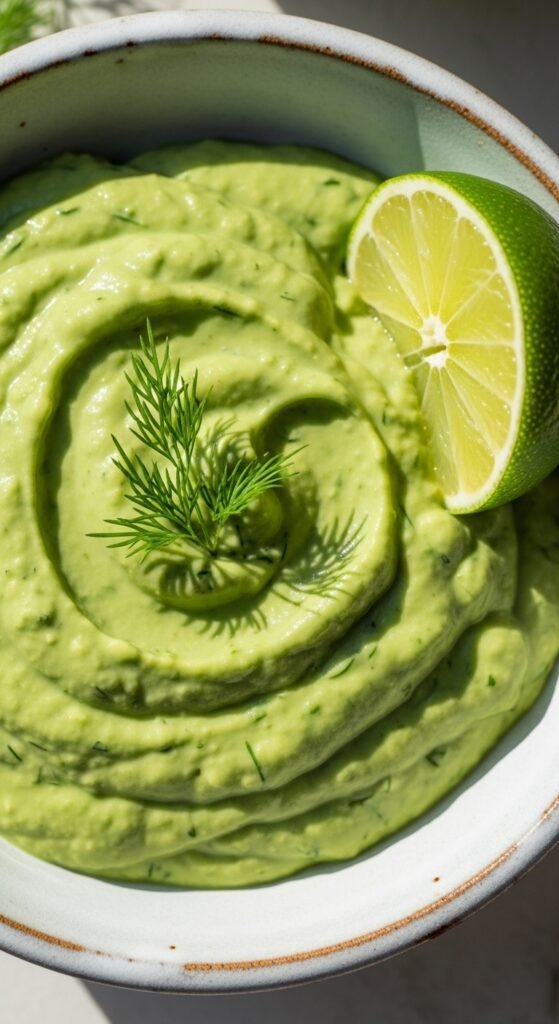
Replace the sour cream with one ripe avocado mashed until smooth. Add 2 tablespoons of lime juice instead of lemon. This version is thicker, greener, and incredibly creamy. It also adds healthy fats and a beautiful pale green color.
Dairy-Free Dill Sauce

Use full-fat coconut milk or cashew cream instead of sour cream and mayonnaise. Coconut milk adds a subtle sweetness that pairs surprisingly well with salmon. Cashew cream has a neutral flavor. Simply blend soaked cashews with water until smooth, then proceed with the recipe.
Common Problems and How to Fix Them
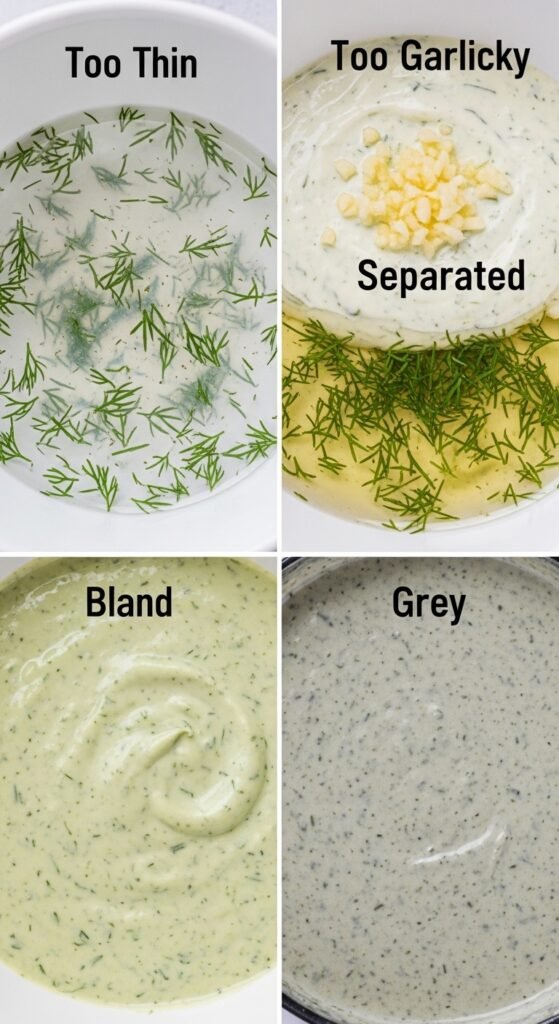
Even simple recipes can occasionally go wrong. Here is how to troubleshoot.
My Sauce Is Too Thin

This usually happens when you add too much lemon juice or use low-fat sour cream. To fix it, stir in 2 to 3 tablespoons of additional sour cream or mayonnaise. Alternatively, add 1 tablespoon of finely grated potato or 1 teaspoon of cornstarch mixed with a little water.
My Sauce Tastes Too Garlicky

Raw garlic can be aggressive. If your dill sauce for salmon burns your tongue, simply let it rest longer in the refrigerator. The sharp compounds mellow significantly after 4 to 6 hours. You can also stir in an extra ¼ cup of sour cream to dilute the garlic.
My Sauce Separated
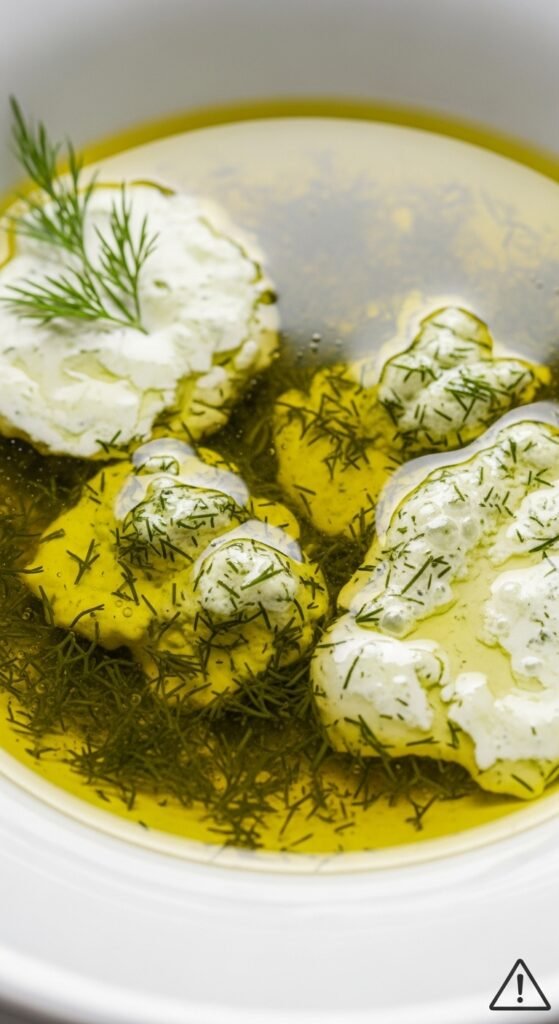
Separation happens when you whisk too vigorously or add acidic ingredients too quickly. Do not panic. Whisk in 1 teaspoon of warm water very slowly, drop by drop, while stirring gently. The emulsion should come back together. In the future, whisk all ingredients gently and add lemon juice last.
My Sauce Tastes Bland
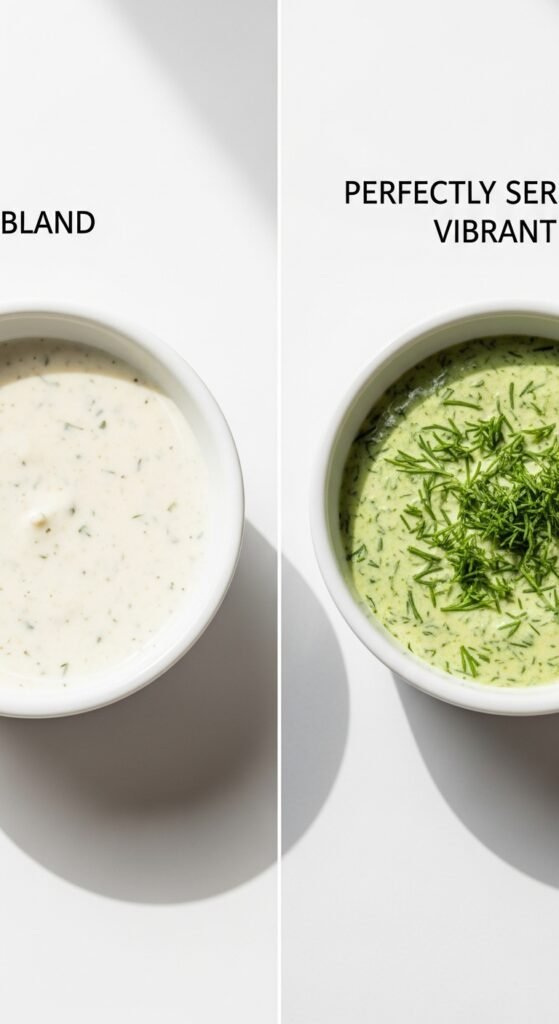
Blandness usually means you need more salt, acid, or herbs. Add a pinch of salt, a squeeze of lemon, or another tablespoon of fresh dill. Taste after each addition. Do not add all three at once.
My Sauce Turned Gray

This happens when you use a metal bowl or metal utensils. The acid in the lemon reacts with the metal. The sauce is still safe to eat, but it looks unappealing. Use glass, ceramic, or stainless steel bowls for best results.
What to Serve with Dill Sauce and Salmon
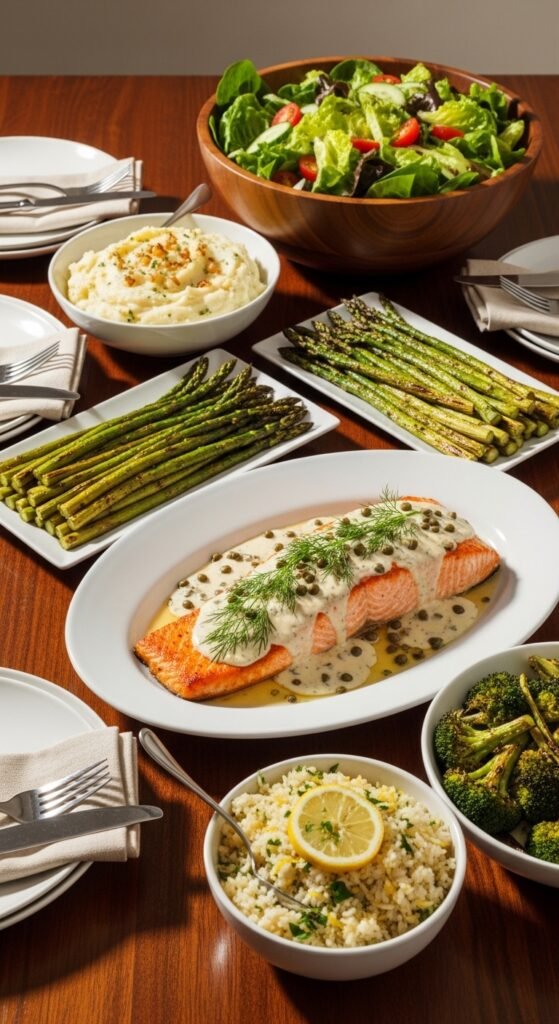
A complete meal goes beyond just fish and sauce. Here are my favorite side dishes.
Roasted Asparagus
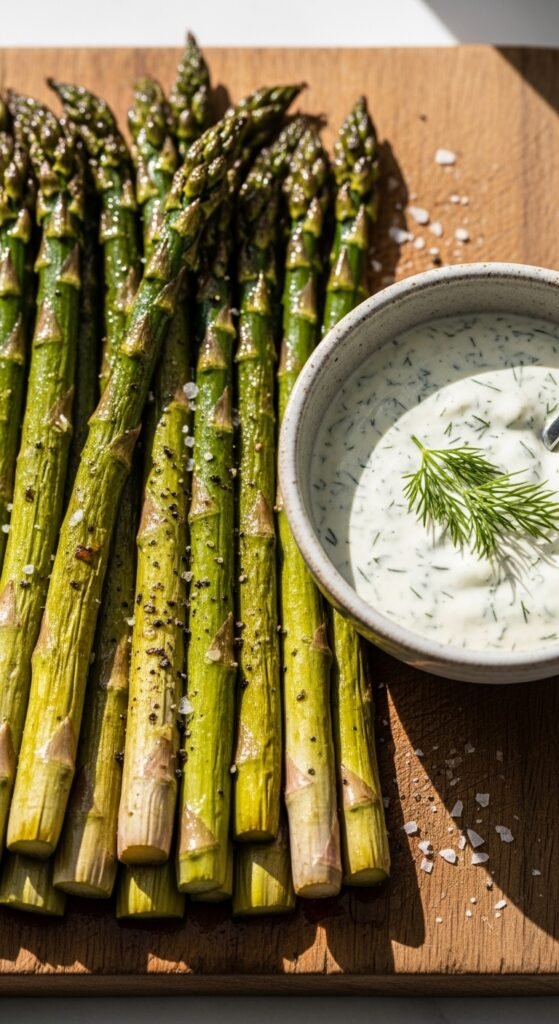
Toss asparagus spears with olive oil, salt, and pepper. Roast at 425°F (220°C) for 10 to 12 minutes. The slight bitterness of asparagus complements the creamy dill sauce for salmon perfectly.
Garlic Mashed Potatoes
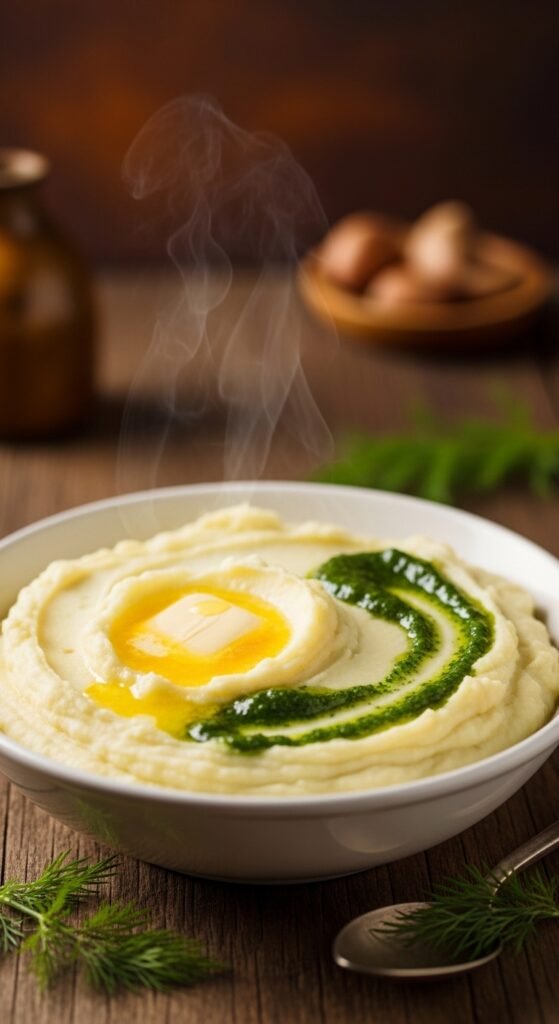
Creamy mashed potatoes act as a neutral canvas for the sauce. Spoon extra dill sauce for salmon directly over the potatoes. You will thank me later.
Lemon Rice
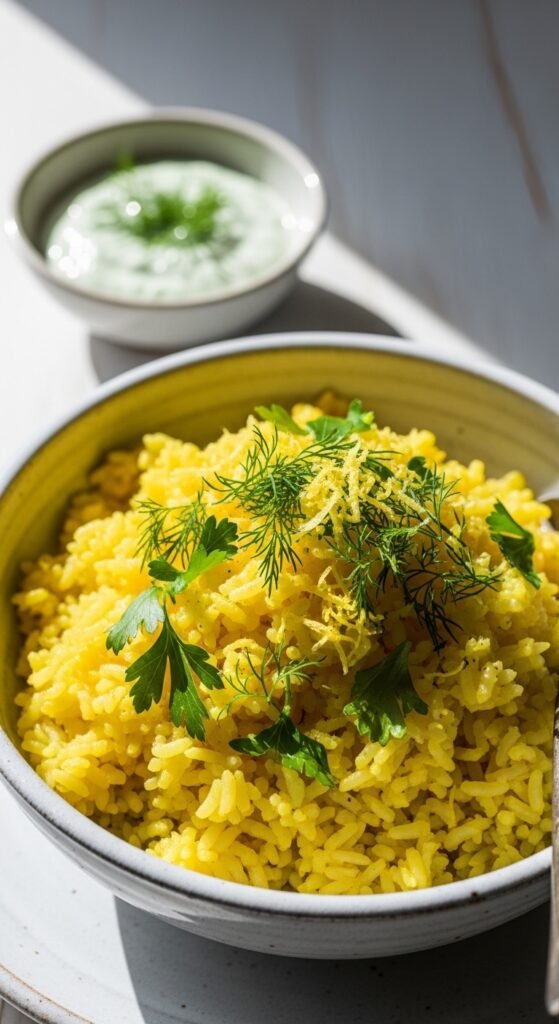
Cook white or brown rice with chicken or vegetable broth. Add the zest of one lemon and a tablespoon of fresh dill. Fluff with a fork and serve alongside the salmon.
Roasted Broccoli
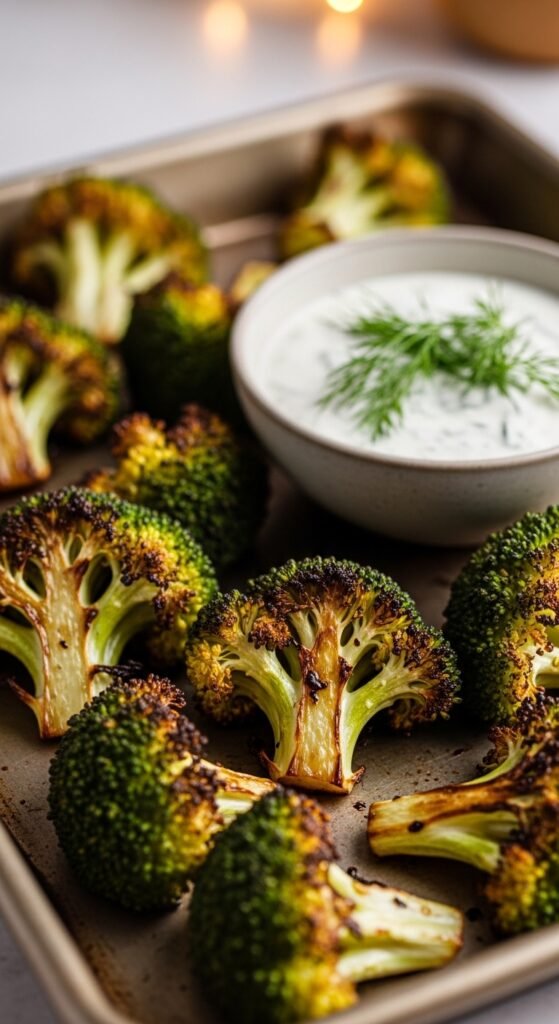
Broccoli roasted until crispy at the edges adds texture and color. Toss with red pepper flakes for a hint of heat.
Simple Green Salad
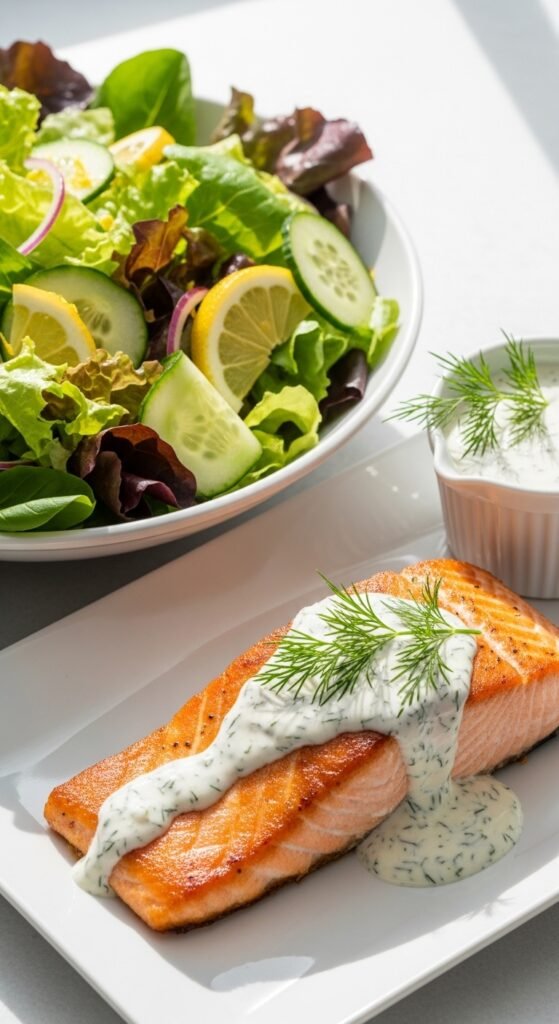
A salad with mixed greens, cucumber, red onion, and a light vinaigrette provides a fresh, crunchy contrast. Keep the dressing simple so it does not compete with your dill sauce for salmon.
Storage and Make-Ahead Tips

Dill sauce for salmon is an excellent make-ahead condiment. Prepare it up to two days in advance and store it in an airtight container in the refrigerator. The flavors actually improve over the first 24 hours.
Do not freeze this sauce. Freezing destroys the emulsion, leaving you with a curdled, watery mess.
Leftover sauce stays fresh for five to seven days when properly refrigerated. Use it on more than just salmon. Here are some creative uses for leftovers:
- Spread on sandwiches instead of mayonnaise
- Toss with warm pasta and peas for a quick pasta salad
- Use as a dip for raw vegetables or potato chips
- Drizzle over baked potatoes or roasted sweet potatoes
- Mix into scrambled eggs for extra creaminess
- Top grilled chicken or turkey burgers
Why You Should Buy Quality Ingredients with Confidence
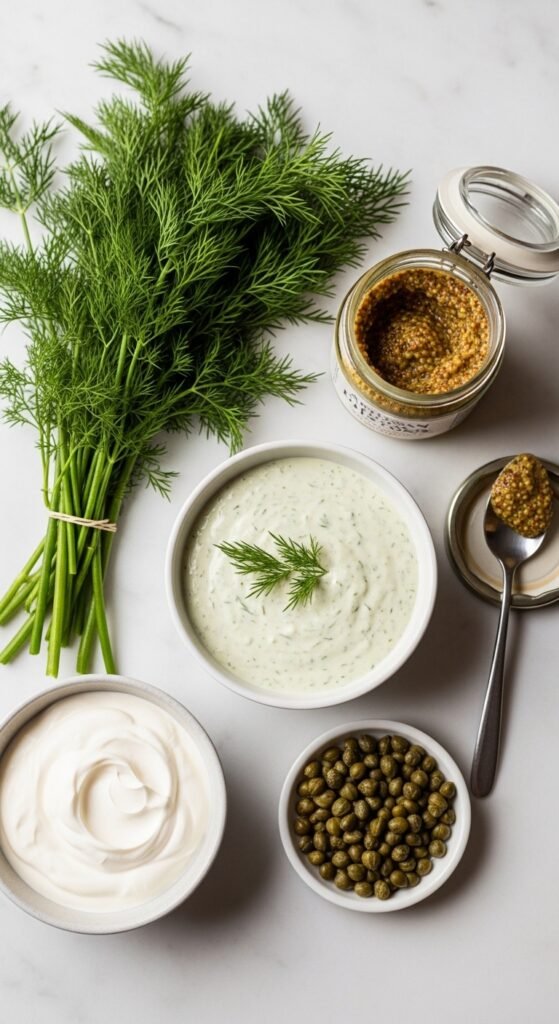
Now let me address something important. Throughout this article, I have emphasized using fresh dill, good mayonnaise, full-fat sour cream, and fresh lemons. You might be wondering if these ingredients are worth the extra cost.
The answer is yes, absolutely, without question.
Fresh dill costs about two to three dollars per bunch. That bunch will make multiple batches of sauce. Dried dill might save you fifty cents, but it will never deliver the same bright, complex flavor. Fresh lemons cost about fifty cents each. Bottled lemon juice costs slightly less, but it tastes flat and metallic. Good mayonnaise costs a dollar or two more than the generic store brand. That small investment transforms your sauce from mediocre to memorable.
Furthermore, buying quality ingredients builds confidence. When you know you have the best components, you cook with intention and pride. You stop worrying about failure and start enjoying the process.
I remember a conversation with a friend who complained that her dill sauce for salmon never tasted as good as mine. I asked what ingredients she used. She said store-brand light sour cream, dried dill from a dusty jar, and bottled lemon juice. I gently suggested she try the real thing. The next week, she called me excitedly. “It worked!” she said. “It actually tastes like your sauce!” She has never gone back to the cheap stuff since.
So here is my recommendation. Spend the extra two or three dollars. Buy fresh dill, a real lemon, good mayonnaise, and full-fat sour cream. Consider it an investment in your cooking and your happiness. You deserve delicious food.
Frequently Asked Questions
Can I use dried dill instead of fresh?
You can, but I strongly advise against it. Dried dill has a muted, hay-like flavor that cannot compare to fresh. If you have no other choice, use 1 tablespoon of dried dill instead of ¼ cup fresh. Rehydrate it in the lemon juice for 10 minutes before adding to the other ingredients.
Can I make this sauce vegan?
Absolutely. Use vegan sour cream and vegan mayonnaise. Many excellent brands exist today. Also, substitute maple syrup or agave for the Dijon mustard if you avoid honey (though most Dijon does not contain honey). The flavor will be slightly different but still delicious.
How long does dill sauce for salmon last in the fridge?
Properly stored in an airtight container, it lasts 5 to 7 days. Always use a clean spoon to scoop out sauce to prevent contamination. If you see any mold, separation that does not whisk back together, or off odors, discard it immediately.
Can I serve this sauce warm?
No. Heating sour cream or mayonnaise causes them to separate and curdle. Serve dill sauce for salmon cold or at room temperature only.
What other fish works with this sauce?
This sauce pairs beautifully with trout, cod, halibut, sea bass, and even tuna steaks. It also works well with grilled chicken, roasted vegetables, and as a dip for fried seafood.
Is this recipe gluten-free?
Yes, as written, this recipe contains no gluten. However, always check your specific brands of mayonnaise and sour cream. Some contain gluten as a thickener or stabilizer.
Final Thoughts and Encouragement
If you take nothing else away from this article, remember this. Dill sauce for salmon is not complicated. It is not fussy. It is not reserved for special occasions or professional chefs. It is a simple, honest sauce that anyone can make in under ten minutes.
I have made this sauce hundreds of times over the past fifteen years. I have made it for holiday dinners, weeknight meals, and even camping trips (pack the ingredients in a cooler). Every single time, it delivers. Every single time, someone asks for the recipe.
The beauty of dill sauce for salmon lies in its simplicity. Fresh dill, sour cream, mayonnaise, lemon, garlic. That is it. No obscure ingredients. No advanced techniques. Just good food made with care.
So here is my challenge to you. Go to the grocery store this week. Buy a beautiful piece of salmon, a fresh bunch of dill, a lemon, and the other ingredients. Come home. Make the sauce first, then cook the salmon. Sit down to eat with no distractions. Take that first bite of salmon coated in your homemade dill sauce. Close your eyes and really taste it.
Then smile. Because you just made something wonderful.
Happy cooking, my friend. Your dill sauce for salmon journey starts now.
Recipe Card Summary
- Prep Time: 10 minutes
- Rest Time: 30 minutes minimum (2-4 hours preferred)
- Total Time: 40 minutes
- Yield: Approximately 1 cup (serves 4)
- Storage: 5-7 days refrigerated
Core Ingredients Recap:
- ½ cup full-fat sour cream
- ¼ cup high-quality mayonnaise
- ¼ cup fresh dill, finely chopped
- 1 tablespoon fresh lemon juice
- ½ teaspoon lemon zest
- 1 small garlic clove, minced
- 1 tablespoon capers, rinsed and chopped (optional)
- 1 teaspoon Dijon mustard
- ¼ teaspoon white pepper
- Salt to taste (⅛ teaspoon or less)
Optional Add-ins:
- Extra lemon juice for brightness
- Horseradish or hot sauce for heat
- Cucumber for freshness
- Avocado for creaminess