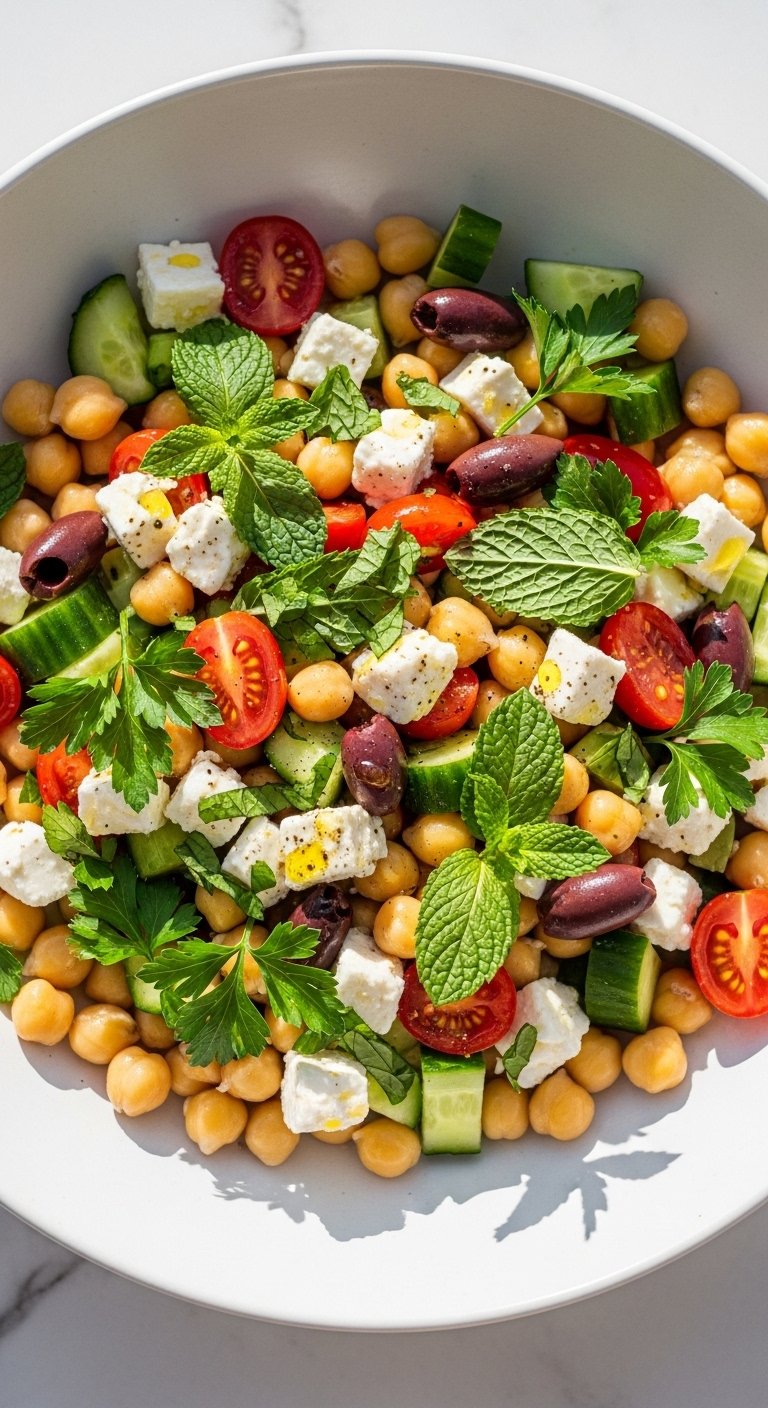
Mediterranean chickpea salad isn’t just another recipe you’ll try once and forget. Honestly? It’s the kind of dish that quietly becomes a weekly ritual—the one you crave when the weather warms up, the reliable friend you bring to potlucks, and the lifesaver on those busy weeknights when cooking feels impossible.
Before we dive deep into every glorious detail, let me share a quick story. Last summer, I found myself standing in my tiny kitchen at 7 PM on a Tuesday. The air conditioner was struggling against a heatwave, and my motivation to cook had completely evaporated. I opened the fridge, hoping for a miracle. Inside? Half a cucumber, some cherry tomatoes starting to wrinkle, a red onion, and a block of feta cheese. The pantry offered a can of chickpeas, some olives, and a bottle of olive oil. Within fifteen minutes—without turning on the stove or breaking a sweat—I had created something so vibrant, so satisfying, and so delicious that I literally ate it three days in a row. That, my friend, was the day I fell in love with Mediterranean chickpea salad.
Now, I’m going to teach you everything I’ve learned about this magical dish. By the time you finish reading, you’ll not only know how to make it perfectly—you’ll understand why it deserves a permanent spot in your meal rotation. Ready? Let’s begin.
Table of Contents
- What Exactly Is Mediterranean Chickpea Salad?
- Why This Salad Will Change Your Kitchen Game Forever
- The Incredible Health Benefits You Didn’t Know About
- Complete Ingredient Breakdown (With Smart Substitutions)
- Step-by-Step Recipe Guide
- Pro Tips for the Perfect Salad Every Single Time
- Delicious Variations to Keep Things Exciting
- How to Store, Meal Prep, and Serve Like a Pro
- Where to Buy the Best Ingredients (And Why Quality Matters)
- Frequently Asked Questions
- Final Thoughts: Your Journey to Salad Mastery
1. What Exactly Is Mediterranean Chickpea Salad?
Let’s start with the basics. Mediterranean chickpea salad is a vibrant, no‑cook dish that combines protein‑packed chickpeas with fresh vegetables, briny olives, creamy feta cheese, and a simple yet powerful lemon‑herb dressing. It draws inspiration from the coastal regions of Greece, Italy, Lebanon, and Turkey—places where people have understood for centuries that the best food doesn’t need complicated techniques or long ingredient lists.
Think of it as a deconstructed Greek salad that swaps lettuce for chickpeas. Or imagine a grain bowl without the grain. But honestly? Neither description does it justice. This salad stands entirely on its own as a complete meal, a satisfying side dish, or a dip when scooped up with warm pita bread.
The beauty of Mediterranean chickpea salad lies in its simplicity. You chop, you toss, you eat. No cooking required. No fancy equipment needed. Just whole, real ingredients that taste incredible together.
A Brief Cultural Context
The Mediterranean region has long celebrated legumes as dietary staples. Chickpeas—known as ceci in Italy, revithia in Greece, and hummus (the actual bean, not the dip) in Arabic‑speaking countries—have been cultivated for over 7,000 years. Ancient Romans enjoyed them roasted as snacks. Mediterranean farmers relied on them as affordable protein sources during lean winter months.
What we now call Mediterranean chickpea salad emerged naturally from this tradition. Home cooks would combine leftover chickpeas with whatever vegetables were growing in their gardens, add a splash of local olive oil and vinegar, and call it lunch. The recipe never needed formal documentation because it was simply common sense—the kind of intuitive cooking that gets passed down through generations.
2. Why This Salad Will Change Your Kitchen Game Forever
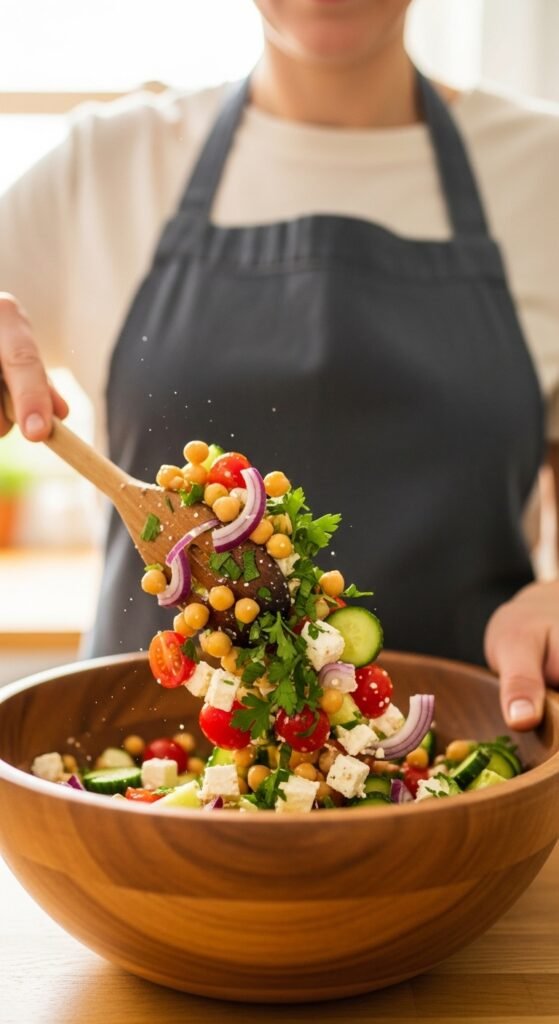
I could give you a hundred reasons to love Mediterranean chickpea salad, but let me focus on the ones that matter most to real people with real lives.
Also Read: Beat the Heat: Your Ultimate Guide to Healthy & Irresistible Summer Snacks
It Requires Zero Cooking Skills
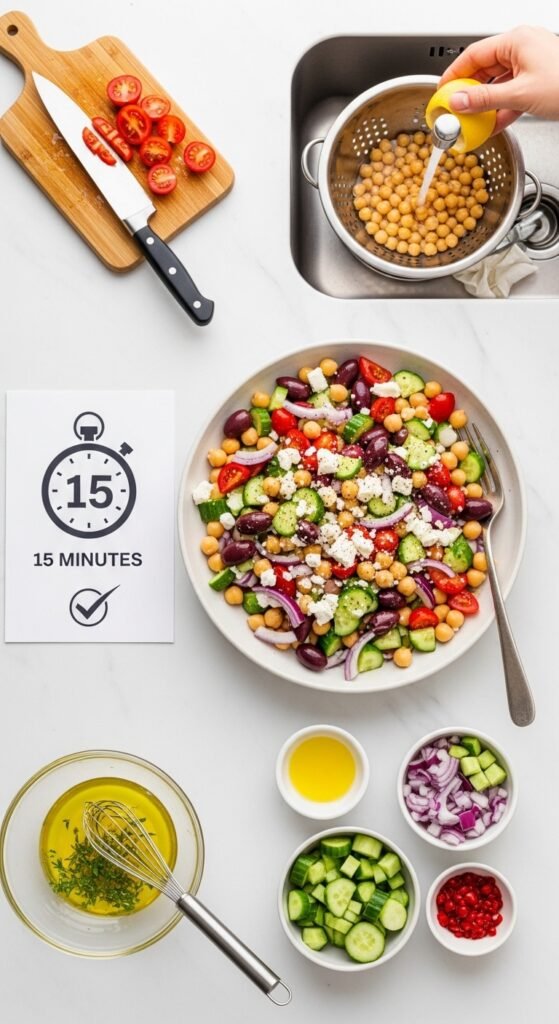
Have you ever burned rice? Overcooked pasta until it turned to glue? Set off the smoke alarm while attempting grilled cheese? Me too. The glorious truth about Mediterranean chickpea salad is that success requires exactly zero heat. If you can operate a knife (or even just a dull one), you can make this salad. There’s no temperature to monitor, no timing to perfect, no risk of ruining dinner.
It Comes Together in Under Fifteen Minutes
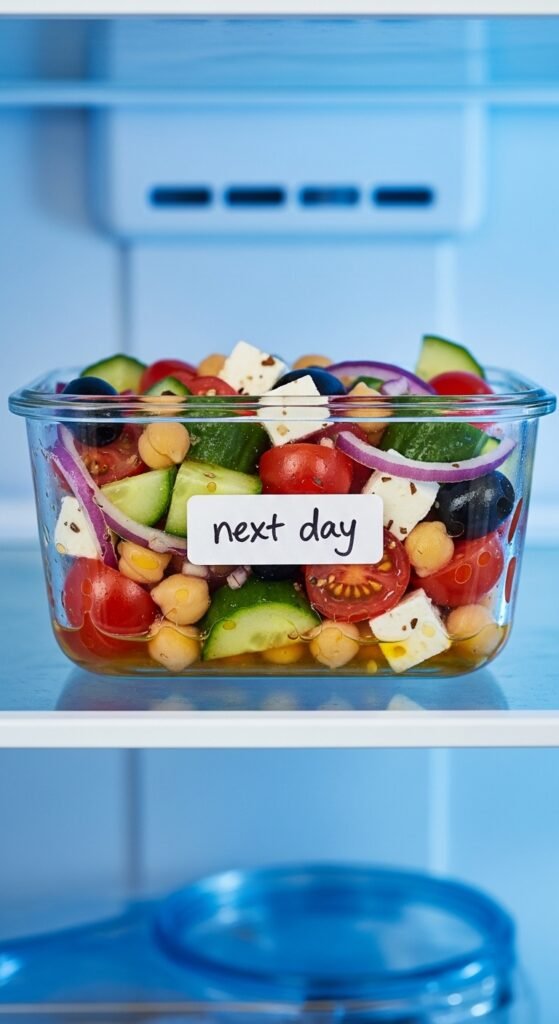
Let me paint you a picture. You’ve just walked through the door after a long day. Your stomach is growling. The thought of chopping onions for thirty minutes makes you want to order pizza instead. Here’s the reality: from the moment you open your pantry to the moment you take your first bite, Mediterranean chickpea salad takes less time than waiting for delivery. I’ve timed it repeatedly. Twelve to fifteen minutes, max. That’s including washing the vegetables.
It Actually Tastes Better the Next Day
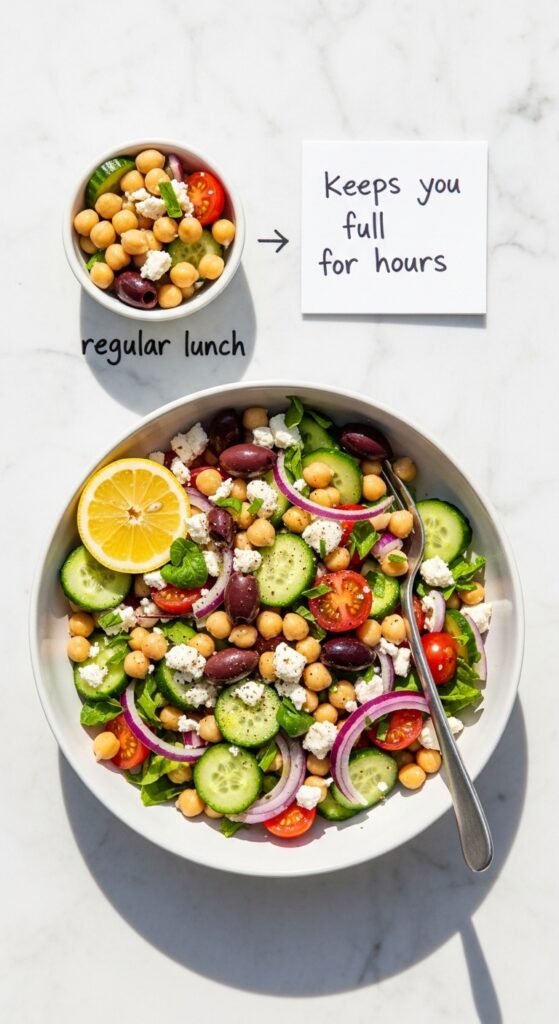
Most salads turn into sad, wilted disappointments after a few hours in the fridge. Not this one. Mediterranean chickpea salad is what I call a “reverse salad”—the longer it sits, the more the flavors meld and deepen. The chickpeas absorb the lemony dressing while remaining perfectly firm. The red onion softens just enough to lose its aggressive bite. The feta cheese gently seasons everything around it. Make it on Sunday, and you’ll be eating an even better version on Wednesday.
It Keeps You Full for Hours
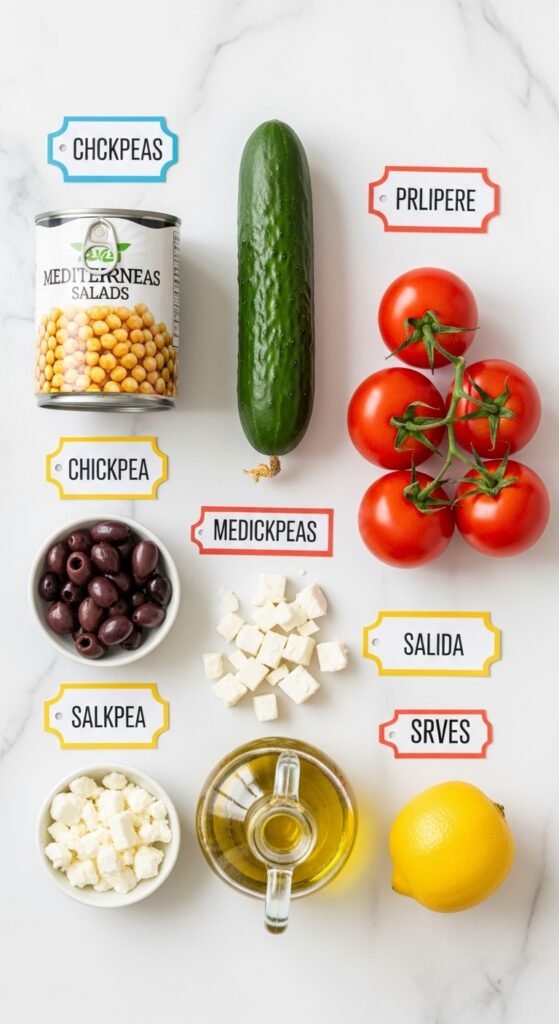
Here’s where Mediterranean chickpea salad truly shines compared to leafy green salads. A bowl of lettuce might satisfy you for an hour before you’re hunting for snacks again. This salad, however, packs serious staying power. Between the plant‑based protein from chickpeas, the healthy fats from olive oil and olives, and the fiber from vegetables, you’ll feel satisfied for four to six hours. No mid‑afternoon crashes. No desperate refrigerator raids.
It Costs Surprisingly Little
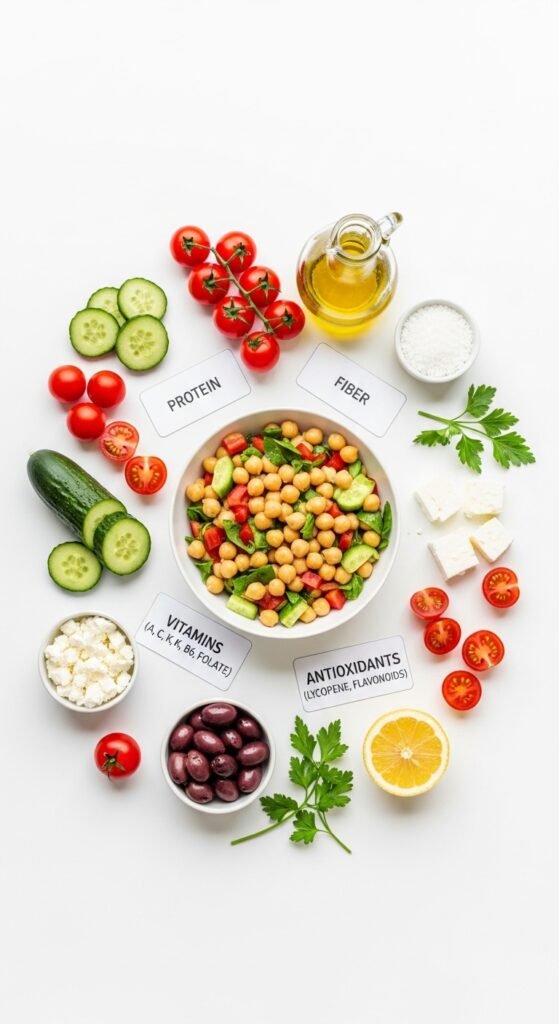
Let’s talk money. A single serving of restaurant salad often costs $12 to $18. Meanwhile, a can of chickpeas (garbanzo beans) runs about $1.50. A cucumber costs under a dollar. A lemon? Fifty cents. Even when you splurge on good feta cheese and Kalamata olives, the total cost per serving for Mediterranean chickpea salad lands somewhere between $2 and $3. That’s not just affordable—that’s financially empowering.
3. The Incredible Health Benefits You Didn’t Know About
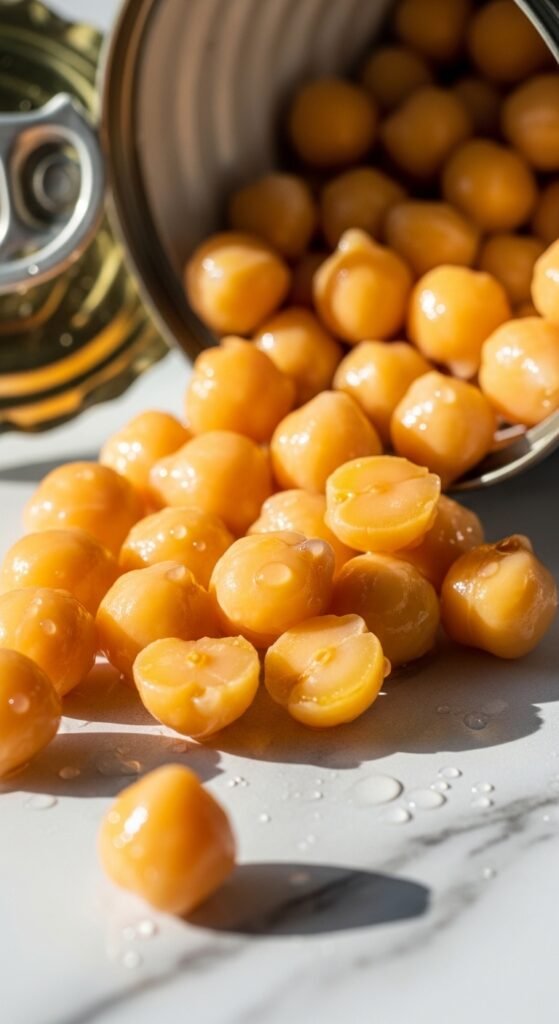
Beyond convenience and taste, Mediterranean chickpea salad delivers serious nutritional value. Let me break down exactly what each ingredient contributes to your wellbeing.
Chickpeas: The Humble Superstar
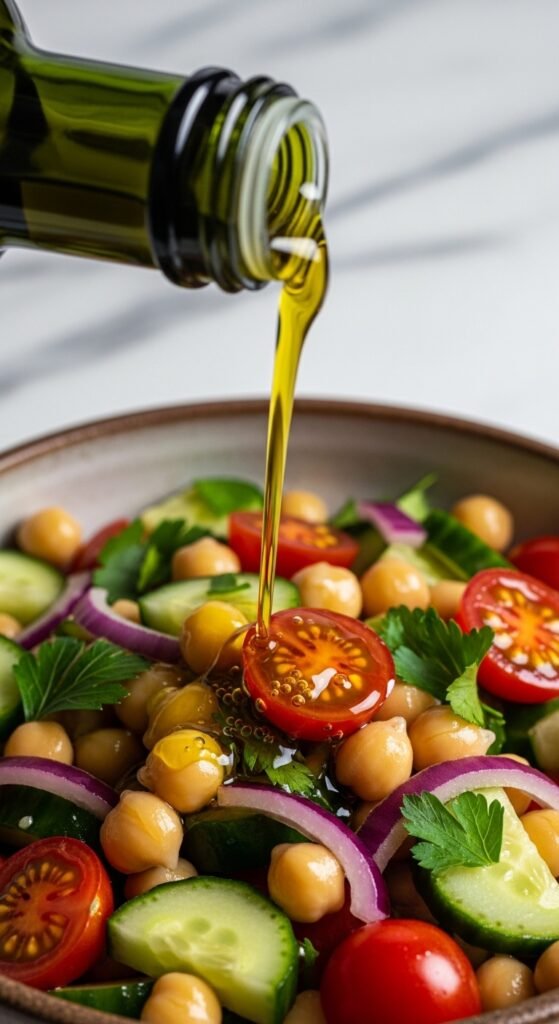
Chickpeas (garbanzo beans) deserve far more attention than they typically receive. A single cup provides approximately 15 grams of protein and 13 grams of dietary fiber. But that’s just the beginning.
- Blood Sugar Regulation: The combination of protein and fiber slows down carbohydrate absorption, preventing dangerous spikes and crashes. This makes Mediterranean chickpea salad an excellent choice for anyone managing diabetes or insulin resistance.
- Heart Health: Chickpeas contain significant amounts of potassium and magnesium, two minerals linked to lower blood pressure. The soluble fiber also helps reduce LDL (bad) cholesterol.
- Weight Management: Research consistently shows that people who eat legumes regularly weigh less and maintain weight loss more successfully than those who don’t. The satiety factor is real.
Extra Virgin Olive Oil: Liquid Gold
The Mediterranean diet—widely considered the healthiest eating pattern on earth—revolves around extra virgin olive oil. Here’s why:
- Monounsaturated Fats: These healthy fats reduce inflammation throughout your body while supporting brain function.
- Polyphenols: These powerful antioxidants protect your cells from damage and may reduce your risk of chronic diseases.
- Vitamin E: A fat‑soluble vitamin that supports immune function and skin health.
The key phrase here is extra virgin. This grade means the oil was extracted without heat or chemicals, preserving all those beneficial compounds. Cheap “pure” or “light” olive oils have been heavily processed and offer minimal health benefits.
Fresh Vegetables: Nature’s Multivitamin
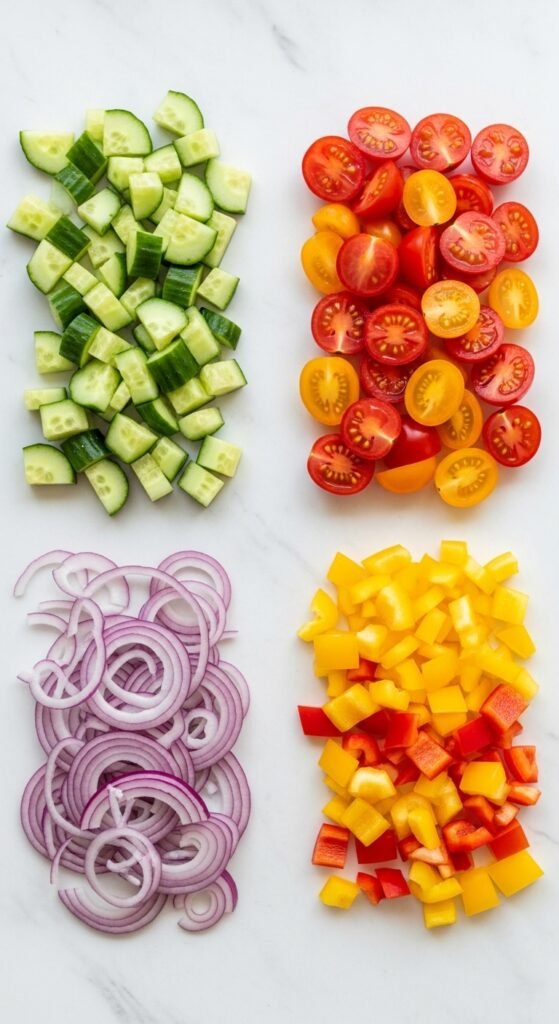
Cucumber provides hydration (it’s 96% water) plus silica, a compound that supports healthy skin, hair, and nails. Cherry tomatoes deliver lycopene, an antioxidant linked to reduced cancer risk, especially prostate cancer. Red onion contains quercetin, a flavonoid with powerful anti‑inflammatory and antihistamine properties.
Feta Cheese: Flavor with Benefits
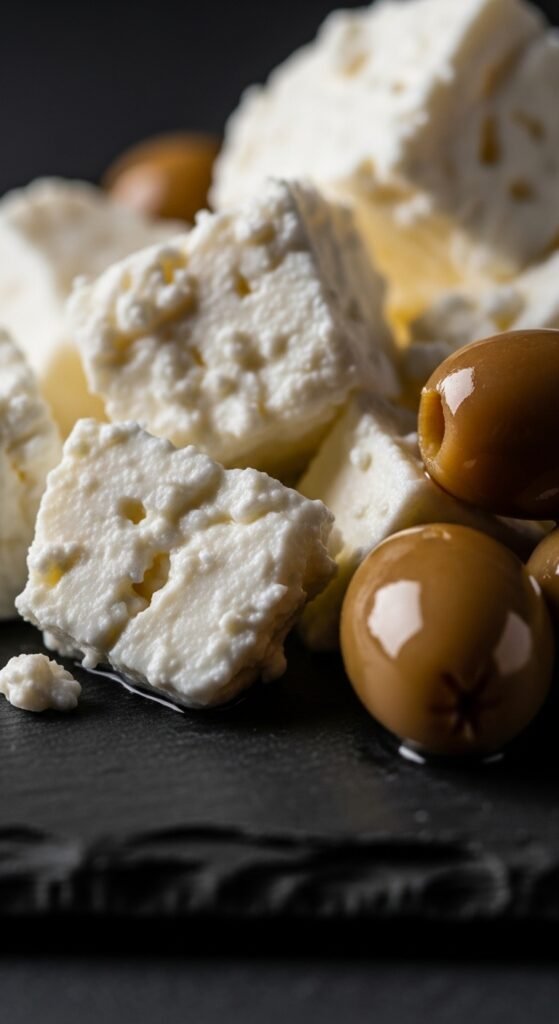
Yes, cheese can be healthy! Feta cheese—especially varieties made from sheep or goat milk—offers several advantages over other cheeses:
- Lower in Calories and Fat: Feta contains about 75 calories per ounce compared to cheddar’s 115.
- Higher in Calcium: Ounce for ounce, feta provides more calcium than many other cheeses.
- Probiotic Potential: Traditional feta made from raw milk contains beneficial bacteria that support gut health.
- Conjugated Linoleic Acid (CLA): Particularly high in sheep’s milk feta, this fatty acid has been linked to improved body composition.
Fresh Herbs: Small But Mighty
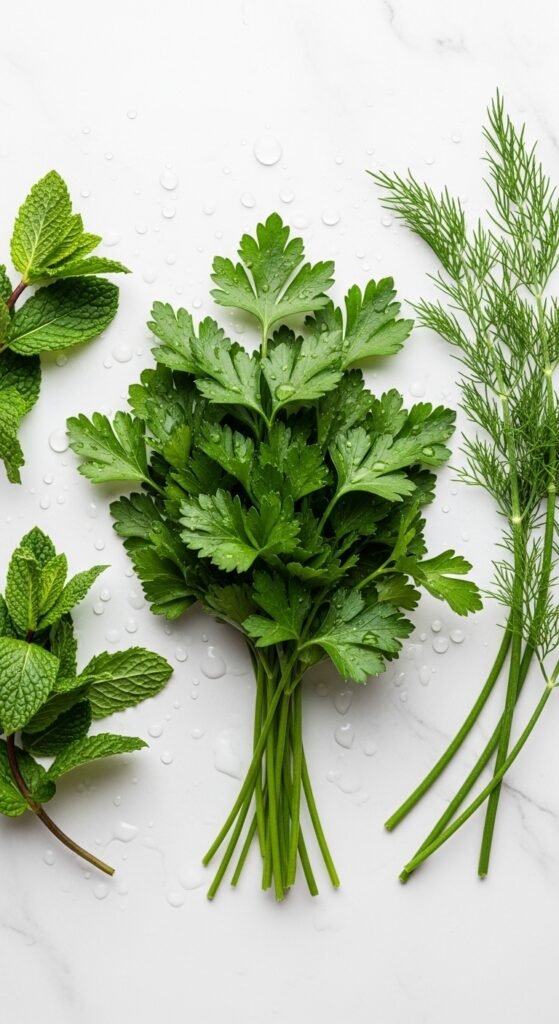
Fresh parsley and fresh mint might seem like garnishes, but they’re nutritional powerhouses. Parsley contains three times more vitamin C than oranges by weight, plus significant amounts of vitamin K, vitamin A, and folate. Mint aids digestion and can help relieve tension headaches.
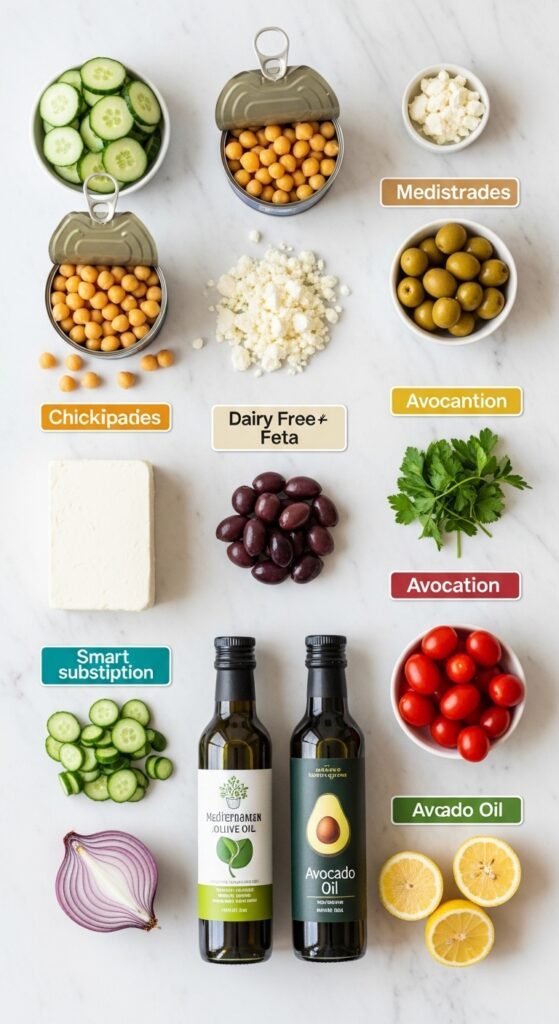
4. Complete Ingredient Breakdown (With Smart Substitutions)
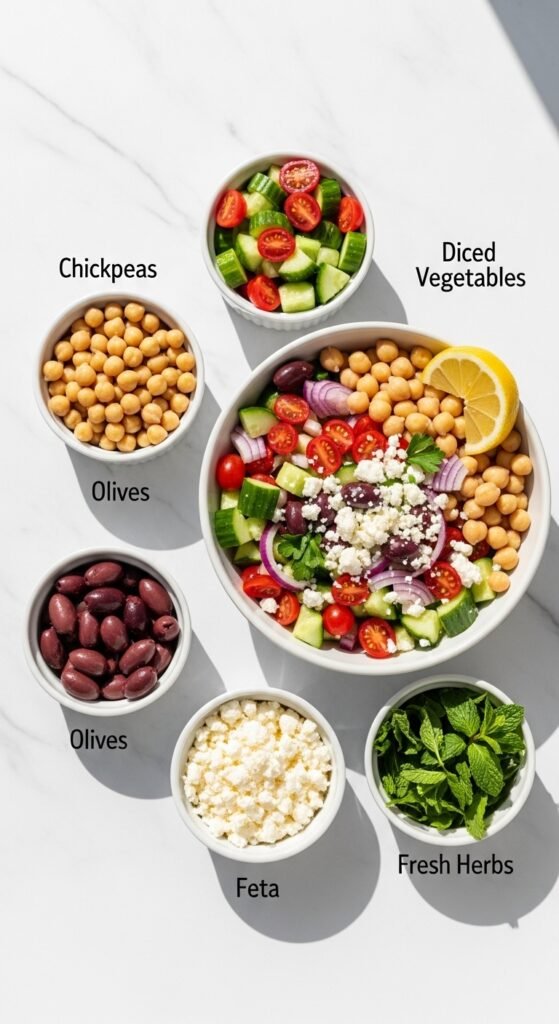
Now let’s get practical. Here’s everything you need to make authentic, restaurant‑quality Mediterranean chickpea salad at home. I’ve included substitutions for every ingredient because I know you won’t always have exactly what the recipe calls for.
The Base: Chickpeas
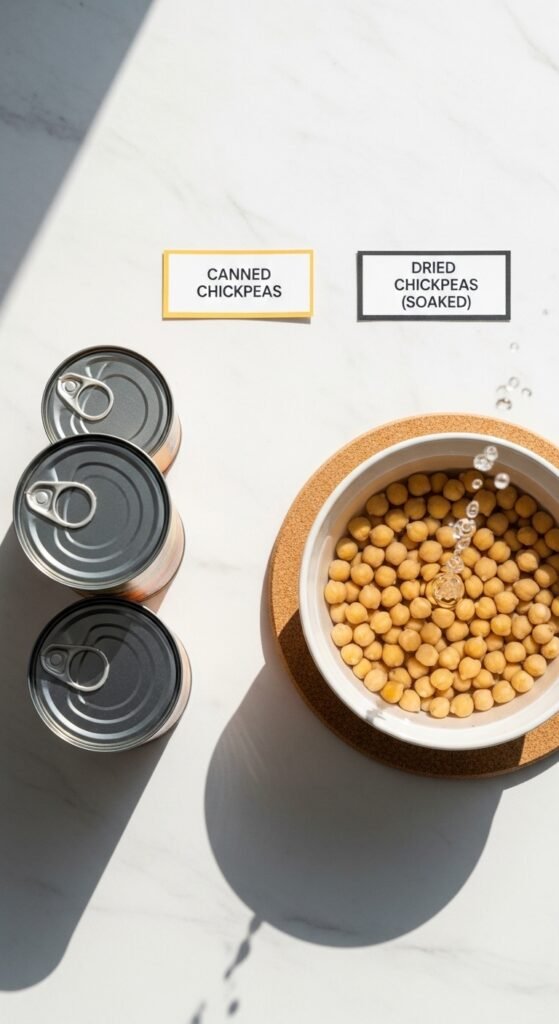
Main Choice: 2 cans (15 ounces each) of chickpeas (garbanzo beans) , drained and rinsed
Why This Works: Canned chickpeas offer convenience without sacrificing quality. Rinsing removes excess sodium and the metallic taste of canning liquid.
Substitution Options:
- Dried chickpeas (soaked and cooked): Use 1.5 cups dried, which yields about 3 cups cooked. Soak overnight, then simmer for 1‑2 hours until tender.
- Other white beans: Cannellini beans or great northern beans work beautifully if you’re out of chickpeas.
- Lentils: French green lentils or brown lentils offer a different texture but similar protein content.
The Vegetables
Main Choice: 1 large cucumber (English or Persian varieties preferred), diced
Why This Works: Cucumber adds essential crunch and freshness. English cucumbers have fewer seeds and thinner skins, requiring no peeling.
Substitution Options:
- Zucchini: Diced raw zucchini works surprisingly well.
- Bell peppers: Any color adds sweetness and crunch.
- Celery: For even more crunch and a savory note.
Main Choice: 1 pint cherry tomatoes or grape tomatoes, halved
Why This Works: Small tomatoes stay firm and offer consistent sweetness in every bite.
Substitution Options:
- Roma tomatoes: Diced into small pieces (remove seeds to prevent excess liquid).
- Sun‑dried tomatoes: Rehydrated and chopped for intense umami flavor.
- Heirloom tomatoes: When in season, these add incredible flavor—just dice them small.
Main Choice: 1/2 red onion, finely diced
Why This Works: Red onion provides sharpness and color. Finely dicing ensures no single bite overwhelms the salad.
Substitution Options:
- Shallots: Milder and slightly sweet.
- Green onions (scallions): Much gentler flavor, use both white and green parts.
- Pickled red onions: For tangy, pre‑softened onion flavor.
The Briny Elements
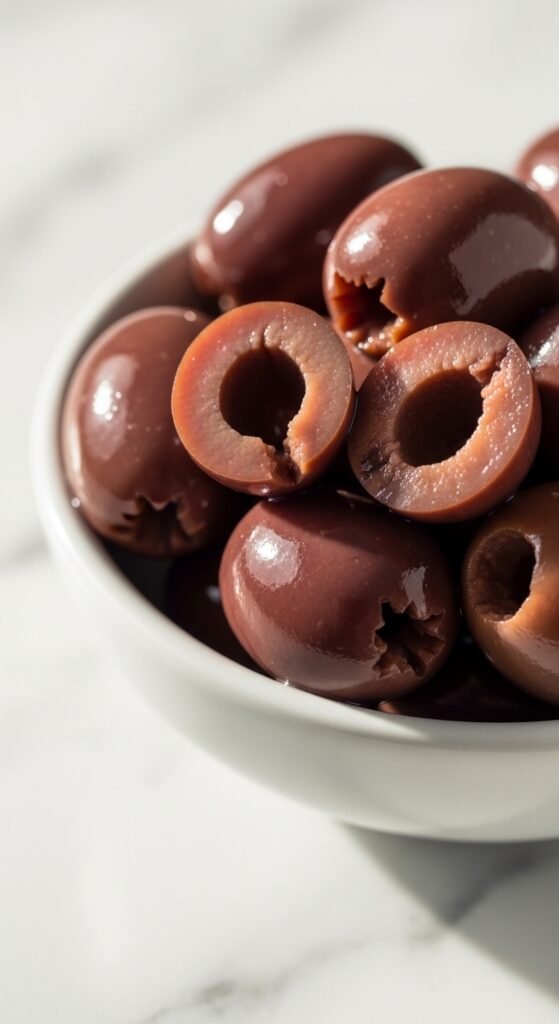
Main Choice: 1/2 cup Kalamata olives, pitted and halved
Why This Works: Kalamatas offer fruity, winey complexity that standard black olives simply can’t match.
Substitution Options:
- Castelvetrano olives: Milder and buttery, with beautiful green color.
- Black olives: Less flavorful but perfectly acceptable.
- Capers: Use 2 tablespoons if you don’t have olives—they provide similar brininess.
Main Choice: 1/2 cup crumbled feta cheese
Why This Works: Feta’s salty, tangy profile ties everything together.
Substitution Options:
- Goat cheese: Creamier with similar tanginess.
- Parmesan: Shaved or grated for a different but delicious result.
- Vegan feta: Several plant‑based brands now offer convincing alternatives.
- Nutritional yeast: For a dairy‑free, cheesy‑flavored option.
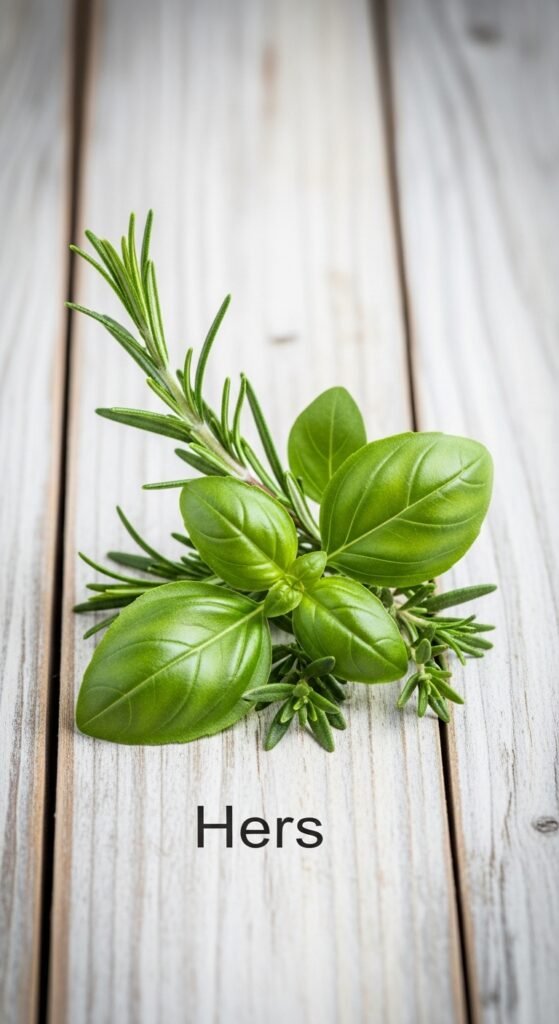
The Fresh Herbs
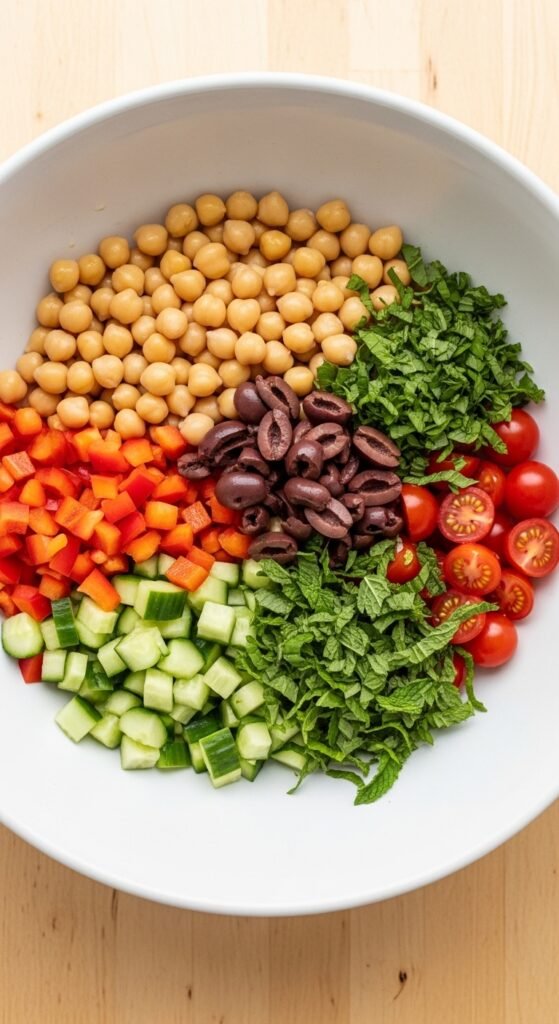
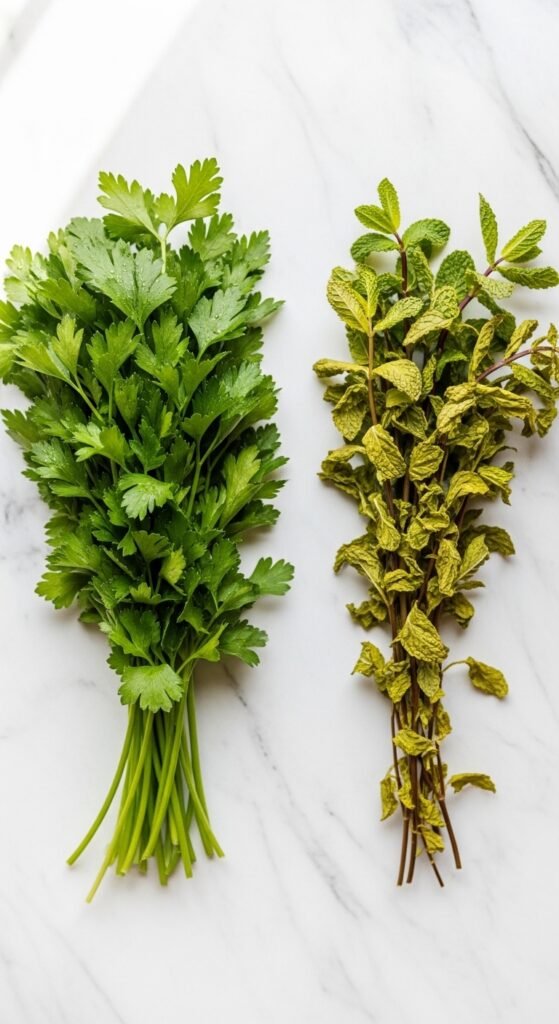
Main Choice: 1/2 cup chopped fresh parsley (flat‑leaf Italian variety preferred)
Why This Works: Parsley adds brightness without overwhelming other flavors.
Substitution Options:
- Cilantro: Completely different but delicious in its own right.
- Fresh dill: Wonderful with cucumber and feta.
- Fresh basil: Especially good with tomato‑heavy variations.
Main Choice: 1/4 cup chopped fresh mint
Why This Works: Mint provides unexpected freshness that elevates the entire dish.
Substitution Options:
- Fresh oregano: More traditional in Greek cooking.
- Fresh thyme: Delicate and earthy.
- Omit entirely: The salad works fine without mint.
The Dressing
Main Choice: 1/4 cup extra virgin olive oil
Why This Works: High‑quality olive oil forms the backbone of Mediterranean cooking.
Substitution Options:
- Avocado oil: Neutral flavor, high smoke point (though you aren’t heating it).
- Walnut oil: Nutty and rich, use half walnut oil and half neutral oil.
Main Choice: 2 tablespoons fresh lemon juice (about 1 large lemon)
Why This Works: Fresh lemon brightens everything without harsh vinegar notes.
Substitution Options:
- Red wine vinegar: The closest match in Mediterranean cooking.
- White wine vinegar: Milder than red wine vinegar.
- Champagne vinegar: Delicate and slightly sweet.
Main Choice: 2 cloves garlic, minced (or 1/2 teaspoon garlic powder)
Why This Works: Garlic adds depth and savoriness.
Substitution Options:
- Shallot: Minced finely for similar pungency.
- Asafoetida (hing): A pinch works for garlic‑free diets.
Main Choice: 1 teaspoon dried oregano
Why This Works: Oregano is the quintessential Mediterranean herb.
Substitution Options:
- Dried marjoram: Similar but sweeter.
- Fresh oregano: Use 1 tablespoon chopped.
Main Choice: 1/2 teaspoon sea salt and 1/4 teaspoon black pepper
Why This Works: Proper seasoning transforms good ingredients into great ones.
5. Step-by-Step Recipe Guide
Let’s make this Mediterranean chickpea salad together. Clear your counter, gather your ingredients, and follow along. I’ve broken everything into manageable steps with timing estimates.
Step 1: Prepare Your Chickpeas (2 minutes)
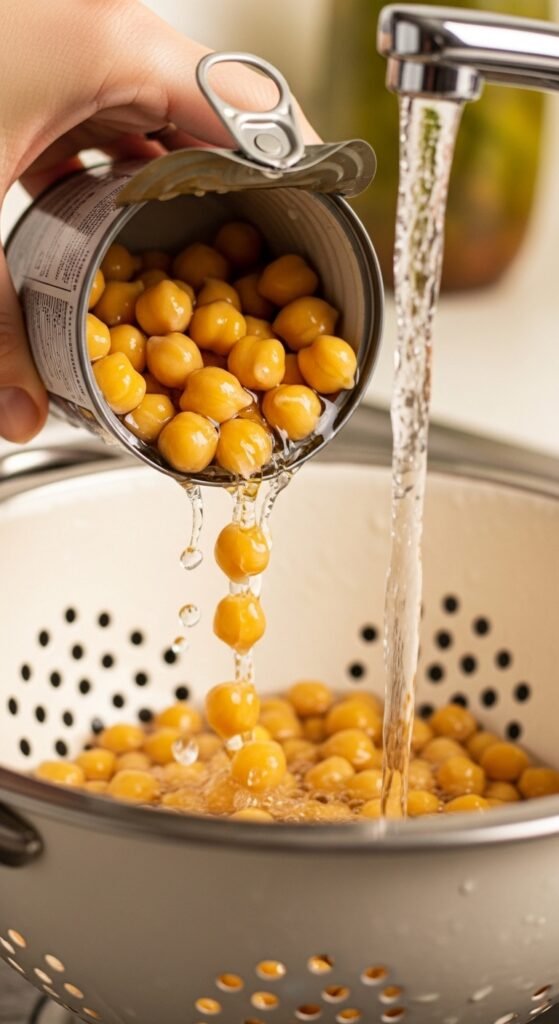
Open two 15‑ounce cans of chickpeas (garbanzo beans) . Pour them into a colander or fine‑mesh strainer. Rinse thoroughly under cool running water for about 30 seconds, agitating the beans with your hands to ensure all the viscous canning liquid washes away. Shake the colander to remove excess water, then set aside to continue draining while you prepare other ingredients.
Pro tip: If you have time, spread the rinsed chickpeas on a clean kitchen towel and pat them dry. Removing surface moisture helps the dressing adhere better.
Step 2: Chop Your Vegetables (5‑7 minutes)
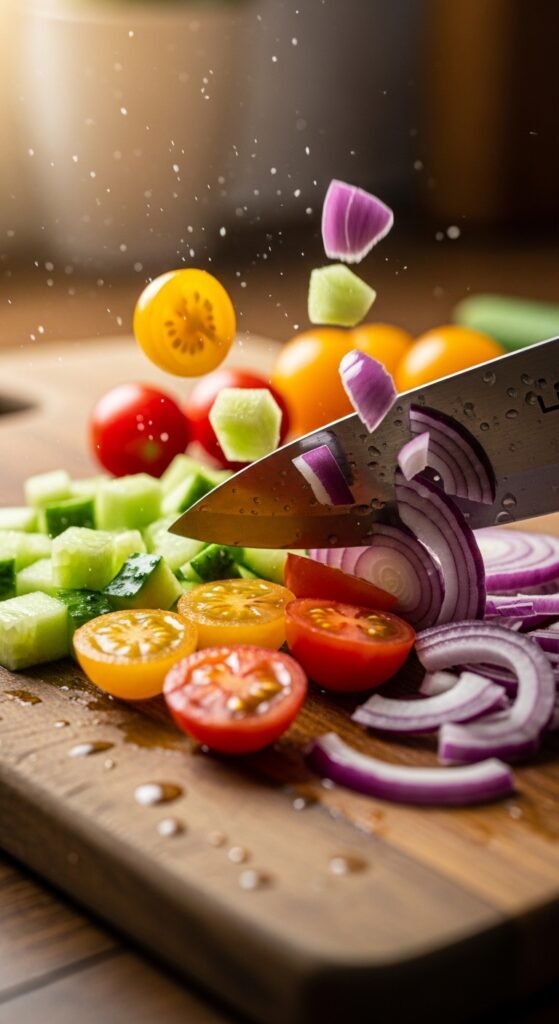
Cucumber: If using an English cucumber (the long, plastic‑wrapped kind), simply dice it into half‑inch pieces. No peeling or seeding required. If using a standard garden cucumber, peel the waxy skin, cut lengthwise, scrape out the seeds with a spoon, then dice.
Cherry tomatoes: Slice each tomato in half. If some are larger than others, cut those into quarters for consistent size.
Red onion: Cut the onion in half through the root end. Peel off the papery skin. Place the flat side down and make thin vertical slices, then rotate and slice again to create small dice. For milder flavor, soak the diced onion in cold water for five minutes, then drain.
Parsley and mint: Wash your herbs thoroughly, then spin or pat dry. Remove the parsley leaves from the thicker stems (thin stems are fine to include). Chop both herbs roughly—you want identifiable pieces, not powder.
Step 3: Prepare the Olives and Feta (2 minutes)
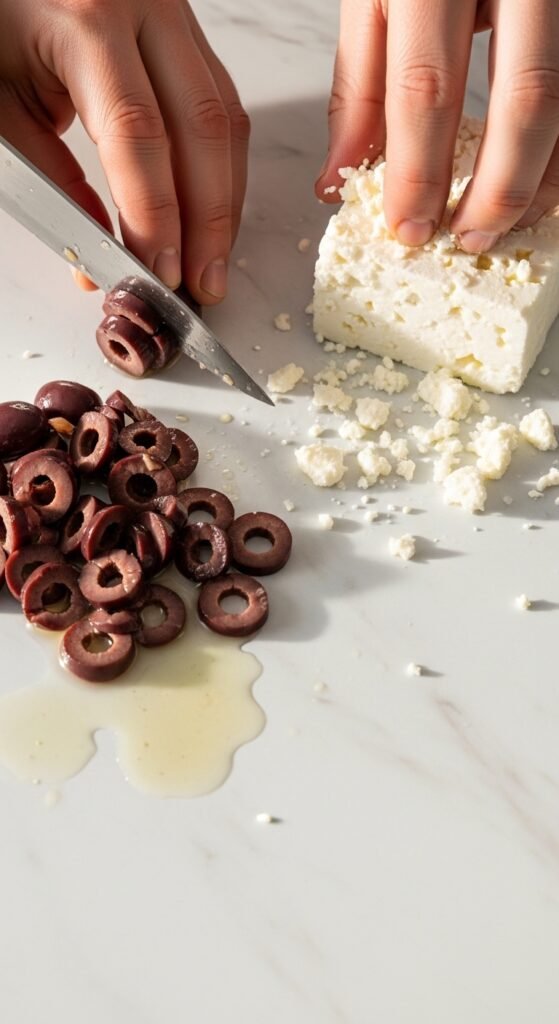
Kalamata olives: If your olives come with pits, slice each olive away from the pit, then cut the flesh into halves or quarters. If using pre‑pitted olives (convenient but slightly less flavorful), just cut them in half.
Feta cheese: If you bought a block (which I strongly recommend over pre‑crumbled), cut it into small cubes or crumble it with your fingers. Pre‑crumbled feta contains anti‑caking agents that prevent it from softening and melding into the salad.
Step 4: Make the Dressing (3 minutes)
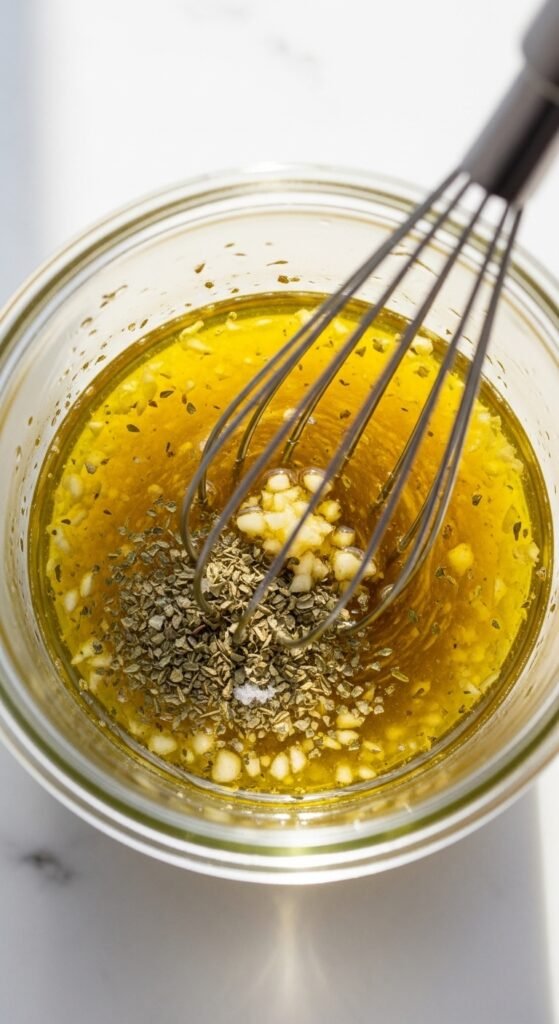
This is where Mediterranean chickpea salad comes alive. Combine in a small bowl or jar:
- 1/4 cup extra virgin olive oil
- 2 tablespoons fresh lemon juice (roll the lemon on the counter before cutting to release more juice)
- 2 minced garlic cloves
- 1 teaspoon dried oregano
- 1/2 teaspoon sea salt
- 1/4 teaspoon black pepper
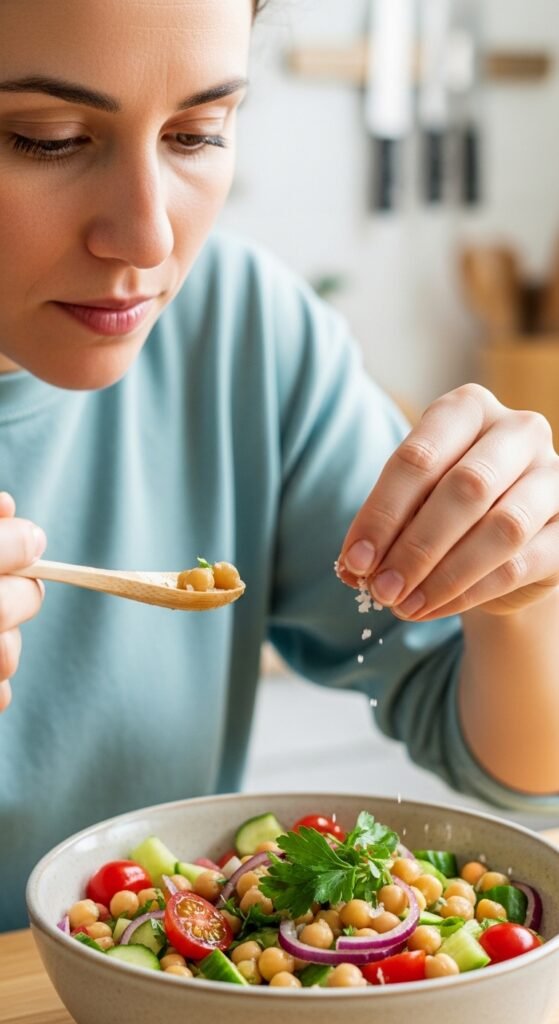
Whisk vigorously with a fork or shake in a sealed jar until emulsified. Taste the dressing on a piece of cucumber or chickpea—adjust salt, lemon, or pepper as needed. The dressing should taste bold and slightly too salty on its own, since it will season the entire salad.
Step 5: Assemble Everything (2 minutes)
Choose a large bowl—bigger than you think you need. You’ll be mixing vigorously, and you don’t want ingredients flying onto your counter.
Add the drained chickpeas first. Then add the cucumber, tomatoes, red onion, olives, parsley, and mint. Pour the dressing over everything.
Step 6: Toss and Massage (1 minute)
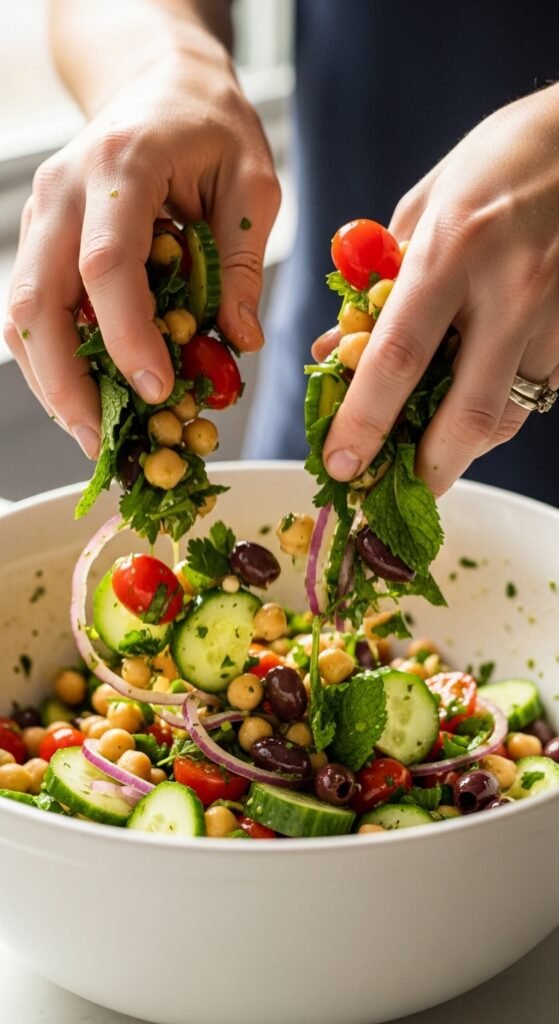
Here’s the secret to exceptional Mediterranean chickpea salad: don’t just stir it. Use your hands (clean ones, obviously) or two large spoons to toss everything thoroughly. Then, gently massage the mixture for about 30 seconds. This slightly bruises the vegetables and helps the dressing penetrate the chickpeas.
Step 7: Add the Feta Last (1 minute)
Sprinkle the feta cheese over the top, then toss very gently. Feta crumbles easily, and you want distinct pieces throughout the salad, not a uniform cheese paste. If you’re not serving immediately, hold the feta aside and add it just before serving.
Step 8: Taste and Adjust (1 minute)
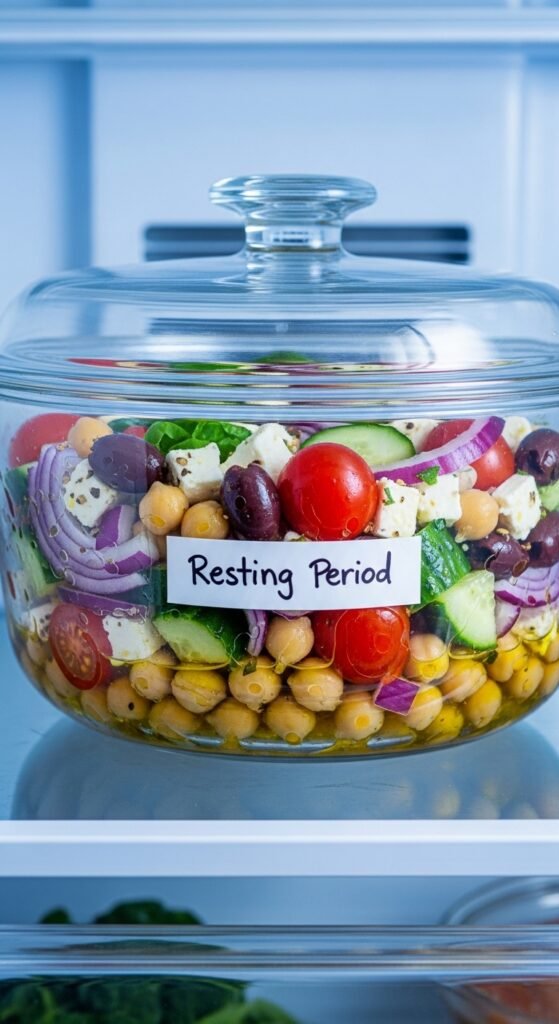
Take a bite. What does it need? More salt? Another squeeze of lemon? A pinch of red pepper flakes for heat? Adjust accordingly. Great cooking always involves tasting and tweaking.
Step 9: Rest (Optional but Recommended)
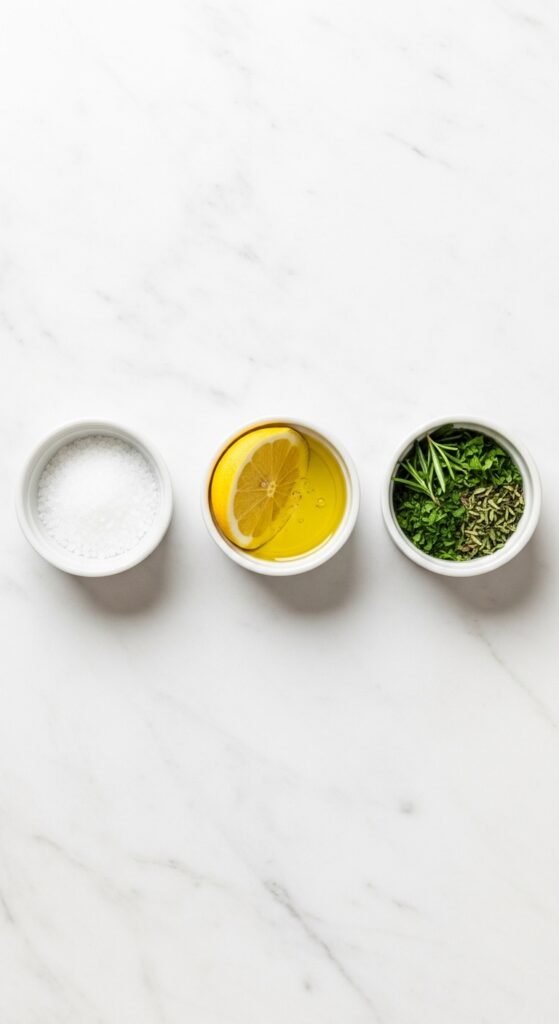
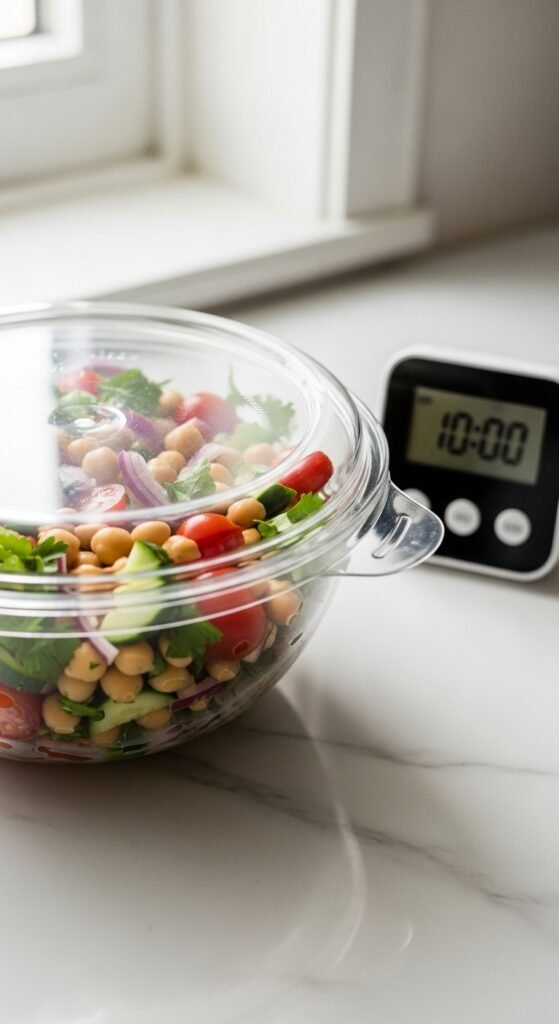
Here’s where patience pays off. If you can wait 20‑30 minutes before serving, cover the bowl and let it sit at room temperature. The lemon juice gently “cooks” the red onion, softening its bite. The flavors meld into something greater than the sum of their parts. This salad actually improves for about 48 hours.
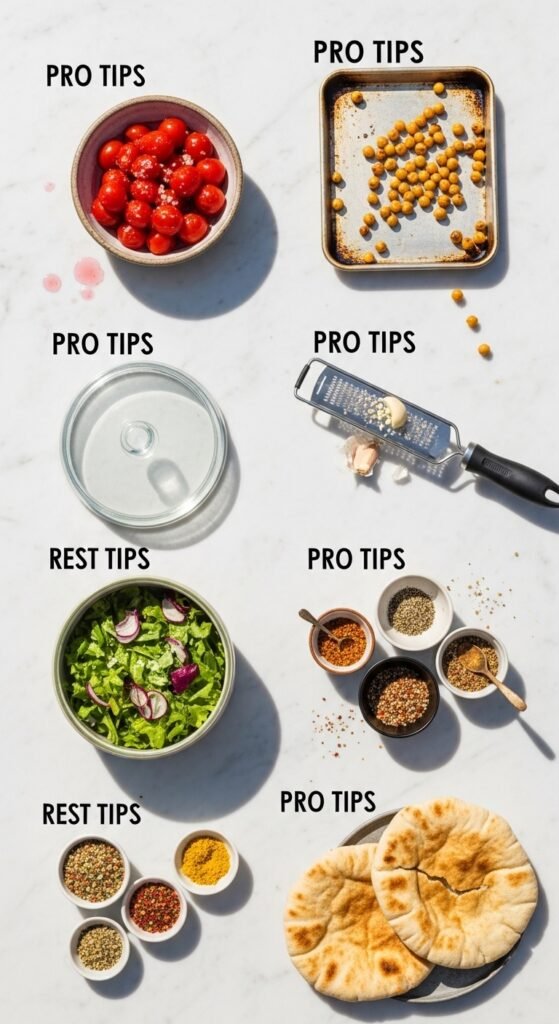
6. Pro Tips for the Perfect Salad Every Single Time
After making Mediterranean chickpea salad literally hundreds of times (I’m not exaggerating), I’ve discovered some game‑changing techniques. Learn from my mistakes and triumphs.
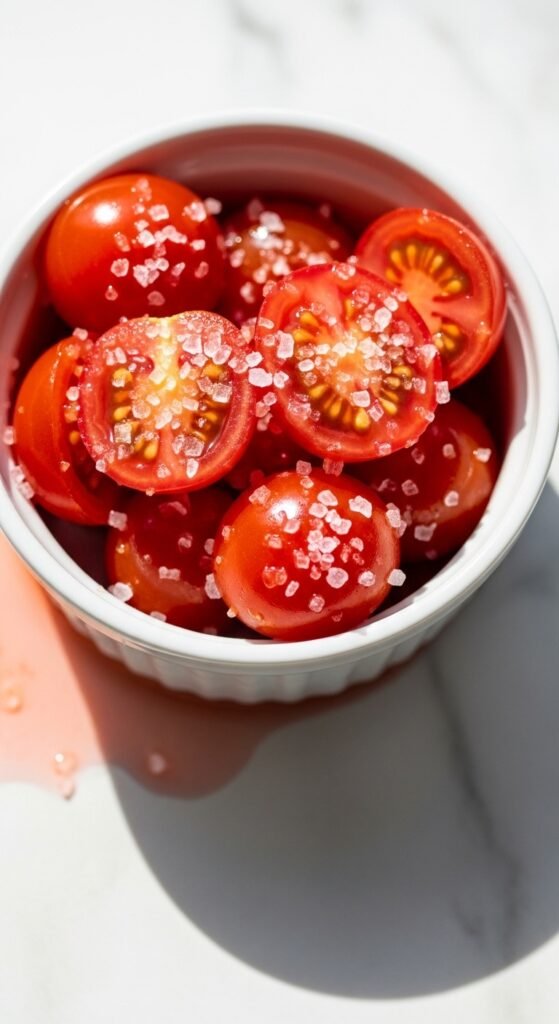
Tip 1: Salt Your Tomatoes Separately
Tomatoes release liquid when salted. If you add them directly to the salad with salt, the bottom of your bowl can become watery. The fix? Toss your halved cherry tomatoes with a pinch of salt in a small bowl, let them sit for five minutes, then drain off the accumulated liquid before adding them to the salad.
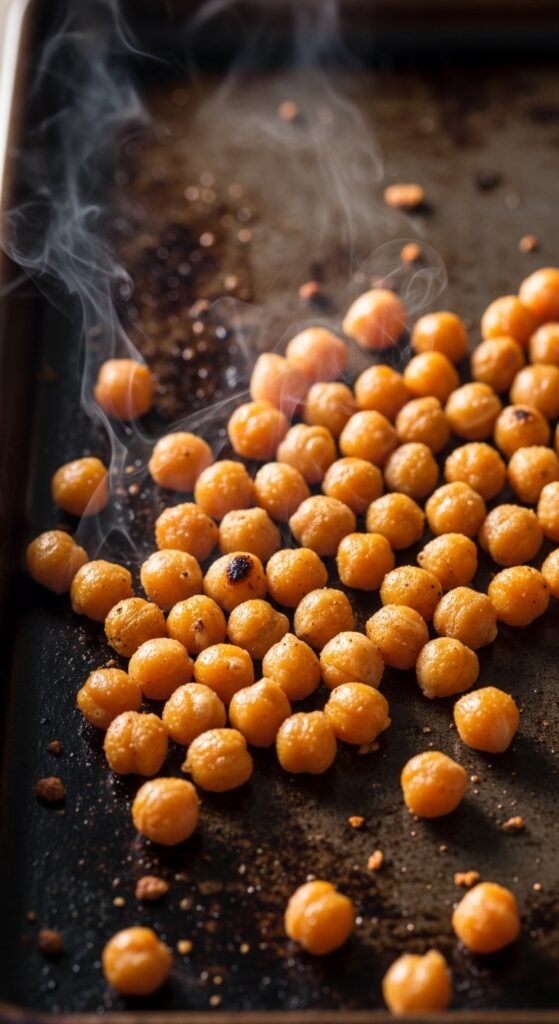
Tip 2: Toast Your Chickpeas for Texture
Want to elevate Mediterranean chickpea salad from great to unforgettable? After rinsing and drying your chickpeas, spread them on a baking sheet and roast at 400°F (200°C) for 10‑12 minutes until slightly crispy on the outside but still creamy inside. Let them cool completely before using. This adds an incredible texture contrast that will impress anyone you serve.
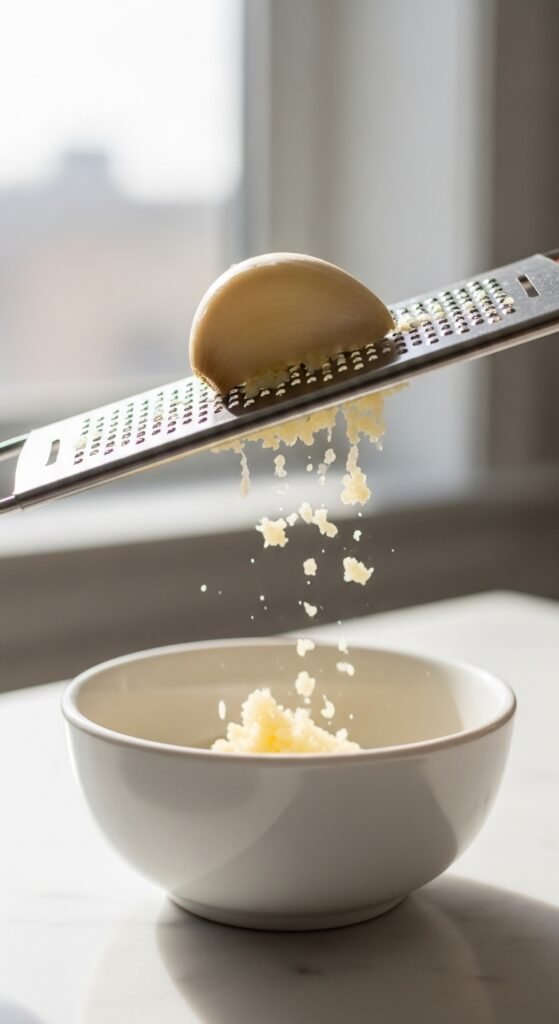
Tip 3: Use a Microplane for Garlic
Minced garlic can be harsh and uneven. A Microplane or fine rasp turns garlic into a paste that distributes evenly throughout the dressing without leaving sharp chunks. If you don’t own one, smash your garlic cloves with the flat side of a knife, sprinkle with salt, and drag the knife across repeatedly to create a paste.
Tip 4: Don’t Skip the Resting Period
I mentioned this earlier, but it bears repeating. Mediterranean chickpea salad made and served immediately is good. Mediterranean chickpea salad that rests for 30 minutes is great. Mediterranean chickpea salad that rests overnight is transcendent. The difference is genuinely shocking.
Tip 5: Season in Layers
Instead of adding all the salt to the dressing, season each component as you add it to the bowl. A pinch of salt on the tomatoes. A pinch on the cucumbers. A pinch on the chickpeas. This technique ensures every bite is properly seasoned, not just the surface.
Tip 6: Warm Your Pita Bread
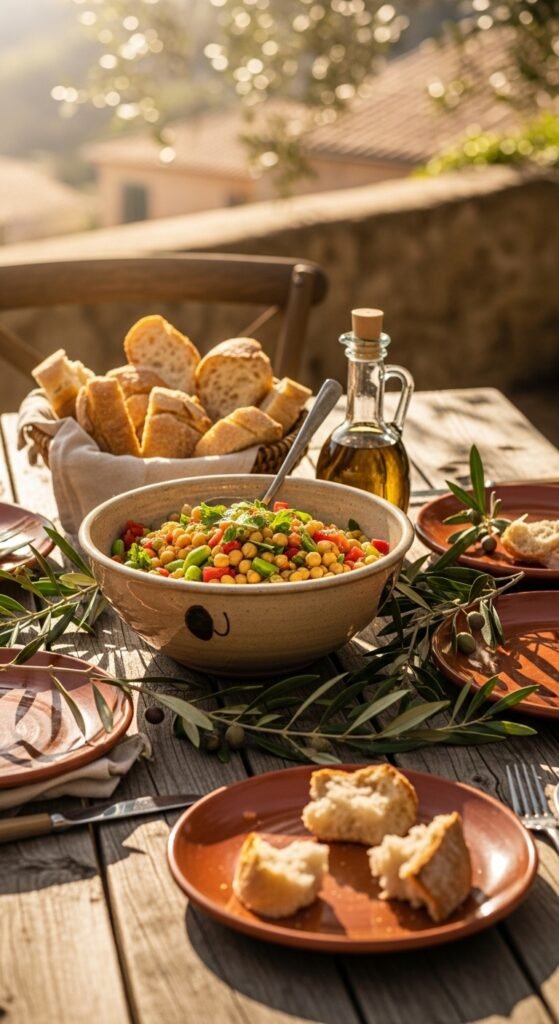
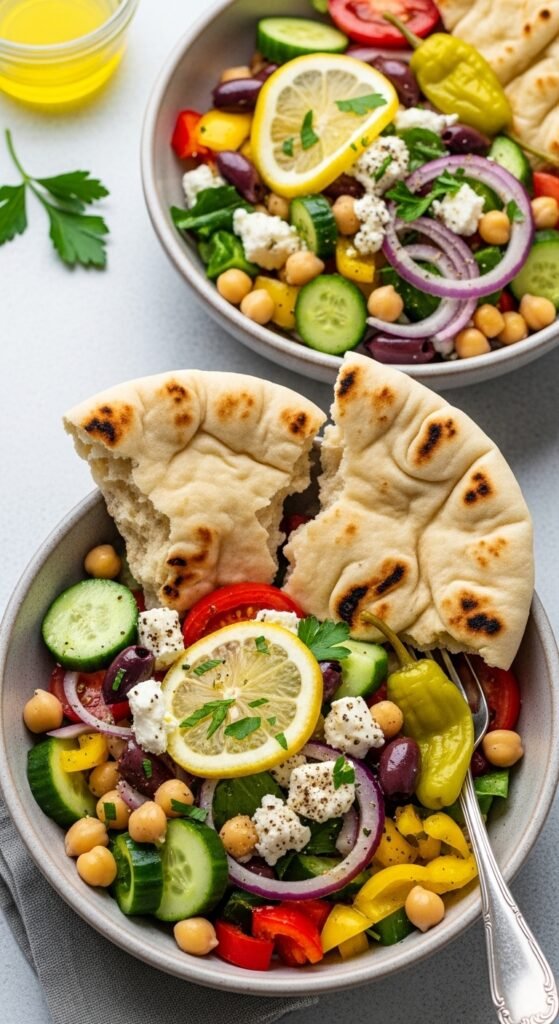
If you’re serving this salad with warm pita bread (and you absolutely should), wrap the pitas in foil and warm them in a 350°F oven for 5‑7 minutes. Alternatively, brush them with olive oil and warm them directly on a grill or in a dry skillet. The contrast between cool, crunchy salad and warm, soft bread is magical.
7. Delicious Variations to Keep Things Exciting
The recipe above is my classic version, but Mediterranean chickpea salad welcomes endless creativity. Here are eight variations I rotate through depending on my mood and what’s in my kitchen.
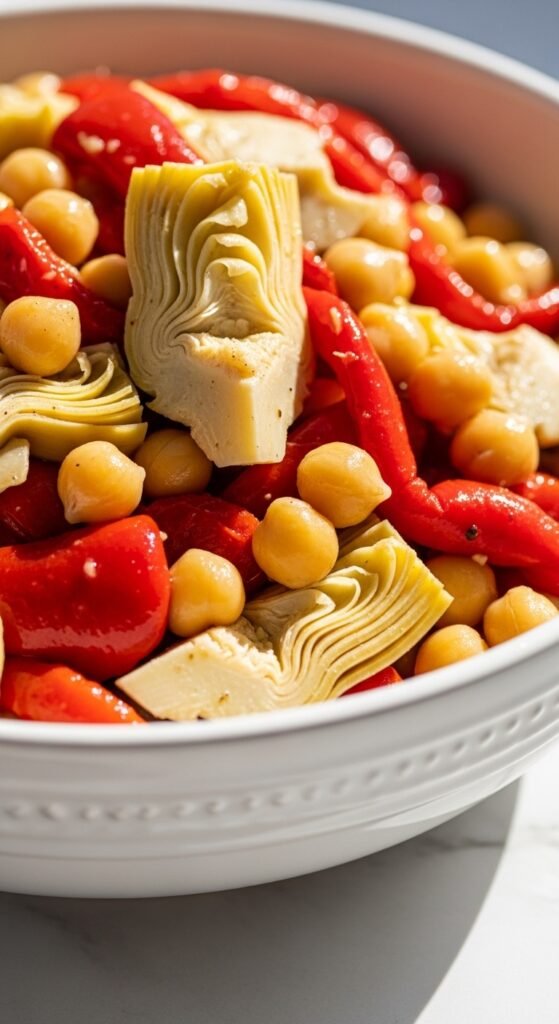
Variation 1: Roasted Red Pepper and Artichoke
Add 1/2 cup chopped roasted red peppers (from a jar, drained) and 1/2 cup quartered marinated artichoke hearts. Reduce the olives slightly to balance the brininess. This version tastes like something from an upscale Mediterranean deli.
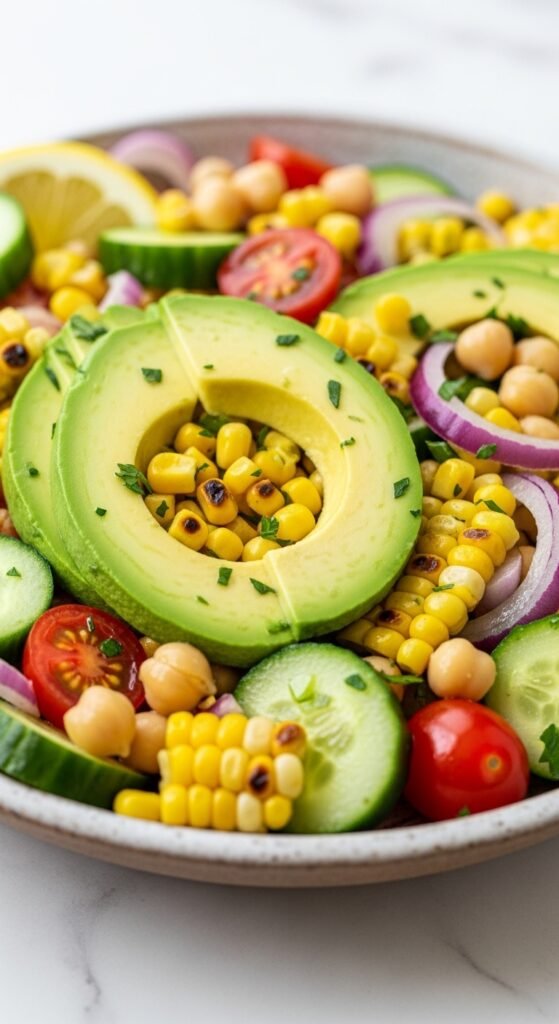
Variation 2: Avocado and Corn
Add 1 diced avocado and 1 cup fresh or thawed frozen corn kernels. Omit the feta for a fully plant‑based version or keep it for creamy, salty contrast. The avocado makes the salad extra filling—perfect for a main course.
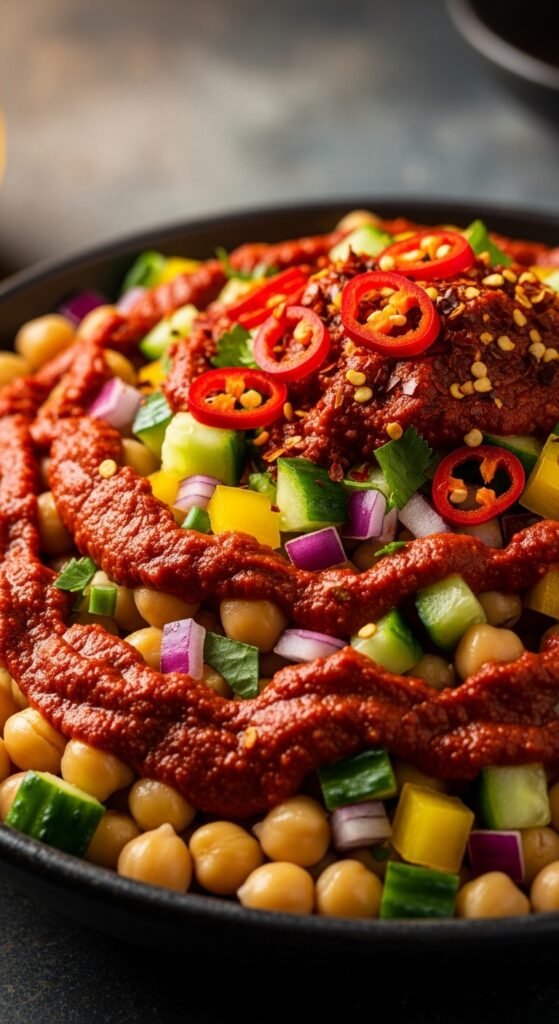
Variation 3: Spicy Harissa
Stir 1‑2 tablespoons of harissa paste into your dressing. Add 1/4 cup chopped dried apricots for sweet‑spicy balance and 1/4 cup toasted slivered almonds for crunch. This North African‑inspired variation wakes up your taste buds.
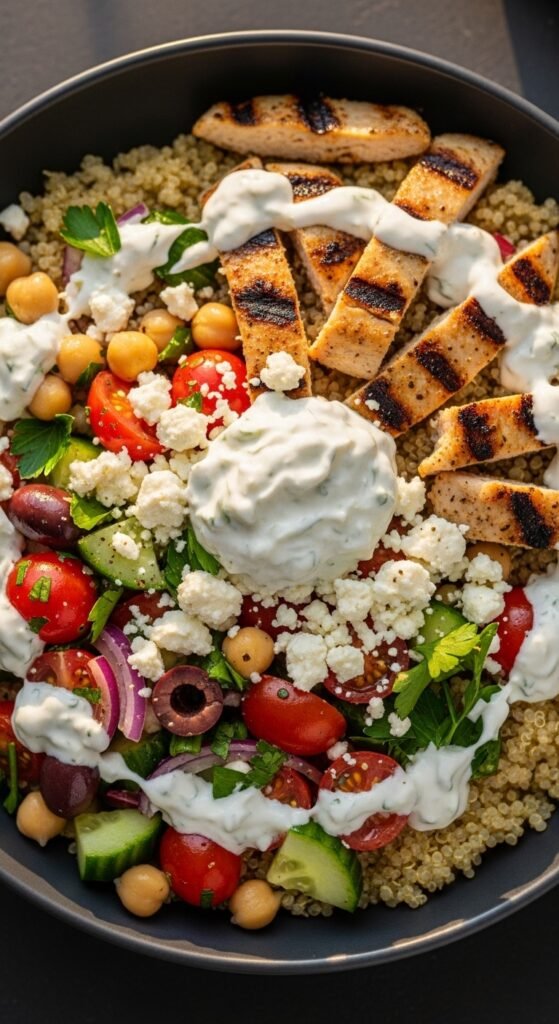
Variation 4: Greek Power Bowl
Add 1 cup cooked farro or quinoa to make this salad even more substantial. Top with a generous sprinkle of dried oregano and serve with lemon wedges on the side. This version sustained me through many busy work weeks.
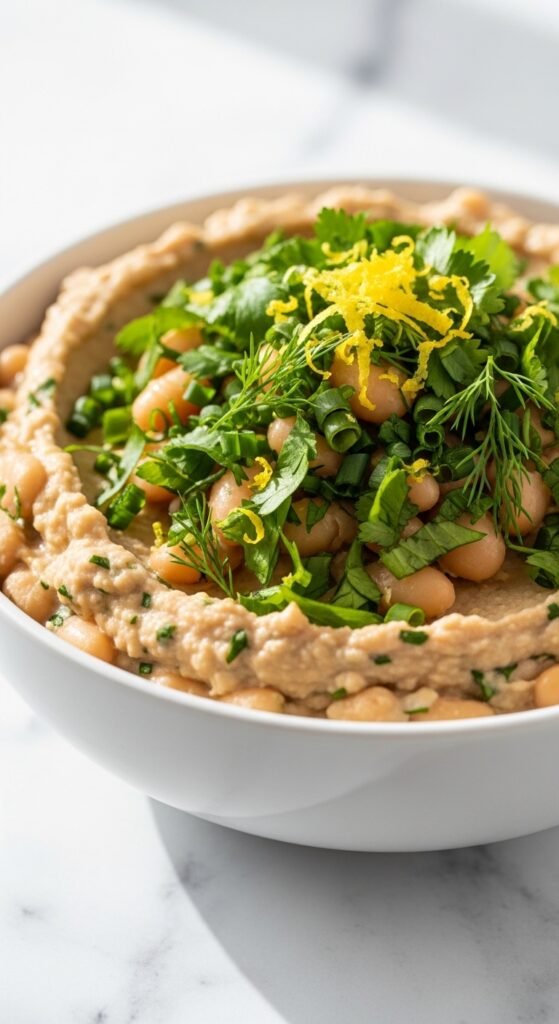
Variation 5: Herbed White Bean
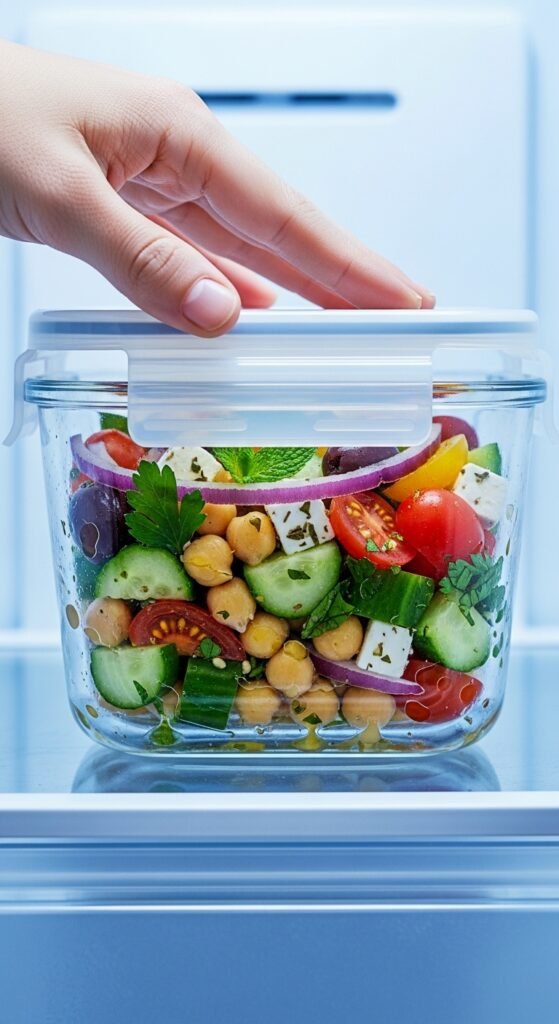
Replace chickpeas with cannellini beans. Double the fresh herbs (parsley, mint, dill, and oregano all work). Add 1/4 cup chopped fresh chives. The result is lighter, creamier, and incredibly elegant.
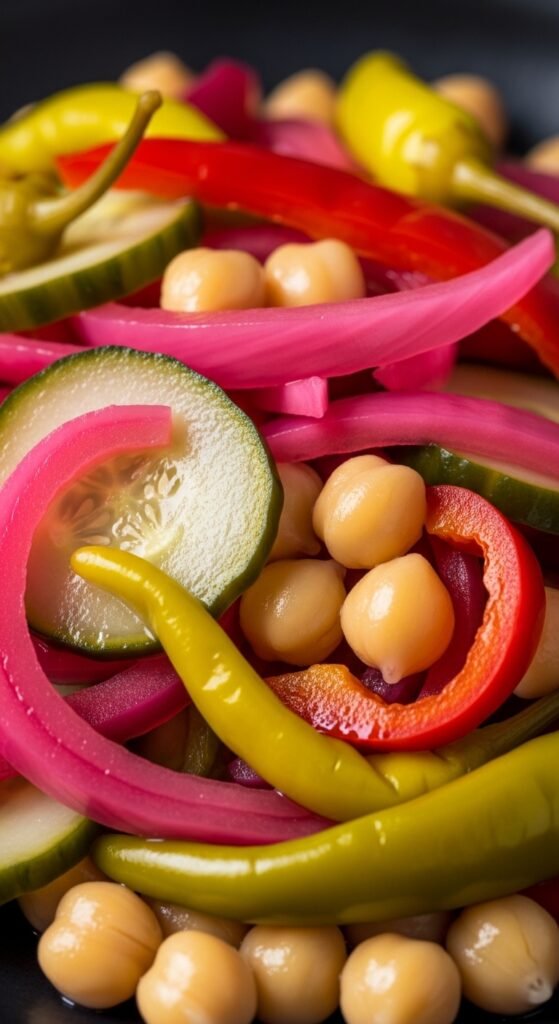
Variation 6: Pickled Everything
Use pickled red onions instead of raw. Add 1/4 cup pickled banana peppers or pepperoncini. Include 2 tablespoons of the pickling liquid in your dressing. This tangy version pairs beautifully with grilled meats.
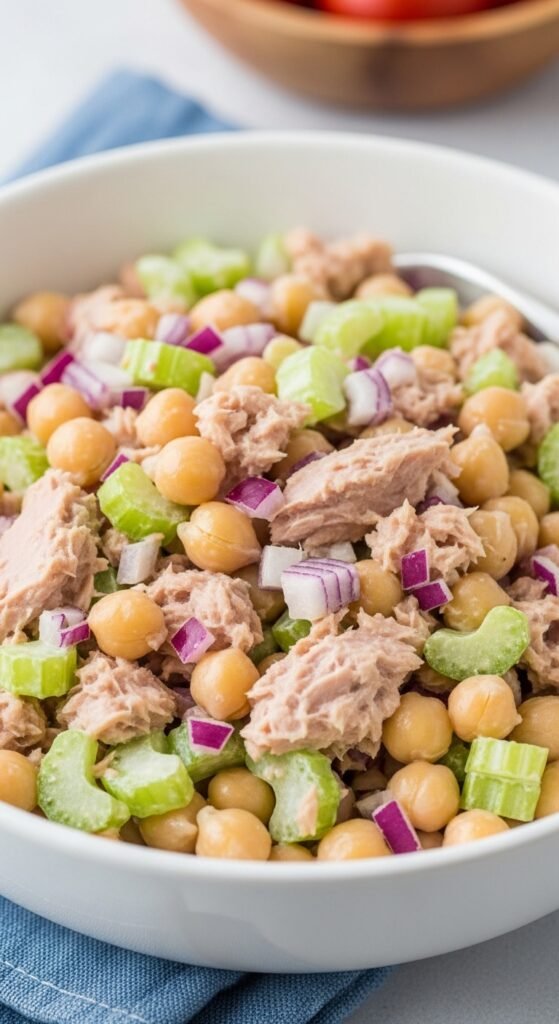
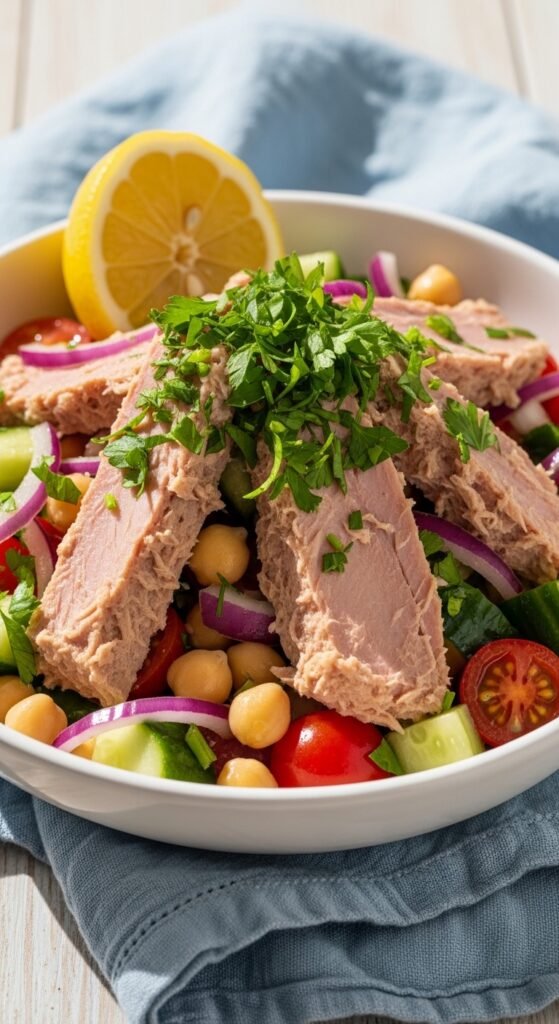
Variation 7: Mediterranean Tuna Salad
Add one 5‑ounce can of high‑quality tuna packed in olive oil (drained but not rinsed). Flake it into large chunks and gently fold into the salad. The tuna adds protein and transforms this into a hearty fisherman’s lunch.
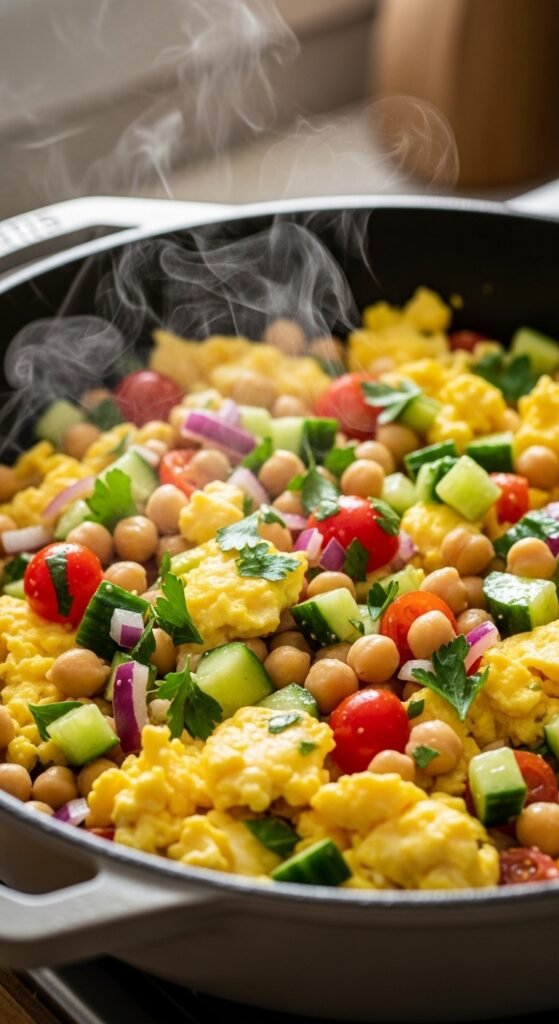
Variation 8: Breakfast Scramble
Yes, you read that correctly. Warm leftover Mediterranean chickpea salad in a skillet, then push it to one side and scramble two eggs on the other side. Combine and serve with hot sauce. Don’t knock it until you’ve tried it—the combination is unexpectedly fantastic.
8. How to Store, Meal Prep, and Serve Like a Pro
Mediterranean chickpea salad might be the most meal‑prep‑friendly dish in existence. Here’s everything you need to know about keeping it fresh and serving it beautifully.
Proper Storage Methods
Short‑term (up to 3 days): Transfer the salad to an airtight container. Press a piece of plastic wrap directly onto the surface of the salad before sealing the lid. This prevents air from drying out the top layer. Refrigerate promptly.
Medium‑term (3‑5 days): If you want your salad to last longer, store the feta cheese separately and add it only when serving. Feta can become mushy after several days in acidic dressing. Everything else holds up beautifully.
Long‑term (freezing): I don’t recommend freezing this salad. The vegetables will become limp and watery upon thawing. Make fresh batches instead—it’s so quick that freezing isn’t necessary.
Meal Prep Strategies
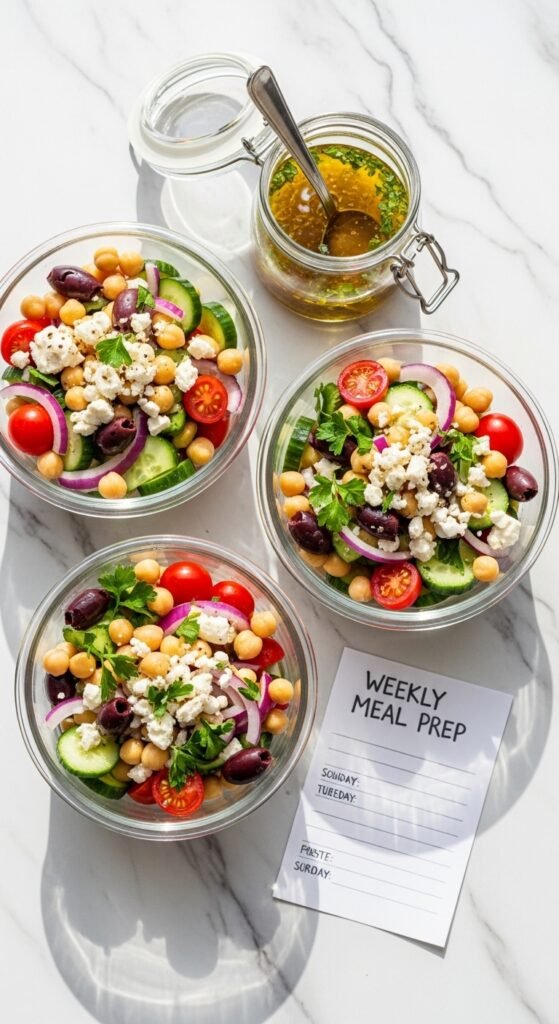
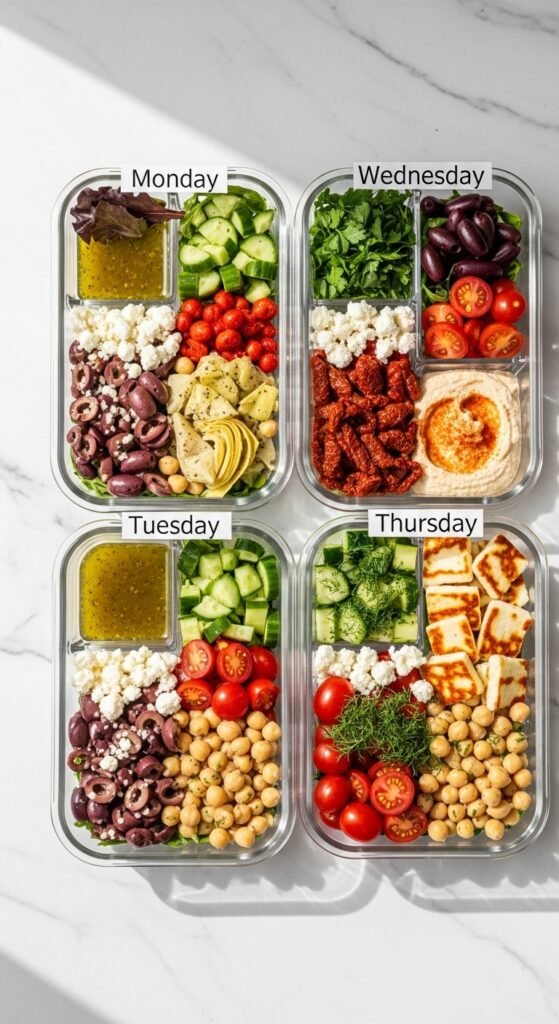
For weekly meal prep: Make a double batch on Sunday, but divide it into individual portions immediately. Store each portion in its own container. Grab one each morning for lunch. By Friday, the salad will be perfectly marinated.
For ingredient prep (even faster assembly): Wash and chop all vegetables on Sunday. Store each in separate containers. Drain and rinse chickpeas. Make dressing and store in a jar. When you’re ready to eat, simply combine everything—assembly takes two minutes.
For work lunches: Pack the salad in a main container. Pack the feta cheese in a tiny separate container. Pack warm pita bread in foil. Combine at lunchtime for the best texture.
Serving Suggestions
As a main course: Serve a generous bowl (about 2 cups) with warm pita bread on the side. Add a dollop of Greek yogurt or tzatziki for creaminess.
As a side dish: Serve alongside grilled chicken, lamb chops, fish, or falafel. A 3/4‑cup portion complements almost any protein.
As a dip: Drain some of the dressing and pulse the salad briefly in a food processor (not too much—you want texture). Serve with pita chips, crostini, or raw vegetables.
As a stuffed vegetable: Hollow out tomatoes, bell peppers, or zucchini boats. Fill with the salad. Top with extra feta and broil for 2‑3 minutes until bubbly.
On a grain bowl: Layer quinoa, brown rice, or freekeh in a bowl. Top with the salad. Add a spoonful of hummus and a sprinkle of sumac.
9. Where to Buy the Best Ingredients (And Why Quality Matters)
You can make Mediterranean chickpea salad with ingredients from any grocery store. However, upgrading certain components transforms good salad into unforgettable salad. Let me tell you what’s worth the splurge.
Extra Virgin Olive Oil: Non‑Negotiable Quality
This is the single most important ingredient in your kitchen. Bad olive oil tastes greasy and bitter. Good olive oil tastes fruity, peppery, and alive.
What to look for: A harvest date within the last 18 months. A dark glass bottle (light destroys olive oil). A certification seal from the North American Olive Oil Association or the California Olive Oil Council. A price above $10 per bottle (sadly, cheap olive oil is often adulterated with cheaper oils).
Where to buy: Whole Foods, Trader Joe’s (their California estate bottles are excellent values), Costco (the Kirkland Signature organic bottles consistently rank high in tests), or directly from producers.
What to avoid: Anything labeled “pure olive oil” or “light olive oil.” These have been chemically refined and stripped of flavor and health benefits. Also avoid clear glass bottles sitting on warm shelves near the stove.
Feta Cheese: Greek Is Traditional, French Is Creamy
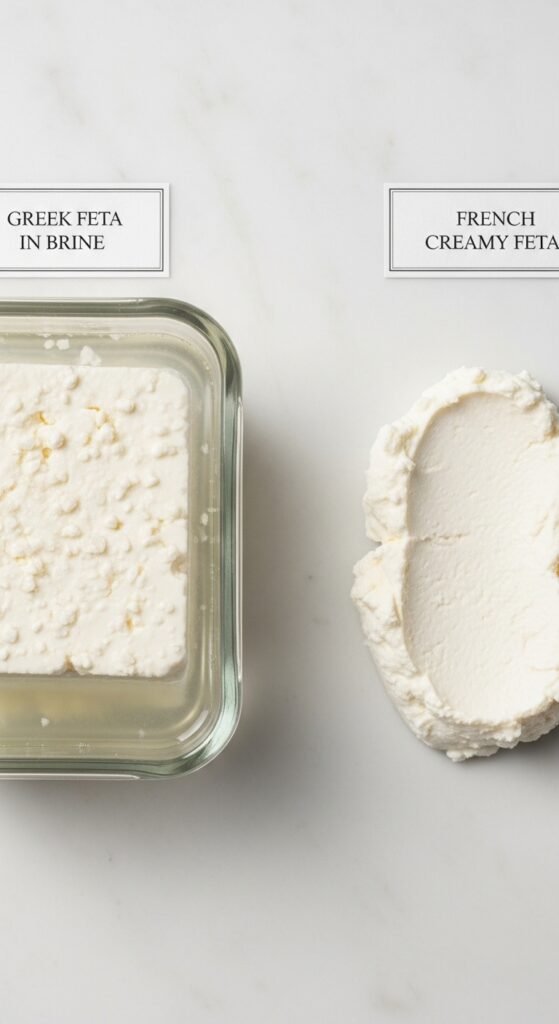
Greek feta (protected designation of origin) comes from sheep’s milk or a sheep‑goat blend. It’s tangy, salty, and crumbly. French feta uses sheep’s milk exclusively and tastes creamier, milder, and less salty. Both are delicious—choose based on your preference.
What to look for: Feta sold in blocks submerged in brine. Pre‑crumbled feta contains cellulose (wood pulp) to prevent clumping and never tastes as good.
Where to buy: Dodoni and Mt. Vikos are reliable Greek brands available at most supermarkets. Valbreso makes excellent French feta. Your local Mediterranean or Middle Eastern market will have exceptional options.
Kalamata Olives: Seek Out the Pits
Olives sold with pits intact taste dramatically better than pre‑pitted olives. The pitting process bruises the flesh and accelerates oxidation. Yes, removing pits adds two minutes of work. Yes, it’s worth it.
What to look for: Olives floating in brine, not oil. Plump, purple‑black skins. A firm texture when pressed.
Where to buy: Mediterranean markets and grocery store olive bars offer the best quality. Divina and Mezzetta make decent jarred options if fresh aren’t available.
Chickpeas: Canned vs. Dried
Both work. Here’s the honest breakdown:
Canned chickpeas offer unbeatable convenience. Rinse and use. Look for BPA‑free cans from brands like Eden Foods or Westbrae Natural. Avoid cans with added sugar or preservatives.
Dried chickpeas cost about one‑quarter as much per serving and taste noticeably better—creamier interior, firmer skin, no metallic notes. The trade‑off is planning ahead (overnight soak) and cooking time (1‑2 hours). I use dried when I remember to soak them. I use canned when I don’t.
Fresh Herbs: Don’t Buy Sad Bunches
Limp, yellowing herbs add nothing to Mediterranean chickpea salad. Vibrant, perky herbs transform it.
What to look for: Bright green color. No sliminess or dark spots. Strong aroma when you bring the bunch to your nose. Parsley should look perky, not collapsed.
Storage tip: Treat fresh herbs like flowers. Trim the stems, place them in a jar with an inch of water, cover loosely with a plastic bag, and refrigerate. They’ll last five to seven days.
10. Frequently Asked Questions
Over years of sharing Mediterranean chickpea salad with friends, family, and cooking students, I’ve heard the same questions repeatedly. Here are the answers.
Can I make this salad vegan?
Absolutely. Simply omit the feta cheese or replace it with vegan feta (brands like Violife and Miyoko’s make excellent versions). Some people add nutritional yeast for a cheesy, savory flavor without dairy. The salad remains delicious and satisfying.
How long does Mediterranean chickpea salad last in the fridge?
Properly stored in an airtight container, the salad stays fresh for 3‑5 days. After day 4, the cucumbers may start to soften and the tomatoes might release more liquid, but the flavor remains excellent. If you notice any off smells or sliminess, discard immediately.
Can I freeze leftovers?
I don’t recommend freezing this salad. The high water content in the vegetables causes ice crystals to form, destroying their texture. When thawed, you’ll end up with mushy chickpeas and watery vegetables. Make smaller batches instead.
Is this salad gluten‑free?
Yes! All ingredients in Mediterranean chickpea salad are naturally gluten‑free. The only potential concern is cross‑contamination if you’re buying olives or feta from bulk bins. For celiac disease, purchase packaged versions from certified gluten‑free brands.
Can I use dried herbs instead of fresh?
You can, but the salad won’t be as vibrant. Dried herbs have concentrated flavor but lack the brightness and texture that fresh herbs provide. If you must substitute, use one‑third the amount (since dried herbs are more potent) and rehydrate them in the dressing for 10 minutes before adding to the salad.
Why is my salad watery?
Several possible culprits:
- You didn’t salt and drain your tomatoes before adding them
- Your cucumber wasn’t seeded (standard cucumbers need seeding; English cucumbers don’t)
- You added the feta too early and it released moisture
- You stored the salad for several days (some liquid release is normal)
To fix a watery salad, drain off the excess liquid and add another drizzle of extra virgin olive oil to restore richness.
What protein can I add to make it more filling?
Mediterranean chickpea salad already contains significant plant‑based protein from chickpeas, but you can add:
- Grilled chicken (shredded or cubed)
- Shrimp (chilled and peeled)
- Salmon (flaked, hot or cold)
- Tuna (Mediterranean‑style packed in oil)
- Hard‑boiled eggs (quartered)
- Lamb (leftover from a roast, shredded)
Can I serve this salad warm?
Interesting question! While traditionally served cold or at room temperature, Mediterranean chickpea salad works warm too. Gently warm the chickpeas (skip the fresh vegetables) and toss with the dressing, then add room‑temperature tomatoes, cucumber, and herbs. The result reminds me of a warm bean salad—comforting and unexpected.
Is this salad good for weight loss?
Yes, for several reasons. The combination of protein and fiber promotes satiety, meaning you’ll feel full on fewer calories. The healthy fats support metabolic health. And because the salad tastes delicious, you’re unlikely to feel deprived and binge on less healthy options. Many nutritionists specifically recommend legume‑based salads for weight management.
My kids won’t eat raw onions. What can I do?
Try one of these approaches:
- Soak the onions in cold water for 10 minutes, then drain. This removes much of the sharpness while keeping some crunch.
- Use green onions (scallions) instead—much milder.
- Sauté the onions briefly in olive oil until softened, then cool before adding.
- Omit them entirely. The salad still tastes great without onions.
11. Final Thoughts: Your Journey to Salad Mastery
We’ve covered a lot of ground together. You now know exactly how to make Mediterranean chickpea salad that rivals anything from a restaurant. You understand the health benefits, the storage strategies, the variations, and the pro tips that separate good cooks from great ones.
But here’s what I really want you to take away from this article: cooking doesn’t have to be complicated to be extraordinary. The best meals often involve the fewest ingredients, the simplest techniques, and the most love. This salad proves that point beautifully.
The next time you’re tired, hungry, and tempted to order expensive takeout, remember this recipe. Open your pantry. Open your fridge. In fifteen minutes—less time than delivery would take—you’ll be eating something vibrant, nourishing, and deeply satisfying.
Make a batch this week. Share it with someone you love. Watch their face light up at the first bite. Then smile, because you created that reaction with your own two hands, a few simple ingredients, and a recipe that will serve you for life.
Now go make some Mediterranean chickpea salad. Your taste buds are waiting.
Did you enjoy this article? Want more simple, delicious, and healthy recipes? Subscribe to our weekly newsletter. Every Thursday, you’ll receive one new recipe, one cooking technique, and one story from our kitchen. No spam. Just real food for real people.
Ready to Make the Best Mediterranean Chickpea Salad of Your Life?
You have all the knowledge. You have the confidence. Now you just need the ingredients.
Shop the Ultimate Mediterranean Chickpea Salad Kit
Includes premium extra virgin olive oil, authentic Greek feta, Kalamata olives, and organic chickpeas. Everything you need delivered to your door.
Get the Pre‑Made Dressing
Our signature lemon‑oregano dressing, cold‑pressed and bottled within 24 hours of production. Tastes like it came from a Greek grandmother’s kitchen.
Buy the Complete Starter Bundle
Salad kit + dressing + wooden mixing bowl + recipe card. The perfect gift for the home cook in your life (including yourself).
100% Satisfaction Guarantee: If you don’t absolutely love your Mediterranean chickpea salad experience, return any unopened items within 30 days for a full refund. No questions asked. That’s how confident we are that this recipe will change the way you think about salads forever.