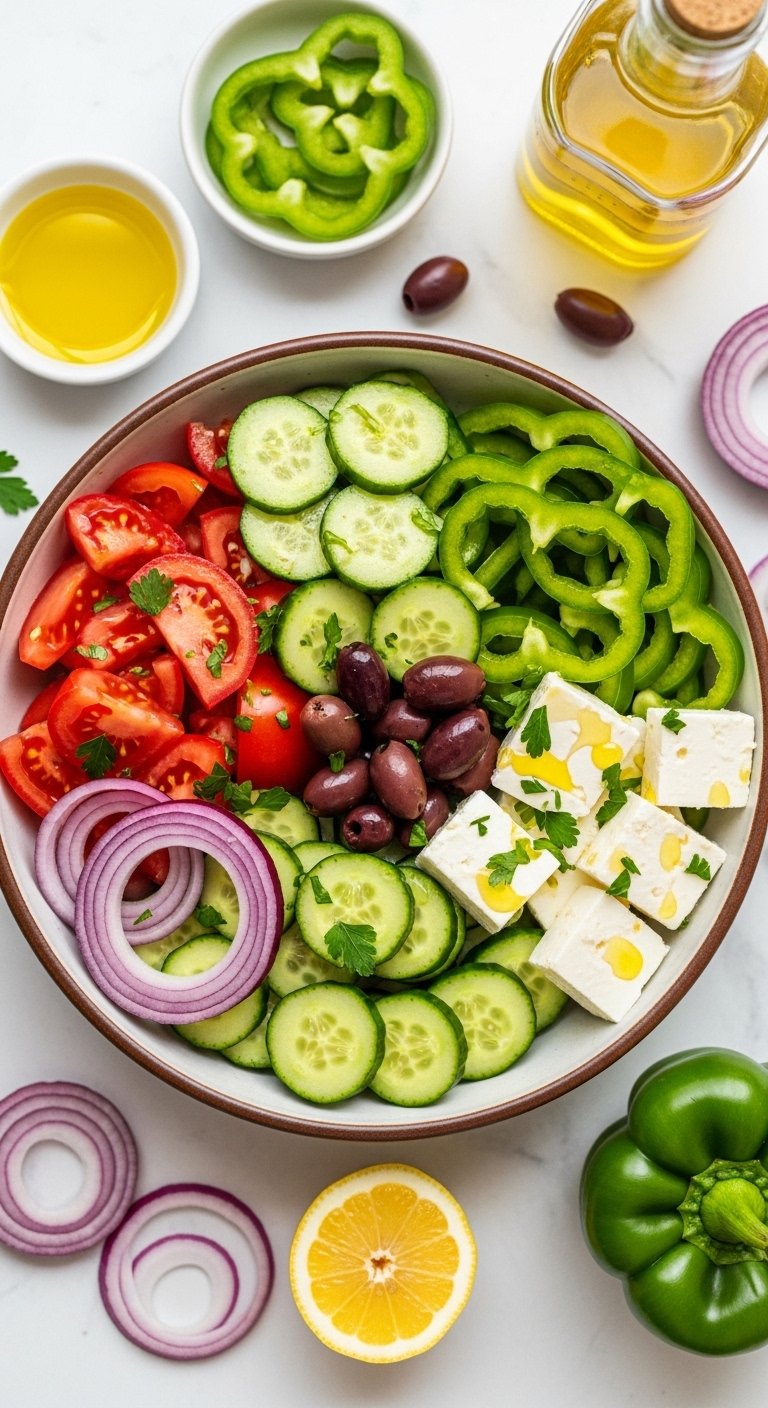
Have you ever tasted something so vibrant and alive that it instantly transported you to a sun‑drenched coastline, with the gentle sound of waves and the scent of fresh herbs filling the air? That is exactly what happened to me on a small Greek island called Crete nearly a decade ago. I had just finished a long hike through olive groves and wildflower‑covered hills when a lovely elderly woman named Eleni invited me into her humble kitchen. She spoke very little English, but her eyes sparkled with warmth as she handed me a wooden bowl filled with the most beautiful Mediterranean salad recipe I had ever encountered.
That single bite changed everything. The crisp cucumbers, the juicy tomatoes, the creamy feta cheese, and that unmistakable extra virgin olive oil drizzled on top – it was pure magic. Eleni laughed at my astonished expression and said something in Greek that I later learned meant, “This is not just food. This is life.”
And you know what? She was absolutely right.
Today, I am going to share with you an authentic, step‑by‑step Mediterranean salad recipe that will bring that same sunshine and vitality into your own kitchen. Whether you are a complete beginner or a seasoned home cook, this guide will walk you through every detail. Furthermore, I will explain why investing in high‑quality ingredients matters more than anything else. By the time you finish reading, you will feel confident, excited, and ready to create the best salad of your life.
So, grab a glass of water, sit back, and let us begin this delicious journey together.
Why This Mediterranean Salad Recipe Will Change the Way You Eat

Before we dive into the ingredients and techniques, let me ask you an honest question. How many times have you thrown together a sad bowl of iceberg lettuce, pale tomatoes, and bottled dressing, only to feel completely underwhelmed? I have been there more times than I care to admit. The truth is, most people have never tasted a truly authentic Mediterranean salad because they are missing a few critical secrets.
First and foremost, a genuine Mediterranean salad recipe does not rely on lettuce as its base. Surprised? You should be. Traditional versions from Greece, Lebanon, Turkey, and Italy focus on chunky, ripe vegetables, briny olives, and bold cheeses. Consequently, every bite bursts with texture and flavor. Additionally, the dressing is incredibly simple: extra virgin olive oil, fresh lemon juice, dried oregano, salt, and pepper. No complicated emulsions, no sugary store‑bought bottles, no strange preservatives.
Another reason this recipe stands out is its incredible versatility. You can serve it as a light lunch, a side dish for grilled meats, a topping for hummus and pita, or even a filling for wraps and sandwiches. Moreover, it comes together in less than fifteen minutes. That means you have no excuse not to make it, even on your busiest weeknights.
Finally, this Mediterranean salad recipe is packed with nutrients. The fresh vegetables provide vitamins A and C; the olive oil delivers heart‑healthy monounsaturated fats; and the feta cheese adds protein and calcium. You are not just eating something delicious – you are nourishing your body from the inside out.
My Personal Anecdote: How a Simple Salad Became a Lifelong Obsession
Let me share another quick story to illustrate why I am so passionate about this dish. When I returned home from Crete, I tried to recreate Eleni’s Mediterranean salad recipe using ingredients from my local supermarket. To my utter disappointment, something was terribly wrong. The tomatoes had no flavor. The cucumbers were waxy and bitter. The olive oil tasted like nothing at all. I felt defeated.
For weeks, I convinced myself that I would never enjoy that magical salad again unless I flew back to Greece. Then, one afternoon at a farmers’ market, I met an Italian olive oil producer named Marco. He handed me a small plastic cup with a single tablespoon of his extra virgin olive oil and said, “Taste this first. Then we talk.”
I swirled the golden liquid in my mouth, and suddenly I understood. The oil tasted like freshly cut grass, green almonds, and a hint of pepper at the back of my throat. It was alive. Marco explained that most commercial olive oils are refined, diluted, and stripped of their beneficial polyphenols. “You cannot make a real Mediterranean salad recipe with fake oil,” he said. “That would be like making love songs on a broken guitar.”
That conversation changed everything. I started seeking out authentic Mediterranean ingredients – vine‑ripened tomatoes, Persian cucumbers, block feta packed in brine, Kalamata olives with their deep purple hue, and wild oregano that smelled like the hillside itself. Slowly but surely, I cracked the code.
Now, I want to help you crack it too.
The Complete Ingredient Breakdown for the Perfect Mediterranean Salad Recipe
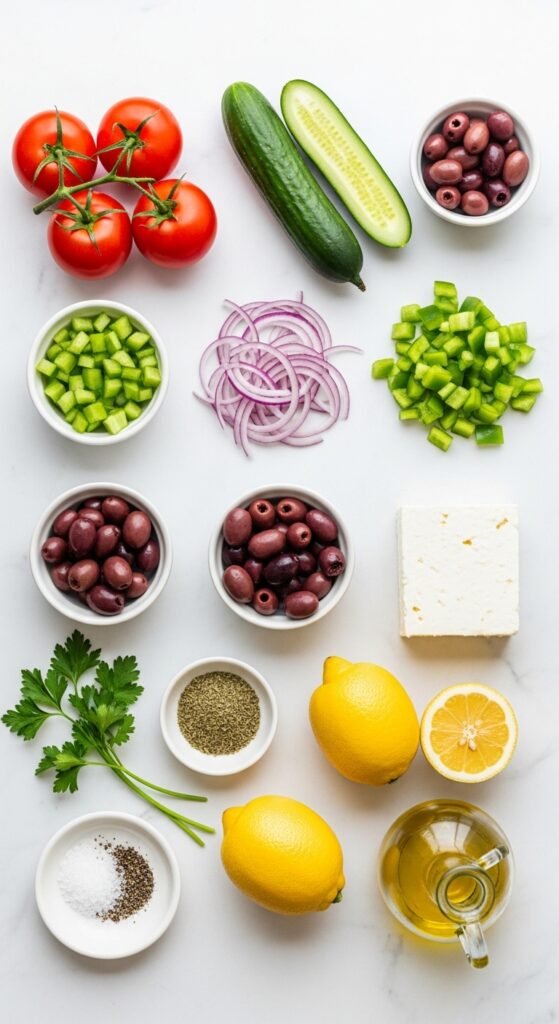
Let us get into the specifics. Below is every component you will need, along with notes on why each one matters and how to choose the best version. Remember: quality is everything. You can follow the steps perfectly, but if your ingredients are mediocre, your salad will be too.
1. Ripe Tomatoes (2 large or 3 medium)
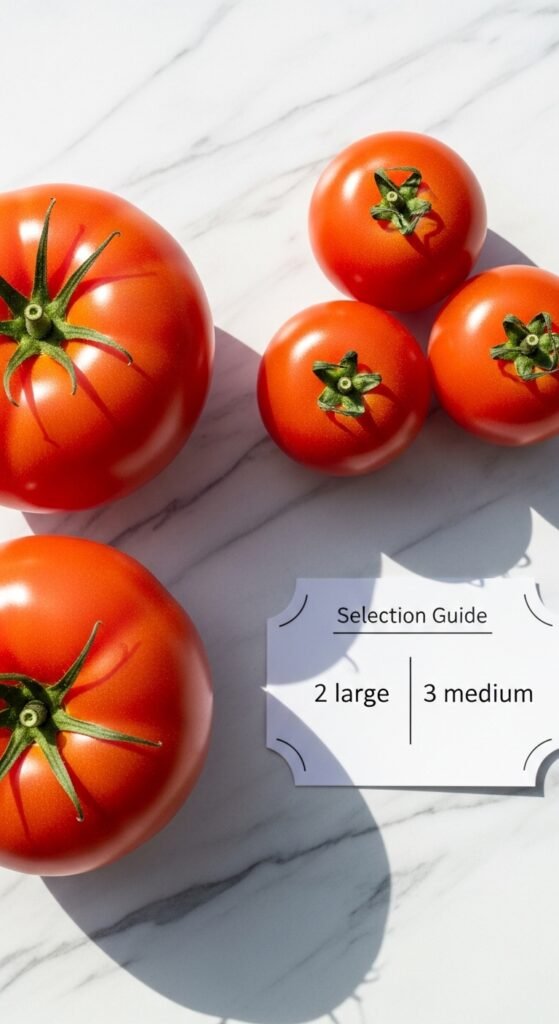
Tomatoes are the backbone of any great Mediterranean salad recipe. Look for tomatoes that feel heavy for their size and yield slightly to gentle pressure. Heirloom varieties, Campari tomatoes, or cherry tomatoes work beautifully. Avoid anything pale, bruised, or odorless. In summer, farmers’ market tomatoes are unbeatable. In winter, you can use high‑quality drained canned cherry tomatoes, but fresh is always best.
2. Persian or English Cucumbers (2 medium)
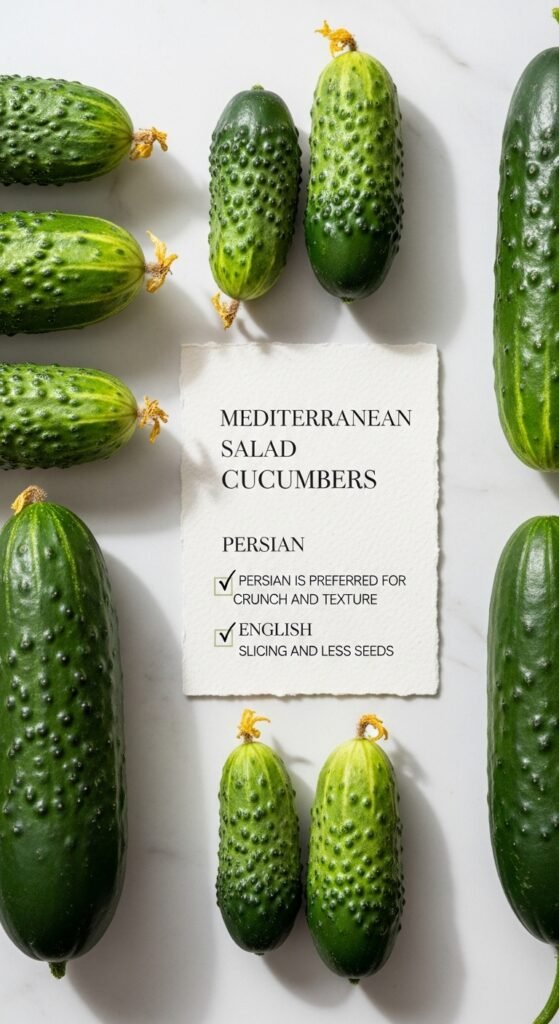
Cucumbers add that refreshing, crisp bite. Persian cucumbers have thin skins and tiny seeds, so you do not need to peel them. English cucumbers (the ones wrapped in plastic) are also excellent. Avoid standard waxy grocery‑store cucumbers – they are often bitter and watery. Cut your cucumbers into half‑moons or small chunks.
Also Read: Summer Food: Your Ultimate Guide to Staying Cool, Energized, and Absolutely Satisfied
3. Red Onion (1/2 small)
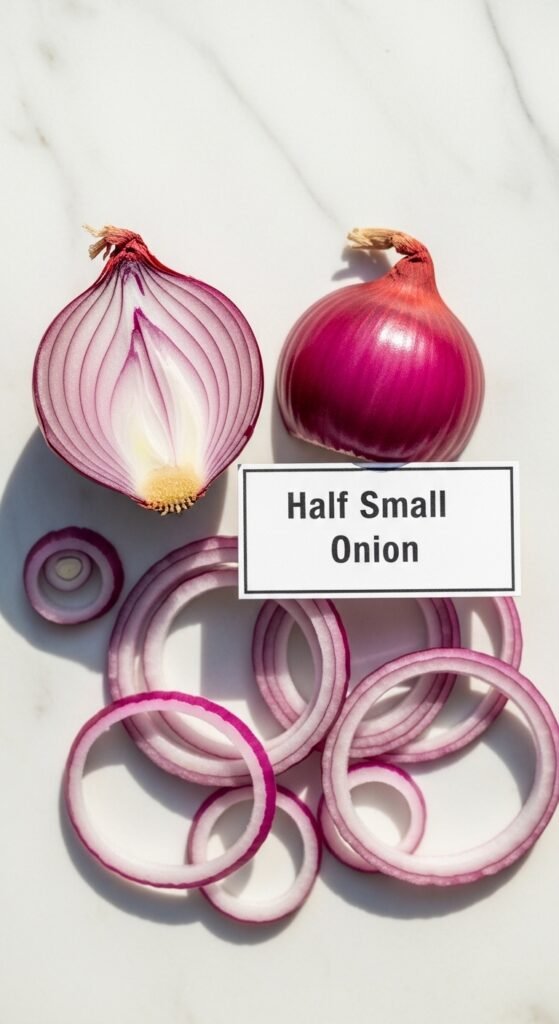
Red onion brings sharpness and a beautiful pop of color. To mellow its bite, soak the sliced onion in cold water for ten minutes, then drain and pat dry. This trick makes a world of difference, especially if you are sensitive to raw onion flavor.
4. Green Bell Pepper (1 medium)
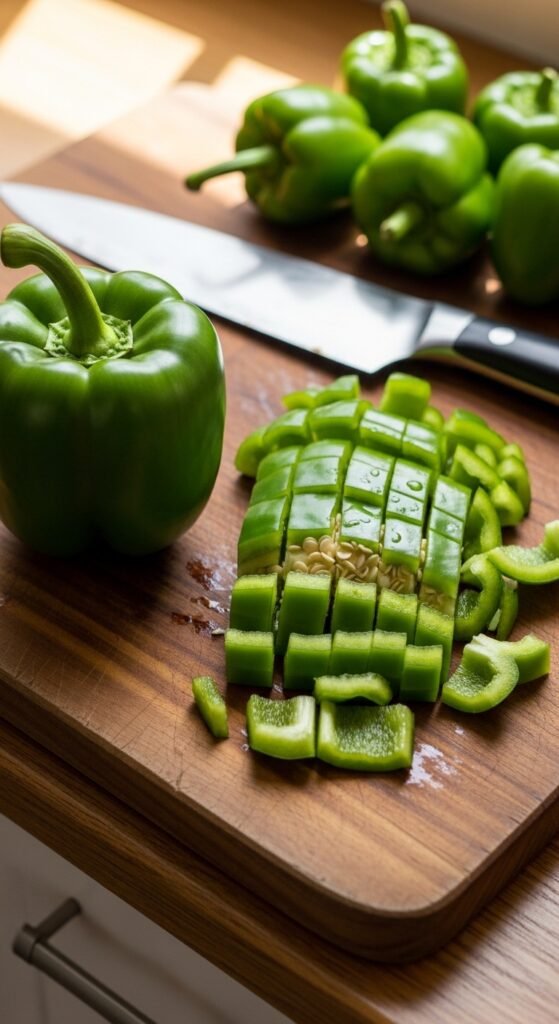
Bell peppers add sweetness and crunch. While green is traditional in Greek salads, you can use red, yellow, or orange for variety. Remove the seeds and membranes, then chop into bite‑sized pieces.
5. Kalamata Olives (1/2 cup, pitted)
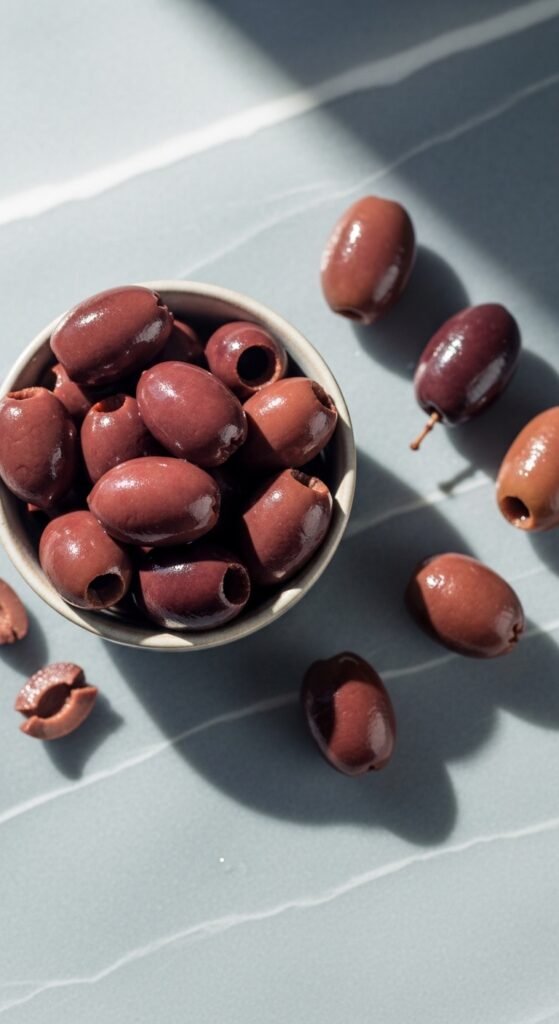
Kalamata olives are non‑negotiable. Their briny, almost fruity flavor is unmistakable. Buy them with the pit still in if possible – they have better texture and flavor. However, pitted ones are more convenient. Never use canned black olives; they are completely wrong for this Mediterranean salad recipe.
6. Feta Cheese (200 grams / about 7 ounces)
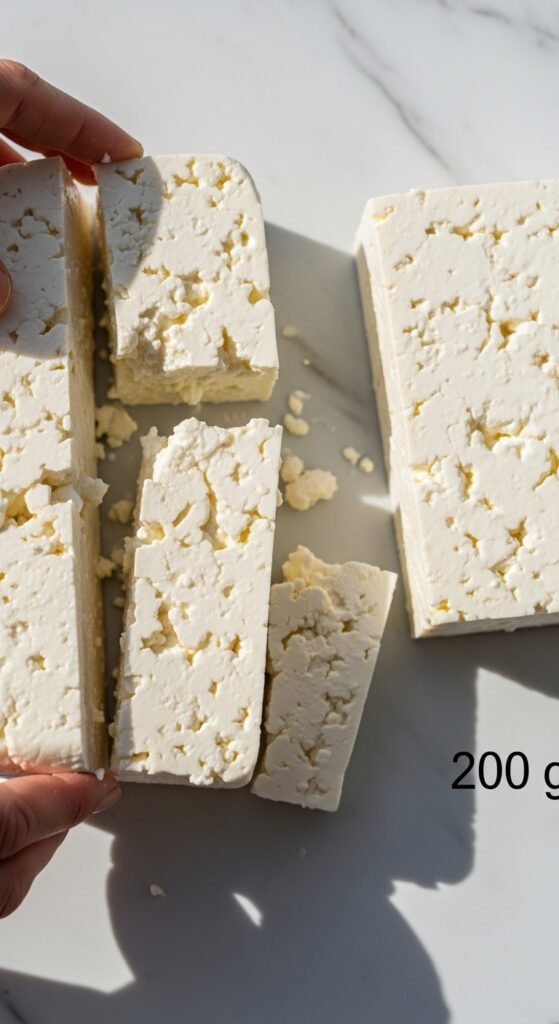
Block feta packed in brine is the only acceptable choice. Avoid pre‑crumbled feta, which is often dry, mealy, and coated in anti‑caking agents. Look for feta made from sheep’s milk or a sheep/goat milk blend. Cow’s milk feta is milder and less authentic but works in a pinch. Cut the block into small cubes rather than crumbling.
7. Fresh Parsley (1/4 cup, chopped)
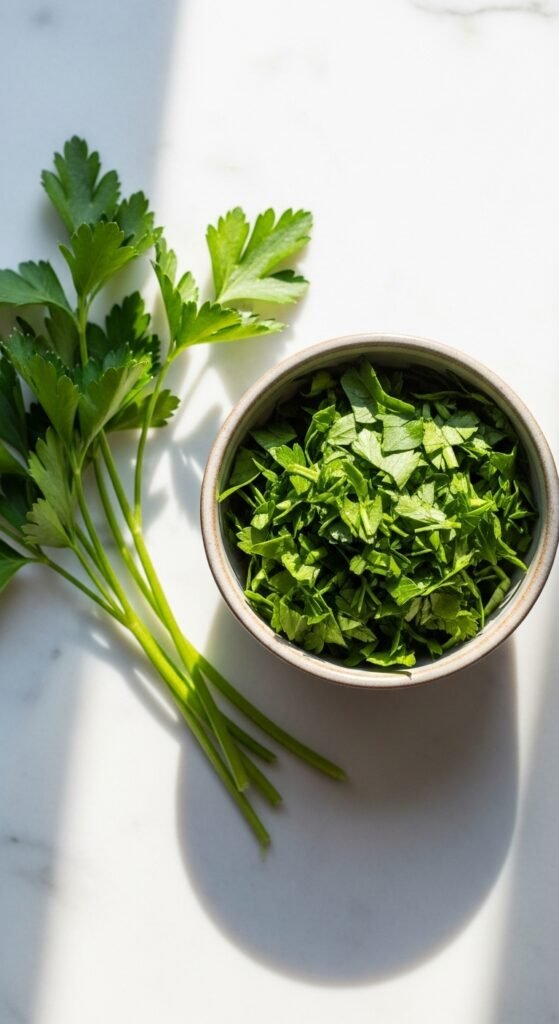
Parsley adds brightness and a slightly peppery note. Flat‑leaf Italian parsley is superior to curly parsley. Do not skip this – it makes a surprising difference.
8. Dried Oregano (1 teaspoon)
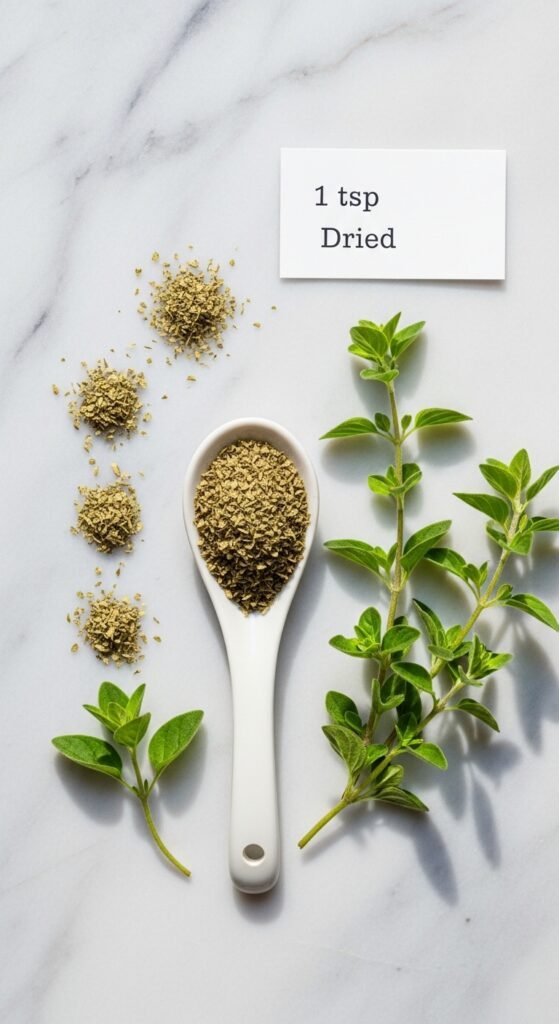
Mediterranean oregano is more pungent and earthy than standard grocery‑store oregano. If possible, buy dried oregano from a Greek or Turkish market. Rub it between your palms before adding to release the essential oils.
9. Extra Virgin Olive Oil (1/4 cup)
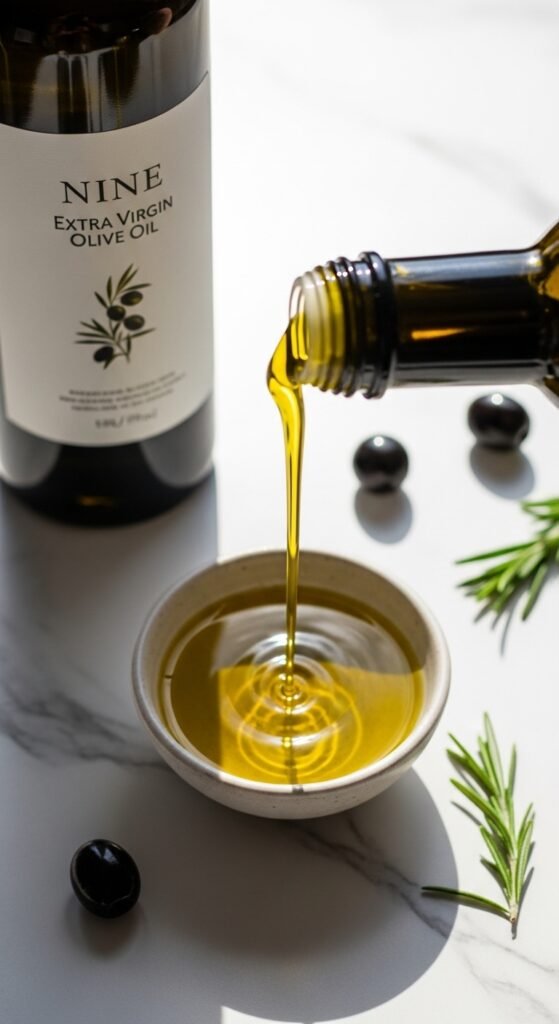
Here is where most people go wrong. Your extra-virgin olive oil should be early-harvest, cold‑extracted, and from a single origin (Greece, Italy, Spain, or Tunisia). Look for a harvest date on the bottle – olive oil is best within 18 months of pressing. Avoid anything labeled “light,” “pure,” or “blended.” I will share my favorite brand later in the buying guide.
10. Fresh Lemon Juice (2 tablespoons)
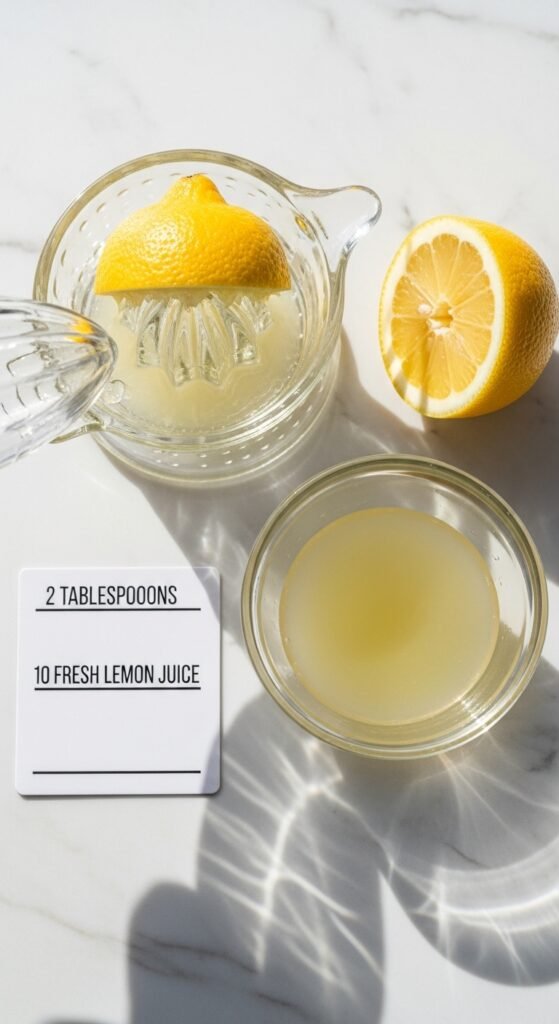
Use real lemons, not bottled juice. Roll the lemon on the counter before cutting to release more juice. The acidity balances the richness of the olive oil and feta.
11. Sea Salt and Black Pepper (to taste)
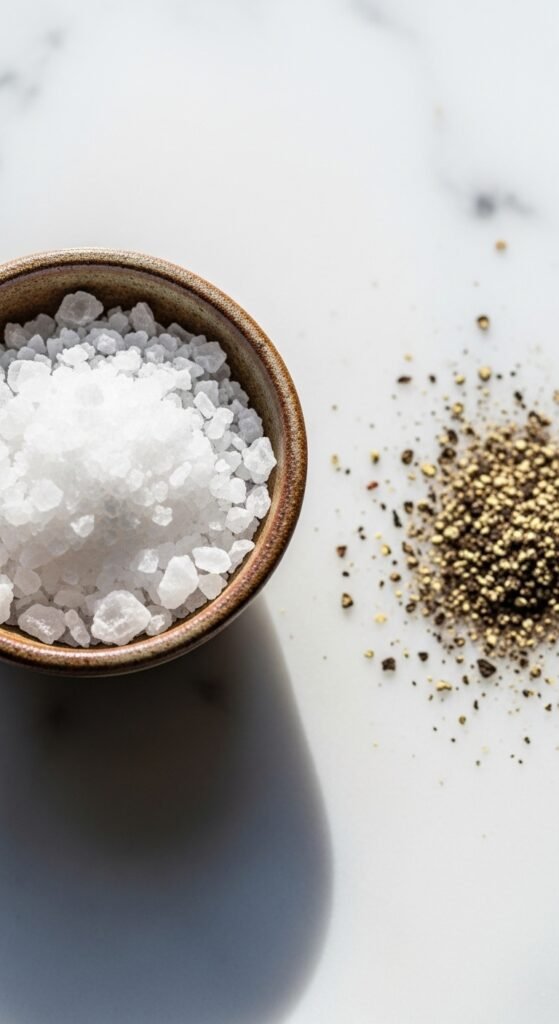
Flaky sea salt like Maldon or fleur de sel is ideal. Freshly cracked black pepper adds gentle heat.
Optional Add‑Ins
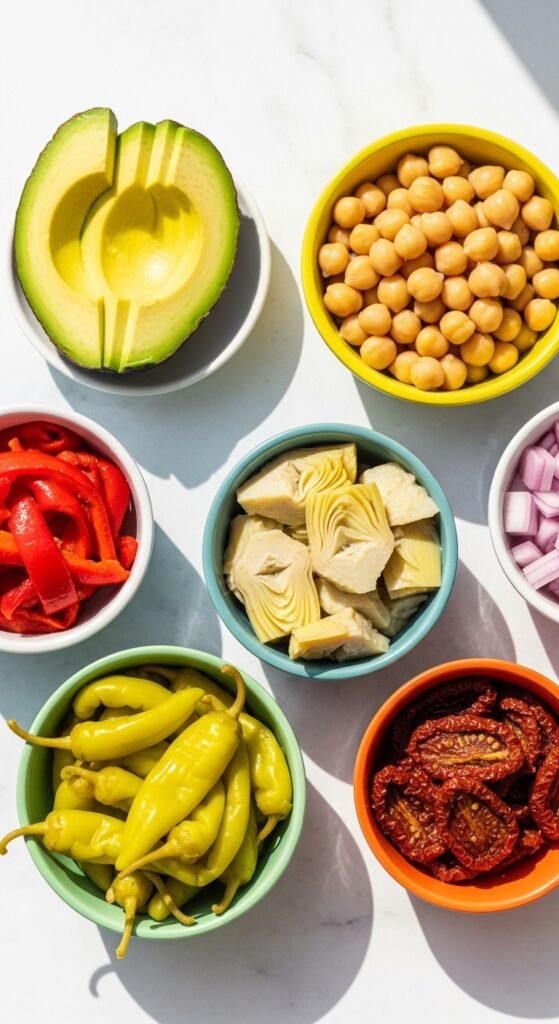
- Chopped fresh mint (1 tablespoon) for extra freshness
- Capers (1 tablespoon, rinsed) for briny pops of flavor
- Sliced pepperoncini for a mild kick
- Toasted pita chips or crusty bread for serving
Step‑by‑Step Guide to Assembling This Mediterranean Salad Recipe
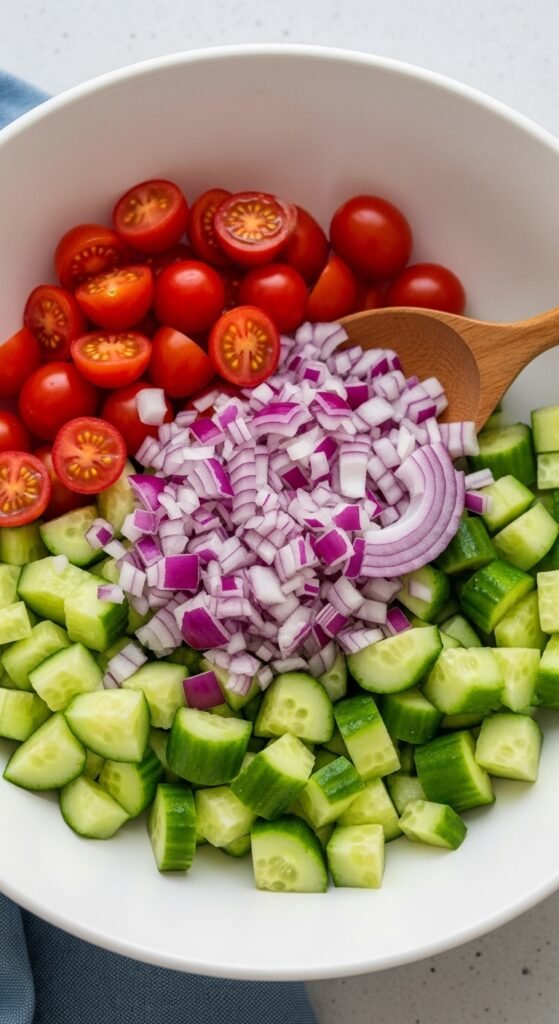
Now comes the fun part. Follow these steps exactly, and you will have a restaurant‑quality salad in minutes.
Step 1: Prepare Your Vegetables
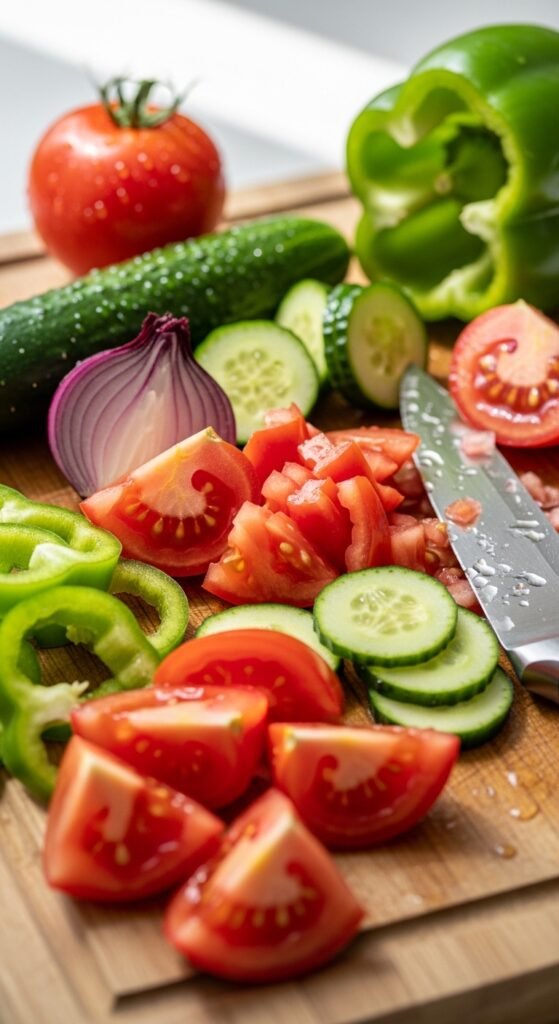
Wash all your produce thoroughly under cool running water. Pat everything dry with a clean kitchen towel or paper towels. Excess water will dilute the dressing – do not skip this.
Cut the tomatoes into wedges or bite‑sized chunks. Some people prefer larger pieces, others smaller bits. Either way is fine, but keep everything roughly the same size for even eating.
Slice the cucumbers into half‑moons about a quarter‑inch thick. If using English cucumbers, leave the skin on. If using Persian cucumbers, slice them into rounds.
Thinly slice the red onion. Remember the cold‑water trick? Place the slices in a small bowl of ice water for ten minutes. Drain and pat dry.
Chop the green bell pepper into small squares, about the same size as your tomato chunks.
Step 2: Combine the Vegetables
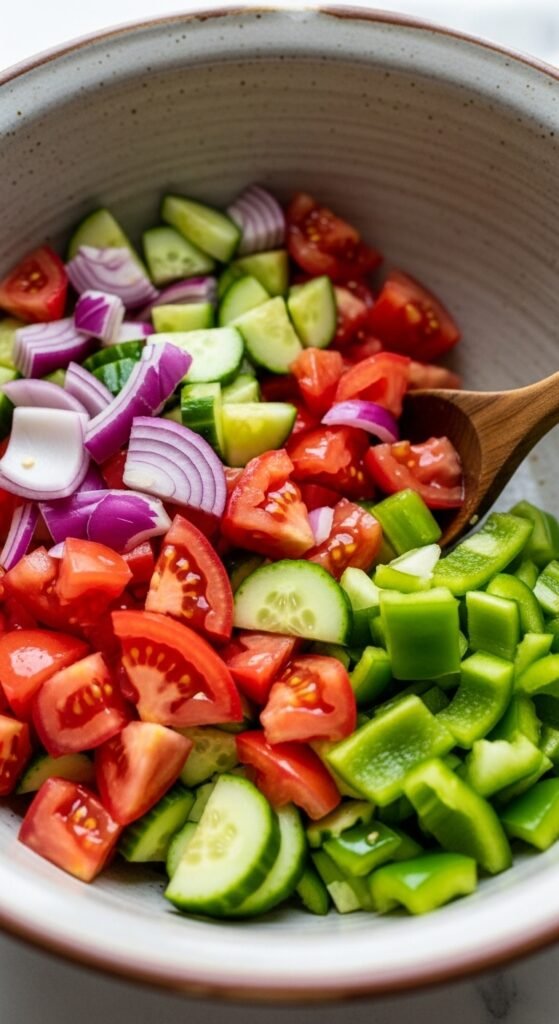
In a large mixing bowl, add the tomatoes, cucumbers, red onion, and bell pepper. Toss gently with your hands or a pair of tongs.
Step 3: Add the Olives and Herbs
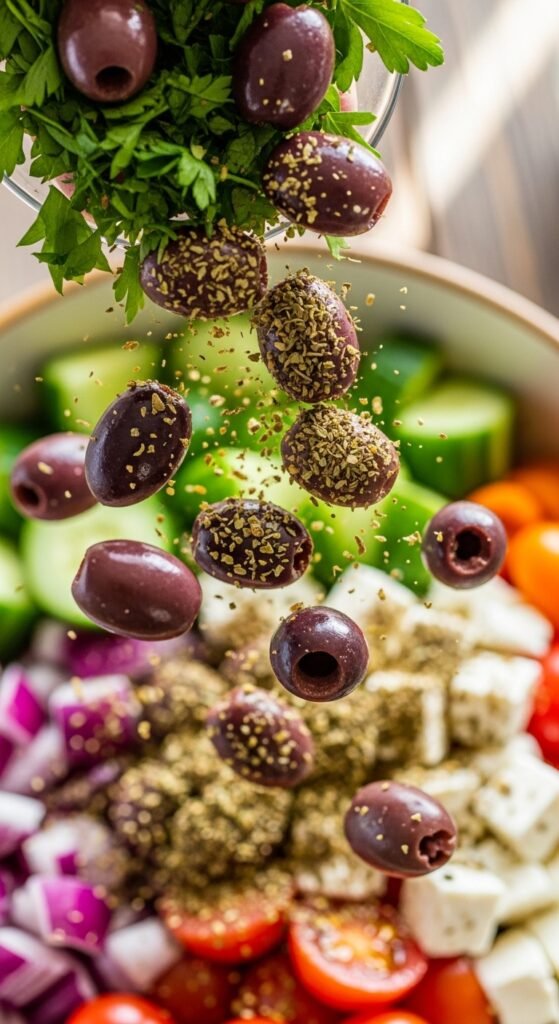
Scatter the Kalamata olives over the vegetable mixture. Sprinkle the chopped fresh parsley and dried oregano on top. If using mint or capers, add them now.
Step 4: Dress the Salad Properly

Critical tip: do not add the feta cheese yet. Many people toss everything together at once, which causes the feta to break down into a mushy mess. Instead, first dress the vegetables.
In a small jar or bowl, combine the extra virgin olive oil, fresh lemon juice, a pinch of sea salt, and several cracks of black pepper. Shake or whisk until emulsified. Pour this dressing over the vegetables and toss thoroughly.
Step 5: Add the Feta Cheese
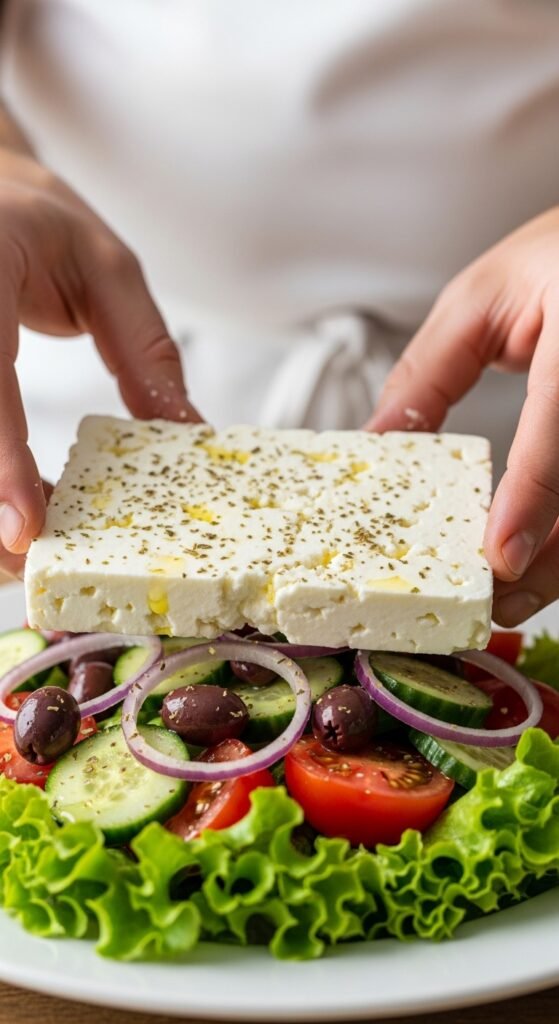
Now, gently place the cubed feta cheese on top of the dressed vegetables. Use a spoon to lightly mix it in – just enough to distribute without crushing the cubes.
Step 6: Taste and Adjust
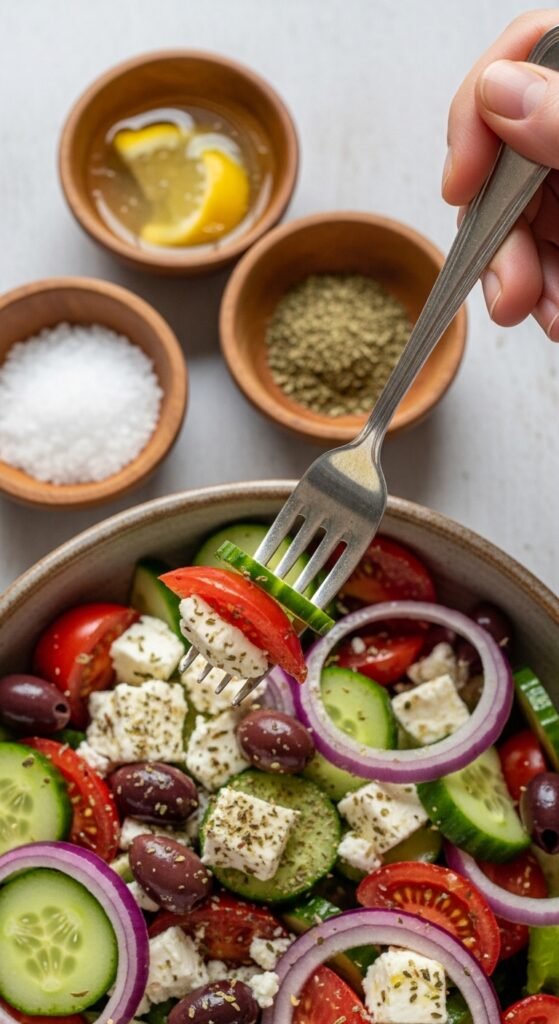
Take a piece of tomato coated in dressing and taste it. Does it need more salt? More lemon? More oregano? Adjust accordingly. Remember, the feta is salty, so go easy on the salt at first.
Step 7: Let It Rest (Optional but Recommended)
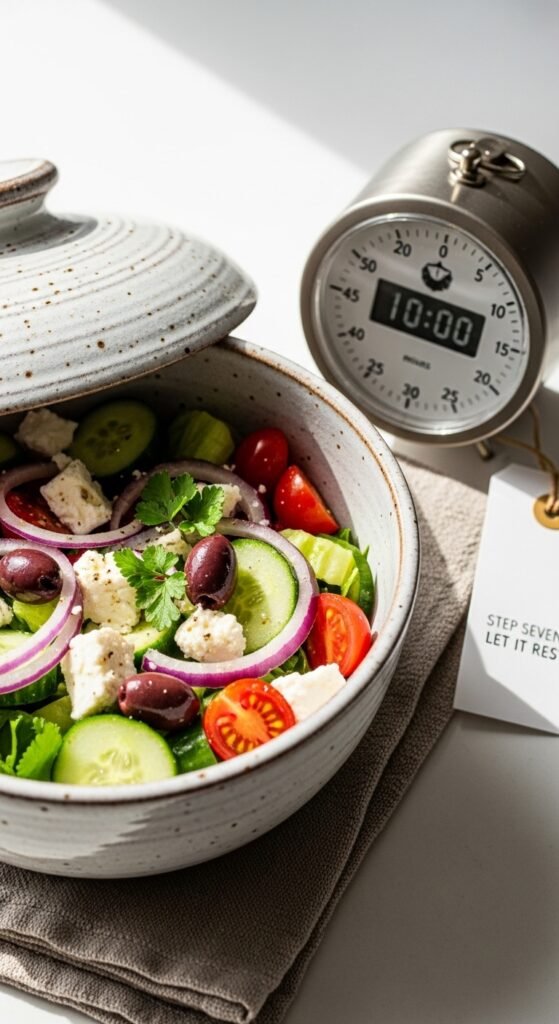
If you have time, let the Mediterranean salad recipe sit at room temperature for ten to fifteen minutes before serving. This allows the flavors to meld beautifully. If you are in a hurry, serve it immediately.
Step 8: Serve with Love
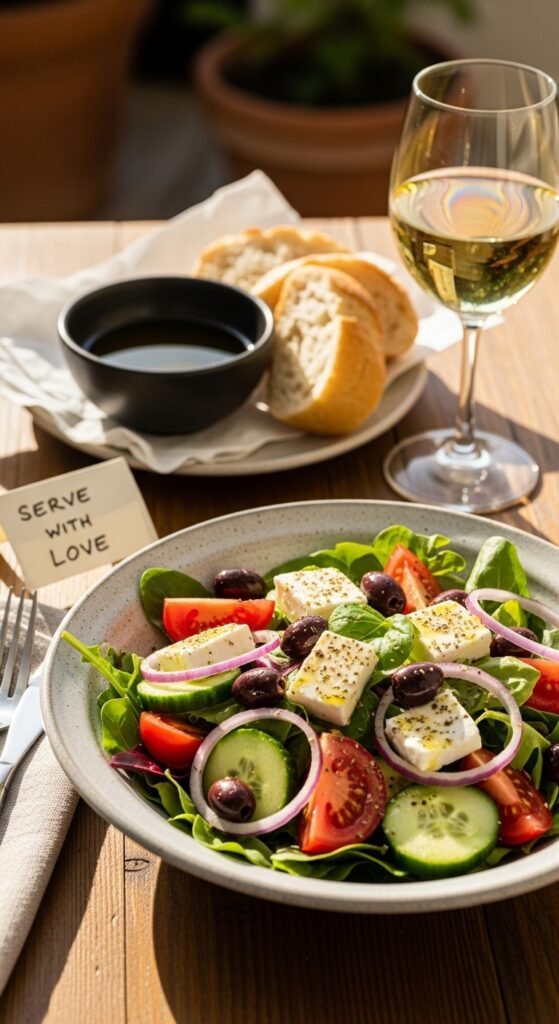
Transfer the salad to a beautiful bowl or platter. Drizzle a tiny bit more extra virgin olive oil on top for visual appeal. Garnish with an extra sprinkle of oregano and a few whole parsley leaves. Serve alongside warm pita bread, grilled chicken, fish, or lamb.
Common Mistakes to Avoid with Your Mediterranean Salad Recipe
Even experienced cooks mess up this dish sometimes. Let me save you from the most frequent pitfalls.
Mistake #1: Using Cold Ingredients
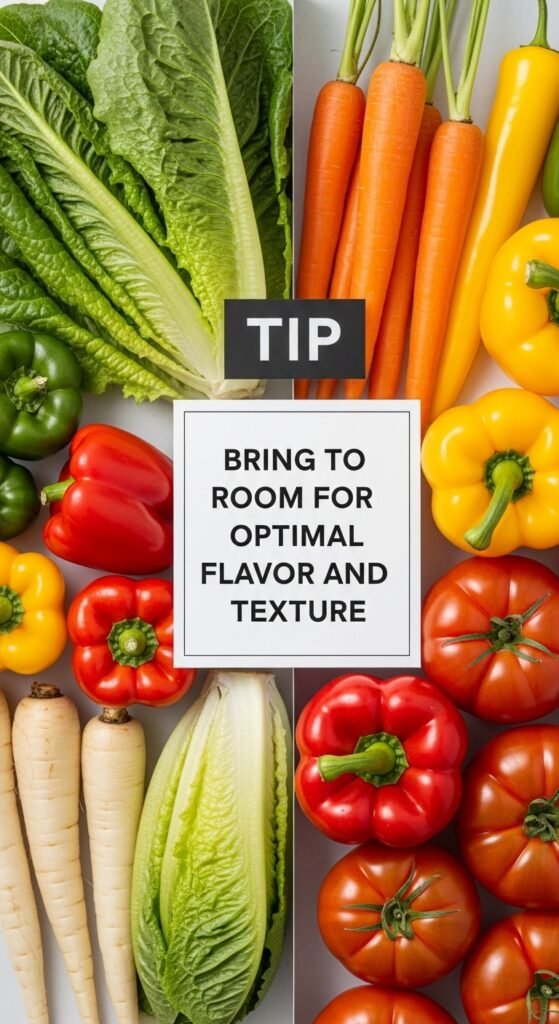
Mediterranean salads are meant to be served at room temperature. If your vegetables are straight from the refrigerator, they will taste dull. Take everything out thirty minutes before assembling.
Mistake #2: Overdressing
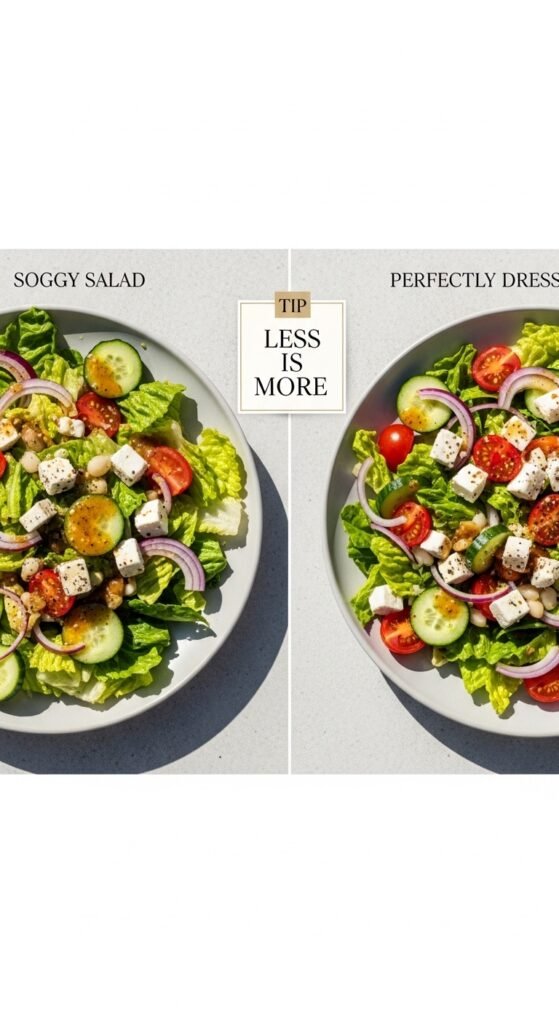
Too much dressing will drown the vegetables and make the salad soggy. Start with less than you think you need, then add more if desired.
Mistake #3: Skipping the Lemon
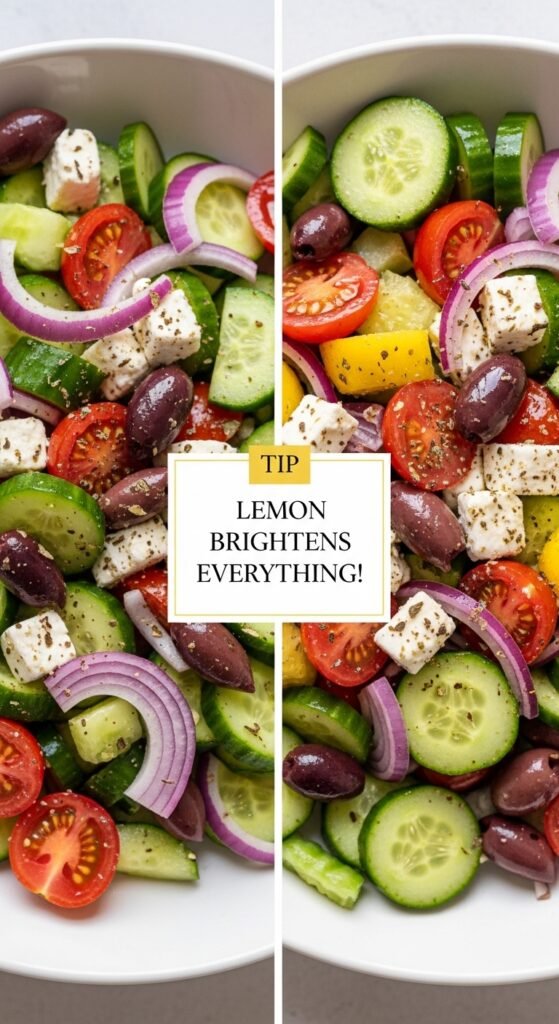
Some people try to use red wine vinegar instead of lemon juice. Please do not do this. Lemon is brighter, fresher, and more authentic to the region.
Mistake #4: Buying Cheap Olive Oil
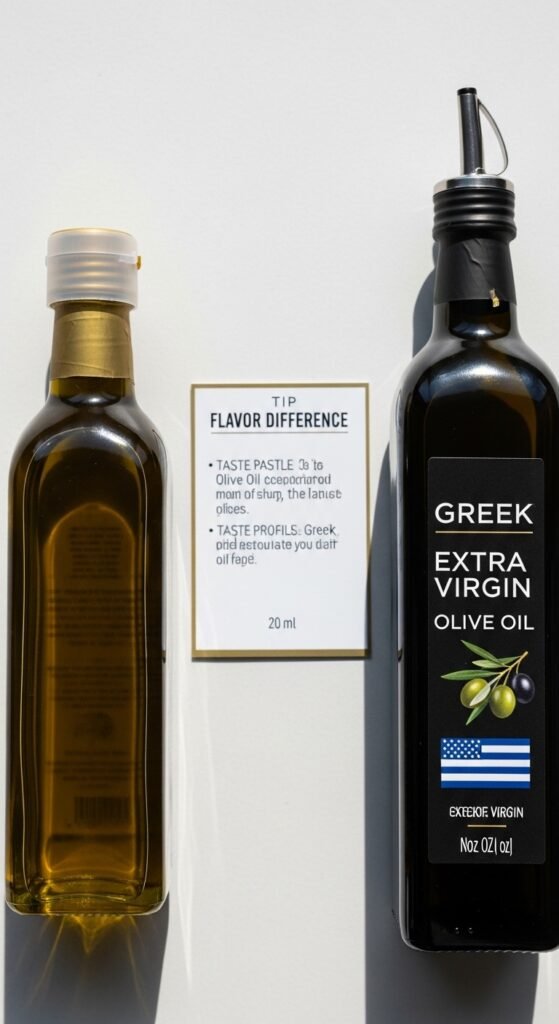
I cannot stress this enough. The difference between a good Mediterranean salad recipe and a great one is almost entirely the olive oil. Cheap oil tastes greasy and flat. Premium oil tastes fruity, peppery, and complex.
Mistake #5: Cutting Vegetables Too Small
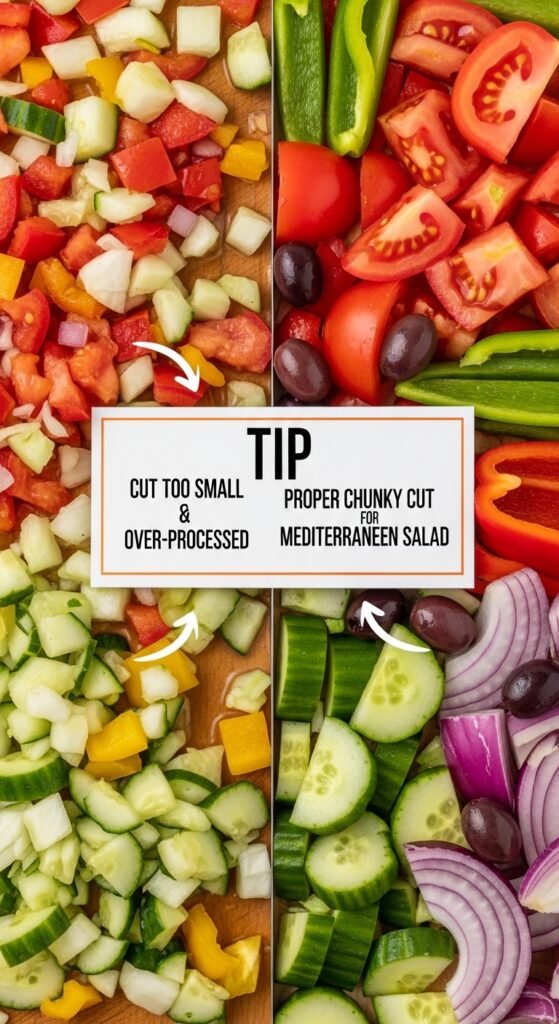
This is not a delicate composed salad. Chunky, rustic cuts are part of the charm. If you dice everything into tiny cubes, you lose the texture contrast.
Mistake #6: Adding Lettuce
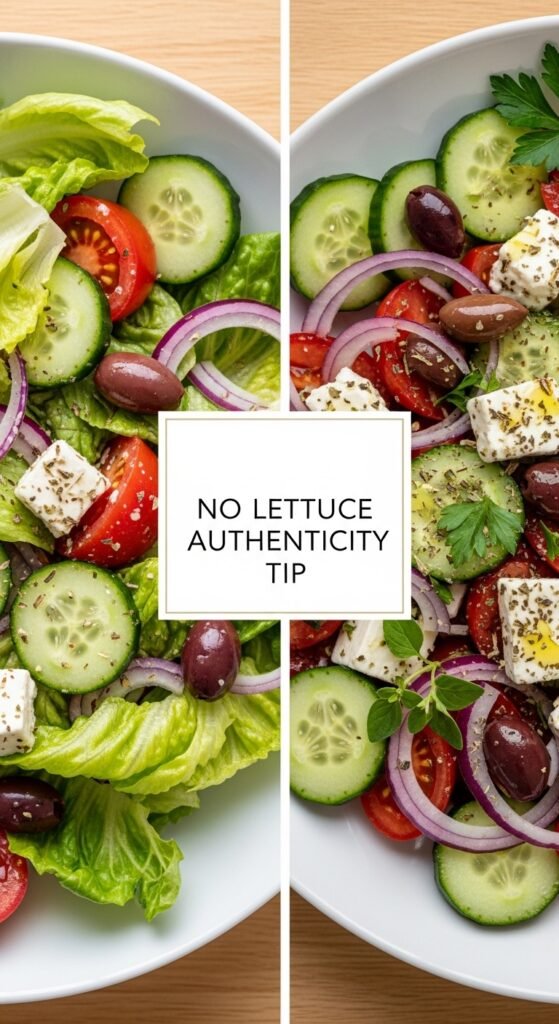
As mentioned earlier, traditional versions do not include lettuce. However, if you want to stretch the salad, you can serve it over a bed of arugula or romaine. Just do not mix the lettuce into the bowl, or it will become limp.
Why You Should Buy Premium Ingredients for This Mediterranean Salad Recipe
By now, you might be thinking, “This all sounds wonderful, but do I really need to spend extra money on high‑end olive oil and block feta?” I understand the hesitation. Grocery bills are already high, and it is tempting to cut corners.
However, let me share some perspective. A truly great Mediterranean salad recipe is not about expensive gadgets or complicated techniques. It is simply about letting a few perfect ingredients shine. When you taste the difference side by side, you will never go back.
To convince you further, here is a quick comparison.
| Ingredient | Budget Option | Premium Option | Why Premium Wins |
|---|---|---|---|
| Olive Oil | “Pure” or “Light” olive oil | Early harvest, cold‑extracted EVOO | Premium oil has flavor, aroma, and health benefits |
| Feta | Pre‑crumbled cow’s milk feta | Block sheep’s milk feta in brine | Premium feta is creamy, tangy, and not dry |
| Tomatoes | Hothouse tomatoes | Farmers’ market heirloom or vine‑ripened | Premium tomatoes are sweet, juicy, and flavorful |
| Olives | Canned black olives | Kalamata olives from Greece | Premium olives are meaty and briny, not metallic |
I promise you, once you invest in the real deal, you will understand why people across the Mediterranean eat this salad almost every single day. It never gets boring because it is simply that good.
My Recommended Products for the Best Mediterranean Salad Recipe
Over the years, I have tested dozens of brands to find the very best options. Below are my honest recommendations. (I am not being paid to promote any specific company – these products have consistently delivered outstanding results.)
- Best Extra Virgin Olive Oil: Koroneiki variety from Crete – Look for brands like Gaea, Sitia, or Terra Creta. A 500ml bottle typically costs $15–$25. California‑based McEvoy Ranch also produces an excellent early harvest oil.
- Best Feta Cheese: Dodoni or Mt. Vikos – Greek brands made from sheep’s milk. Find them in the specialty cheese section or at Mediterranean markets. A 7‑ounce block costs about $6–$9.
- Best Kalamata Olives: Divina or Peloponnese – Look for olives still partially attached to the pit. Avoid jars with preservatives or artificial coloring. A 10‑ounce jar runs about $5–$7.
- Best Dried Oregano: Greek wild oregano – Brands like Spitiko or Ellinika are fantastic. The leaves should be green and fragrant, not brown and dusty. A small bag costs $4–$8 and lasts for months.
- Best Sea Salt: Maldon Sea Salt Flakes – Delicate, pyramid‑shaped crystals that dissolve beautifully and add a satisfying crunch. A box costs around $7.
- Optional – Best Salad Bowl: Hand‑carved olive wood bowl – Not strictly necessary, but there is something deeply satisfying about tossing this salad in a beautiful wooden bowl. Etsy has many affordable options from Greek artisans.
How to Customize Your Mediterranean Salad Recipe for Any Occasion
One of the reasons I love this dish is its flexibility. Here are several delicious variations.
- For a heartier meal: Add cooked chickpeas, quinoa, or farro. Top with grilled shrimp, chicken breast, or sliced lamb.
- For a vegan version: Omit the feta or substitute with marinated tofu feta. Increase the olives and add a handful of toasted pine nuts for richness.
- For a low‑carb version: This salad is already low in carbohydrates. Simply double the cucumber and bell pepper and reduce the tomatoes slightly.
- For a spicy kick: Add a pinch of crushed red pepper flakes to the dressing, or include sliced fresh jalapeño or banana peppers.
- For a breakfast twist: Serve the salad over a bed of arugula with a poached egg on top. The runny yolk mixes beautifully with the olive oil and lemon.
- For a party platter: Arrange the vegetables on a large platter without mixing. Drizzle the dressing over everything, then crumble the feta on top. This “deconstructed” style looks stunning and allows guests to serve themselves.
The Health Benefits of Eating This Mediterranean Salad Recipe Regularly
Beyond the incredible taste, this salad is genuinely good for you.
- Heart Health: The extra virgin olive oil is rich in monounsaturated fats and polyphenols, which lower bad cholesterol and reduce inflammation. Multiple studies (including the PREDIMED trial) show that a Mediterranean diet cuts heart disease risk by about 30%.
- Blood Sugar Control: With no refined sugars or simple carbs, this salad has a minimal impact on blood glucose. The fiber from vegetables slows digestion and promotes stable energy.
- Weight Management: Despite the olive oil and feta, this Mediterranean salad recipe is surprisingly low in calories but high in satisfaction. Healthy fats and protein keep you full for hours.
- Gut Health: The vegetables provide prebiotic fiber that feeds beneficial gut bacteria. Fermented foods like feta add probiotics.
- Brain Protection: Emerging research suggests the Mediterranean diet may lower the risk of Alzheimer’s and cognitive decline. Antioxidants and healthy fats support brain cell membranes.
- Skin Health: Vitamin C from tomatoes and lemons supports collagen production. Olive oil’s vitamin E fights oxidative stress. Many people report clearer, more radiant skin after eating this salad regularly.
Frequently Asked Questions About This Mediterranean Salad Recipe
Can I make this salad ahead of time?
Yes, but with caveats. Chop the vegetables and store them separately in the refrigerator for up to two days. Do not add the dressing or feta until just before serving. If combined too early, the vegetables will release water and become soggy.
How long does leftover salad last?
If already dressed, eat within 24 hours – the next day it will still taste good but the texture will be softer. Undressed vegetables last three to four days.
Can I use dried herbs instead of fresh?
For parsley, fresh is strongly preferred – dried parsley has almost no flavor. For oregano, dried is actually traditional, so that is fine.
Is this the same as a Greek salad?
Yes and no. In Greece, this exact combination is called “horiatiki” (village salad). The main difference is that Greek salads typically do not include lettuce or bell peppers. Many variations exist across the country.
What should I serve with this salad?
The options are endless: grilled meats, roasted vegetables, seafood, lentils, rice pilaf, hummus, baba ghanoush, or simply warm crusty bread.
Can I grow my own ingredients?
Absolutely. Tomatoes, cucumbers, bell peppers, and parsley are beginner‑friendly garden plants. Oregano is a perennial herb that thrives in sunny spots. Even lemon trees can be grown in large pots indoors.
A Final Story to Inspire You
Before we conclude, I want to take you back to Eleni’s kitchen one last time. After she handed me that wooden bowl, she sat down across from me with her own smaller portion. We ate in comfortable silence, listening to the cicadas buzzing outside her window. When we finished, she wiped her mouth with the back of her hand and smiled.
“You know,” she said in her broken English, “I make this salad every day for sixty years. My mother teach me. Her mother teach her. Same recipe. Same love.”
I asked her if she ever got tired of it.
She laughed loudly, then pointed to her heart. “How can you get tired of sunshine?”
That question has stayed with me ever since. How can you get tired of something that makes you feel alive, grateful, and connected to generations who came before? This Mediterranean salad recipe is not just food. It is a reminder that the simplest things in life are often the most profound.
So, my friend, I encourage you to make this salad today. Not tomorrow. Not next week. Today. Go to the store, spend a little extra on good olive oil and real feta, and treat yourself to something beautiful. Your body will thank you. Your taste buds will thank you. And who knows? Maybe you will start a tradition that lasts for sixty years.
Ready to Buy? Here Is Your Shopping List
To make it easy, here is everything you need. Print this or save it on your phone.
Produce Section:
- 2 large ripe tomatoes (heirloom or vine‑ripened)
- 2 Persian or English cucumbers
- 1/2 small red onion
- 1 green bell pepper
- 1 bunch fresh flat‑leaf parsley
- 1 lemon
Specialty / International Section:
- 1 jar Kalamata olives (pitted or with pits)
- 1 block feta cheese in brine (sheep’s milk preferred)
- 1 bottle early harvest extra virgin olive oil (Greek or Italian)
- 1 small bag dried Greek oregano
Pantry:
- Flaky sea salt (like Maldon)
- Black peppercorns and a grinder
Optional Add‑Ins:
- Fresh mint
- Capers
- Pepperoncini
- Pita bread for serving
Final Thoughts and an Invitation
Creating the perfect Mediterranean salad recipe is not about following rules rigidly. It is about understanding why each ingredient matters – and then trusting your own instincts. Maybe you prefer more lemon. Maybe you like your feta in larger chunks. Maybe a sprinkle of sumac or za’atar takes it to another level. That is wonderful. Make it your own.
What matters most is that you start. Because once you taste the real thing, you will never settle for sad, lifeless salads again. You will crave the brightness, the crunch, the brininess, and the richness. You will understand why people from Greece to Italy to Lebanon to Morocco eat this dish with such joy and regularity.
Thank you for reading this guide. I genuinely hope it helps you create something delicious. If you have questions or want to share your own tips, please leave a comment below. And if you decide to purchase the premium ingredients I recommended, know that you are making an investment in your health, your happiness, and your kitchen skills.
Now go make that salad. Eleni would be proud.