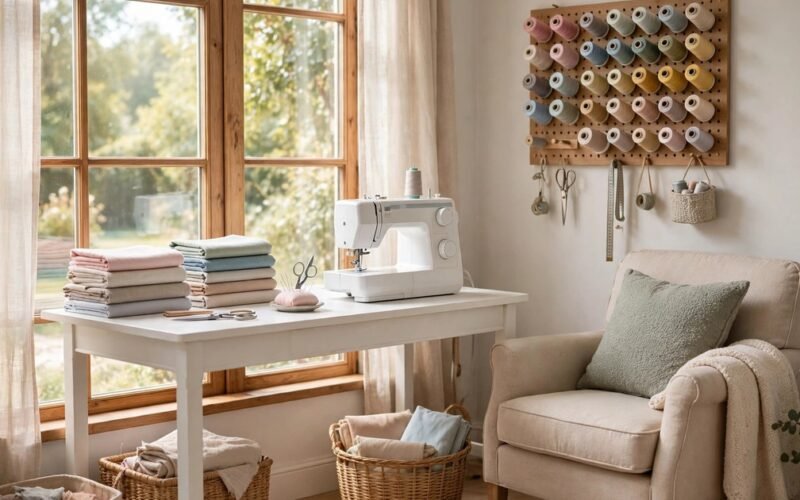
These 20 small living room decor ideas prove that a compact room can feel calm, warm and genuinely roomy when each piece earns its place. Small rooms do not need more things; they need the right things, in the right sizes, with light and breathing room around them. Every idea here works in a real apartment or cottage, with no renovation required.
Start by looking at your room the way a guest would: where does the eye land first, and where does it get stuck? Most small rooms feel tight because of one or two bulky pieces, dark corners or surfaces covered in small items. Fix those, and the same square footage suddenly feels generous.
This guide begins with three simple rules that make small rooms feel bigger, then walks through all twenty ideas with a pro tip and a mistake to skip for each. Pick the five or six that fit your room and your budget first. Small rooms reward small changes more than any other space in the house.
Table of Contents
Three Rules That Make Small Rooms Feel Bigger
The living room has always been the social heart of the home, and in a small one the trick is protecting that feeling with fewer, better pieces. Rule one is light: pale walls, sheer curtains and at least one mirror keep daylight moving around the room instead of letting it die in the corners.
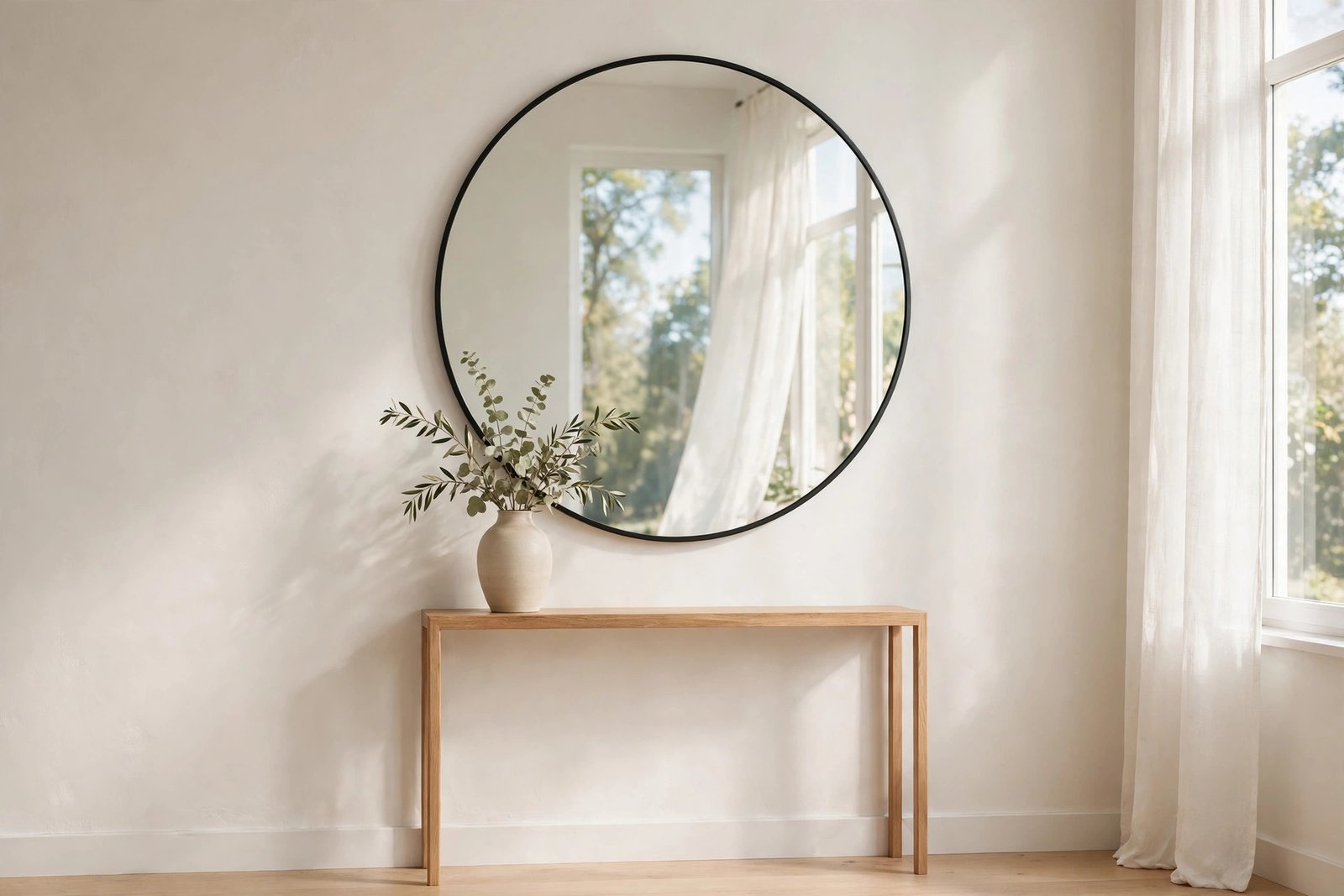
Rule two is legs. Furniture raised on visible legs, like sofas, chairs and media units, lets the eye travel under and past each piece, which reads as more floor. Rule three is editing: one large, calm object looks tidier than five small ones, so group little things on a tray or clear them away entirely.
20 small living room decor ideas
Work through these ideas in order if you like, since the early ones change the room most. Each entry says what the idea is, who it suits, how to do it, a pro tip and one mistake to avoid. Measure your room and your largest pieces before you shop for anything new.
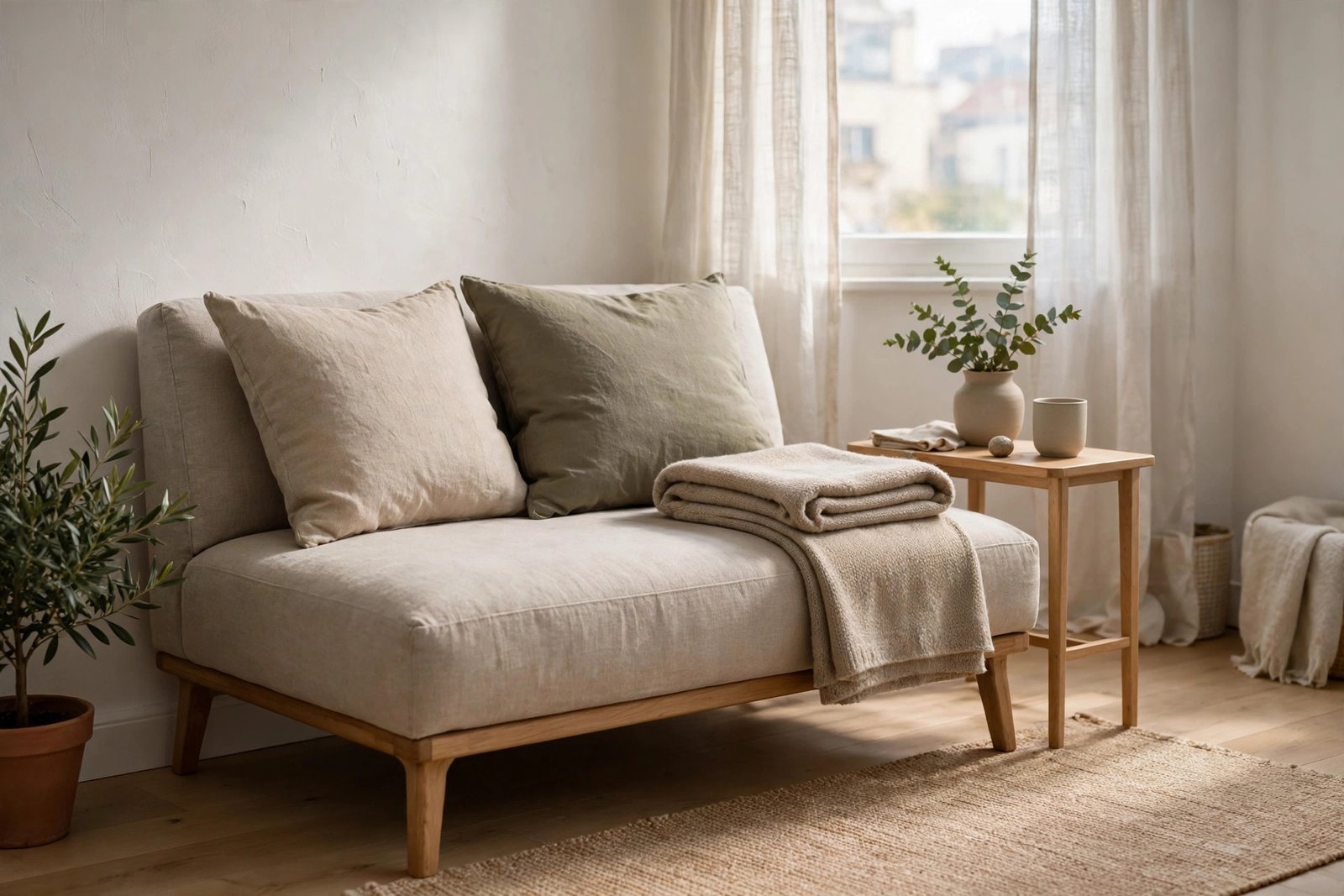
Choose a Light, Leggy Sofa
What it is: A sofa in a pale or mid-tone fabric, raised on visible wooden or metal legs instead of sitting flat on the floor.
Who it suits: Almost every small room, since the sofa is the largest piece and sets the tone for everything else.
How to do it: Pick a sofa no wider than your wall run allows, with slim arms and legs at least a few inches tall. Keep the fabric plain or softly textured so it stays calm at large scale.
Pro tip: A loveseat plus one good chair often seats the same people as a big sofa, with far more layout freedom.
Mistake to avoid: Choosing a deep, dark, skirted sofa; it reads as a solid block and shrinks the room around it.
Use a Round Coffee Table
What it is: A round or oval coffee table that removes sharp corners from the middle of the room.
Who it suits: Rooms with a walkway through the seating area and families tired of bruised shins.
How to do it: Choose a table roughly two-thirds the length of your sofa, and leave a comfortable gap between table and seats. A lower shelf or a glass top keeps it feeling light.
Pro tip: A round table makes an easy landing spot for a tray, which keeps remotes and cups corralled.
Mistake to avoid: Picking a table so large that everyone must shuffle sideways around it.
Hang One Large Mirror
What it is: A single generous mirror placed to reflect a window or the brightest part of the room.
Who it suits: Rooms with one small window, north-facing light or a dark wall opposite the daylight.
How to do it: Hang the mirror across from or beside the window so it doubles the view and the light. A slim frame keeps it elegant, and leaning a large mirror on a console works when hanging is not possible.
Pro tip: Angle the mirror to reflect something pretty, like plants or artwork, not a cluttered shelf.
Mistake to avoid: Hanging several tiny mirrors; one large reflection opens the room, many small ones just add visual noise.
Keep the Palette Pale and Cohesive
What it is: A restful scheme of warm whites, soft neutrals and one or two accent colors repeated around the room.
Who it suits: Anyone whose small room currently holds five competing colors and feels busy because of it.
How to do it: Choose one main color for walls and large pieces, one supporting tone for textiles, and one accent for cushions and art. Repeat each color at least twice so the room reads as planned.
Pro tip: Pale does not have to mean cold; these moody living room ideas show how even deep colors work when the palette stays disciplined.
Mistake to avoid: Painting one wall a bold accent color in a tiny room; it usually makes that wall rush forward and shrinks the space.

Float the Sofa a Few Inches off the Wall
What it is: Pulling the sofa slightly away from the wall so a shadow line and breathing space appear behind it.
Who it suits: Rooms that feel flat and boxy, where every piece is pressed against the edges.
How to do it: Move the sofa forward just a few inches; even a small gap changes the light and makes the arrangement feel intentional. If space allows, angle one chair for the same effect.
Pro tip: A slim console or a low plant behind the floated sofa makes the gap look designed, not accidental.
Mistake to avoid: Floating furniture so far into a small room that the walkway disappears.
Pick Low-Arm or Armless Chairs
What it is: Side chairs with low arms or no arms, which take up less visual and physical space than full armchairs.
Who it suits: Rooms that need two extra seats without the bulk of a second sofa.
How to do it: Choose chairs with open bases and slim profiles, and angle them toward the sofa to keep conversation easy. One chair plus a pouf often beats two heavy chairs.
Pro tip: Armless chairs slide neatly under a console or desk when you need the floor back.
Mistake to avoid: Matching the chairs exactly to the sofa fabric; a related but different texture looks lighter and more collected.
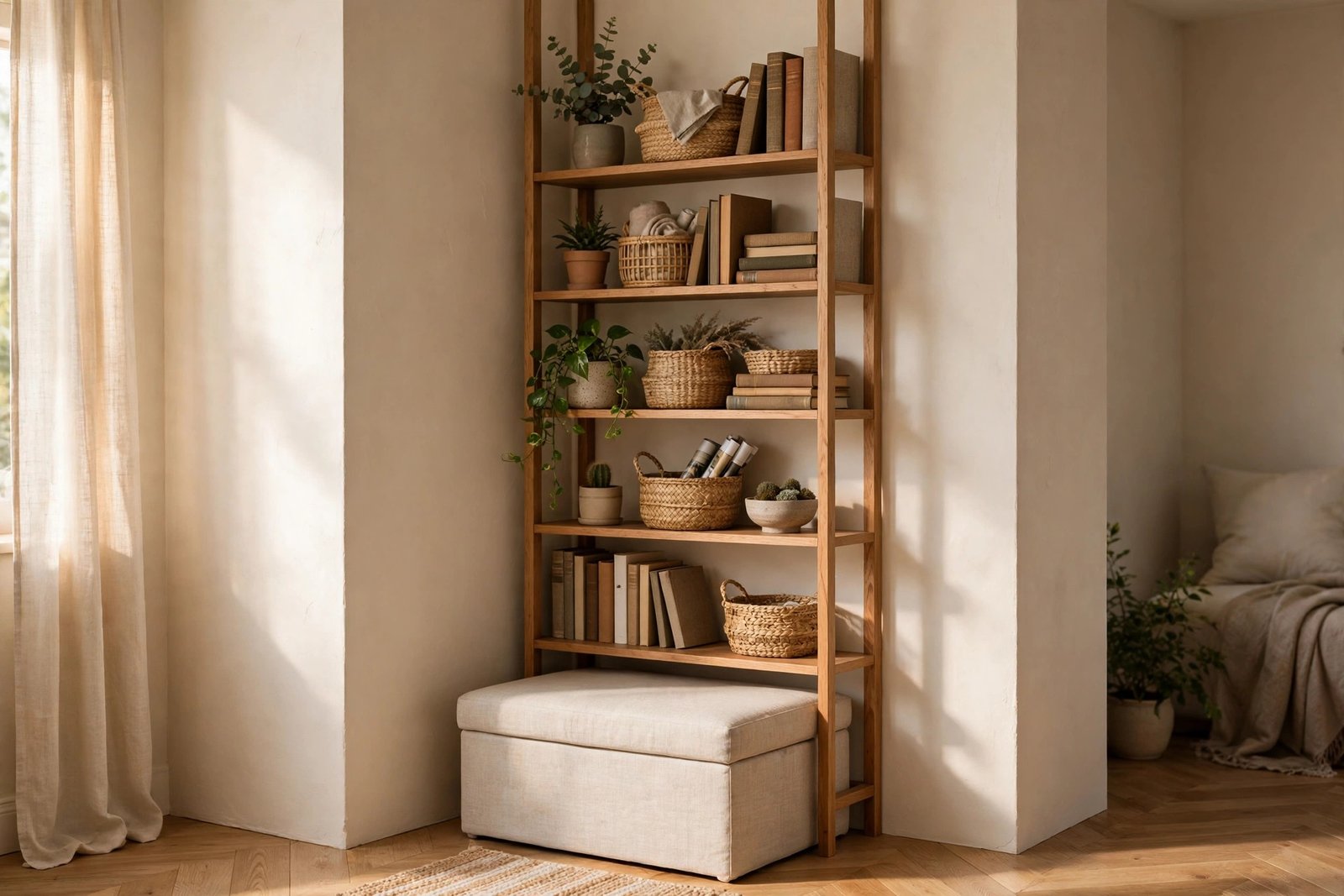
Add Tall, Slim Shelving
What it is: Narrow bookcases or wall shelves that use vertical space instead of precious floor space.
Who it suits: Book lovers and anyone whose surfaces are crowded with things that could live on a wall.
How to do it: Place one tall, narrow unit in a corner or beside the sofa, and style shelves with breathing room: books, one plant, one object, then space. Keep the heaviest items on the lowest shelves.
Pro tip: Painting the shelving the same color as the wall makes it nearly disappear while still holding plenty.
Mistake to avoid: Filling every shelf edge to edge; crowded shelves pull the walls inward visually.
Use a Storage Ottoman as the Table
What it is: A padded ottoman with a hidden compartment that works as coffee table, footrest and extra seat.
Who it suits: Families who need blankets, games and remotes to vanish in seconds before guests arrive.
How to do it: Pick an ottoman sized like a coffee table and set a firm tray on top for drinks. Store the everyday clutter inside and keep the lid easy to lift.
Pro tip: A storage ottoman at the end of the sofa can double as a chaise for one lucky reader.
Mistake to avoid: Choosing a very soft ottoman and expecting drinks to balance; the tray is not optional.
Lay One Right-Sized Rug
What it is: A single rug large enough for at least the front legs of the sofa and chairs to stand on.
Who it suits: Rooms where a too-small rug currently floats in the middle like a postage stamp.
How to do it: Measure so the rug reaches under the front of every seat in the group. Choose a light, low-pile design that brightens the floor and stays easy to clean.
Pro tip: A pale rug on a dark floor is one of the fastest ways to make a small room feel wider.
Mistake to avoid: Using two small rugs in one seating area; the broken lines make the floor feel smaller.
Hang Curtains High and Wide
What it is: Curtain panels mounted near the ceiling and beyond the window frame, so the window reads taller and wider.
Who it suits: Rooms with low ceilings or small windows that need all the height they can borrow.
How to do it: Fix the rod close to the ceiling and extend it past the frame on both sides. Let sheer or light linen panels fall to the floor, or just kiss it.
Pro tip: When the curtains are open, the fabric should cover wall, not glass, so no daylight is wasted.
Mistake to avoid: Hanging the rod directly on the frame at window height; it caps the room’s height exactly where it hurts.
Choose a Glass or Clear Coffee Table
What it is: A transparent table that holds your books and cups without blocking the view of the rug and floor.
Who it suits: Very small rooms where even a slim wooden table feels like one object too many.
How to do it: Pick a simple glass or acrylic table with clean lines and keep only a few items on it. The see-through top keeps sight lines open from every seat.
Pro tip: A clear table shows dust and fingerprints, so keep a soft cloth in the storage ottoman nearby.
Mistake to avoid: Pairing a glass table with glass shelving and mirrors everywhere; one transparent piece is enough.
Light the Walls, Not Just the Ceiling
What it is: Wall sconces or picture lights that wash the walls with light and free up floor and table space.
Who it suits: Rooms with no room for floor lamps and one harsh central ceiling light.
How to do it: Add a pair of sconces beside the sofa, a mirror or artwork, at about eye level when standing. Plug-in models with cords work well in rentals.
Pro tip: Warm bulbs at low brightness in three places beat one bright bulb in the middle every time.
Mistake to avoid: Relying on the overhead light alone; flat light from above makes small rooms feel like boxes.
Give Every Corner a Job
What it is: Turning dead corners into a reading spot, a plant stand or a small bar or book corner.
Who it suits: Rooms with awkward angles, chimney breasts or one corner that currently holds only dust.
How to do it: Fit the corner to its size: a compact chair and lamp, a tall plant on a stand, or a narrow ladder shelf. One clear purpose per corner keeps it calm.
Pro tip: A corner chair angled at forty-five degrees softens the whole room’s grid of straight lines.
Mistake to avoid: Using corners as overflow storage; a working corner adds space, a dumping corner eats it.
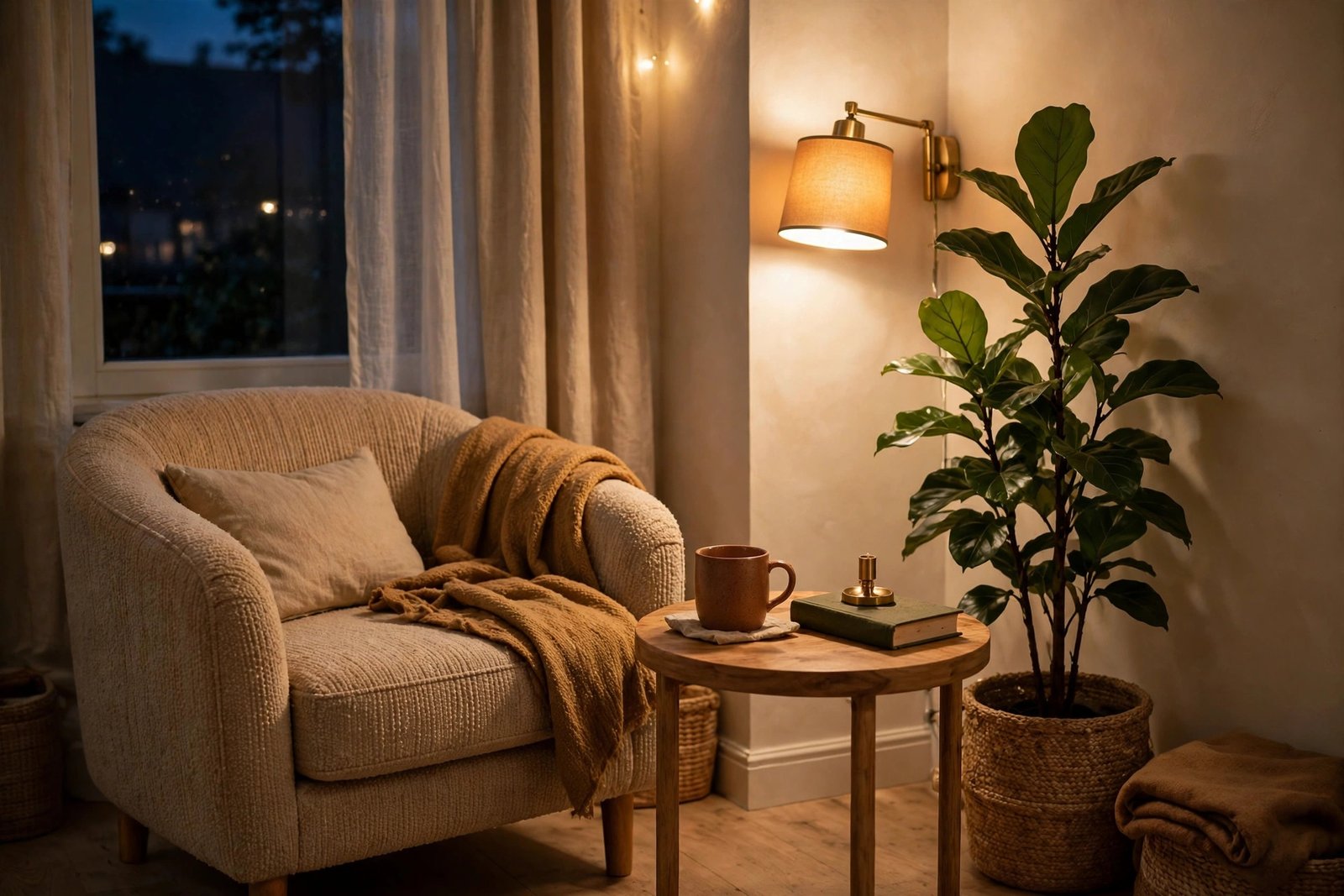
Edit Surfaces with the Tray Rule
What it is: Keeping each surface to one tray or one small group of objects, with empty space around it.
Who it suits: Anyone whose tables have slowly filled with candles, coasters, plants and small bowls.
How to do it: Choose a tray for the coffee table and one for the console; everything decorative must fit on them or leave the room. Bare surface is not unfinished; it is what makes the room feel large.
Pro tip: Photograph your room; the camera shows clutter your eyes have learned to skip.
Mistake to avoid: Displaying every gift and souvenir at once. Rotate a few favorites and store the rest.
Add One Tall Plant
What it is: A single upright plant, like a fiddle leaf fig, olive tree or tall snake plant, drawing the eye upward.
Who it suits: Rooms that feel flat and low, and anyone who wants life in the room without a jungle.
How to do it: Place the plant in a bright corner or beside the sofa, in a pot that suits your palette. Height matters more than fullness in a small space.
Pro tip: Raise the pot on a stand so the leaves start at sofa height and the floor stays visible.
Mistake to avoid: Scattering five small plants on five surfaces; one tall plant opens the room, many small ones clutter it.
Choose Nesting and Folding Pieces
What it is: Nesting side tables, folding trays or stackable stools that appear when needed and vanish after.
Who it suits: Hosts in small homes who need surfaces and seats for guests, but not every day.
How to do it: Tuck a pair of nesting tables beside the sofa and pull the second out only when drinks multiply. Stools can live under a console and serve as seats or side tables.
Pro tip: Choose nesting tables in the same finish as your coffee table so the set looks planned.
Mistake to avoid: Buying folding furniture so flimsy it wobbles; guests remember the wobble, not the cleverness.
Match Big Pieces to the Wall Color
What it is: Choosing a sofa or shelving in a tone close to the wall color so large pieces visually recede.
Who it suits: Rooms where a contrasting sofa currently chops the space into loud blocks.
How to do it: You do not need an exact match; a sofa a shade or two deeper than the walls is enough. Save the contrast for cushions, art and the rug.
Pro tip: This trick is why all-white rooms feel big, but warm greige and soft sage work the same way.
Mistake to avoid: Matching every single item; without a few darker or brighter accents the room turns bland.
Build a Small Reading Corner
What it is: One comfortable chair, a lamp and a tiny table arranged as a deliberate one-person retreat.
Who it suits: Readers in shared homes who need a spot that is clearly for quiet time.
How to do it: Use the best-lit corner, add the chair and a floor or wall lamp, and keep a small stack of current books there. A folded throw marks the spot as taken.
Pro tip: A reading corner beside the window uses free daylight and leaves the lamps for evening.
Mistake to avoid: Letting the corner become the household’s charging and paperwork station; guard it gently.
Hide the Cords and the Clutter
What it is: Simple cord covers, a basket for chargers and remotes, and closed storage for the things that buzz and blink.
Who it suits: Every small room with a television, since visible cables make even tidy rooms look restless.
How to do it: Run cords along the skirting board in a cover that matches the wall, and give remotes and chargers one lidded basket. Closed storage near the TV keeps games and boxes out of sight.
Pro tip: Take a photo from the doorway after tidying; the remaining visual noise will be obvious.
Mistake to avoid: Buying open baskets for clutter; if you can see the mess, the room still feels full.
Hang One Large Artwork
What it is: A single big framed print or canvas above the sofa instead of a cluster of small frames.
Who it suits: Rooms where a gallery of tiny pictures currently makes the main wall feel busy and small.
How to do it: Choose a piece about two-thirds the width of the sofa and hang it so its center sits near eye level. A calm image with light tones keeps the wall feeling open.
Pro tip: A large frame with a wide pale mount makes even a small print read as one generous artwork.
Mistake to avoid: Hanging the artwork too high; floating near the ceiling, it disconnects from the furniture below.
A Simple Layout Formula That Almost Always Works
Good interior design in a small room is mostly traffic flow: you should be able to cross the room without turning sideways. Start with the rug, place the sofa on its longest edge, and set chairs opposite or at right angles with the table between them. Leave one clear path from the door to the window or next room.
If your sofa is dark, do not panic and replace it. These black couch living room ideas show how pale rugs, light cushions and bright walls balance a deep sofa beautifully. The formula stays the same; only the styling around the big piece changes.
Seasonal changes follow the same rules. The site’s Christmas living room decor ideas keep decorations concentrated on the mantel, tree and one table, which is exactly how a small room should handle any celebration. One festive zone, not twelve small ones.
Frequently Asked Questions
What colors make a small living room look bigger?
Warm whites, soft greiges and pale versions of the colors you love reflect the most light and blur the room’s edges. The trick is cohesion more than paleness: a few tones repeated calmly beat a rainbow of favorites. Add depth with cushions and art rather than wall color.
Which of these 20 small living room decor ideas helps most?
The leggy sofa, the right-sized rug and the large mirror change a room fastest, because they fix scale and light at once. If you can only do one thing this weekend, edit the surfaces and clear the corners. That costs nothing and the difference is immediate.
How do I fit a TV in a small living room without it taking over?
Mount it on the wall at seated eye level and keep the unit below it low and closed. A dark screen reads like a picture frame when surrounded by art at similar sizes. Hide the boxes and cords so the wall stays calm.
Can a small living room have a dark sofa?
Yes. Balance it with a pale rug under the front legs, light cushions and throws, and bright walls or curtains nearby. Keep the other large pieces light so the sofa is the only deep note in the room.
How many furniture pieces should a small living room have?
For most small rooms, a sofa, one or two chairs, a coffee table or ottoman, one storage piece and a side table or two are plenty. Every extra piece must argue for its place. If a piece holds nothing and seats no one, it is decor that costs floor space.
Conclusion
A small room asks for kindness, not square footage: light pieces, clear surfaces, one or two generous gestures and nothing that does not earn its place. Work through these 20 small living room decor ideas a few at a time and your room will start to feel like the calm heart of your home again. For more gentle home inspiration, explore the other decor guides here and keep building your space slowly.