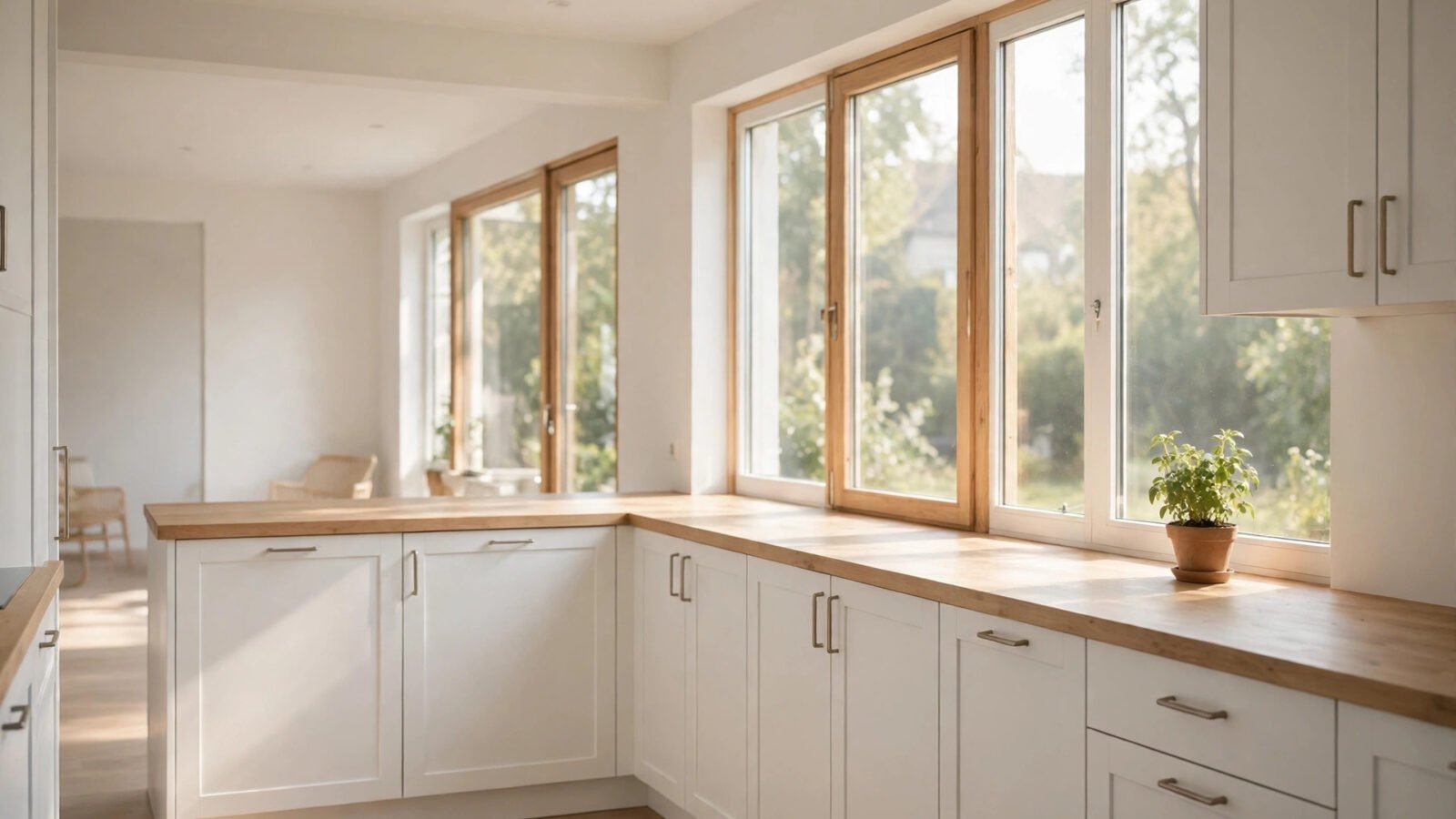
These 24 simple kitchen design ideas are for anyone whose kitchen feels busy, dark or harder to cook in than it should be. A simple kitchen is not an empty one; it is a kitchen where every cabinet, counter and object has a clear job and the eye can rest. Most of these ideas cost little more than paint, patience and a good edit.
Simple design suits real cooking. Clear counters give you room to chop, plain fronts wipe clean in seconds, and a short list of repeated materials makes even a small kitchen feel planned. You can take these ideas one weekend at a time, starting with the free ones.
This guide opens with the few rules behind every calm kitchen, then lists all twenty-four ideas with who they suit, how to do them, a pro tip and a mistake to skip. If your cabinets are due for attention first, the site’s kitchen cabinets guide goes deeper on doors, colors and finishes. By the end, you will have a kitchen plan that stays simple on purpose.
Table of Contents
The Simple Kitchen Rules That Never Fail
The kitchen became a designed room only in the last century or so, and the calm ones still follow the same logic: keep the work zone clear, keep daily tools close, and keep the palette short. Two or three materials, one metal finish and one accent color are enough for most kitchens.
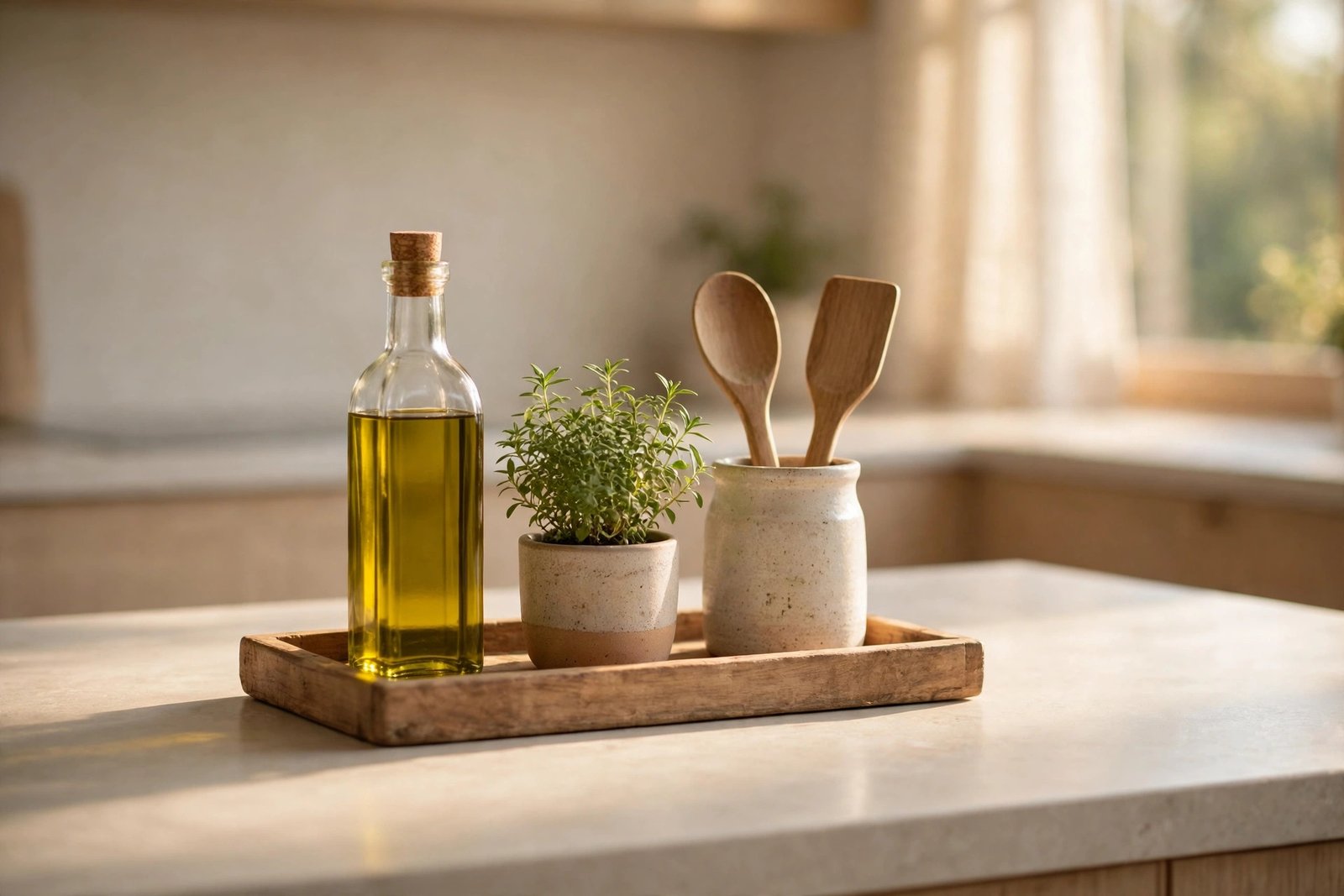
Rule two is that counters are for working, not storing. A simple kitchen keeps only the true daily items out, like a kettle and a knife block, and gives everything else a home behind a door. Rule three is light: pale surfaces and one good light over the work zone make the whole room feel cleaner.
24 simple kitchen design ideas
These 24 simple kitchen design ideas run from paint and hardware to layout and daily habits, kept tight so you can scan them fast. Each one says what it is, who it suits, how to do it, a pro tip and one mistake to avoid. Start with the ideas that fix what annoys you every single day.
Paint Cabinets a Soft Neutral
What it is: Cabinet doors painted in warm white, soft greige or pale sage instead of strong colors.
Who it suits: Anyone whose kitchen feels dark or dated but whose cabinets are sound.
How to do it: Clean, sand lightly, prime and paint with a durable cabinet paint in a satin finish. Take the doors off and label them so they return to the right boxes.
Pro tip: Paint one door first and live with it for a day; colors shift a lot under kitchen light.
Mistake to avoid: Skipping primer on glossy old finishes; the new paint will peel within the year.
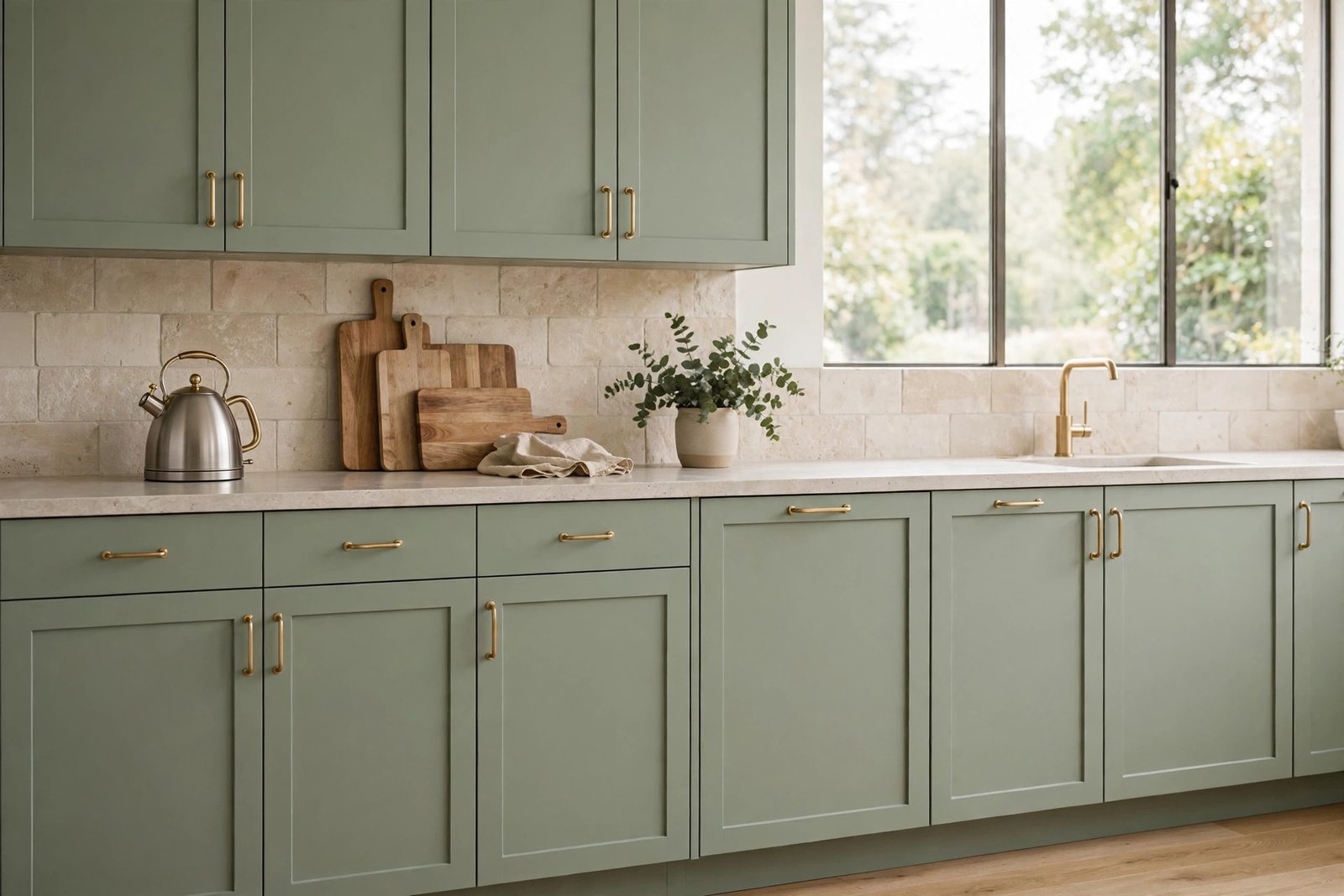
Choose Flat-Front Cabinet Doors
What it is: Plain slab or simple shaker doors with no deep grooves or ornate frames.
Who it suits: Busy cooks, because flat fronts wipe clean in one pass.
How to do it: If you are refacing or replacing, pick slab or slim shaker doors in one color for every cabinet. The kitchen cabinet styles range widely, but the plainest ones age the slowest.
Pro tip: Shaker frames with a narrow rail catch far less dust than wide, deep-profile frames.
Mistake to avoid: Mixing two door styles in one kitchen; the mismatch always looks accidental.
Swap in Simple Matching Hardware
What it is: One style of handle or knob, in one finish, repeated on every drawer and door.
Who it suits: Anyone with a drawer full of mismatched handles collected over the years.
How to do it: Count every door and drawer, choose plain bar pulls or round knobs, and fit them all in one afternoon. Keep the old screws in case the new ones need a different length.
Pro tip: Longer pulls on drawers and knobs on doors is a classic pairing that never fights itself.
Mistake to avoid: Choosing tiny knobs for heavy drawers; you will fight them every day.
Keep Counters Mostly Clear
What it is: A rule that only daily-use items live on the counter; everything else gets a cupboard home.
Who it suits: Small kitchens and anyone who never has room to roll pastry or rest a hot pan.
How to do it: Clear everything off, clean the counters, then return only what you used in the last two days. Find homes for the rest in cupboards, or let rarely used gadgets go.
Pro tip: One tray under the kettle and oils makes the few allowed items look tidy, not scattered.
Mistake to avoid: Letting mail and school papers colonize the cleared counter within a week.
Run One Long Runner Rug
What it is: A single washable runner along the main work run instead of several small mats.
Who it suits: Galley kitchens and anyone whose feet ache on hard floors while cooking.
How to do it: Measure the run between counters and choose a runner that leaves a border of floor on each side. Pick a low-pile, washable design in a calm pattern.
Pro tip: A rug pad underneath stops the slow sideways creep every runner develops.
Mistake to avoid: Choosing a thick, fluffy rug; it traps crumbs and makes spills a project.
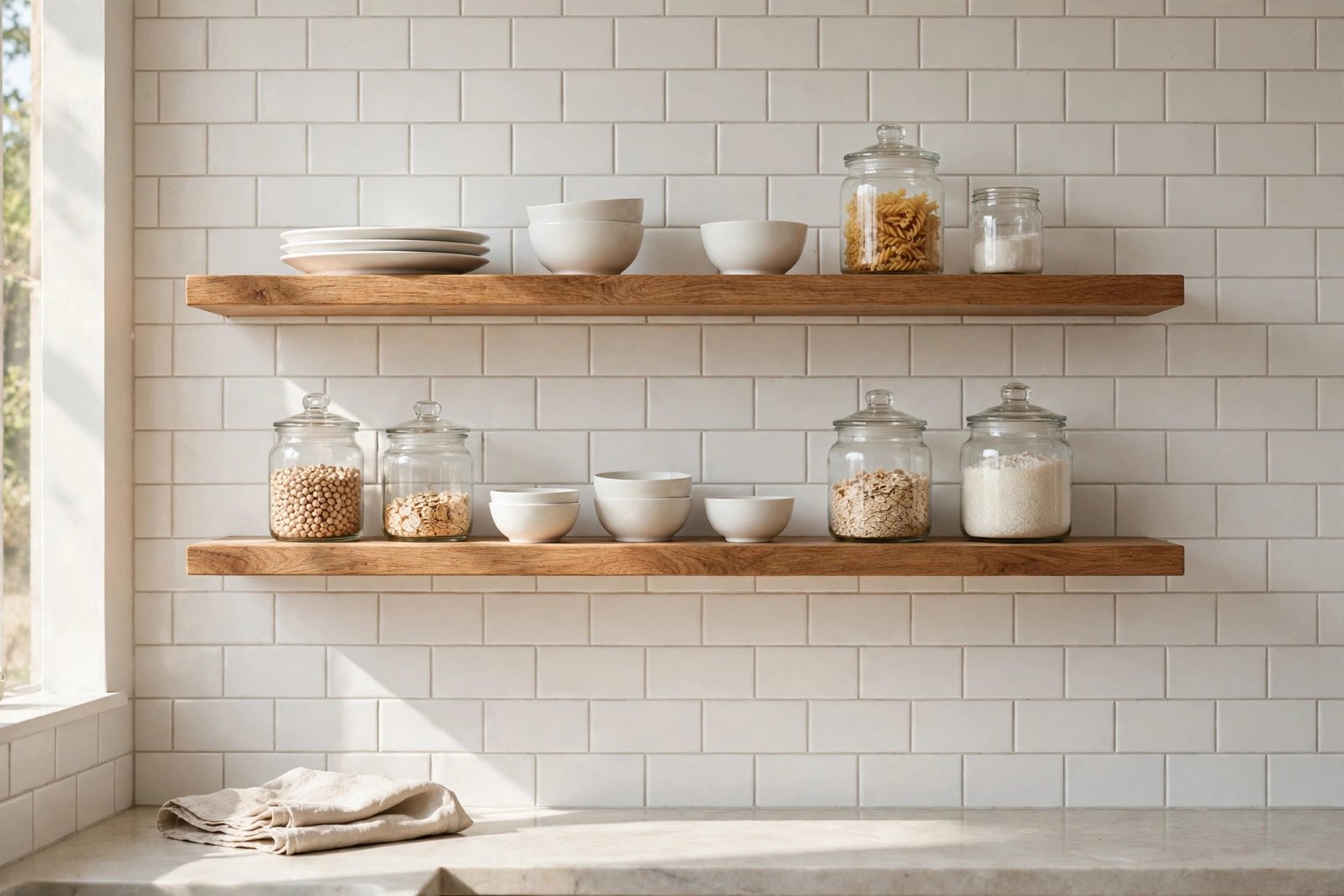
Add Open Shelves for Everyday Dishes
What it is: One or two open shelves holding the plates, bowls and glasses you use daily.
Who it suits: Households that open the same cupboard twenty times a day.
How to do it: Replace one upper cabinet or use a free wall stretch, and keep only everyday pieces on the shelves. Group by type and leave small gaps so the shelves breathe.
Pro tip: All-white or all-clear everyday dishes look calm even when the shelf is full.
Mistake to avoid: Shelving rarely used items; they gather dust and turn the shelf into storage, not design.
Pick a Single-Bowl Sink
What it is: One deep, generous sink bowl instead of two small divided ones.
Who it suits: Anyone who washes roasting pans, big pots and baking trays often.
How to do it: Choose the deepest single bowl your cabinet allows, with a simple faucet in your chosen finish. A fitted rack in the base protects the surface and doubles as a drainer.
Pro tip: An undermount sink lets you sweep crumbs straight from the counter into the bowl.
Mistake to avoid: Choosing a shallow designer sink; splashing water will redesign your floor daily.
Choose a Quiet Backsplash
What it is: A plain backsplash in one material and color, like white subway tile or a single stone slab.
Who it suits: Kitchens that already have plenty of color and pattern elsewhere.
How to do it: Run one simple tile from counter to cabinets in a straight or stacked layout. Match the grout closely to the tile so the wall reads as one calm surface.
Pro tip: Taking the backsplash all the way up to the cabinets looks more finished than a short strip.
Mistake to avoid: Adding a patterned feature strip; it dates faster than anything else in the room.
Stick to One Metal Finish
What it is: Handles, faucet, light fittings and appliances sharing one finish, like brushed nickel or black.
Who it suits: Anyone whose kitchen quietly mixes chrome, brass, steel and copper at once.
How to do it: Choose the finish you already have most of, then change the odd pieces out over time. The faucet and handles matter most because they sit at eye and hand level.
Pro tip: Matte finishes hide fingerprints better than polished ones in busy kitchens.
Mistake to avoid: Chasing a fashionable finish for every piece; one calm finish repeated is the whole trick.
Hide the Small Appliances
What it is: Toasters, blenders and coffee gadgets stored in a cupboard or appliance garage instead of on show.
Who it suits: Small kitchens where three appliances eat half the worktop.
How to do it: Give the most-used appliance one cupboard near a socket, and store the rest deeper. A simple lift-up or tambour door on a counter corner creates an appliance garage.
Pro tip: If an appliance is annoying to put away, you will not; store it at counter height, not overhead.
Mistake to avoid: Hiding the kettle you use five times a day; simple design serves habits, not rules.
Use a Rolling Cart as Extra Counter
What it is: A slim wheeled cart that adds work surface and storage, then parks against a wall.
Who it suits: Renters and small kitchens that cannot add fixed cabinets.
How to do it: Choose a cart with a solid top at counter height and at least one shelf below. Use it as a baking station, coffee corner or extra landing space beside the stove.
Pro tip: Locking wheels matter; a cart that rolls while you chop is worse than no cart.
Mistake to avoid: Buying a cart wider than your parking spot; measure the gap it will live in.
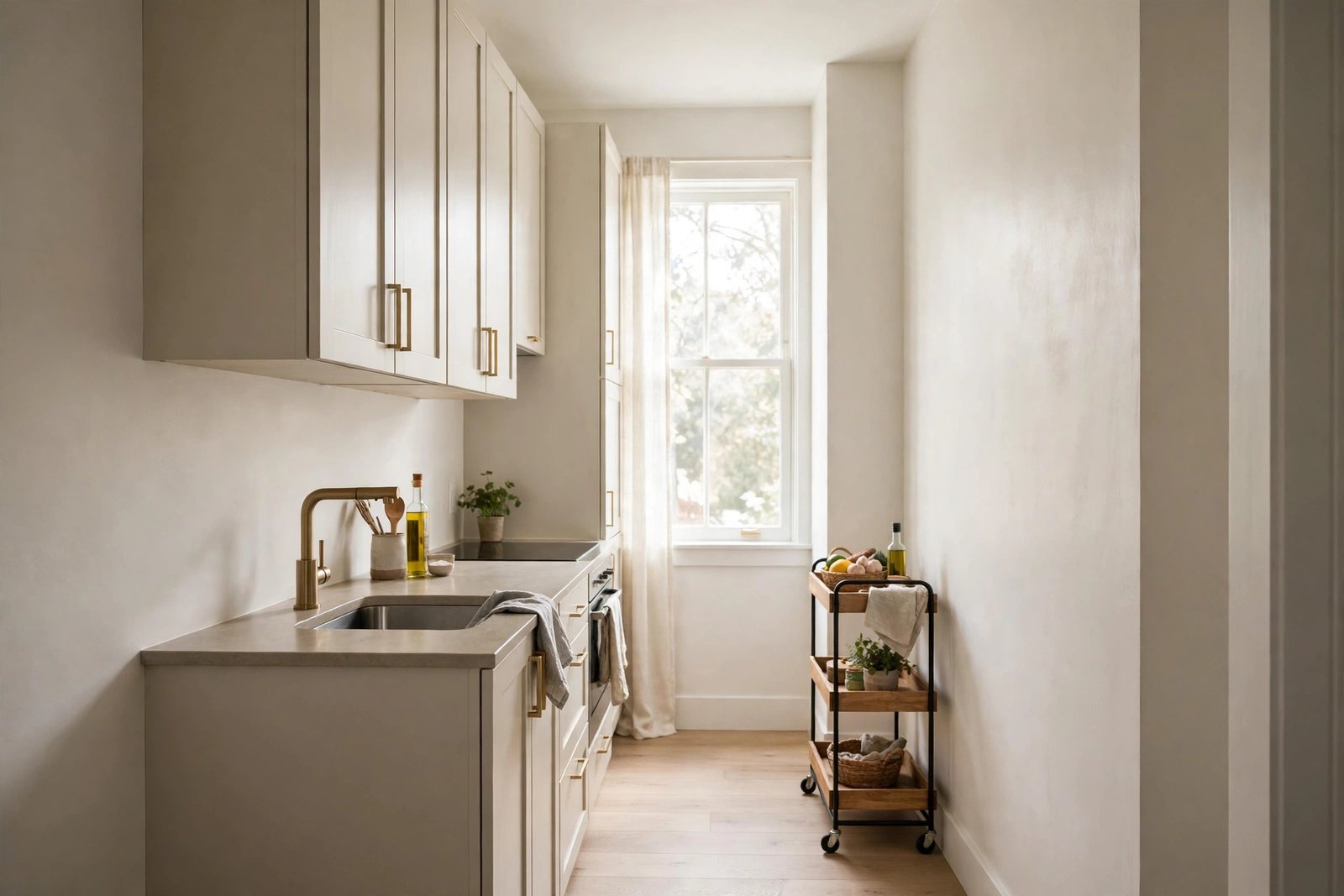
Plan a Galley Layout for a Narrow Kitchen
What it is: Two straight runs of cabinets facing each other, or one single run, in a narrow room.
Who it suits: Apartments and older homes with long, thin kitchen spaces.
How to do it: Keep the sink, stove and fridge spaced along the runs so you never carry hot pans far. Small-space tricks from these Christmas apartment decor ideas apply here all year: light colors, mirrors of light and nothing bulky.
Pro tip: One wall of full-height cabinets and one wall kept low and open stops a galley feeling like a tunnel.
Mistake to avoid: Putting tall units on both sides at the entrance; the room feels narrow before you step in.
Try an L-Shaped Layout for Corners
What it is: Cabinets along two adjoining walls, leaving the rest of the room open for a table or island cart.
Who it suits: Square-ish rooms and families who want eating space inside the kitchen.
How to do it: Put the sink under the window if you can and the stove on the other leg of the L. Use the corner cabinet for the least-used large items, or fit a lazy Susan.
Pro tip: Keeping the fridge at the open end of the L stops traffic jams at the work zone.
Mistake to avoid: Wasting the corner with a blind cabinet you cannot reach into.
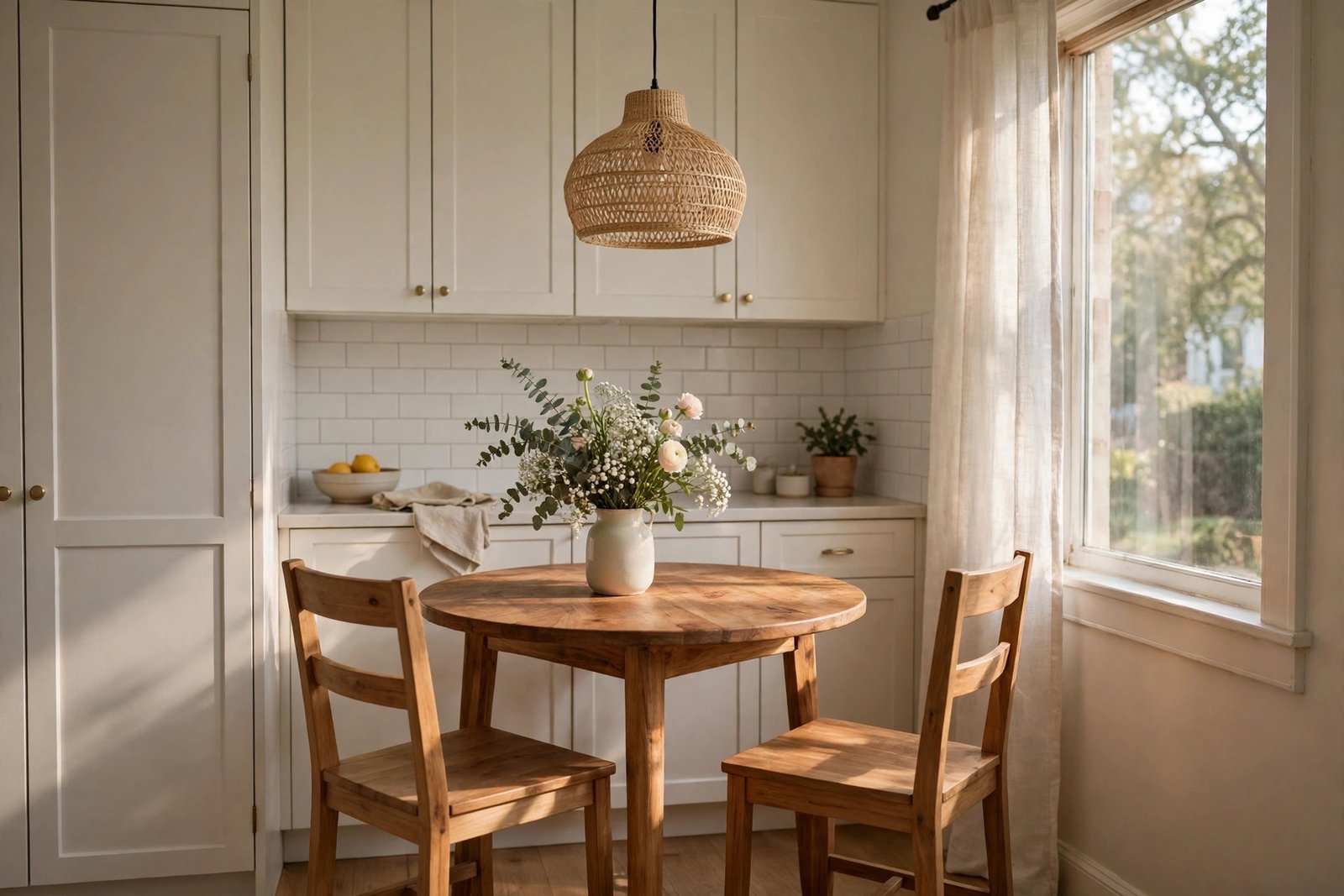
Add a Small Breakfast Nook
What it is: A compact table and two chairs, or a bench, tucked into a corner or by a window.
Who it suits: Families who eat breakfast and homework at the kitchen table daily.
How to do it: Choose a round or drop-leaf table that seats two to four without crowding the work zone. A bench against the wall seats children and slides away neatly.
Pro tip: A pendant light over the nook table marks it as a place, not leftover space.
Mistake to avoid: Blocking a cupboard or the fridge door with the table; test every door swing first.
Light Under the Cabinets
What it is: Simple strip or puck lights fitted beneath upper cabinets to light the work surface.
Who it suits: Anyone chopping vegetables in their own shadow from the ceiling light.
How to do it: Fit LED strips toward the front edge of the cabinet underside so light falls on the counter, not the wall. Battery or plug-in versions suit rentals and quick upgrades.
Pro tip: Match the bulb warmth to your ceiling light so the room does not glow two colors at once.
Mistake to avoid: Placing strips at the back of the cabinet; they light the backsplash and leave the counter dim.
Keep Appliances in One Color Family
What it is: Choosing white, black or stainless for all visible appliances so they read as one set.
Who it suits: Kitchens built up over years with one appliance replaced at a time.
How to do it: You rarely need to replace working machines; start by grouping the odd one out of sight or covering a small appliance. When something truly dies, replace it in the family color.
Pro tip: A single colorful kettle or stand mixer is charming; five different colors are noise.
Mistake to avoid: Buying a bargain appliance in a clashing finish that you will look at for a decade.
Decant Dry Goods into Glass Jars
What it is: Flour, rice, pasta and beans stored in matching clear jars on one shelf or counter stretch.
Who it suits: Bakers and anyone tired of torn bags and mystery packets.
How to do it: Choose one jar shape in two or three sizes and keep the group together, not spread around the kitchen. Label the lids or backs if your household forgets what is what.
Pro tip: Jars at eye level get used; jars above your head become decoration and then dust.
Mistake to avoid: Decanting everything you own; a short row of daily staples is the calm version.
Hang a Rail for Utensils and Pans
What it is: A simple wall rail with hooks holding the tools and pans you reach for daily.
Who it suits: Cooks short on drawer space who like everything visible and close.
How to do it: Fit the rail on the wall beside the stove or sink, at a height you can reach without stretching. Hang only the daily tools; the rest stay in drawers.
Pro tip: One rail, one finish, matching your handles, keeps the look designed rather than busy.
Mistake to avoid: Hanging rarely used gadgets; a rail of dusty tools is clutter with hooks.
Keep a Big Board on the Counter
What it is: One large wooden cutting board that lives on the counter as both worktop and warm accent.
Who it suits: Anyone whose counters are cold stone or plain laminate and need one warm note.
How to do it: Choose the largest board your counter fits and keep it oiled and clean. It protects the surface, gives you a permanent prep zone and softens the room.
Pro tip: A board with a juice groove on one side and a flat side suits both melons and bread.
Mistake to avoid: Leaving a wet board flat on the counter overnight; store it on its edge to dry.
Dress the Window Simply
What it is: A bare window, a simple blind or one sheer panel instead of heavy curtains.
Who it suits: Small kitchens where fabric near the sink and stove feels fussy and unhygienic.
How to do it: Choose a washable roller blind or a short sheer that filters light without pooling fabric. Keep the sill clear except, perhaps, for one herb pot.
Pro tip: A clean, bare window with a good view is the simplest design choice of all.
Mistake to avoid: Long curtains near a gas stove; it is both a mess and a safety risk.
Add One Herb Pot or Small Plant
What it is: A single pot of herbs or a small trailing plant on the sill or shelf.
Who it suits: Every kitchen that needs one living, green note among the hard surfaces.
How to do it: Basil, mint or a small pothos all forgive kitchen warmth and steam. Keep it to one or two pots so the sill stays easy to wipe.
Pro tip: Herbs you cook with earn their place twice, as decor and as dinner.
Mistake to avoid: Crowding the sill with five struggling plants; one healthy plant looks better.
Choose Simple Stools and Chairs
What it is: Plain wooden or metal stools and chairs with clean lines that tuck fully under counters and tables.
Who it suits: Kitchens with a small island, breakfast bar or nook.
How to do it: Pick backless stools for counters so they vanish underneath, and simple chairs for the table. One material, repeated, keeps the set calm.
Pro tip: Measure seat height against your counter before buying; comfort lives in that gap.
Mistake to avoid: Choosing chunky upholstered chairs that block walkways when pushed back.
Paint Walls and Ceiling One Color
What it is: Using the same soft color on walls and ceiling so the room’s edges blur and it feels larger.
Who it suits: Low-ceilinged kitchens and rooms with awkward angles and beams.
How to do it: Choose a washable kitchen paint in your neutral and run it over both surfaces. The cabinets and shelves then carry the contrast instead of the paint line.
Pro tip: A satin or soft-sheen finish wipes clean better than flat matte near cooking zones.
Mistake to avoid: Painting the ceiling bright white over warm walls; the lid effect makes the room feel shorter.
Keep Decor to One Small Vignette
What it is: One tiny arranged moment, like a board, a bowl of fruit and a small plant, instead of scattered ornaments.
Who it suits: Anyone whose kitchen slowly fills with decorative bits that gather grease.
How to do it: Choose one spot away from the stove, group three items of different heights, and let every other surface stay plain. Change the vignette with the seasons if you enjoy it, using these Christmas kitchen decor ideas when December comes.
Pro tip: Fruit in a bowl is the easiest vignette: useful, colorful and never dusty for long.
Mistake to avoid: Decorating the splashback zone; everything there ends up filmed with cooking grease.
Keeping a Simple Kitchen Simple Every Day
A simple kitchen stays simple through small habits, not big purges. Put each thing back in its home while the kettle boils, wipe counters as you finish cooking, and keep a small box for items that no longer belong in the room. Five calm minutes a day protect the whole design.
Once a season, open every cupboard and ask what has not been touched. Gadgets and novelty mugs creep back in quietly, and a short edit twice a year is far kinder than a yearly upheaval. The goal is a kitchen that resets to calm in minutes, ready for the next meal.
Frequently Asked Questions
Where should I start with these 24 simple kitchen design ideas?
Start with the free steps: clear the counters, hide the small appliances and edit the surfaces. Then paint, which changes the room more per dollar than anything else. Hardware and lighting come next, and layout changes only if you are renovating anyway.
What colors suit a simple kitchen best?
Warm whites, soft greiges, pale sage and gentle clay tones all keep a kitchen calm and bright. The exact color matters less than repeating it consistently across cabinets, walls and textiles. Add warmth with wood and one accent color so the room never feels cold.
Can a simple kitchen still feel warm and personal?
Yes, because simple refers to the structure, not the soul of the room. Wood boards, a woven runner, herbs on the sill and one small vignette add plenty of warmth. Personal items shine more, not less, when they are not competing with clutter.
How do I make a small kitchen feel bigger without renovating?
Keep counters clear, use light colors, add under-cabinet lighting and choose one long runner to stretch the floor visually. Open shelves for everyday dishes and a rolling cart add function without bulk. A galley or L-shaped arrangement of what you already own often helps too.
How much does a simple kitchen refresh cost?
The editing, rearranging and deep-cleaning steps cost nothing but time. Paint and hardware are the next tier and usually the best value in the whole list. Save the larger spending, like sinks and appliances, for when the old ones genuinely wear out.
Conclusion
A calm kitchen is built from clear counters, plain fronts, one finish, good light and things that earn their place, and these 24 simple kitchen design ideas show the order to tackle them in. Start with the free edits this week and let paint and hardware follow when you are ready. For more gentle home inspiration, explore the other decor guides here and keep your kitchen simple on purpose.