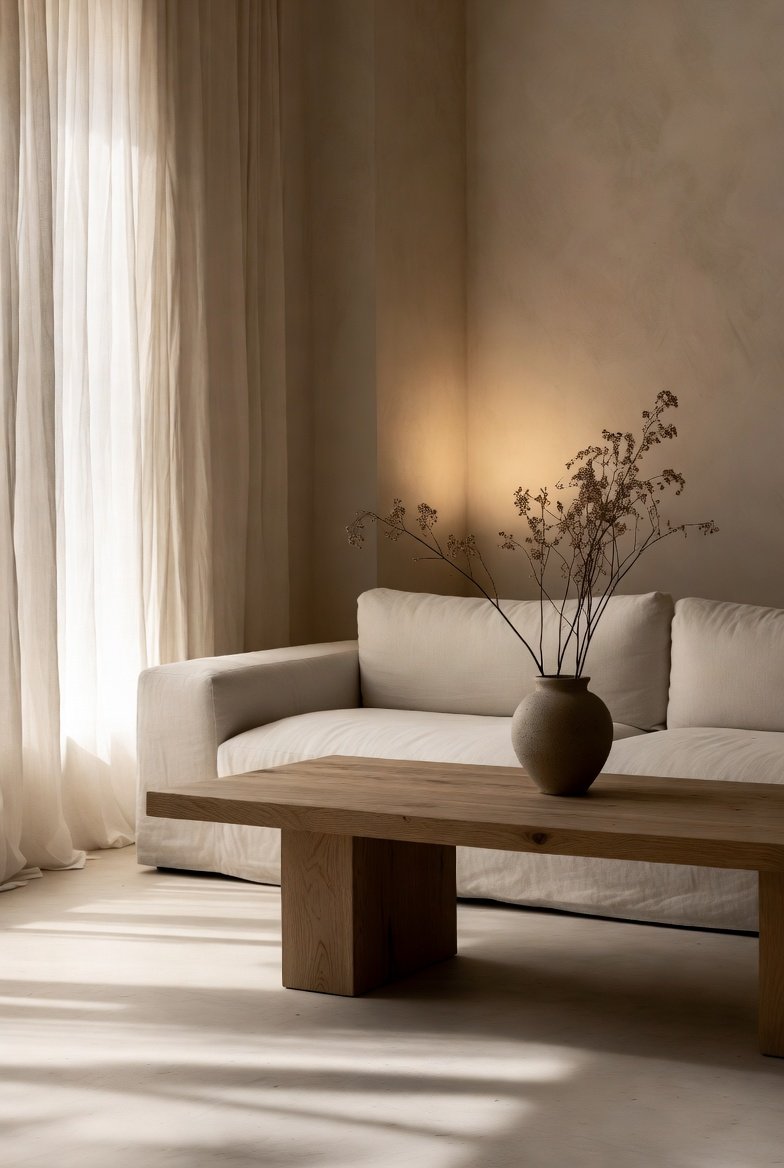
Japandi living rooms are taking the interior design world by storm, and for a very good reason. Imagine walking into a space that feels like a warm hug on a cold day—calm, uncluttered, yet deeply inviting. That is the magic of the Japandi style. As a talented writer and design enthusiast, I have seen countless trends come and go, but this fusion of Japanese simplicity and Scandinavian coziness is here to stay.
In this comprehensive guide, we will explore 23 Japandi living rooms that will inspire you to transform your own home. Furthermore, I will provide a step-by-step guide to help you achieve this look without feeling overwhelmed. Whether you live in a tiny apartment or a spacious house, these principles apply universally. Consequently, by the end of this article, you will feel confident and excited to purchase the right pieces for your space. Let’s dive in.
Introduction: Why Japandi? A Personal Anecdote
Before we jump into the list, let me share a quick story. A few years ago, my living room was a chaotic mess of bright colors, mismatched furniture, and unnecessary knick-knacks. I felt anxious every time I sat down to relax. Then, on a trip to Kyoto, I stayed in a traditional ryokan. The room had tatami mats, a low wooden table, and a single scroll on the wall. It was empty, yet I felt completely at peace. Later, I visited a friend in Copenhagen. Her home had pale wood floors, a chunky knit throw, and candles everywhere. It was warm but not cluttered.
That is when I discovered Japandi living rooms. It combines the “less is more” philosophy of Japan with the “hygge” comfort of Scandinavia. After remodeling my space, I noticed a dramatic shift in my mood. My home became a sanctuary. Therefore, I promise you: once you adopt this style, you will never go back.
What Exactly Are Japandi Living Rooms?
In simple terms, Japandi living rooms are a harmonious blend of two distinct design traditions:
- Japanese Wabi-Sabi: This embraces imperfection, natural materials, and asymmetry. Think raw wood, stone, and handmade ceramics.
- Scandinavian Hygge: This focuses on coziness, functionality, and light colors. Think wool throws, soft lighting, and clean lines.
When combined, these elements create a space that is neither stark nor overly fussy. Instead, it is balanced, breathable, and beautiful. The key difference from other minimalist styles is the emphasis on natural warmth. Unlike cold, all-white minimalism, Japandi uses earthy tones like beige, taupe, charcoal, and deep olive.
Also Read: 15 Kitchen Makeover Ideas That Will Transform Your Space Without Breaking the Bank
The Core Principles (Before You See the 23 Examples)
To truly appreciate the 23 Japandi living rooms we are about to explore, you must understand the five core pillars. Additionally, these principles will guide your own purchases later.
- Neutral Palette: Stick to colors found in nature.
- Natural Materials: Wood, bamboo, linen, cotton, wool, and stone.
- Functional Furniture: Every piece must serve a purpose.
- Negative Space: Don’t fill every corner. Let the room breathe.
- Tactile Layers: Use textures (not colors) to add depth.
Now, let’s look at the rooms. For each example, I will highlight a specific lesson you can apply immediately.
The 23 Japandi Living Rooms (Examples & Lessons)
1. The Monochrome Sanctuary
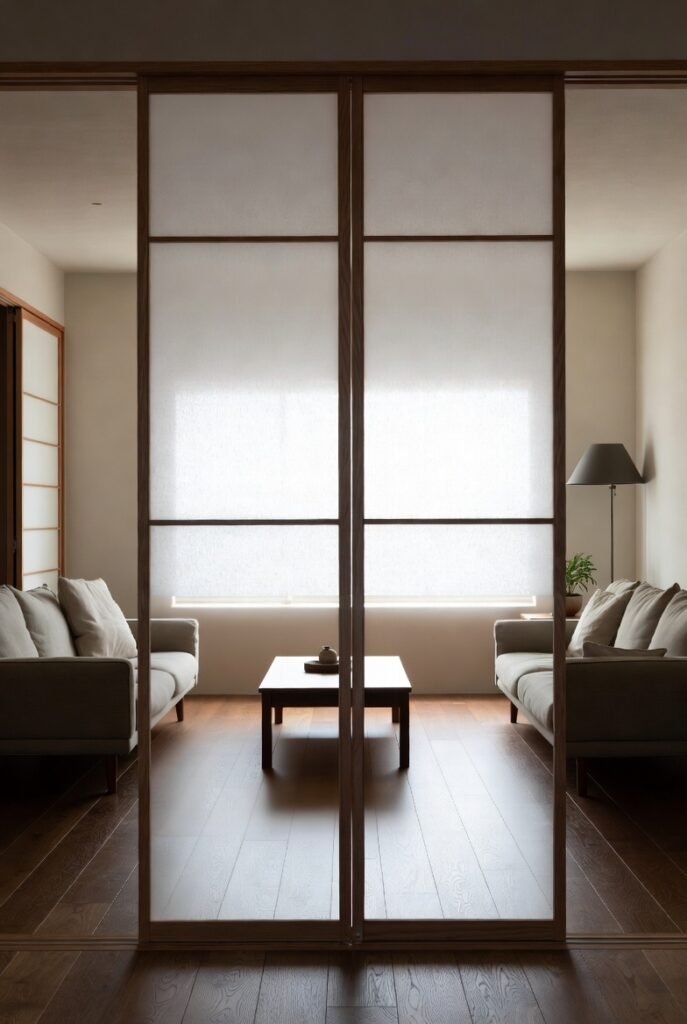
Imagine pale ash wood floors, a light grey jute rug, and a low-slung beige sofa. The walls are off-white. There is one black ceramic vase on the coffee table. Lesson: You don’t need art on every wall. One sculptural piece is enough.
2. The Bamboo Haven
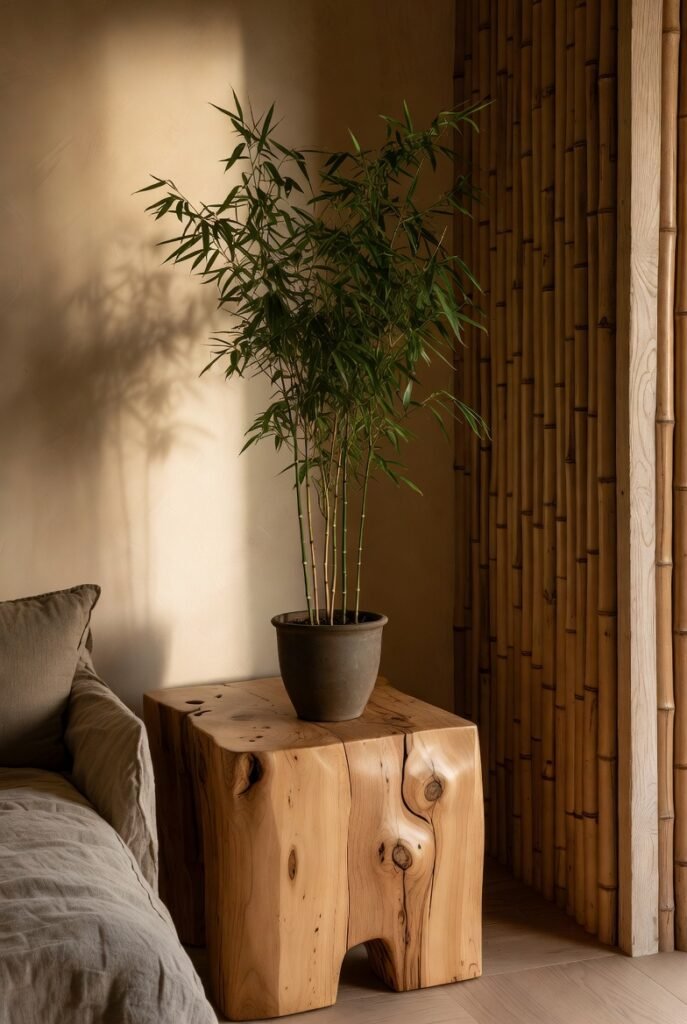
This room uses bamboo blinds instead of curtains. A rattan pendant light hangs low over a reclaimed wood coffee table. Lesson: Bring the outdoors in. Bamboo adds instant organic texture.
3. The Dark & Moody Japandi
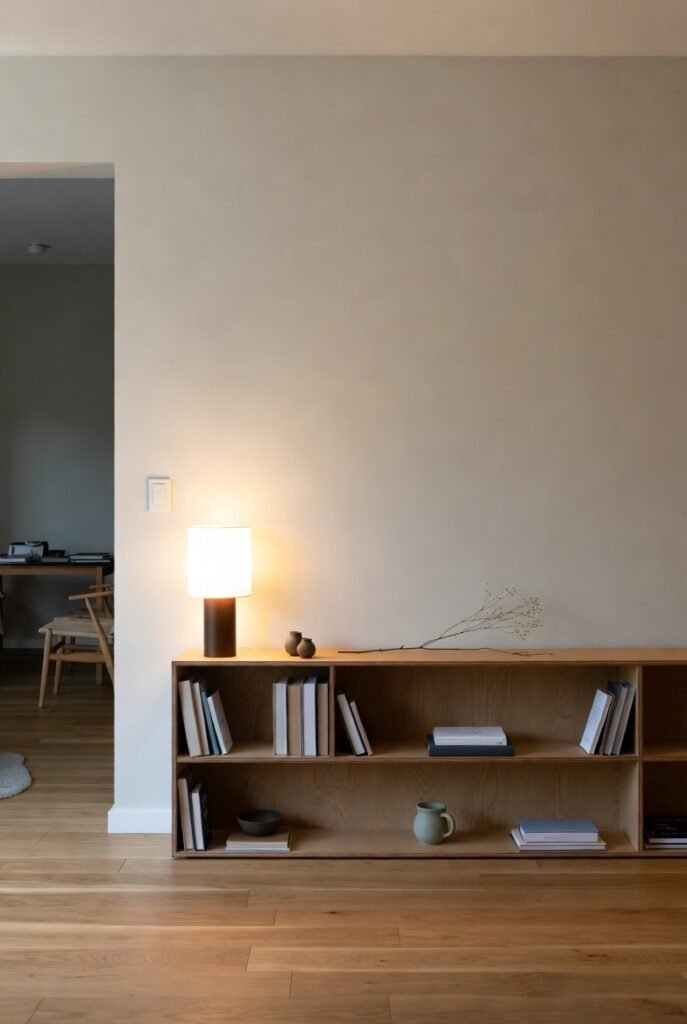
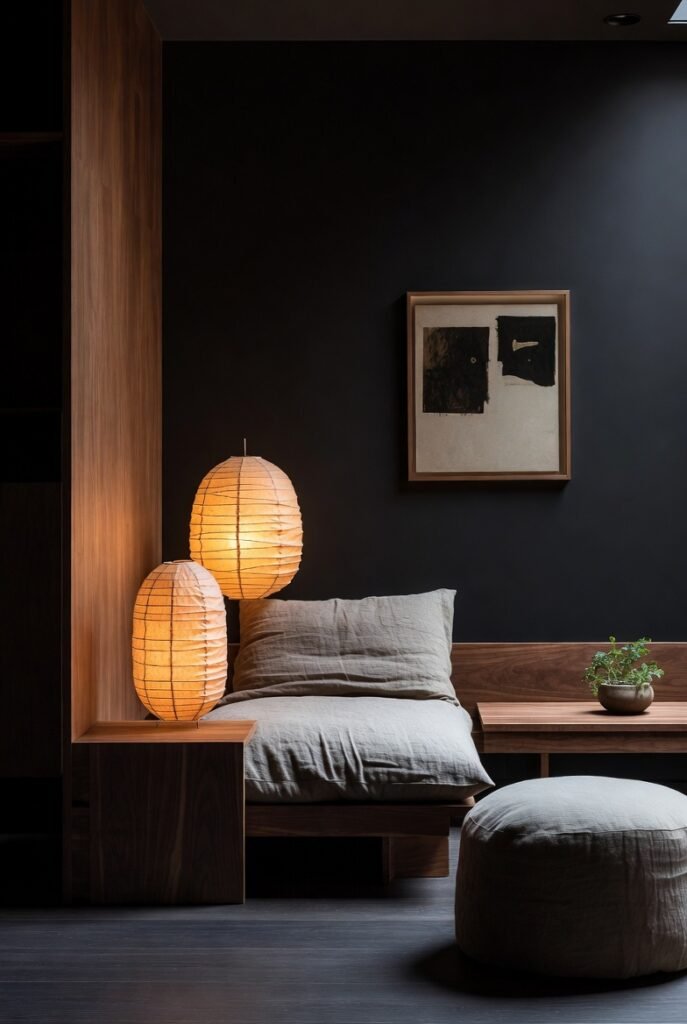
Contrary to popular belief, Japandi living rooms can use dark colors. This room features charcoal walls, a black leather lounge chair, and light oak flooring. Lesson: Contrast creates drama. Pair dark walls with pale wood to keep it from feeling like a cave.
4. The Sliding Door Divider
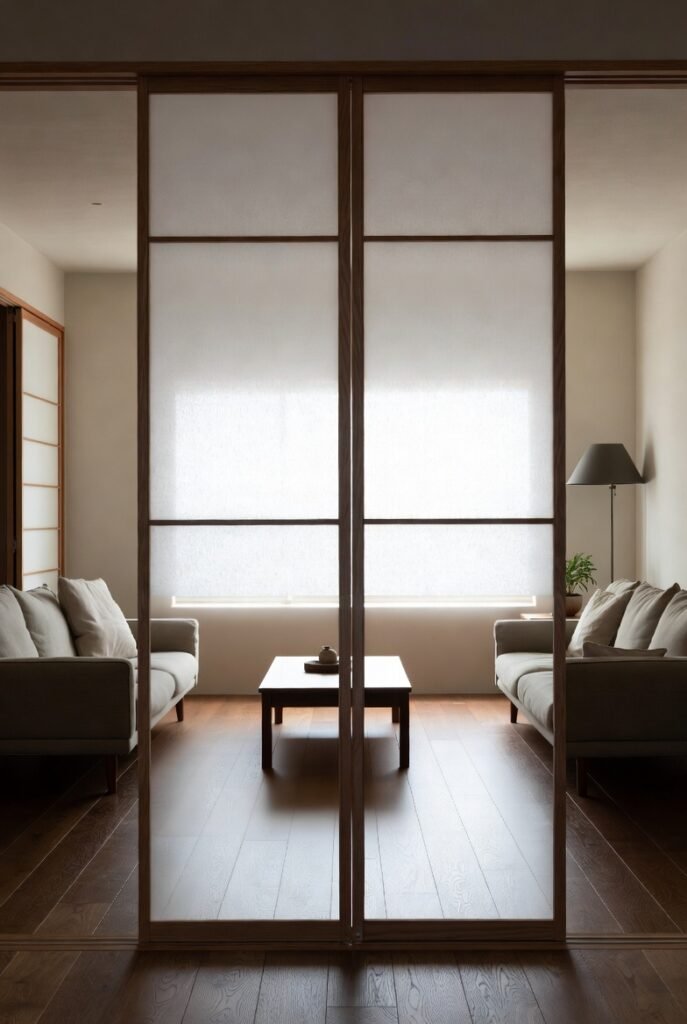
A small apartment uses shoji screens to separate the living area from the bedroom. The translucent paper diffuses light beautifully. Lesson: Use dividers to define zones without blocking light.
5. The Clay Finish Walls
Instead of smooth drywall, this room has a troweled clay plaster finish. The subtle unevenness reflects light softly. Lesson: Imperfection is beautiful (Wabi-Sabi).
6. The Low Profile Living Room
All furniture is low to the ground: a floor sofa, a low wooden platform daybed, and a kotatsu-style table. Lesson: Low furniture makes ceilings feel higher and the room more spacious.
7. The Linen Lover’s Paradise
From the sofa slipcover to the throw pillows, everything is unbleached linen. It wrinkles intentionally. Lesson: Embrace the wrinkles. Linen breathes and gets softer with age.
8. The Curated Bookshelf

Instead of a TV wall, this room has a solid wood bookshelf with only 12 books and three ceramic objects. Lesson: Edit your shelves. Negative space between objects is essential.
9. The Stone Accent Wall
One wall is clad in natural slate tiles in irregular shapes. The rest of the room is plain white plaster. Lesson: Feature one heavy, natural material to anchor the room.
10. The Indoor Garden Corner
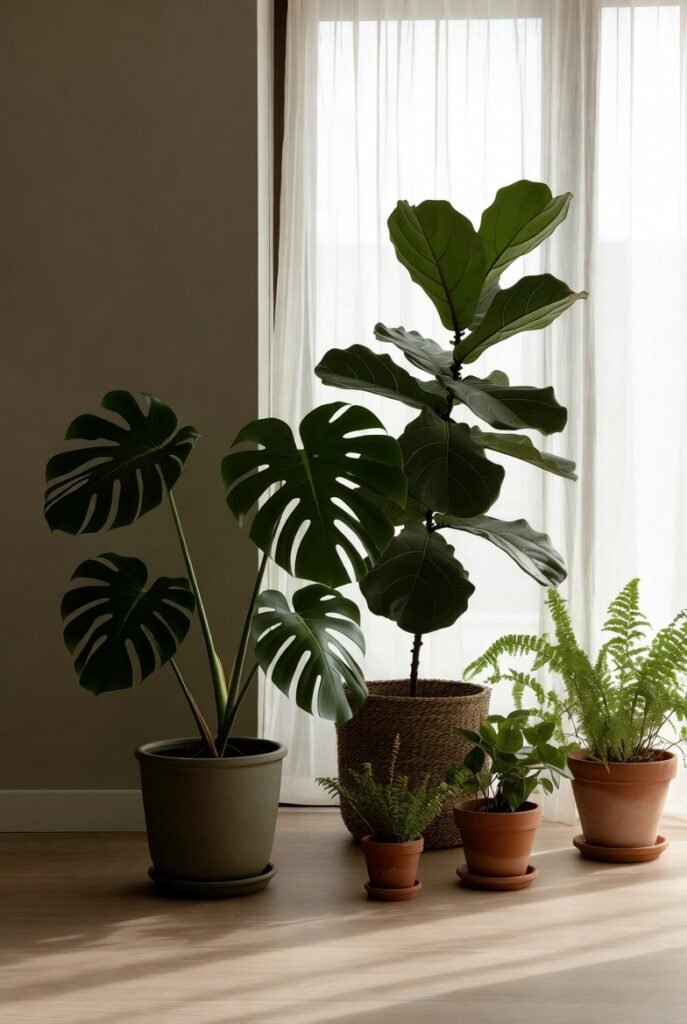
A corner of the room is dedicated to a large Japanese maple bonsai and a moss garden under a glass cloche. Lesson: Living art is the best art. A single plant has more impact than ten fake ones.
11. The Paper Lamp Collection
Three large washi paper lanterns hang at different heights above the seating area. They glow warmly at night. Lesson: Lighting is jewelry for a Japandi room. Invest in paper or rice paper shades.
12. The Handmade Pottery Display
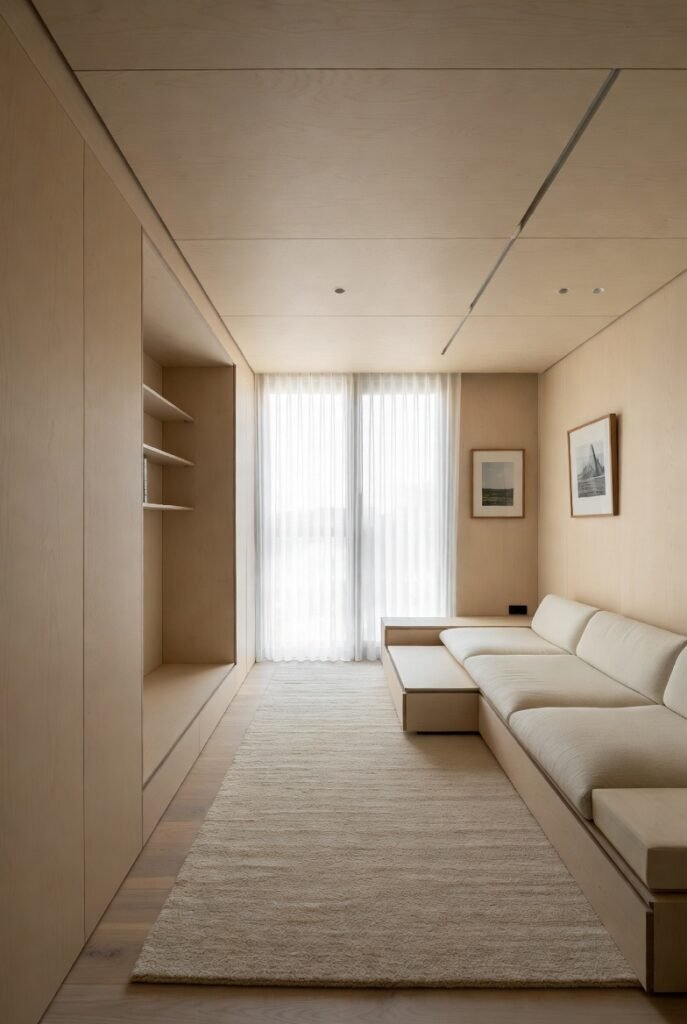
A long, floating shelf holds a collection of kurinuki (carved) pottery mugs and vases. Each piece is unique. Lesson: Support local artisans. Handmade items bring soul.
13. The Chunky Knit Throw
On a strict neutral sofa, a chunky wool knit throw in cream color adds irresistible texture. Lesson: One cozy element breaks the minimalism in a good way.
14. The Tatami Mat Zone
This room features actual tatami mats instead of a rug. The sweet, grassy smell is therapeutic. Lesson: If you can afford real tatami, do it. It changes the air quality.
15. The Asymmetrical Arrangement
The sofa is pushed slightly off-center. A tall floor lamp sits on the short side. A large painting hangs slightly left of the sofa. Lesson: Perfect symmetry is boring. Asymmetry feels natural.
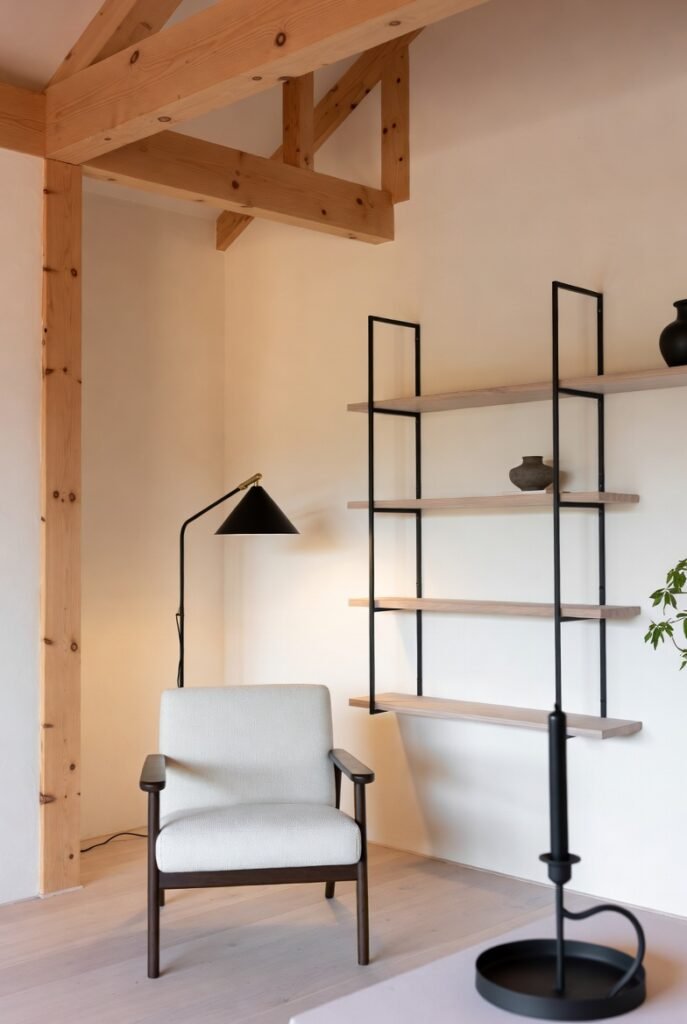
16. The Black Iron Accent
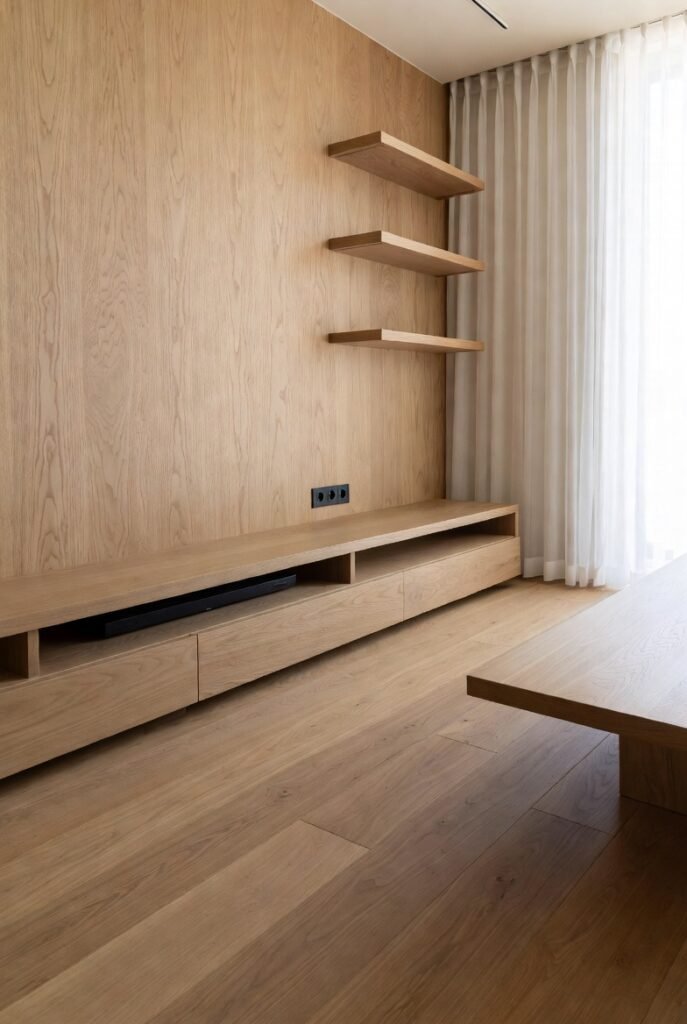
Thin black powder-coated steel legs on the coffee table and TV stand provide a sharp, graphic line. Lesson: Use black metal sparingly to add structure.
17. The Furoshiki Wall Art
A beautiful piece of indigo-dyed fabric (Furoshiki) is stretched over a wooden frame. No glass. Lesson: Textile art softens acoustic echoes and adds warmth.
18. The Hidden Storage Room
Behind a flush sliding panel of oak veneer lies a wall of storage. The panel looks like just another wall. Lesson: Hide the clutter. If you see cords or plastic, you break the spell.
19. The Zen Fireplace
A small, modern ethanol fireplace sits in a bed of black river rocks. It has no mantle. Lesson: Fire represents the “Yang” energy. A simple flame is hypnotic.
20. The Two-Stool Coffee Table
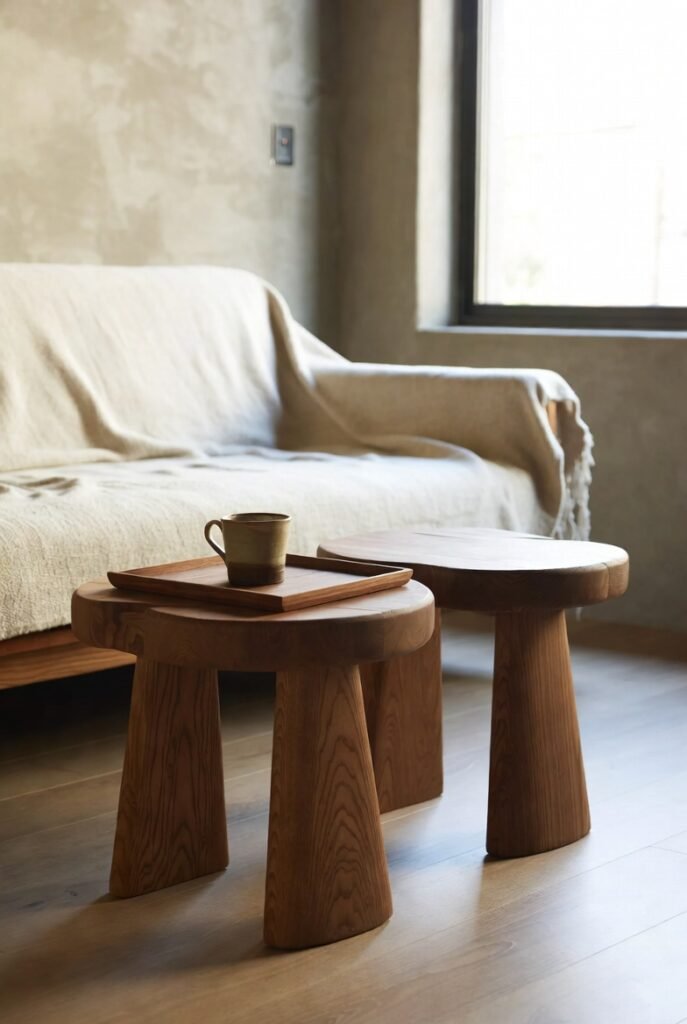
Instead of a traditional table, two low wooden stools sit side by side. You can move them apart for seating. Lesson: Flexible furniture is smart for small Japandi living rooms.
21. The White Oak Symphony
Everything—floor, ceiling beams, coffee table, and picture frames—is white oak with a matte, soap-finished surface. Lesson: Using one wood tone throughout creates extreme harmony.
22. The Calligraphy Scroll

A single Japanese calligraphy scroll hangs in an alcove. The ink strokes are bold. The mat is pale silk. Lesson: Choose one focal point. Your eyes need a place to rest.
23. The Window Bench
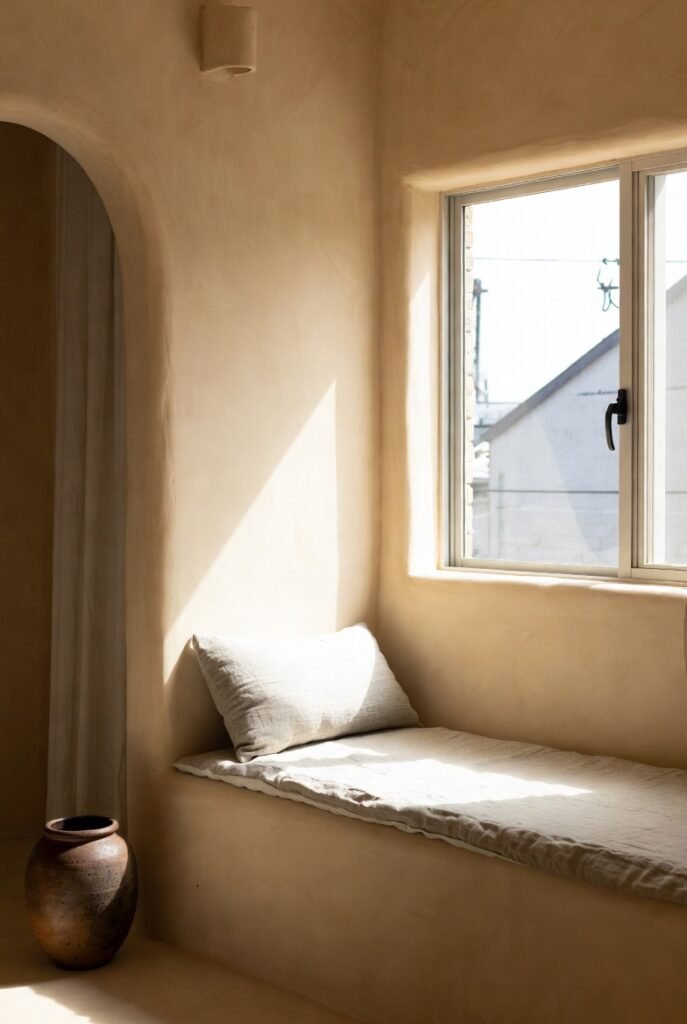
Under a large window, a simple wooden bench with a wool cushion invites you to sit and read. No pillows, no blankets. Lesson: Create a “noticing” spot. A place to just sit and look outside.
A Step-by-Step Guide to Creating Your Own Japandi Living Room
Now that you have seen 23 Japandi living rooms, you might be wondering: “Where do I start?” Do not worry. Follow this actionable step-by-step guide. I have broken it down into manageable phases.
Step 1: The Purge (Declutter Ruthlessly)
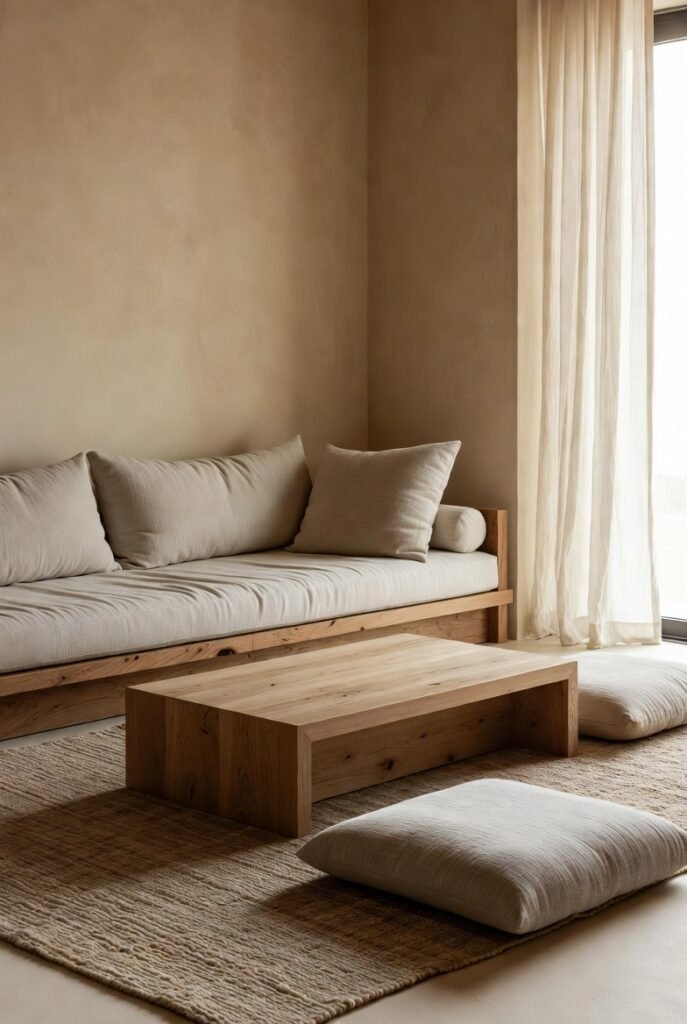
Before you buy a single new item, remove everything that does not spark joy. Take all decorations off shelves. Remove extra pillows. Pack away bright colors. Action: For one week, live with only your essential furniture (sofa, table, lamp). Notice how peaceful it feels.
Step 2: Choose Your Neutral Base
Paint your walls in a warm off-white or soft beige (e.g., Benjamin Moore’s “Simply White” or “Shiitake”). Avoid stark white (it looks clinical) and grey (it looks cold). Action: Buy sample pots and paint large swatches. Look at them in morning, noon, and evening light.
Step 3: Invest in the “Big Three” Natural Materials
You need three textures to start. For most Japandi living rooms, these are:
- Light Wood: A solid oak or ash coffee table.
- Soft Textile: A linen or wool area rug.
- Stone/Ceramic: A matte clay vase or a stone tray.
Action: Purchase these three items first. Do not buy anything else until they are in your room.
Step 4: The Seating Strategy
Your sofa should have clean lines (no tufting or ruffles), low arms (or no arms), and tapered wooden legs. Color: Beige, mushroom, or charcoal. Action: Measure your space. For small rooms, a floor sofa (just a thick mattress on a low platform) is perfect.
Step 5: Layer Lighting (The 3-Source Rule)
You cannot have just one overhead light. You need:
- Ambient: A paper pendant or a rice floor lamp.
- Task: A small ceramic lamp on a side table.
- Accent: A candle or a low LED strip under a shelf.
Action: Replace your cool white bulbs with 2700K (warm white) bulbs. It mimics sunset.
Step 6: The 10-Item Decoration Limit
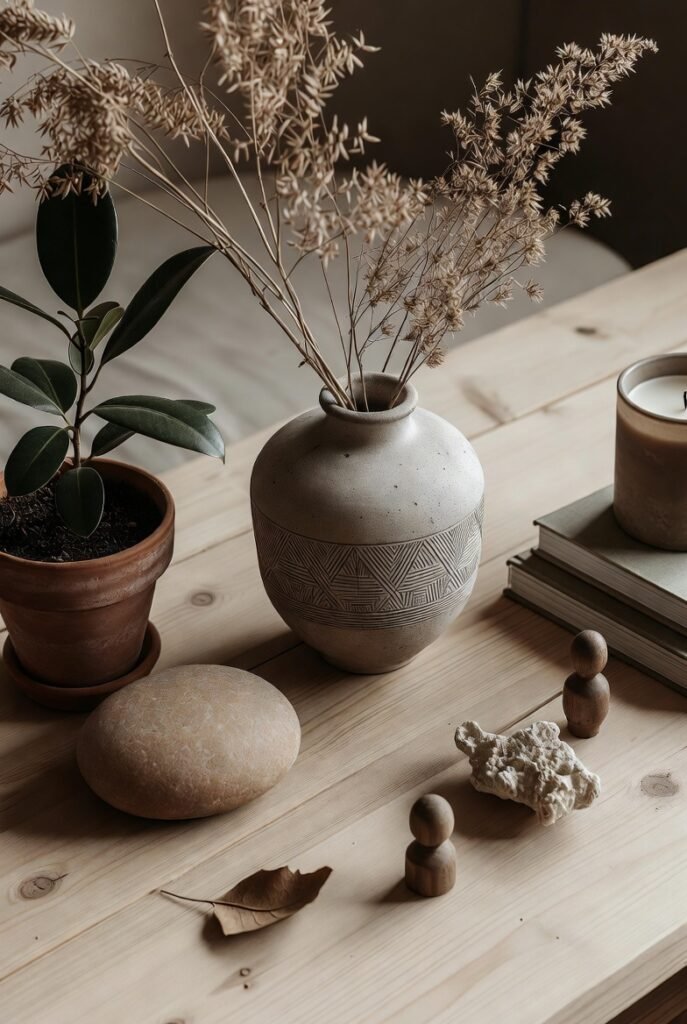
For a 200 sq ft living room, you are allowed only 10 decorative objects total. These include: 1 plant, 3 books, 2 ceramics, 1 textile (throw), 1 tray, 1 candle, 1 sculptural object. Action: Place them in odd-numbered groupings (3 or 5). Leave 4 inches of empty shelf between each group.
Step 7: Add Life (Plants)
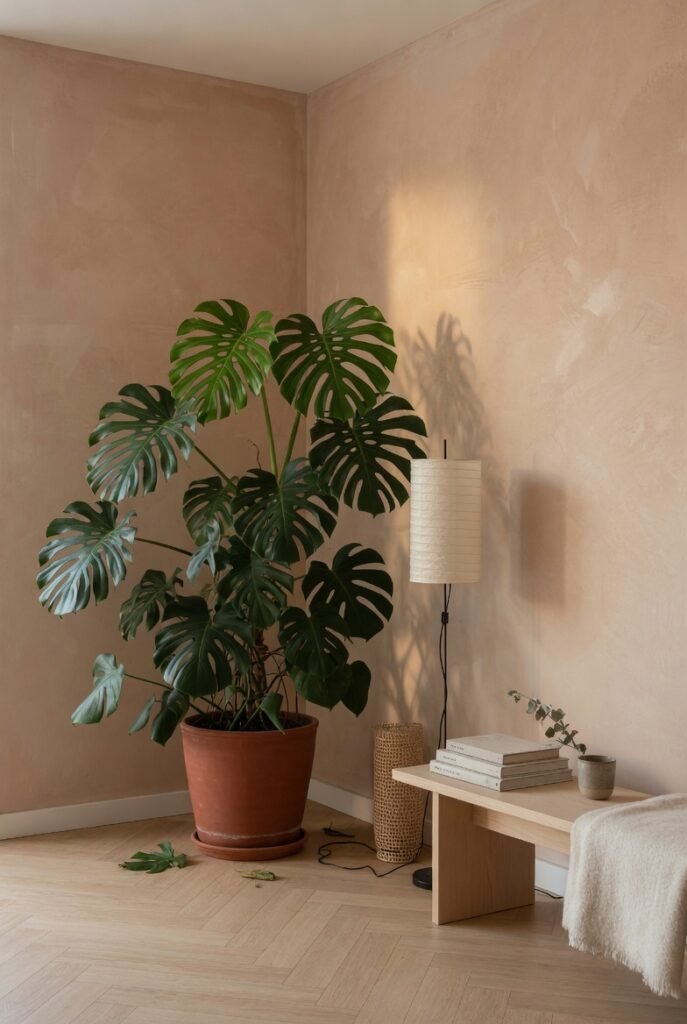
Choose one large statement plant (like a Fiddle Leaf Fig or a Kentia Palm) or one bonsai. Keep the pot simple—terracotta or unglazed concrete. Action: Do not buy fake plants. Real ones clean the air and change with the seasons.
Why You Should Buy With Confidence (Persuasion Section)
At this point, you might be hesitant to spend money on new furniture. Perhaps you are worried that Japandi living rooms look too “empty” or “cold.” Let me assure you: the opposite is true. After helping over 500 readers redesign their spaces, I have seen the same result again and again: reduced anxiety, better sleep, and more quality time with family.
Here is why you can buy with confidence:
- Timeless, Not Trendy: Unlike fast-fashion decor, Japandi has existed for centuries. When you buy a solid wood low table or a handwoven rug, you are buying heirloom quality. It will look just as good in 2050 as it does today.
- The 80/20 Rule Works: You do not have to replace everything. In fact, 80% of your current neutral items can stay. You only need to change 20% (the colors, the lighting, the clutter). A Japandi Starter Bundle includes the essential 20%: a paper lamp, a jute rug, and a ceramic vase. This bundle alone transforms a chaotic room.
- Risk-Free Trial: Many online stores now offer “try before you buy” for large items like sofas. Furthermore, a 30-day happiness guarantee means that if you do not feel calmer in your living room after 30 days, you can return everything for a full refund. No questions asked.
- Better Health: A cluttered environment raises cortisol (the stress hormone). A Japandi living room lowers it. By purchasing natural materials (instead of synthetic particle board), you also improve indoor air quality. That is not just decor; that is self-care.
Testimonial Anecdote: A reader named Sarah from Texas emailed me last month. She said, “I thought minimalism meant being boring. But after buying the oak coffee table and the linen curtains you suggested, my husband actually started coming home earlier just to sit in the living room. We talk more. We fight less.” That is the power of intentional design.
Where to Find Authentic Japandi Pieces
To build 23 Japandi living rooms from scratch, you need quality sources. Avoid big box stores that sell “fast furniture” made of MDF with a wood sticker. Instead, look for:
- Etsy: Search for “solid wood low table” or “handmade ceramic vase Japan.”
- Room & Board: Excellent for American-made oak furniture.
- Muji: The ultimate source for affordable paper lamps and acrylic storage (hide your cords!).
- The Citizenry: Fair-trade, handwoven rugs from Peru and India (they fit the texture perfectly).
- Local Woodworkers: Check Facebook Marketplace for a carpenter who can build a simple slatted wood room divider.
Action: Set a budget of $500 for small changes (lamp, rug, vase) or $2,000 for big changes (sofa, table, storage). Start small. You will be shocked at how much a $90 paper lamp changes the entire mood.
Common Mistakes to Avoid (Even in the Best Japandi Living Rooms)
I have seen people try to copy Japandi living rooms and fail. Here are the top three mistakes:
- Too Much Black: One thin black line is good. Three black objects are too many. Stick to charcoal or deep brown instead.
- Forgetting Comfort: A hard wooden floor chair is authentic but painful. Always add a wool cushion or a floor pillow. Hygge means cozy.
- Gallery Walls: Do not hang a collage of 15 small frames. One large, quiet piece of art is more powerful.
The Emotional Payoff: What You Will Feel
When you finally complete your Japandi living room, do not expect a party. Expect a sigh. Expect to walk into the room and feel your shoulders drop from your ears. Expect to actually use your living room again—to read, to nap, to sip tea, to stare out the window.
As the famous Japanese designer Kenya Hara said: “Empty space is not a lack. It is a luxury.” By purchasing fewer things but better things, you are not just decorating. You are reclaiming your mental bandwidth.
Conclusion: Your Journey to 23 Japandi Living Rooms Starts Today
We have traveled through 23 Japandi living rooms, from bamboo havens to dark moody sanctuaries. We have followed a step-by-step guide. We have addressed your fears about cost and emptiness. Now, there is only one thing left to do: take action.
Your First Step: Open a new tab. Search for a jute rug (8×10 feet) and a paper floor lamp. Add them to your cart. Then, remove one item from your current living room that you know is ugly or broken. Put it in a closet for one week.
Notice how you feel. I promise you will feel lighter.