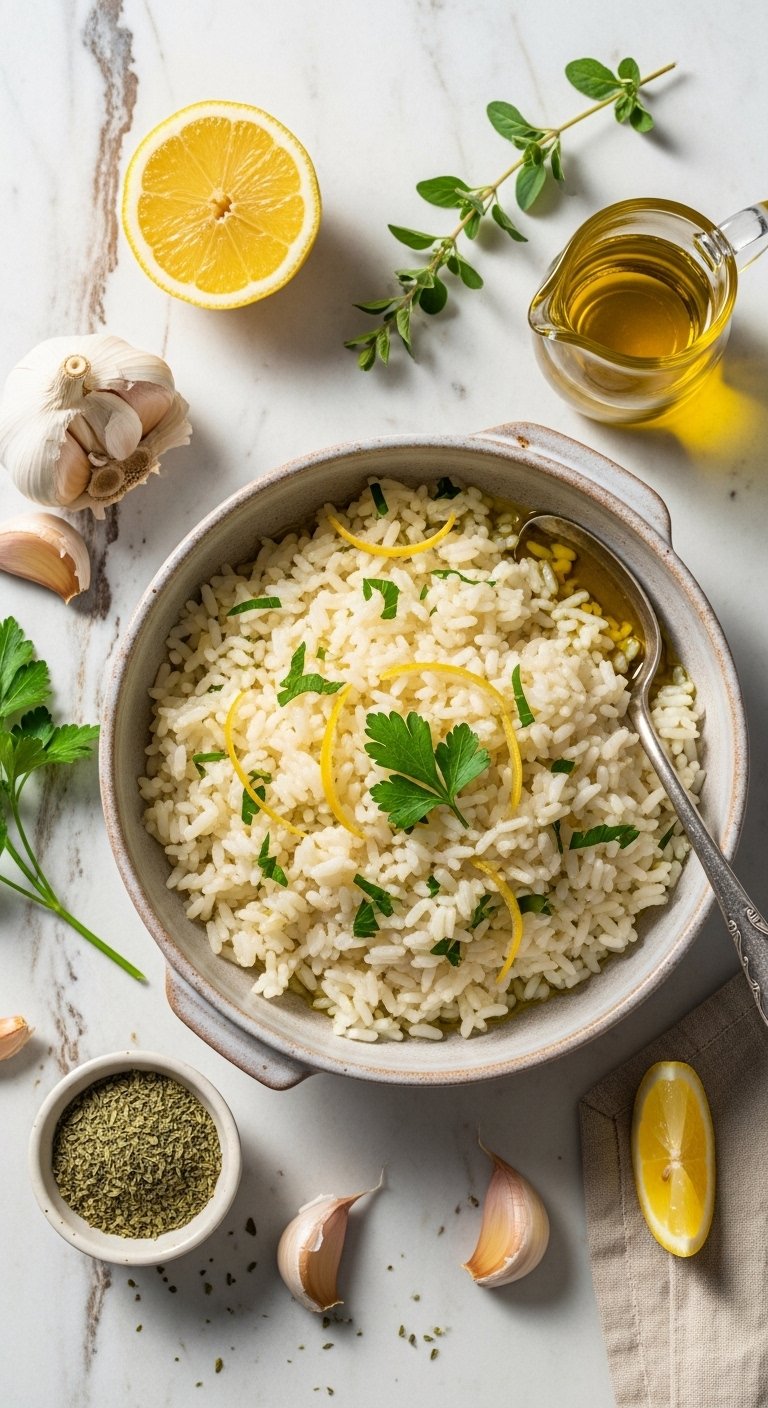
Let me take you on a short trip. Imagine you are sitting at a small taverna in the Plaka district of Athens. The sun is setting behind the Acropolis, casting a golden glow on the whitewashed walls. A plate is placed in front of you. Next to the gyro or the grilled octopus is a mound of rice. But this isn’t the sticky, clumpy, flavorless rice you might make on a busy Tuesday night. This rice is glistening. It smells like lemons and thyme. It has a bite to it. It tastes like Greece.
I remember the first time I tried to replicate that dish at home. I was 22, broke, and desperately missing my semester abroad. I boiled some long-grain rice, squeezed a lemon over it, and called it a day. The result was a watery, sour disaster. My Greek friend, Eleni, looked at my pot, shook her head, and said, “Agapi mou (my love), you are missing the soul.”
The soul she was talking about is the technique behind an authentic Greek rice recipe. It is not just a side dish; it is a vehicle for flavor, a sponge for broth, and a cornerstone of the Mediterranean diet. Over the next few thousand words, I am going to teach you how to turn a bag of dry grains into a show‑stopping centerpiece. By the end, you will not only know how to cook it, but you will understand why every single ingredient matters—convincing you to invest in the quality tools and products that make this dish sing.
Why This Greek Rice Recipe is Different (The “Keto-Fail” Factor)
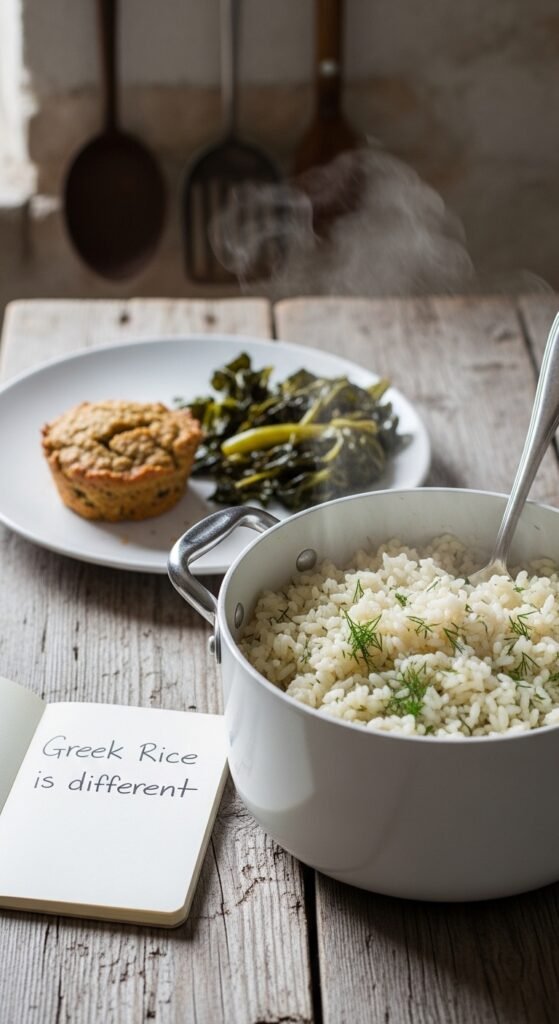
Before we get our hands dirty with garlic and olive oil, we need to talk about texture. In the culinary world, there is a massive divide between Greek rice and, say, Chinese fried rice or Indian biryani.
Greek rice is not supposed to be sticky (like sushi rice). It is also not supposed to be dry and separate like pilaf. Instead, we are aiming for spongy and fluffy with a slight creamy edge—without using cream.
How do we achieve this? The secret lies in starch activation and a technique called tηγάνισμα (tiganisma), or sautéing. Most people fail at a Greek rice recipe because they just boil the rice. You wouldn’t boil a steak, so why boil your grains?
Here is the golden rule we will explore today: Toast first, simmer second, rest third.
The Non‑Negotiable Ingredients: Stocking Your Pantry
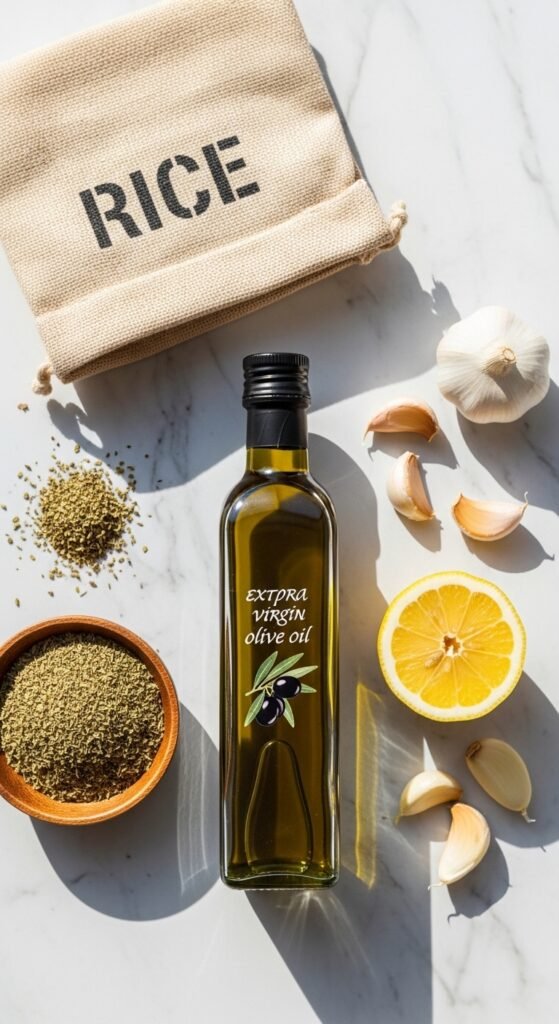
To cook like a Greek grandmother (a Yiayia), you don’t need a magic wand. You need high‑quality ingredients. Let’s break down the shopping list. Bold text indicates the key terms that will elevate your search for authenticity.
Also Read: The Ultimate Chicken Rice Bowl Recipe: A Bowl of Comfort, Flavor, and Simplicity
1. The Rice Itself: Greek Rice Varieties
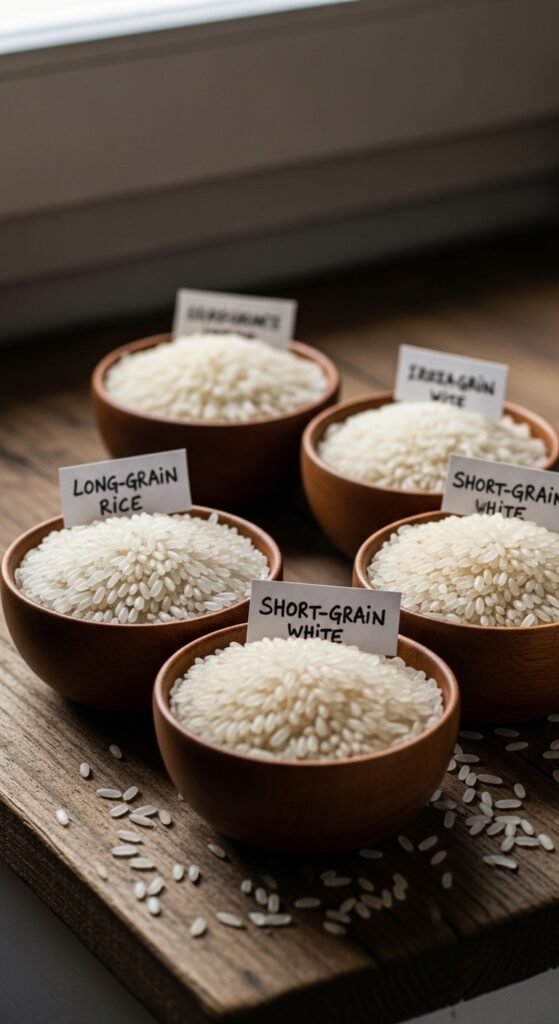
Not all rice is created equal. If you use American long‑grain, you will get a dry result. If you use Japanese short‑grain, you will get paste.
- Best Choice: Carolina Rice or Arborio rice. While Arborio is technically Italian, it is widely used in Greek kitchens for Spanakorizo (spinach rice) because of its creamy starch.
- The Authentic Pick: Greek Carolina Rice. It has a shorter grain than American Carolina, allowing it to absorb more liquid without bursting.
- Buying Advice: Look for imported brands labeled “Kλασικό Ρύζι” (Classic Rice). When you buy a bag of authentic Greek rice, you are paying for a specific starch content that holds up to lemon juice without turning to mush.
2. The Fat: Greek Olive Oil
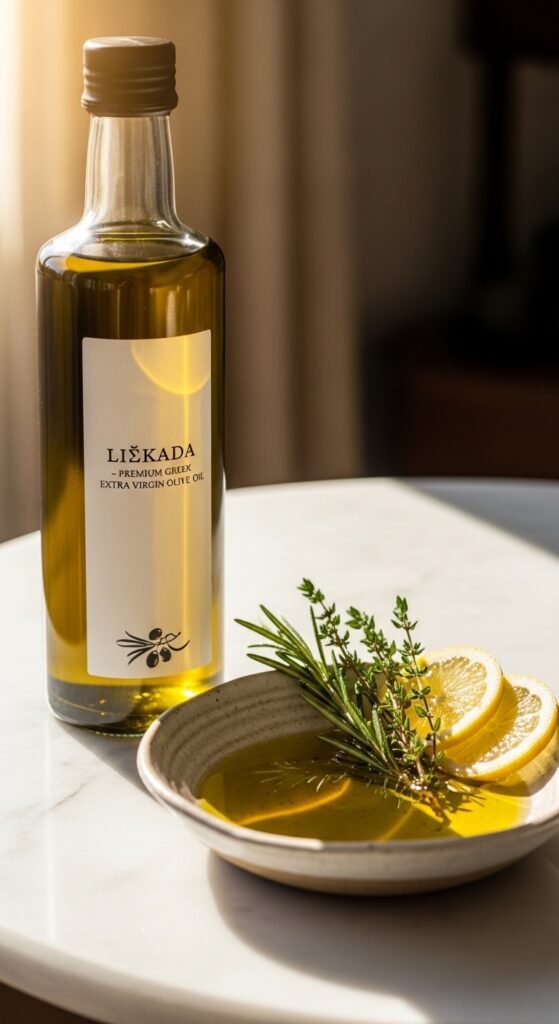
This is the most critical purchase. Do not use vegetable oil. Do not use butter (save that for the French).
- Why: Greek olive oil (especially from Crete or Kalamata) has a peppery finish and a high smoke point. When you toast rice in this oil, the grains absorb the fruity notes of the olive.
- The Anecdote: Eleni once threw away a whole pot of rice I made because I used “light” olive oil. She said, “You are cooking a ghost. Use the oil that screams.” She was right. The extra virgin olive oil (EVOO) is the backbone of any easy Greek rice recipe.
3. The Acid: Fresh Lemon
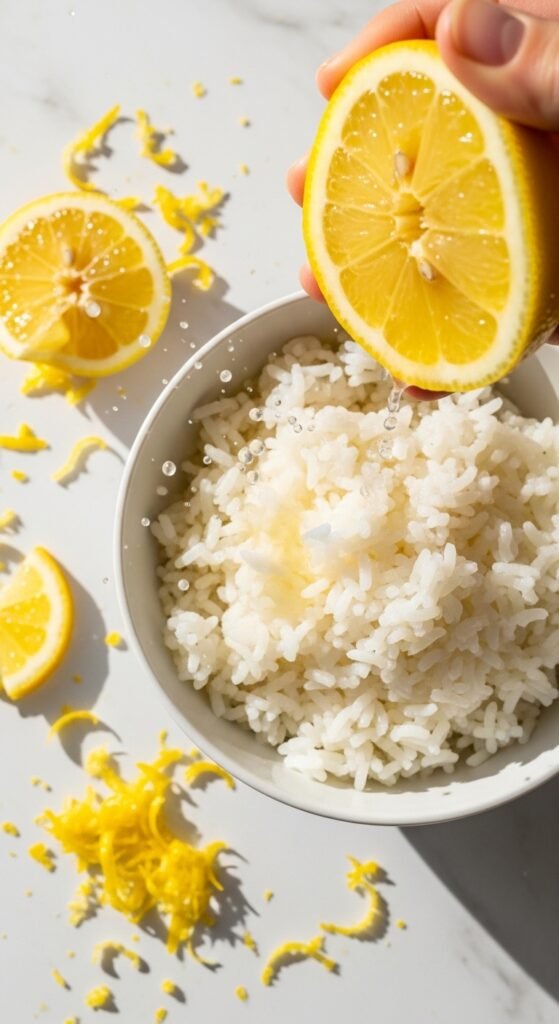
Bottled lemon juice is the enemy of this dish. Greek lemon rice requires fresh zest and juice. The oils in the lemon peel bind with the fat in the olive oil to create an emulsion that coats every grain.
4. The Broth: Vegetable or Chicken Broth
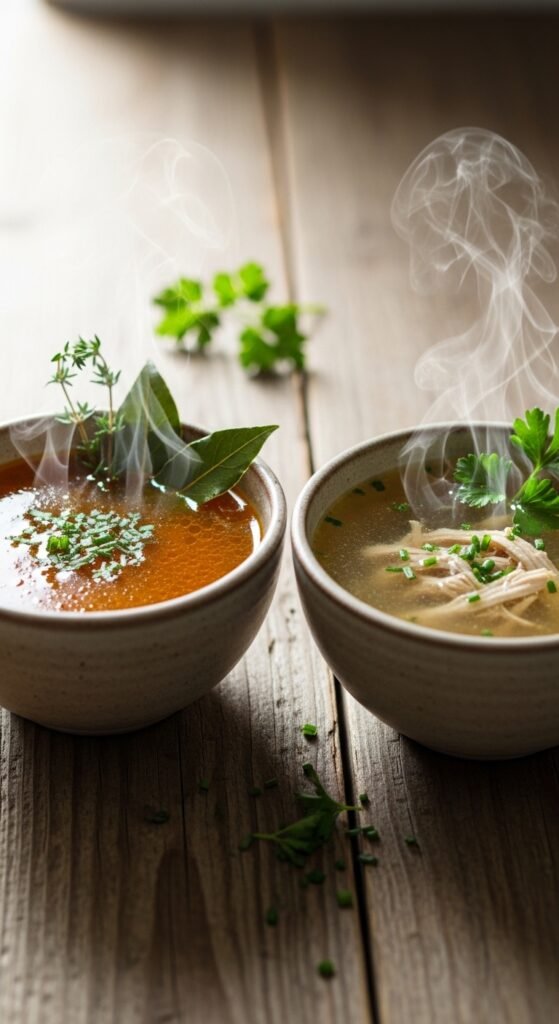
Water is boring. If you want restaurant‑quality Greek rice, you must use broth. A high‑quality organic chicken broth or a Mediterranean vegetable stock adds depth. If you buy bouillon cubes, opt for low‑sodium so you can control the salt.
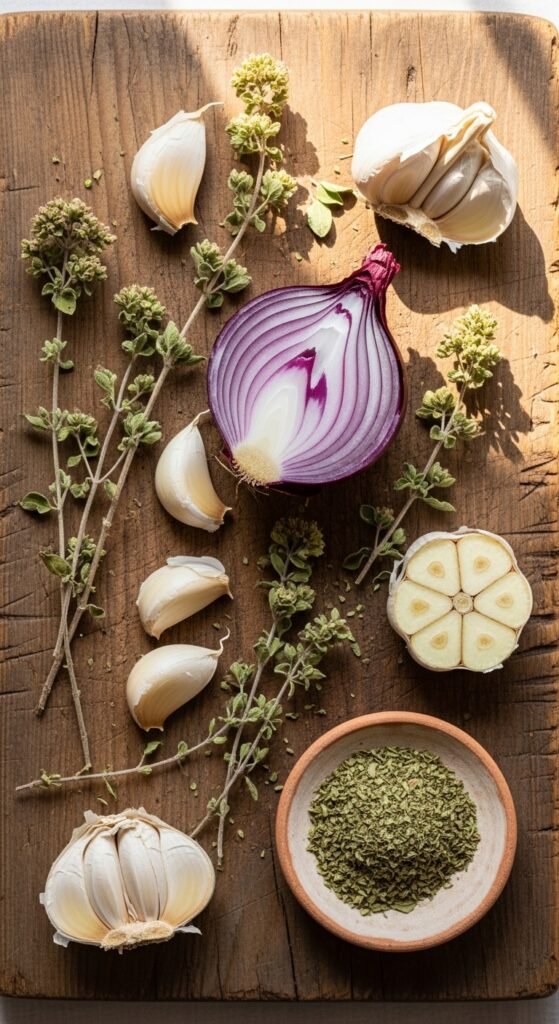
5. The Aromatics: Onion, Garlic, and Dried Oregano
- Onion: Yellow or red? Red is sweeter; yellow is sharper. Use what you have.
- Garlic: Fresh cloves only. Powder is for popcorn.
- Oregano: Greek dried oregano is the secret weapon. It is more aromatic and less bitter than Mexican oregano.
The Equipment: Tools of the Trade
You don’t need a $300 rice cooker. In fact, rice cookers usually fail at Greek rice recipes because they don’t allow for the evaporation needed for that toasted crust.
- A Wide Pot or Sauté Pan: A heavy‑bottomed Dutch oven is ideal. A wide surface area ensures the rice toasts evenly.
- A Wooden Spoon: Metal scrapes the starch and breaks the grains.
- A Tight‑Fitting Lid: This traps the steam for the final rest.
- A Fine‑Mesh Strainer: For rinsing (yes, we do rinse—but only a little).
Step‑by‑Step Guide: The Perfect Greek Rice Recipe
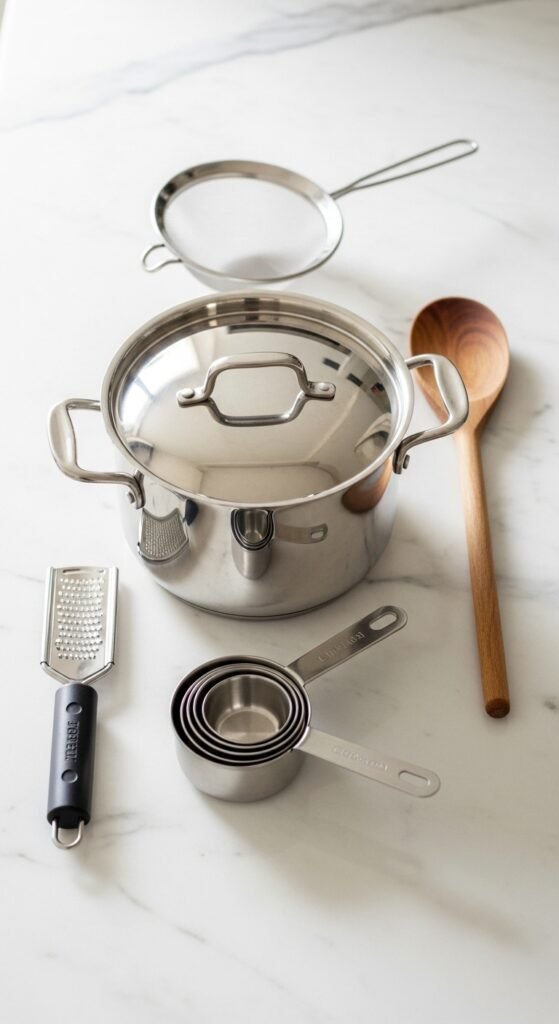
Let’s get cooking. This recipe serves 4 as a side, or 2 as a main (add some feta and olives). Total time: 25 minutes.
Prep Time: 5 Minutes
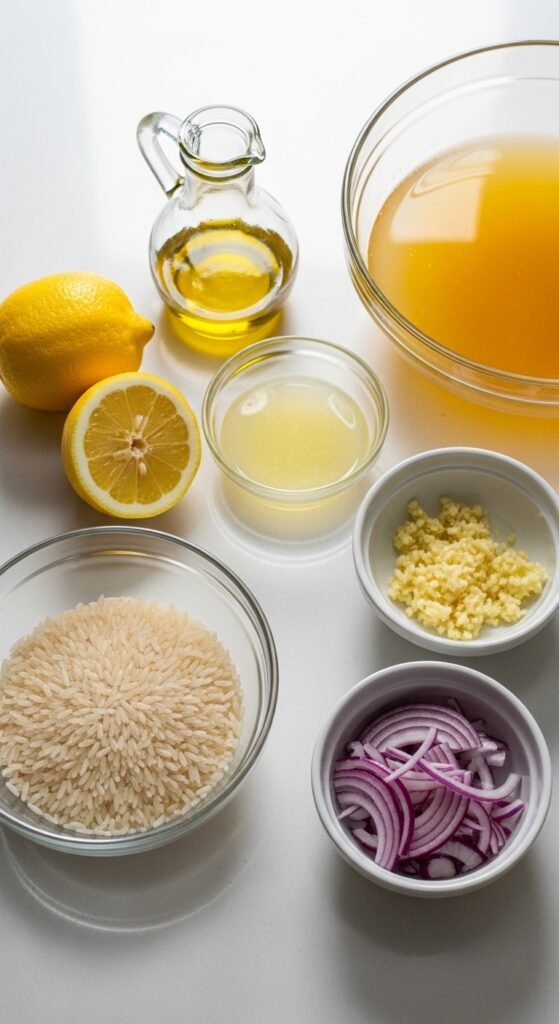
- Ingredient 1: 1 ½ cups Greek rice (Carolina or Arborio).
- Ingredient 2: 2 ¼ cups hot chicken broth (The ratio is 1:1.5, rice to liquid).
- Ingredient 3: ¼ cup Greek olive oil (Don’t be shy).
- Ingredient 4: 1 medium yellow onion (finely diced).
- Ingredient 5: 3 cloves garlic (minced).
- Ingredient 6: 1 lemon (zest and juice).
- Ingredient 7: 1 tbsp dried Greek oregano.
- Ingredient 8: Salt and pepper to taste.
Step 1: The Rinse Debate (A Partial Rinse)
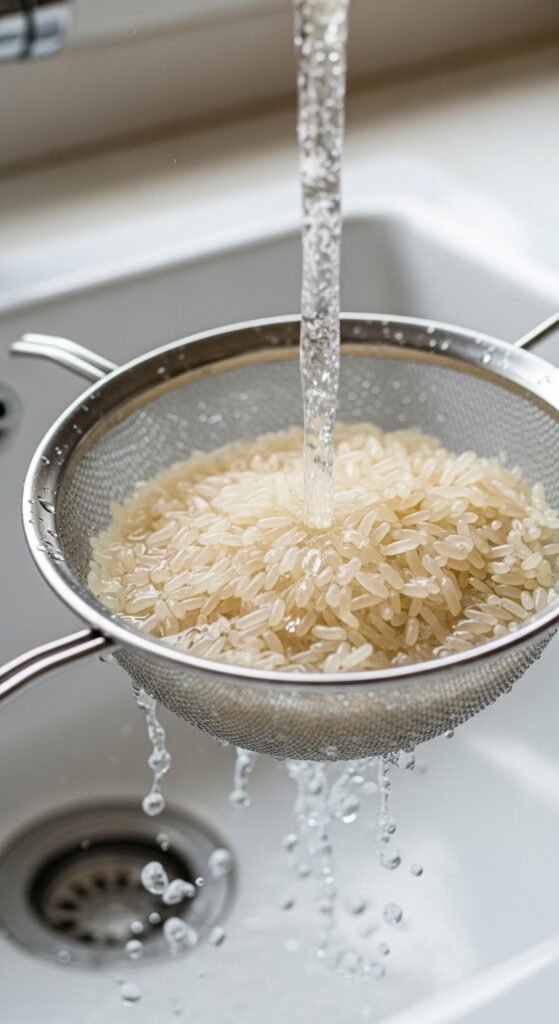
Most cooking tutorials tell you to rinse rice until the water runs clear. Do not do that here.
- The Logic: For a creamy Greek rice recipe, you need some surface starch. Rinse the rice once, maybe twice, but leave the water slightly cloudy. Shake the strainer dry. Set aside.
Step 2: The Sauté (Tiganisma)
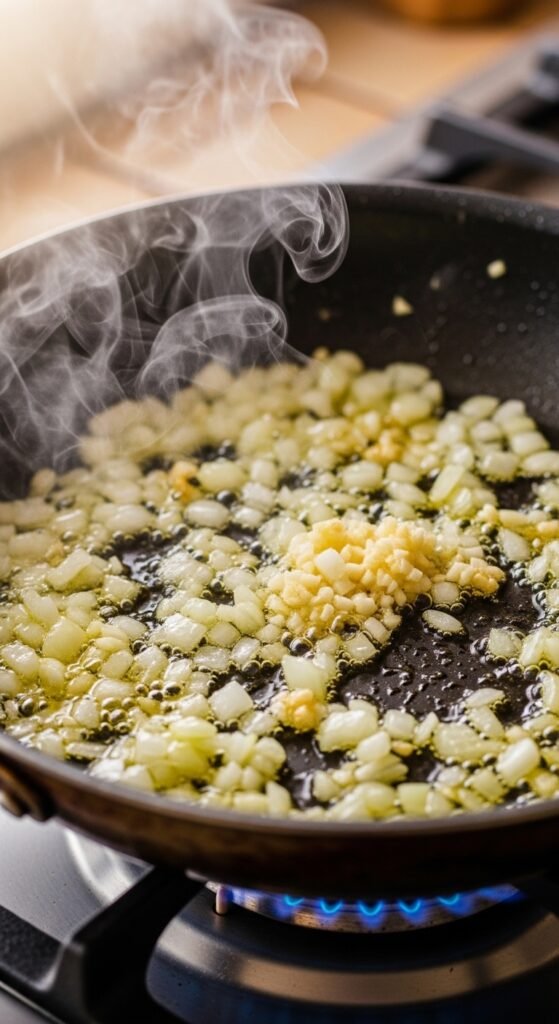
Place your wide pot over medium heat. Add the Greek olive oil. Swirl it around. When the oil shimmers (but does not smoke), add the diced onion.
- Transition: Meanwhile, sprinkle a pinch of salt on the onions to draw out moisture.
Cook the onions for 3‑4 minutes until they are translucent, not brown. Brown = bitter. Translucent = sweet.
- Next, add the minced garlic and the dried oregano. Stir for 30 seconds until it smells like a Greek garden.
Step 3: Toasting the Greek Rice
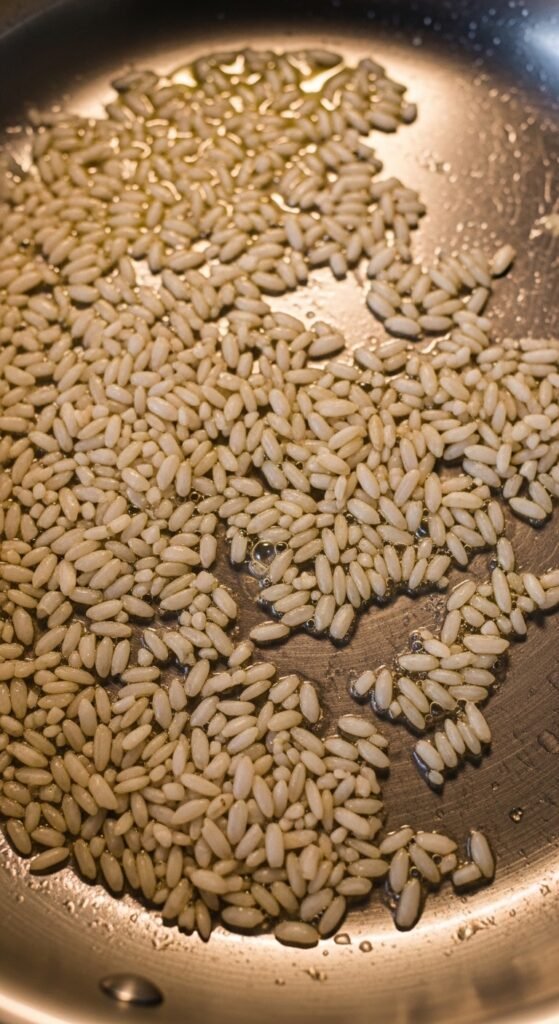
This is the make‑or‑break moment.
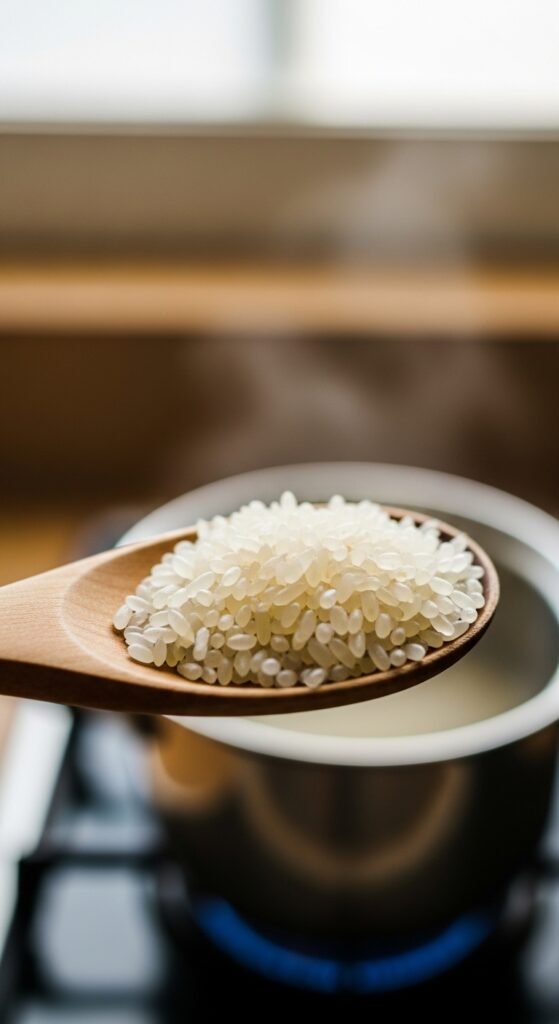
Add your partially rinsed rice to the pot. Stir continuously with the wooden spoon.
- Visual Cue: You will hear a slight crackling sound. The rice grains will go from translucent to opaque white, then to a very pale golden color.
- Time: About 2‑3 minutes.
- Why this works: Toasting the rice in Greek olive oil creates a barrier. This prevents the grains from absorbing liquid too quickly, ensuring they stay al dente rather than mushy.
Step 4: The Deglaze (Lemon and Zest)
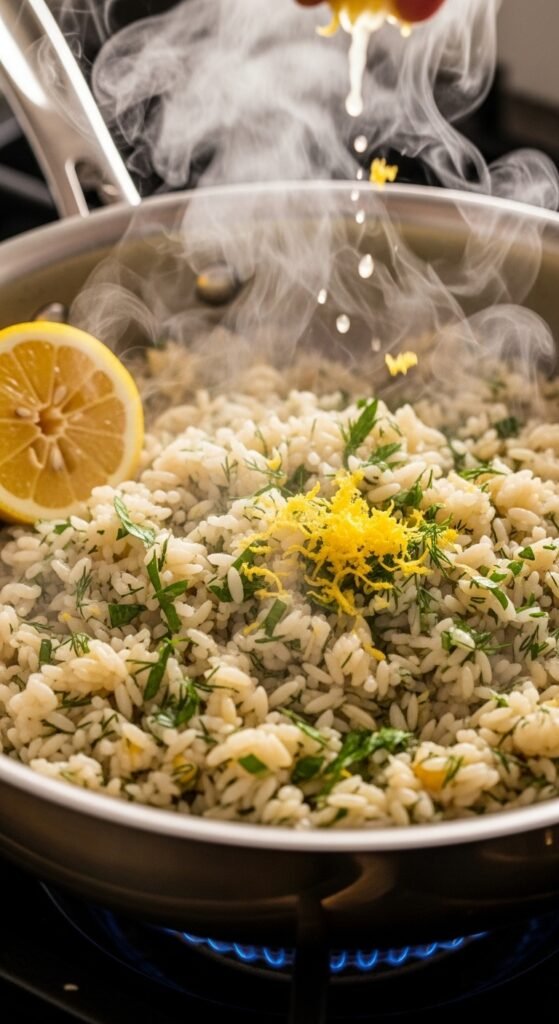
Turn the heat down to low.
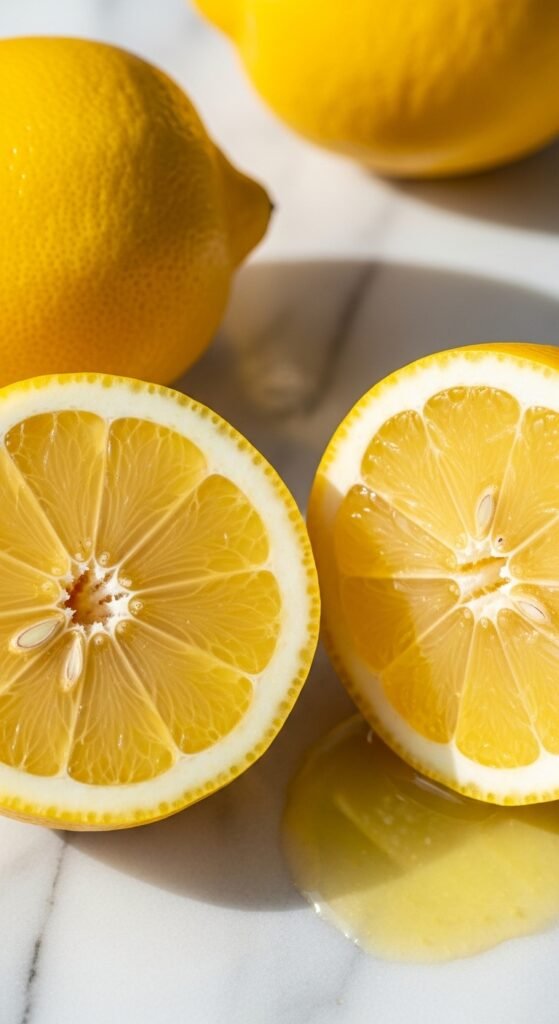
Add the zest of one lemon directly to the hot rice. Stir. The heat will release the essential oils immediately.
- Consequently, pour in the juice of one lemon. Hiss! That sound is flavor.
Stir quickly. The acid will lift the brown bits (the fond) off the bottom of the pan. This is pure flavor.
Step 5: The Simmer
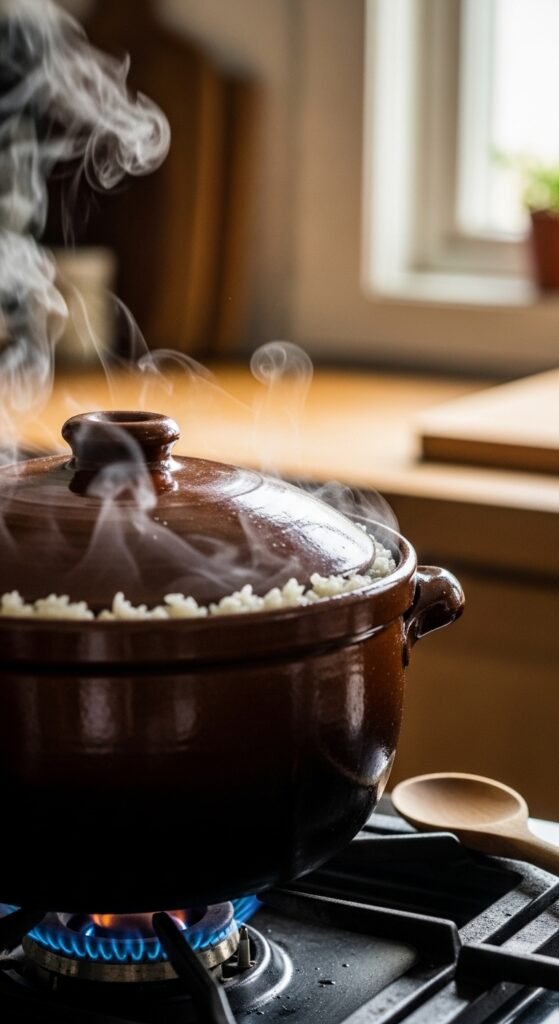
Pour in your 2 ¼ cups of hot chicken broth.
- Warning: If your broth is cold, the rice will seize up. Always use hot liquid.
Turn the heat up to high until the broth bubbles vigorously. Stir one final time to ensure the rice isn’t stuck to the bottom.
- Then, put the lid on tight.
- Reduce the heat to the lowest possible setting (a low simmer).
Step 6: The Clock
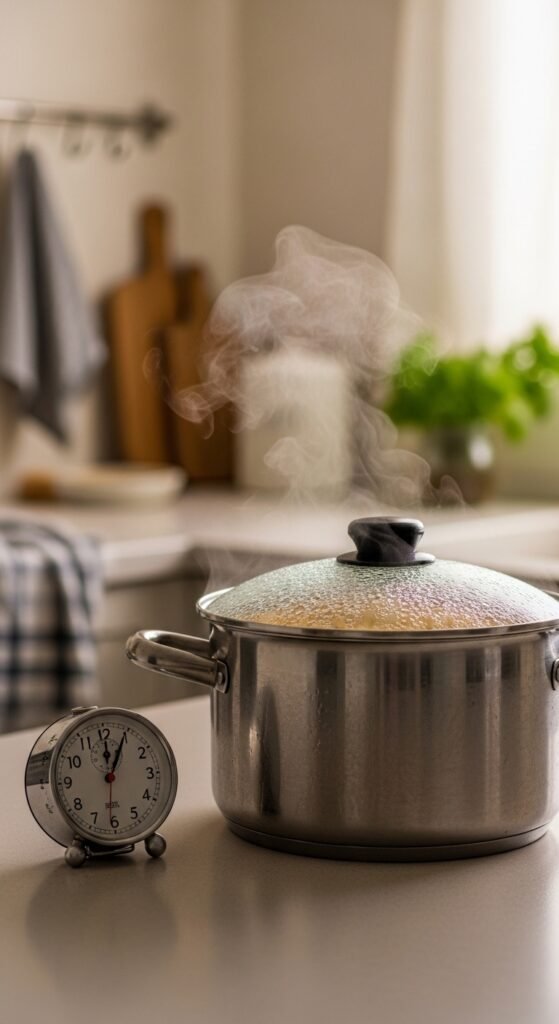
Set a timer for 15 minutes. Do not lift the lid. I repeat: Do not lift the lid.
- Why? Every time you lift the lid, steam escapes. Steam is energy. Without steam, your Greek rice will be undercooked.
Step 7: The Rest (Off Heat)
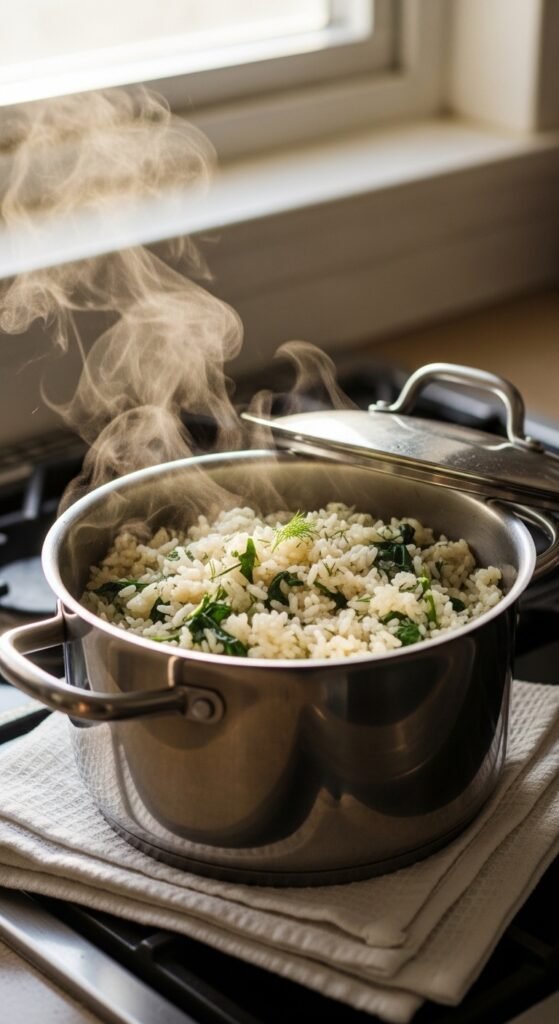
When the timer goes off, turn off the stove. Leave the pot on the burner. Do not move it.
Let it rest, covered, for 5‑10 minutes.
- Furthermore, during this rest, the remaining steam redistributes. The top layer finishes cooking without direct heat. This resting phase is non‑negotiable.
Step 8: Fluff and Serve
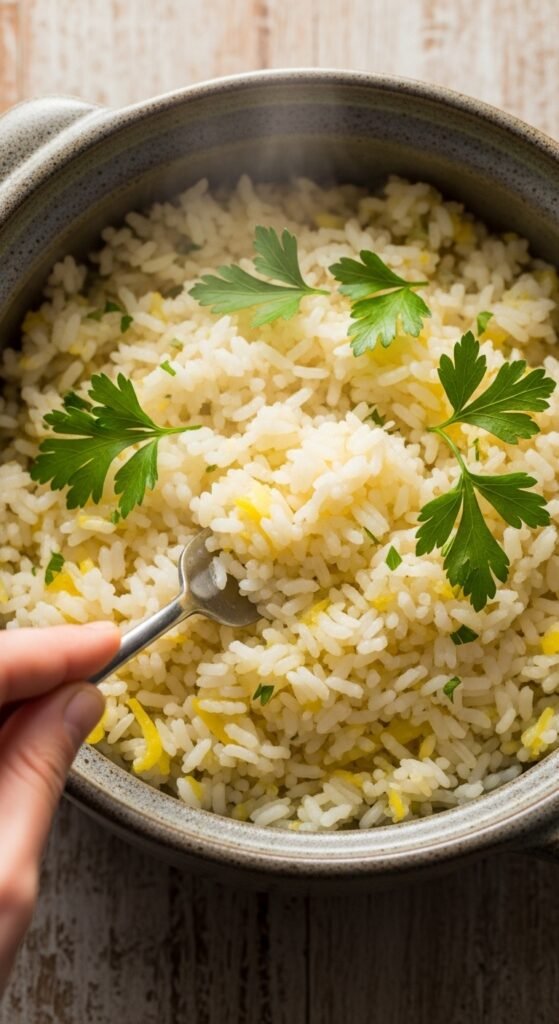
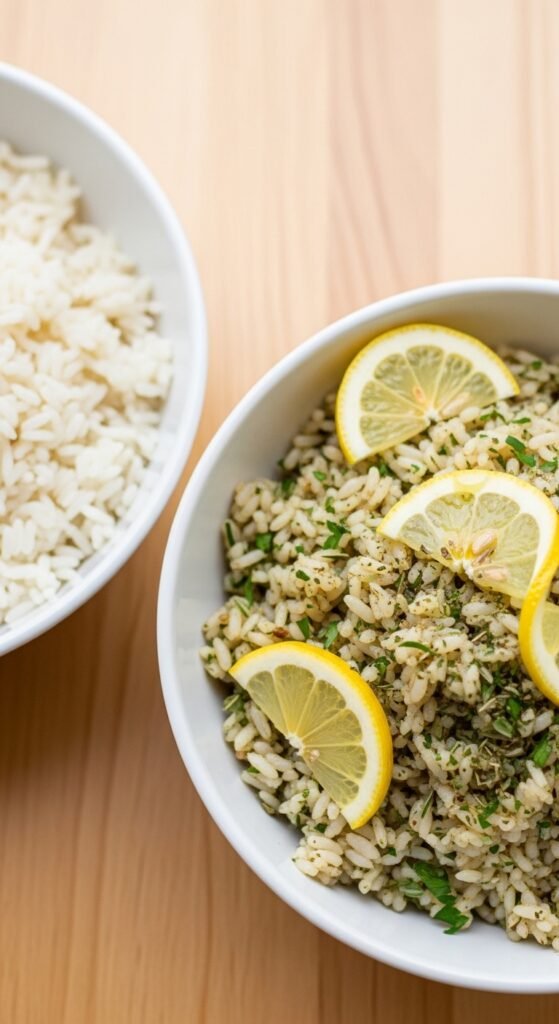
Remove the lid. Take a fork (not a spoon—a spoon mashes it) and gently fluff the rice.
- The Result: It should be fluffy, separate, but with a slight creamy sheen. Taste it. Add a final crack of black pepper and a drizzle of raw Greek olive oil on top for serving.
Variations of the Traditional Greek Rice Recipe
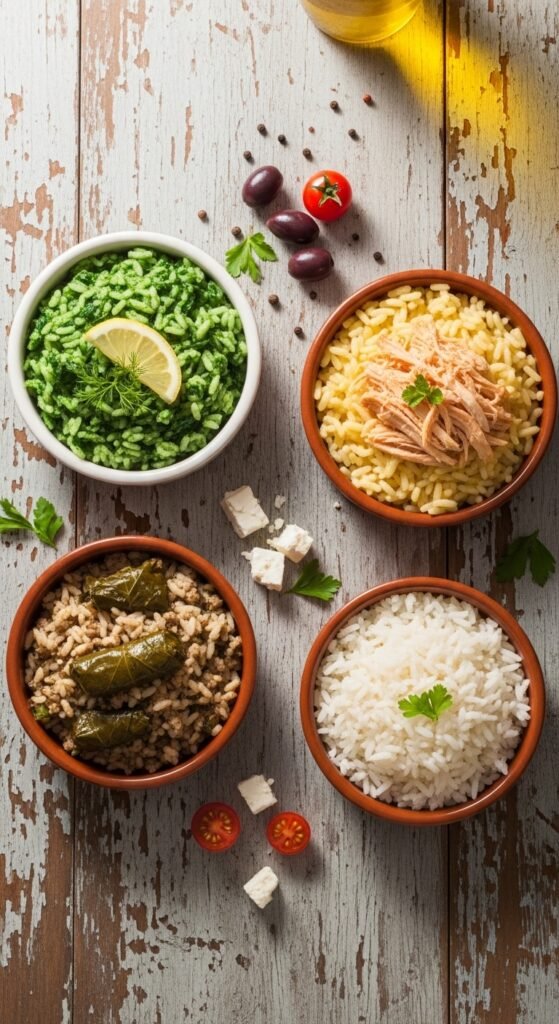
Once you master the base, you can walk through the entire Greek culinary map.
1. Spanakorizo (Spinach Rice)
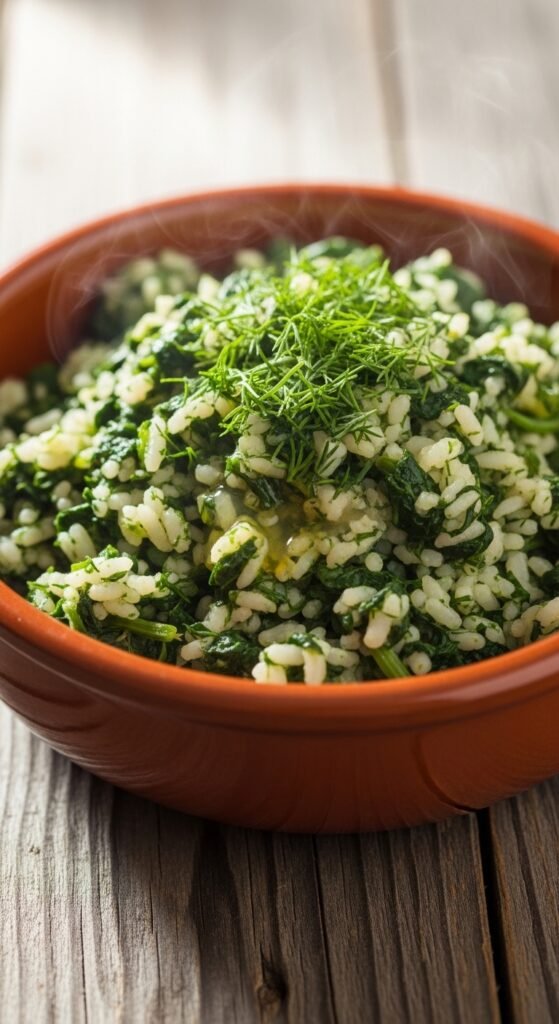
This is a vegetarian main dish, not a side.
- How to modify: After toasting the rice, add 1 lb of fresh chopped spinach (or frozen, thawed and squeezed). Cook until wilted. Then add the broth. The spinach releases water, so reduce your broth by ¼ cup. Finish with crumbled feta cheese on top.
2. Greek Lemon Rice with Chicken (Avgolemono Soup Base)
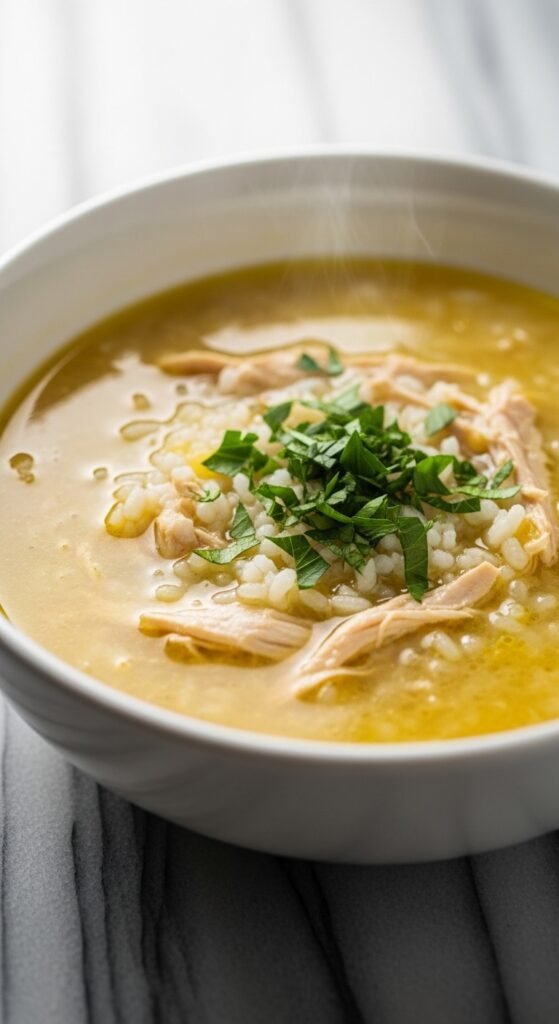
- How to modify: Use 1 cup rice to 4 cups broth. Cook until very soft. Whisk 2 eggs with the juice of 2 lemons. Slowly ladle hot broth into the egg mixture to temper it, then pour back into the pot. This creates a creamy, tangy soup. This is the ultimate comfort Greek rice recipe.
3. Giouvetsi (Orzo Rice)

- How to modify: Replace 50% of the rice with Greek orzo (kritharaki). Toast the orzo and rice together. Use beef broth instead of chicken. This is the traditional companion for lamb.
4. Dolmades Filling (Stuffed Grape Leaves)
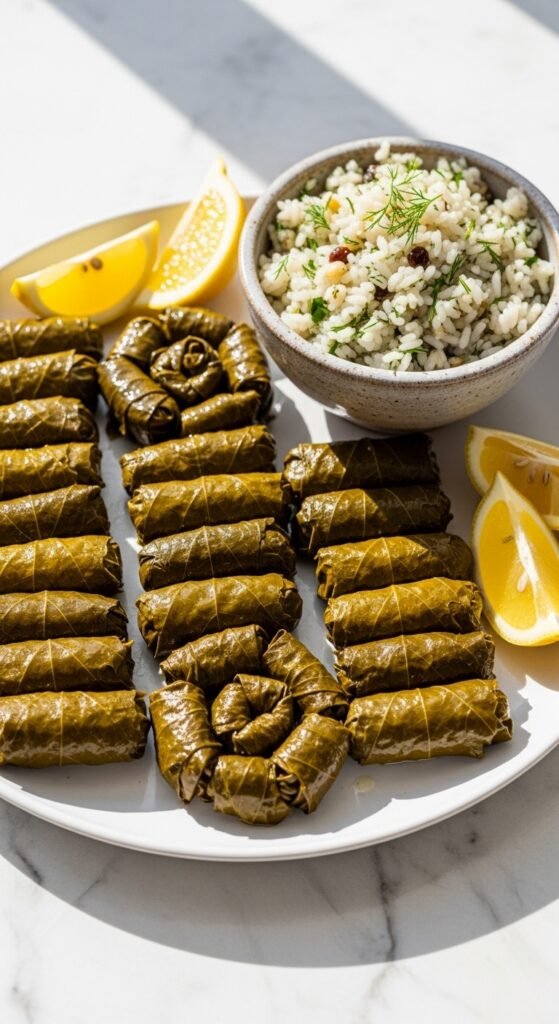
- How to modify: Cook the rice only halfway (use less broth, cook for 8 minutes only). The rice will finish cooking inside the grape leaf. Add currants, pine nuts, and fresh dill to the raw toasted mixture.
Troubleshooting: Why Did My Greek Rice Fail?
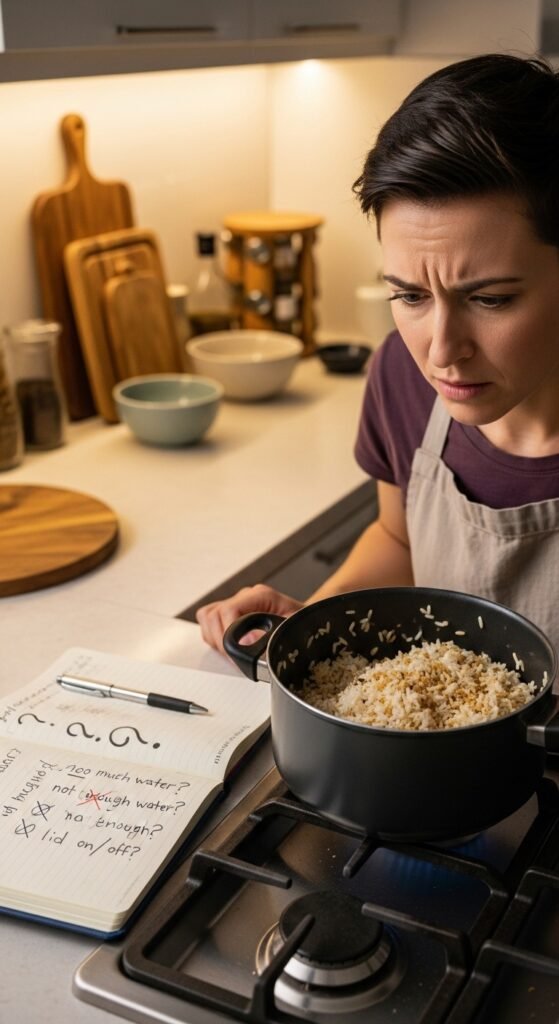
Let’s be honest. Even Yiayia burns dinner sometimes. If your rice didn’t turn out perfect, here is the diagnosis.
Problem 1: “My rice is mushy and sticky.”
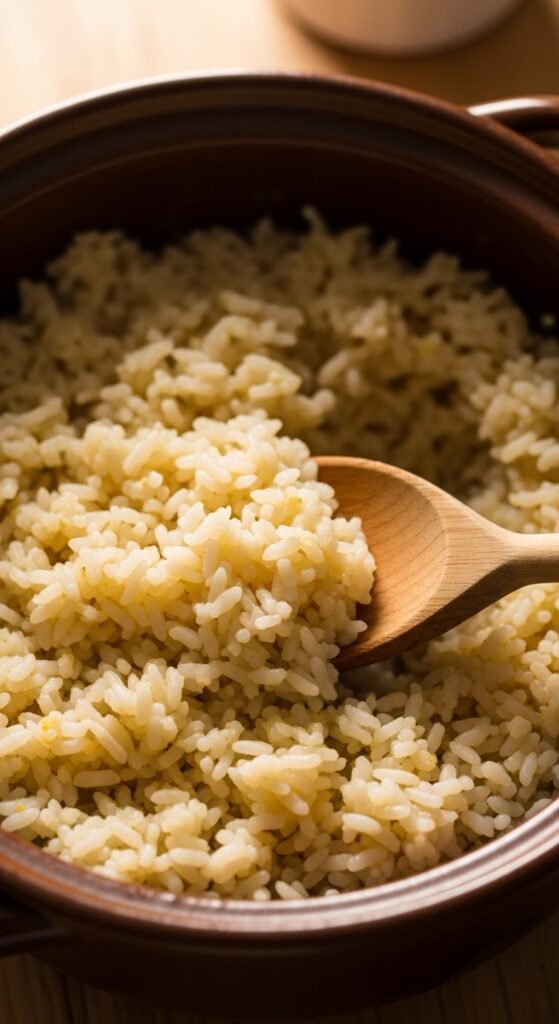
- Cause: Too much water, or you stirred it too much after the simmer started.
- Solution: Next time, reduce liquid by 2 tablespoons. Remember, Greek rice should hold its shape. Also, never stir after you put the lid on!
Problem 2: “My rice is hard and crunchy.”
- Cause: The heat was too high, and the liquid evaporated too fast.
- Solution: Your simmer was probably a boil. Turn the heat to low or “2 out of 10.” Alternatively, you lifted the lid to peek, letting the steam out.
Problem 3: “It tastes bland.”
- Cause: You used water instead of broth, or you used cheap olive oil.
- Solution: Greek olive oil is a seasoning, not just a fat. If you use a neutral oil, you lose the peppery, grassy notes that define the dish.
Problem 4: “The lemon is bitter.”
- Cause: You added the zest after the liquid, or you burned the garlic.
- Solution: Always zest before liquid so the alcohol in the zest cooks off. Also, if garlic turns brown, throw it away and start over. Brown garlic = bitter lemon.
The Health Benefits of a Mediterranean Rice Recipe
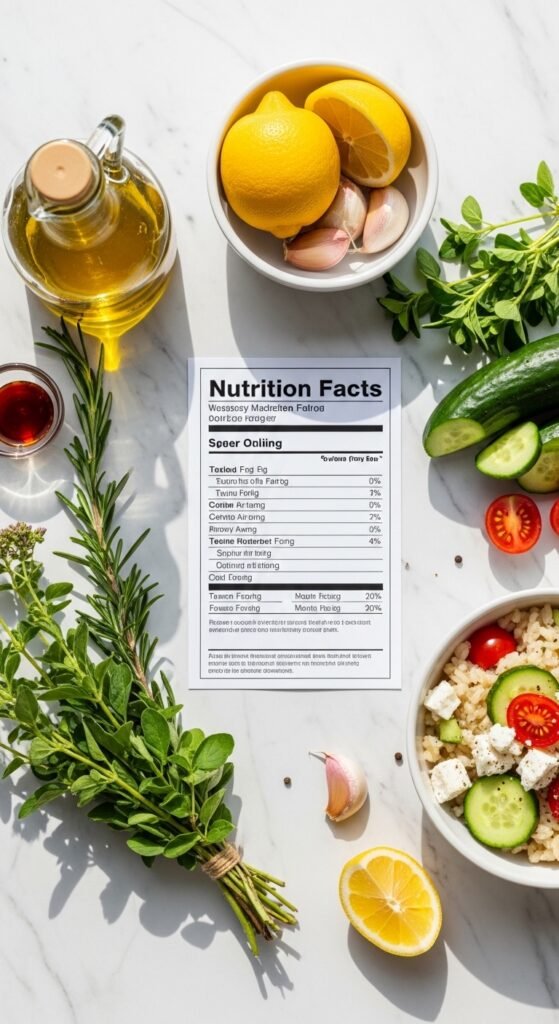
Aside from tasting like a vacation, this healthy Greek rice recipe is a powerhouse for your body.
- Heart Health: Greek olive oil is rich in monounsaturated fats, which lower bad cholesterol.
- Gut Health: Rice is a prebiotic. When it cools slightly, it forms resistant starch, which feeds your good gut bacteria.
- Mental Health: The combination of garlic, onion, and oregano is anti‑inflammatory. Furthermore, the carbohydrates provide tryptophan, which helps produce serotonin (the happy hormone).
If you are on a gluten‑free diet, rejoice! Authentic Greek rice (not orzo) is naturally gluten‑free. It is safe for celiacs, provided your broth is gluten‑free.
Why You Should Buy Premium Ingredients (The Confidence Pitch)
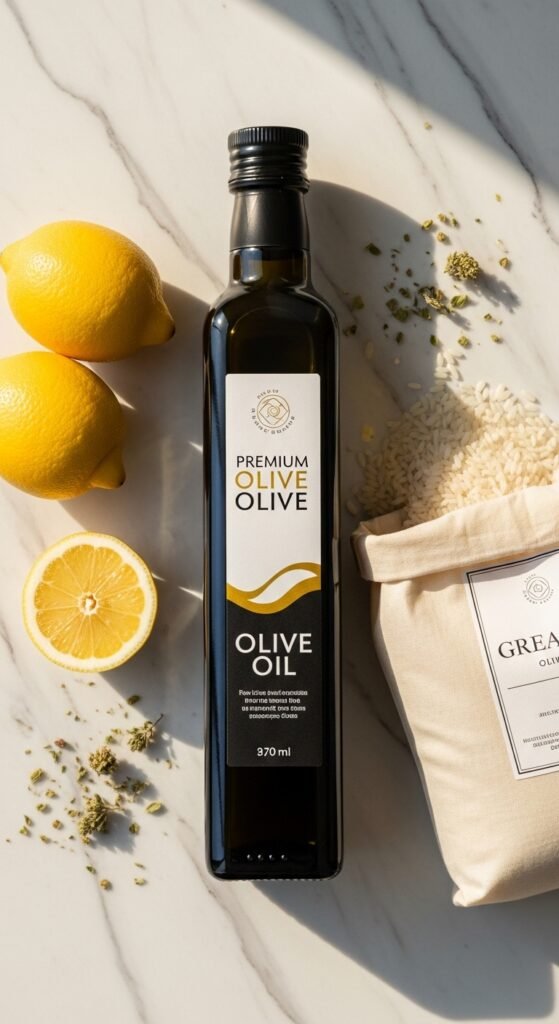
You might look at your grocery list and see that Greek olive oil costs $15 more than the store brand. You might see Greek oregano in a little bag for $6 and wonder if the $1 bottle is the same.
Here is the hard truth from a writer who wasted 10 years of cooking: You cannot fake the sun.
The olives in Greece grow under a specific sun. The soil in the Kalamata region is mineral‑rich. When you buy imported Greek ingredients, you are buying terroir—the taste of a place.
Buying with confidence means:
- Look for PDO labels (Protected Designation of Origin) on your olive oil. If it says “Product of Italy,” it is not Greek rice oil.
- Buy Greek rice in cloth bags, not plastic. Cloth allows the rice to breathe and maintains its moisture content.
- **Invest in a heavy‑bottomed pot. A thin pot creates hot spots. Hot spots burn the Greek rice on the bottom while leaving the top raw.
My promise to you: If you follow the steps above and use the premium Greek rice and Greek olive oil I’ve recommended, you will not be able to eat plain white rice ever again. You will be spoiled. You will become the person who brings the rice dish to the potluck, and everyone will ask, “Who made this?”
Serving Suggestions: What to Eat with This Greek Rice Recipe
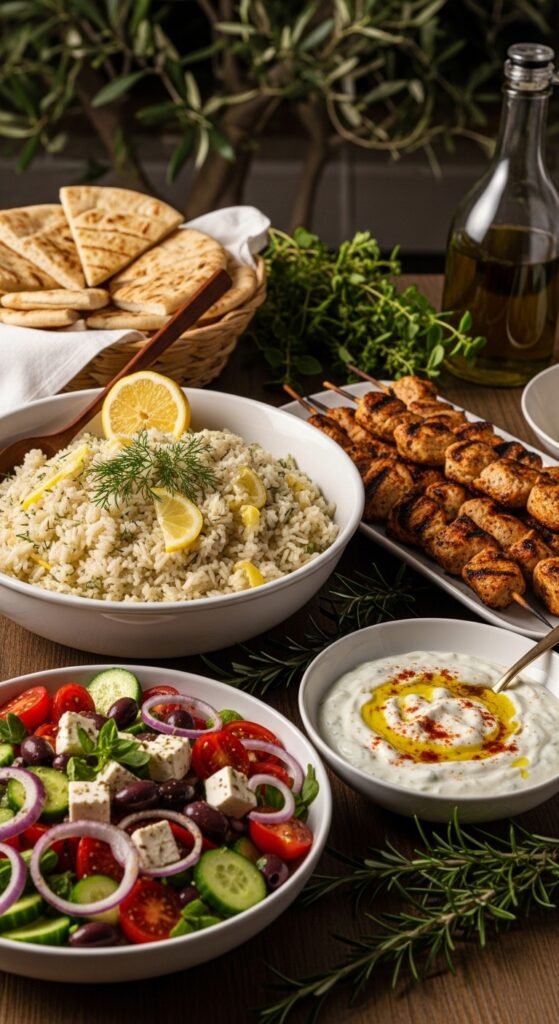
This rice is a chameleon. It pairs with:
- Grilled meats: Lamb chops, chicken souvlaki, pork gyros.
- Seafood: Grilled octopus, baked cod, or shrimp saganaki.
- Vegetarian: Roasted eggplant, Greek salad (horiatiki), or tzatziki.
- Breakfast: Leftover Greek rice fried with an egg on top? Yes. Don’t knock it until you try it.
A Final Anecdote: The Wedding Test

Last summer, my cousin got married. She is a food snob. She hired a chef from Santorini to cater the event. At the buffet, there was a massive pan of Greek lemon rice.
I walked up to the chef and asked him, “What is your secret?”
He winked at me and said, “I burn the bottom a little on purpose.”
He was referring to the krusta—the crispy, golden crust of rice that sticks to the bottom of the pan. In Greece, they fight over this crust. It is the cook’s treat.
- How to get it: When you serve the rice, leave the bottom layer in the pot. Crank the heat to high for 1 minute. Scrape up the crust. Eat it standing in the kitchen. That is happiness.
The Printable Greek Rice Recipe Card (Summary)
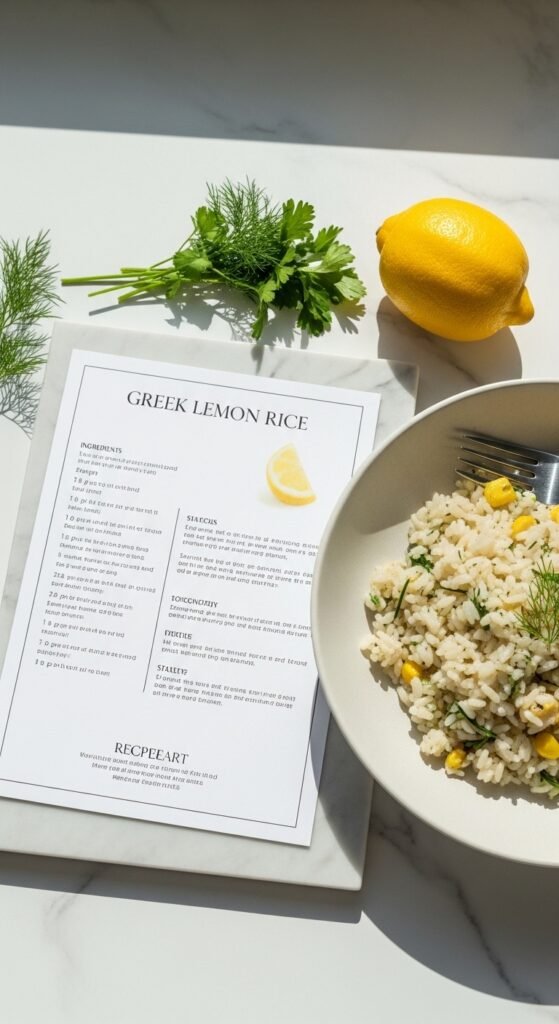
For those who scrolled to the bottom, here is the cheat sheet.
Ingredients:
- 1.5 cups Greek rice (Carolina)
- 2.25 cups hot chicken broth
- 0.25 cup Greek olive oil
- 1 onion, diced
- 3 garlic cloves
- 1 lemon (zest & juice)
- 1 tbsp dried oregano
Instructions:
- Rinse rice once. Set aside.
- Sauté onion in Greek olive oil until soft (3 min).
- Add garlic and oregano (30 sec).
- Add rice, toast until pearly (2 min).
- Add lemon zest and juice. Stir.
- Add hot broth. Boil once.
- Cover, reduce heat to low, simmer 15 min.
- Turn off heat, rest covered 5 min.
- Fluff with fork. Serve.
Conclusion: Your Journey to Greece Starts Tonight
You don’t need a plane ticket to feel the Aegean breeze. You just need a pot, some Greek olive oil, and a willingness to toast your rice properly.
This easy Greek rice recipe is forgiving enough for a beginner but nuanced enough to impress a chef. It is a side dish that demands to be the main event.
So, go ahead. Add that authentic Greek rice to your cart. Buy the good oregano. Squeeze that lemon with confidence. Your kitchen is about to smell like a taverna in Athens. And when you take that first bite—fluffy, tangy, rich, and golden—you will finally understand what Eleni meant about the soul.