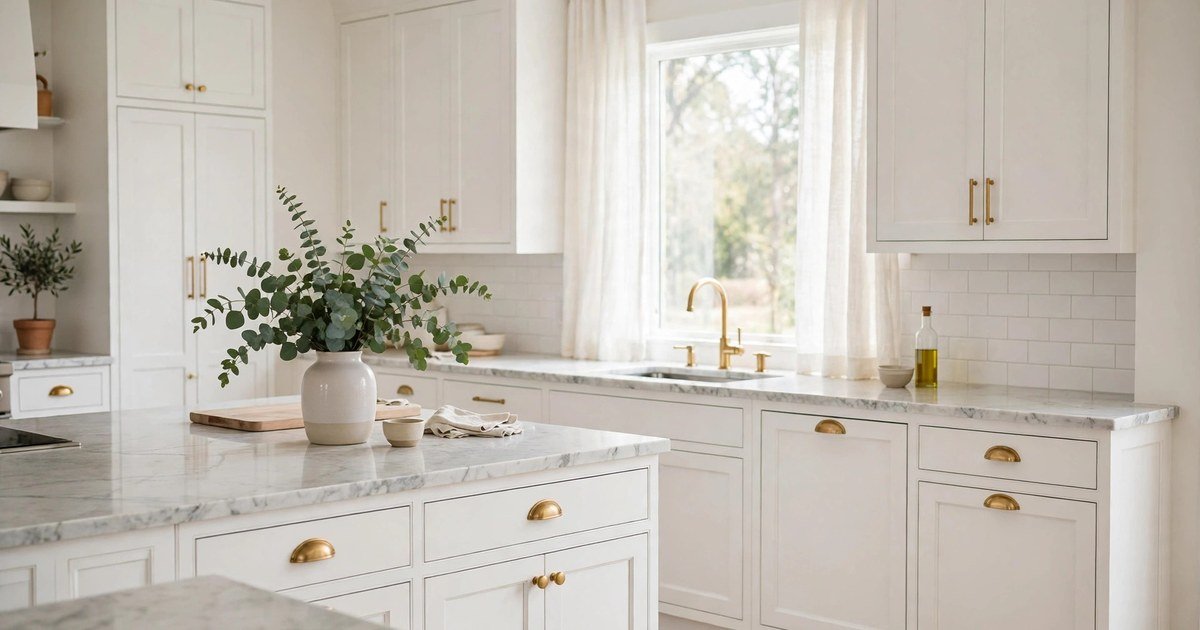
Kitchen cabinets set the tone for the whole kitchen, so a small change to them can make the entire room feel new. They cover more wall space than almost anything else in the room, and their color, shape and hardware shape how the kitchen feels every single day.
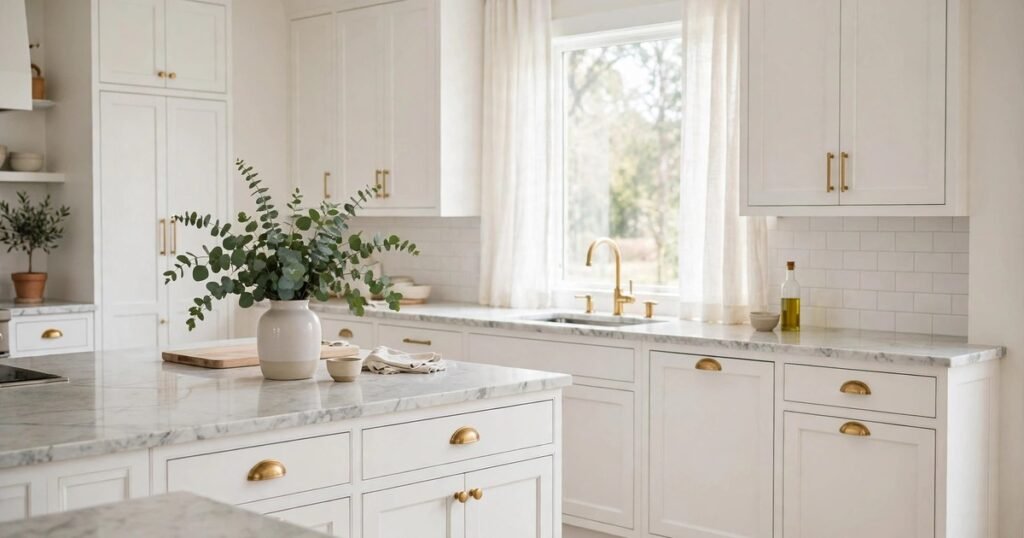
A kitchen does not need a full remodel to feel fresh. New paint, better lighting, or a simple hardware swap can lift tired cabinets without the cost or mess of replacing them. The ideas below range from a weekend project to a bigger refresh, and each one works on its own.
This guide shares ten cabinet ideas that fit real homes and real budgets. If you want a seasonal touch first, these Christmas kitchen decor ideas pair well with any of the looks below. Start with the idea that fits your kitchen best.
Table of Contents
What Makes Kitchen Cabinets Look Great
Great kitchen cabinets balance three things: color, proportion and finish. Light colors open up a small kitchen, while deep colors add warmth and depth to a large one. The classic kitchen cabinet styles include shaker, flat-panel and raised-panel doors, and each one gives the room a different mood.
Proportion matters as much as color. Cabinets that reach toward the ceiling make the room feel taller, while a clear gap between the counter and the upper cabinets keeps the workspace bright and easy to use. A mix of closed storage and a few open shelves keeps the kitchen practical without looking heavy.
Finish is the quiet detail that ties it all together. Matte paint hides fingerprints, satin paint wipes clean easily, and natural wood brings warmth to a cool room. Choose a finish you can live with and clean without worry, and the cabinets will keep looking good for years.
10 Kitchen Cabinets Ideas for a Fresh, Stylish Kitchen
These ten ideas run from quick paint projects to deeper changes. Each one explains what it is, who it suits, how to do it, a pro tip and one mistake to skip.
Paint Them a Soft Sage Green
What it is: Kitchen cabinets painted in a soft sage green, a calm color that feels fresh in daylight and cozy in the evening.
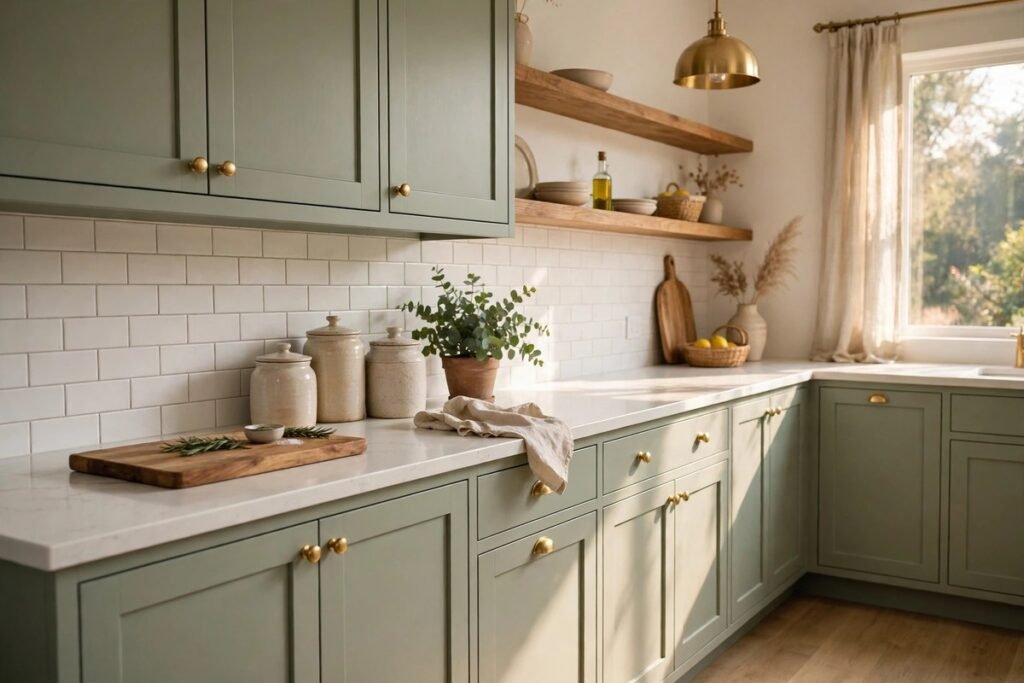
Who it suits: Anyone with plain white or dated wood cabinets who wants color without going bold.
How to do it: Clean and lightly sand the doors, prime them, and apply two thin coats of sage green paint in a satin finish. Choose a sage shade that suits your kitchen’s light, because how color changes a room depends on daylight, lamps and the colors around it.
Pro tip: Test the paint on one door first, and look at it in morning light and lamplight before painting the rest.
Mistake to avoid: Skipping the primer. Paint peels off bare wood and old varnish, and a full repaint is far more work than priming once.
Try Two-Tone Cabinets
What it is: Two cabinet colors in one kitchen, usually pale uppers and a deeper color on the lower cabinets or the island.

Who it suits: Kitchens that feel flat or plain, and anyone who wants a designer look without replacing the cabinets.
How to do it: Keep the upper cabinets light, such as white or cream, and paint the lowers in navy, forest green or charcoal. Repeat the deeper color on the island if you have one, so the room feels balanced.
Pro tip: Carry the lower color into a small detail, like bar stools or a kettle, so the two tones feel planned.
Mistake to avoid: Using two strong colors that fight each other. One light and one deep color works; two bold colors feel busy.
Add Warm Wood Tones
What it is: Natural wood cabinets or wood accents, such as oak, walnut or maple, that bring warmth to a cool kitchen.
Who it suits: White or gray kitchens that feel cold, and anyone who loves a natural, relaxed look.
How to do it: Keep wood cabinets in their natural tone with a clear matte finish, or add wood with open shelves, a butcher-block counter section or wooden floating shelves. Warm wood softens white walls and cool stone counters.
Pro tip: Match the wood tone to your floor or dining table so the kitchen feels connected to the rest of the home.
Mistake to avoid: Mixing three or more different wood tones. One or two wood tones feel calm; a mix of many feels restless.
Swap Some Uppers for Open Shelving
What it is: Replacing one or two upper cabinet doors, or a whole run of uppers, with open shelves for dishes and glasses you use every day.
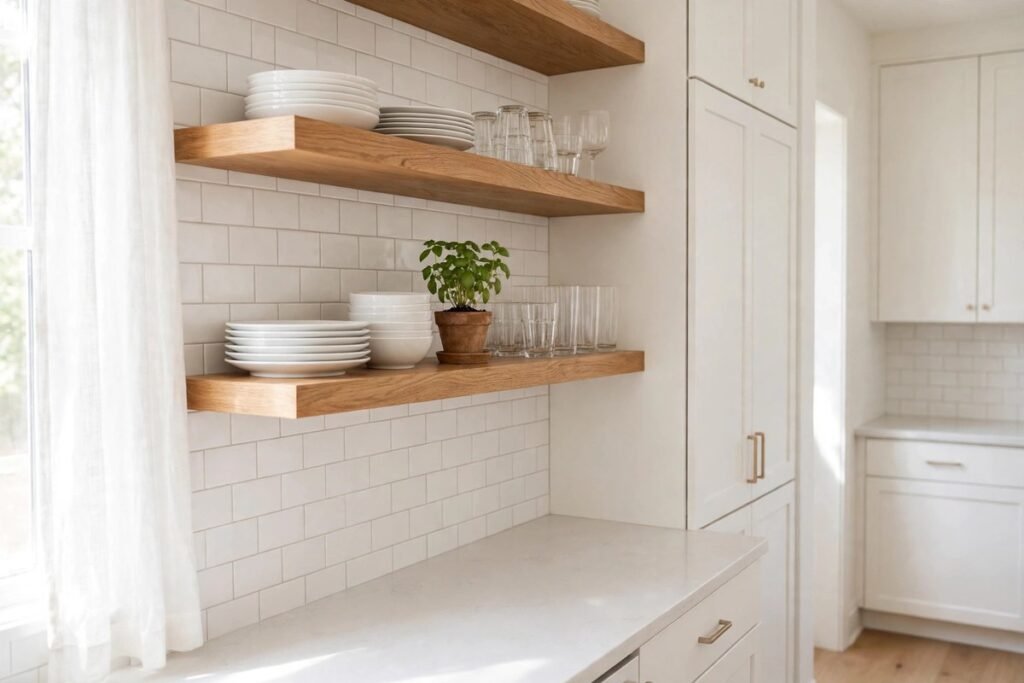
Who it suits: Small kitchens that feel closed in, and anyone who enjoys displaying pretty dishes.
How to do it: Remove the doors from one upper cabinet, or take down a short run of uppers and fit two wooden shelves in their place. Keep only everyday dishes on the shelves, and store the rest behind closed doors.
Pro tip: Group items in odd numbers and leave some empty space, so the shelves look styled rather than crowded.
Mistake to avoid: Opening every cabinet in the kitchen. A little open shelving feels airy; too much leaves everything dusty and hard to keep tidy.
Choose Glass-Front Cabinets
What it is: Cabinet doors with clear or lightly frosted glass panels that show off dishes, glassware and collections inside.
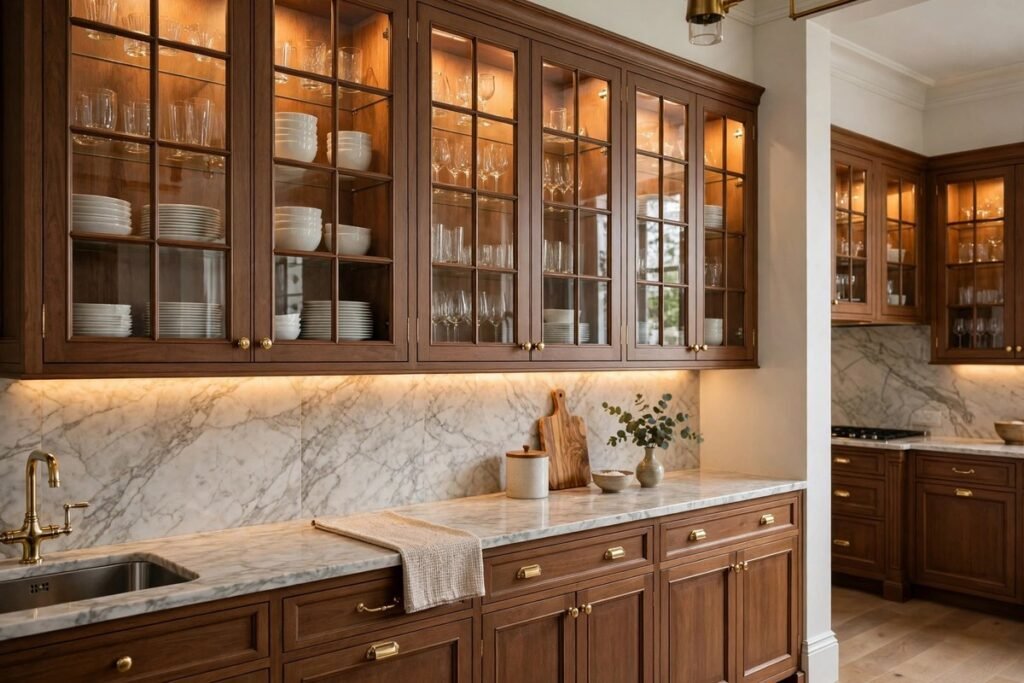
Who it suits: Anyone with pretty dishes or glassware, and kitchens that need more light and depth.
How to do it: Swap solid doors for glass-front doors on one or two upper cabinets, ideally near the sink or the dining area. Line the inside with a pale color so the contents show up well.
Pro tip: Keep what is inside neat and simple, with matching stacks and a little space between groups.
Mistake to avoid: Putting glass fronts on every cabinet. The kitchen starts to look like a shop display, and keeping it all tidy becomes a daily chore.
Go Handleless for a Clean Look
What it is: Flat-panel cabinets with push-to-open doors or hidden finger pulls, giving the kitchen smooth, unbroken lines.
Who it suits: Modern kitchens, small kitchens that need a calm look, and anyone who dislikes visual clutter.
How to do it: Fit push-latch mechanisms or recessed channel pulls along the top edge of lower cabinets and the bottom edge of uppers. Keep the door fronts flat and free of trim so the lines stay clean.
Pro tip: Wipe the doors often in the first weeks, since handleless doors show fingerprints more than handled ones.
Mistake to avoid: Choosing push-to-open latches on heavy drawers full of pots. They can stick or fail, so use proper pull handles on the heaviest drawers.
Upgrade the Hardware
What it is: New knobs, pulls and hinges in a fresh finish, such as brushed brass, matte black or polished nickel.
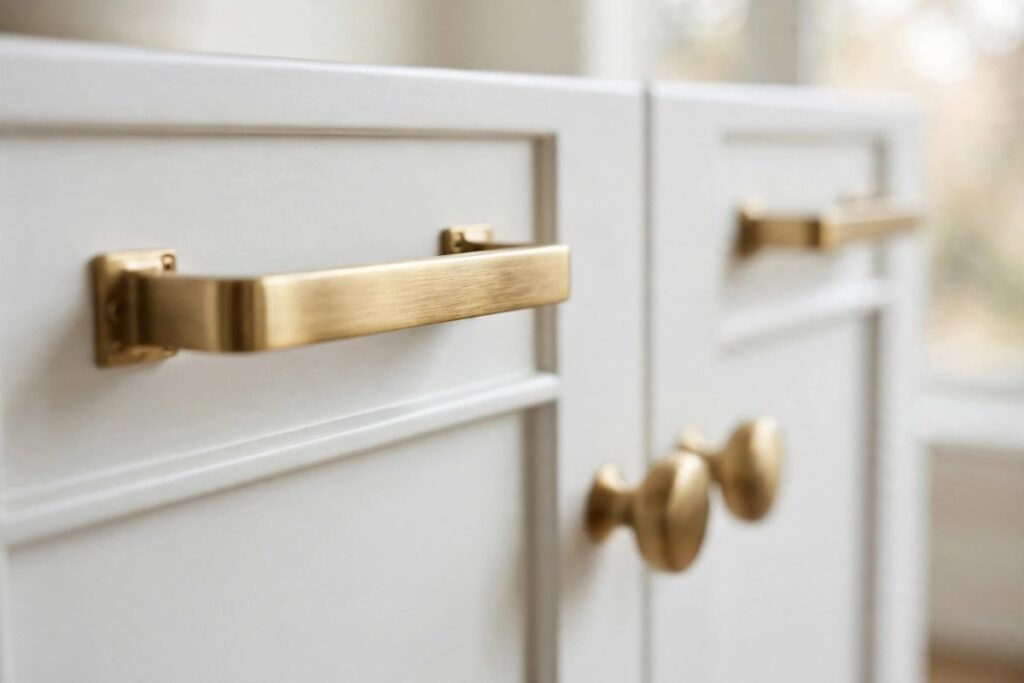
Who it suits: Any kitchen where the cabinets are sound but the hardware looks dated or worn.
How to do it: Remove one knob or pull and take it to the store to match the screw spacing, then fit the new hardware in the same holes. Work one door at a time so nothing gets mixed up, and keep the old screws if they fit better.
Pro tip: Mix one metal finish for the cabinets with a matching finish on the tap and light fixtures for a pulled-together look.
Mistake to avoid: Buying hardware without checking the hole spacing. Pulls come in many sizes, and the wrong spacing means drilling new holes in every door.
Add Under-Cabinet Lighting
What it is: Slim LED strips or puck lights fitted under the upper cabinets, washing the countertop in warm, even light.
Who it suits: Kitchens with dark counters, cooks who chop and prep after dark, and anyone who wants a cozy evening glow.
How to do it: Fit battery or plug-in LED strips along the underside of the upper cabinets, toward the front edge so the light falls on the work surface. Choose warm white light, which flatters food and skin better than cool white.
Pro tip: Add a dimmer or a motion sensor, so the lights come on softly when you walk in at night.
Mistake to avoid: Placing the strips at the back of the cabinet, where they light the wall instead of the counter and leave your work in shadow.
Extend Cabinets to the Ceiling
What it is: Tall upper cabinets, or a stacked row of smaller cabinets above the existing ones, that close the dusty gap at the top.
Who it suits: Kitchens with a gap above the cabinets that collects dust, and anyone who needs more storage.
How to do it: Add a row of short cabinets above the uppers, or fit a simple painted panel and trim to close the gap. Store rarely used items, like holiday dishes, in the top row.
Pro tip: Keep a small step stool nearby, since the top row is only useful if you can reach it safely.
Mistake to avoid: Filling the top cabinets with heavy items. High, heavy storage is hard to reach and unsafe to pull down.
Style the Tops and Counters
What it is: A calm, edited layer of decor on top of tall cabinets and along the counter, such as a plant, a wooden board and one beautiful jar.
Who it suits: Finished kitchens that feel bare or unfinished, and anyone who loves styling but hates clutter.
How to do it: Leave most of the counter clear, and group two or three items in one spot, such as a cutting board leaning against the wall, a small plant and a jar of utensils. If your kitchen opens into the living room, keep the same calm approach there too, as these Christmas living room decor ideas show.
Pro tip: Repeat one material, like wood or brass, across the groups so the styling feels connected.
Mistake to avoid: Filling every surface with decor. A kitchen needs clear counters to work in, and clutter makes even lovely cabinets look messy.
A Simple Weekend Plan for Your Cabinets
A full cabinet refresh does not need to happen in one weekend. Start with the change that will make the biggest difference in your kitchen, and build from there.
On Saturday morning, clear one run of cabinets and clean the doors inside and out. Decide on your first project, whether that is paint, hardware or lighting, and gather everything you need before you start. A tidy start makes the work faster and calmer.
On Saturday afternoon, tackle the main job, such as swapping the hardware or fitting the under-cabinet lights. On Sunday, style the counters, step back, and enjoy the change.
For a wider refresh, these fresh living room ideas for January can help the rooms around the kitchen feel just as new. Small, finished steps beat a half-done overhaul every time.
Frequently Asked Questions
What color kitchen cabinets are best for a small kitchen?
Light colors work best in a small kitchen, because pale paint and light wood reflect daylight and make the walls feel farther away. Soft white, pale sage and light gray are safe choices that suit most homes. If you love a dark color, use it on the lower cabinets only and keep the uppers light.
How can I update my kitchen cabinets without replacing them?
Paint, new hardware and under-cabinet lighting are the three easiest updates, and none of them needs a new cabinet. A fresh coat of paint changes the whole room, new pulls change the feel of every door, and warm light makes the counters glow. Most of these projects fit into a single weekend.
Do two-tone cabinets still look good?
Yes, two-tone cabinets still look good when one color is light and the other is deep, such as white uppers with navy or green lowers. The contrast adds depth without overwhelming the room. Keep the two colors in the same warm or cool family so they feel like a pair.
What hardware finish suits kitchen cabinets best?
Brushed brass suits warm kitchens with wood and cream tones, while matte black suits modern kitchens with white or gray cabinets. Polished nickel is a safe middle ground that works in most rooms. Choose one finish and repeat it on the tap and fixtures for a tidy, planned look.
How do I keep painted kitchen cabinets looking new?
Wipe painted cabinets with a soft cloth and mild soap, and avoid harsh scrubbers that scratch the paint. Touch up chips quickly with a small brush, and keep a little leftover paint in a labeled jar. Gentle, regular cleaning keeps the finish fresh for years.
Conclusion
Kitchen cabinets do more than store dishes. They set the mood of the room you cook, gather and start each day in, so a coat of paint, a better light or a simple hardware swap can give the whole kitchen a fresh, stylish feel. Pick one idea from this guide, start this weekend, and enjoy a kitchen that feels new every time you walk in.
For more ways to refresh your home, explore our other guides on the site.


1 comment