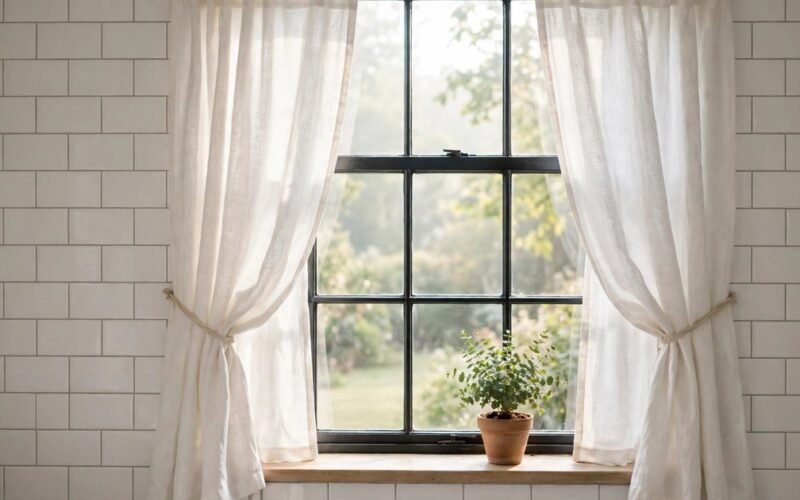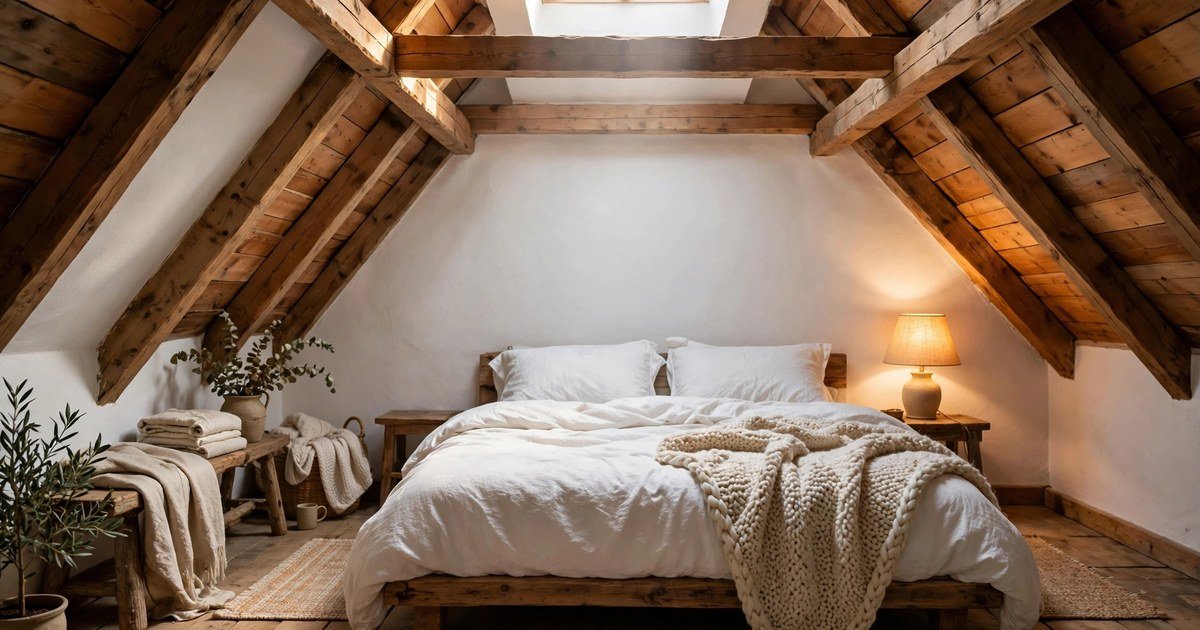
An attic bedroom turns the quietest corner of a house into a private hideaway, and a few thoughtful choices can make it the coziest room you own. Sloped ceilings, skylights, and tucked-away corners give the space a charm that a regular square room cannot match. The trick is to work with the shape of the roof instead of fighting it.

These ten ideas show you how to do exactly that, one small change at a time. Whether your attic is a main bedroom, a guest room, or a weekend reading spot, the ideas below fit small budgets and rented homes as well as full makeovers.
Pick one idea to start with, live with it for a week, and then add the next. Your attic bedroom will feel more like a hideaway with every step.
Table of Contents
In This Guide
- 10 Attic Bedroom Ideas to Try
- Attic Bedroom FAQs
- A Cozy Hideaway Waiting for You
10 Attic Bedroom Ideas to Try
Each idea below works on its own, so you can start anywhere. Together, they turn an attic bedroom from a sloped, awkward space into a calm room made for sleeping, reading, and slow mornings.
1. A Low Bed Under the Slope
What it is: A low platform bed placed where the ceiling is lowest, so the slope becomes a cozy canopy over the bed instead of wasted space.
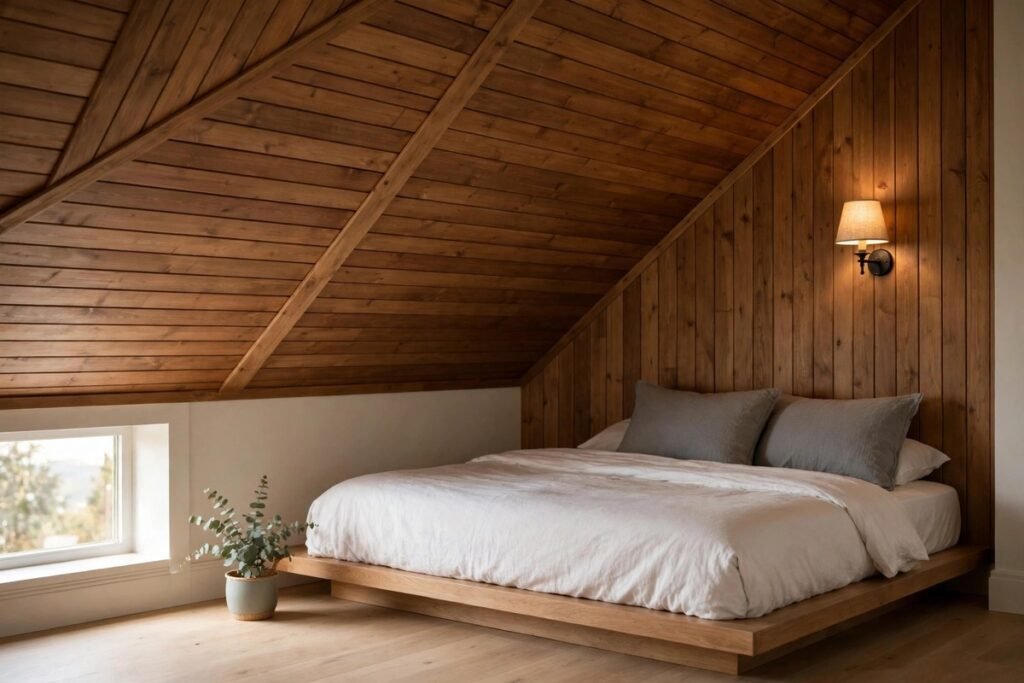
Who it suits: Anyone who sleeps in a room with a steep roofline, especially couples who want the tall center of the room free for walking and dressing.
How to do it: Measure the ceiling height above the mattress before you buy or build anything. Choose a platform frame with no headboard, or a very low one, and keep the bedding flat and simple. Place the bed against the knee wall with the head at the lowest point.
Pro tip: A slim wall sconce above each side of the bed gives you reading light without a nightstand lamp crowding the low space.
Mistake to avoid: A tall headboard or a thick, piled-up duvet will make the slope feel like it is closing in on you.
2. A Skylight Window Seat
What it is: A built-in bench under a skylight, dressed with a thick cushion, a folded throw, and a small stack of books.
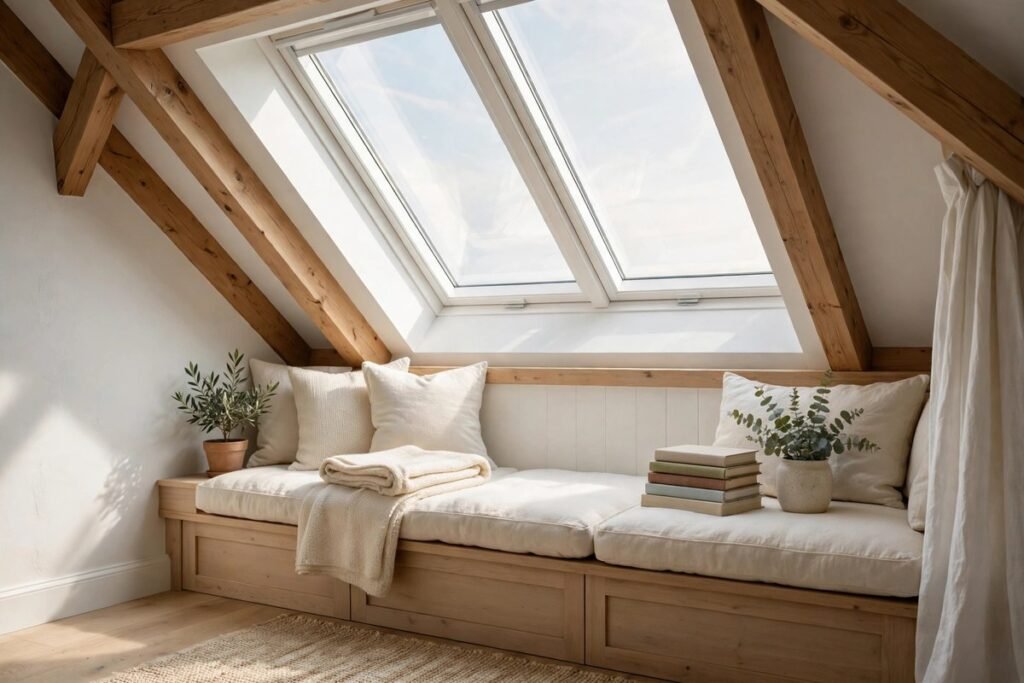
Who it suits: Daydreamers, readers, and anyone whose attic bedroom gets generous daylight through the roof.
How to do it: Build or buy a low bench that fits the width of the skylight, and top it with a firm cushion in a washable fabric. Add a couple of soft pillows and keep a basket nearby for books and blankets. If you are choosing a new skylight, compare skylight styles and options so the size and opening style suit how you use the room.
Pro tip: A blind made for skylights lets you soften bright midday sun and darken the room for an afternoon nap.
Mistake to avoid: Skipping sun control altogether, which can turn a sunny seat into a spot that is too bright and too warm to enjoy.
3. A Dormer Reading Corner
What it is: A small armchair, a floor lamp, and a low shelf tucked into a dormer, turning an odd nook into the best seat in the house.

Who it suits: Book lovers and early risers who want a quiet corner for coffee and a chapter before the day begins.
How to do it: Set a comfortable armchair at an angle to the dormer window so you get the view without glare on the page. Add a floor lamp with a warm bulb and a small shelf or basket for books within arm’s reach. For more inspiration on shaping a small reading spot, see our guide to a cozy reading nook and borrow the pieces that fit your space.
Pro tip: A soft throw draped over the arm of the chair makes the corner look inviting even when no one is sitting in it.
Mistake to avoid: Filling the dormer with tall furniture that blocks the window and steals the daylight that makes the corner special.
4. Built-In Storage Under the Eaves
What it is: Low drawers, open cubbies, and baskets fitted into the knee-wall space where the ceiling is too low to stand.

Who it suits: Anyone short on closet space, especially in an attic bedroom that has no built-in wardrobe.
How to do it: Measure the height and depth of the eave space, then fit low drawers or modular cube units into the gap. Use baskets for folded clothes and open shelves for books and shoes. Paint the units the same color as the walls so they blend into the slope.
Pro tip: Label the baskets by season or by person, so the lowest, hardest-to-reach cubbies hold the things you need least often.
Mistake to avoid: Building deep, dark cubbies with no light inside, where clothes disappear and clutter quietly grows.
5. Warm Layered Lighting
What it is: Several small light sources at different heights, such as bedside lamps, a floor lamp, and a string of soft lights along a beam.

Who it suits: Evening readers and anyone whose attic bedroom feels flat and shadowy under a single ceiling light.
How to do it: Start with a bedside lamp on each side of the bed, then add one taller light in the darkest corner. Finish with a string of warm lights along a beam or shelf for a gentle glow. Choose warm-toned bulbs so the wood and bedding look golden rather than cold.
Pro tip: Put the bedside lamps on a dimmer or use smart bulbs, so you can lower the light as the evening winds down.
Mistake to avoid: Relying on one bright overhead light, which flattens the room and throws harsh shadows across the slopes.
6. Soft White and Warm Paint Colors
What it is: Pale, warm paint on the sloped ceilings and walls, which bounces light around and makes a low room feel taller and calmer.
Who it suits: Owners of dark or north-facing attics, and anyone whose attic bedroom feels smaller than it really is.
How to do it: Test two or three warm white samples on the slope and watch them through a full day before you commit. Paint the ceiling and the walls the same color to blur the line where the slope meets the wall. If you want help narrowing the choice, browse color families to compare warm whites and soft neutrals side by side.
Pro tip: A matte or eggshell finish hides the small bumps and seams that sloped ceilings often show.
Mistake to avoid: Painting every slope a dark color, which can make a low attic bedroom feel like a cave instead of a hideaway.
7. Cozy Textiles and Layered Bedding
What it is: Layers of linen, cotton, and wool on the bed, plus a soft rug underfoot, so the room feels warm the moment you step inside.
Who it suits: Cold sleepers and anyone who wants their attic bedroom to feel soft and lived-in rather than spare and echoing.
How to do it: Start with crisp cotton sheets, add a light quilt, and finish with a chunky knit throw folded at the foot of the bed. Lay a low rug beside the bed so your feet never meet a cold floor. If your room gets chilly in winter, our cozy winter bedroom ideas have more layering ideas that work just as well under a sloped roof.
Pro tip: Stick to two or three colors across all the textiles, so the layers feel calm and put together instead of busy.
Mistake to avoid: Mixing too many patterns at once, which can make a small room feel restless instead of restful.
8. A Small Desk Nook for Work or Homework
What it is: A compact desk and chair set into the tallest part of the room, giving the attic bedroom a second job without crowding the bed.
Who it suits: Remote workers, students, and anyone who needs a quiet place to write, read, or answer email.
How to do it: Place the desk where you can stand up straight, usually near the center of the room or under a dormer. Keep it narrow, with a shelf above for supplies, and choose a chair that slides fully underneath. A small lamp and a cable tidy keep the nook neat when work is done.
Pro tip: Face the desk toward the window or the room, not the wall, so the nook feels open and you get natural light while you work.
Mistake to avoid: Putting a wide desk under the lowest part of the slope, where you will bump your head every time you sit down or stand up.
9. Plants and Natural Touches
What it is: A few hardy plants, woven baskets, and natural wood details that bring life and texture into a room full of angles.
Who it suits: Nature lovers and anyone whose attic bedroom feels a little plain or stark after the big furniture is in place.
How to do it: Choose plants that cope well with indirect light, such as pothos or a snake plant, and set them on a shelf, a stool, or a windowsill. Add a woven basket for blankets and a wooden tray on the nightstand. Water on a set day each week so the routine is easy to keep.
Pro tip: Group plants in threes at different heights, which looks more natural than one plant alone in a corner.
Mistake to avoid: Choosing sun-hungry plants for a dim corner, where they will slowly fade instead of thriving.
10. A Guest-Ready Hideaway Corner
What it is: A daybed or trundle bed with fresh bedding, a small tray, and a carafe of water, so overnight guests feel welcome from the moment they arrive.
Who it suits: Hosts who use their attic bedroom as a guest room, or families who want a spare bed that doubles as a daytime sofa.
How to do it: Dress the daybed with a proper pillow and a light quilt, even when no guest is expected. Set a small tray on a stool nearby with a glass, a book, and a phone charger, and keep spare towels folded in the eave storage so the room is always ready. If the room is tight, these small bedroom layouts show how a daybed can fit without crowding the floor.
Pro tip: A folded towel and a handwritten note on the pillow cost almost nothing and make guests feel genuinely cared for.
Mistake to avoid: Treating the guest corner as a dumping ground for spare boxes between visits, which is the fastest way to ruin the welcome.
Attic Bedroom FAQs
How do I make an attic bedroom feel bigger?
Keep the palette pale and the furniture low, and let the tallest part of the room stay open. A low bed, light bedding, and one clear path across the floor do more for the sense of space than any single piece of furniture. Mirrors near a window can help too, by bouncing daylight deeper into the room.
Is an attic bedroom too hot in summer?
It can be, because warm air rises and roof windows catch the sun. Skylight blinds, a ceiling fan, and light bedding help a great deal in an attic bedroom, and opening windows on opposite sides of the house in the evening lets cooler air move through. Thick curtains on dormer windows also keep the midday sun out.
What kind of bed works best under a sloped ceiling?
A low platform bed is the safest choice for an attic bedroom, because it leaves the most headroom and keeps the slope feeling like a canopy rather than a ceiling pressing down. Measure the height above the mattress before you buy, and skip tall headboards and thick bed frames that eat into the space.
How do I add storage to an attic bedroom?
Use the knee-wall space under the eaves for low drawers, cubbies, and baskets, and add a slim wardrobe or rail along the tallest wall. A bed with drawers underneath adds hidden storage without taking up any floor space at all. Keep the items you use daily within easy reach.
Can I put a desk in an attic bedroom?
Yes, as long as you place it in your attic bedroom where the ceiling is tall enough to stand and sit comfortably. A narrow desk near a dormer or in the center of the room works well, and a chair that slides fully underneath keeps the floor clear when the desk is not in use.
A Cozy Hideaway Waiting for You
An attic bedroom is one of the easiest rooms to love, because its quirks are also its charm. Start with one idea from this list for your attic bedroom, whether it is a low bed, a reading corner, or a string of warm lights, and let the room grow into a hideaway one step at a time.
When you are ready for more ideas, explore our other home decor guides on the site for bedrooms, reading corners, and small-space storage. Your attic bedroom will thank you for it, one slow morning at a time.