Let me start with a small story. A few years ago, I found myself on a tiny, sun-bleached island in Greece called Naxos. It was August, the kind of hot where the air shimmers above the road. I was exhausted, dehydrated, and frankly, a little grumpy from hiking up a mountain to see an old temple. When I finally stumbled down to a small taverna by the sea, the owner, a woman named Eleni, didn’t hand me a menu. She just smiled, wiped her hands on her apron, and said, “You need horiatiki.”
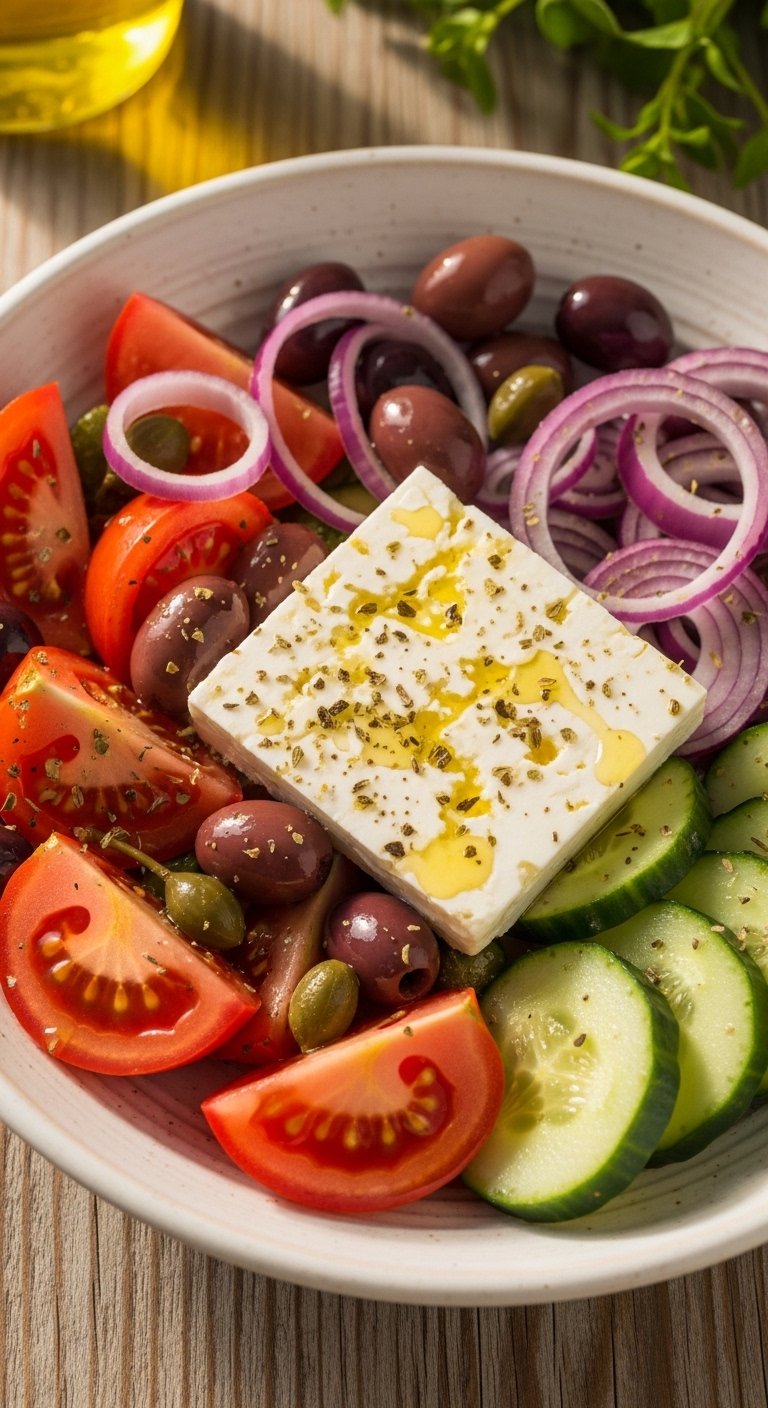
Ten minutes later, she placed a deep ceramic bowl in front of me. Inside wasn’t a fancy, deconstructed salad. It was a glorious, honest mess: fat chunks of crimson tomato, slices of cucumber so crisp they snapped, a thick slab of feta cheese sitting right in the middle like a snowy island, and a dramatic sprinkle of purple onion and black olives. The only dressing was a golden-green pool of extra virgin olive oil and a dusting of wild oregano. I ate every last bite, sopping up the juice with a piece of crusty bread. In that moment, I wasn’t grumpy anymore. I was happy.
That, dear reader, is the magic of an authentic greek salad recipe. It is not about fancy techniques or hard-to-find ingredients. It is about honoring a few perfect things. Today, I will teach you how to bring that Mediterranean sunshine into your own kitchen. Furthermore, I will show you exactly which products to buy so you never end up with a sad, watery, flavorless imitation.
Why Most Greek Salads Fail (And How Yours Will Shine)
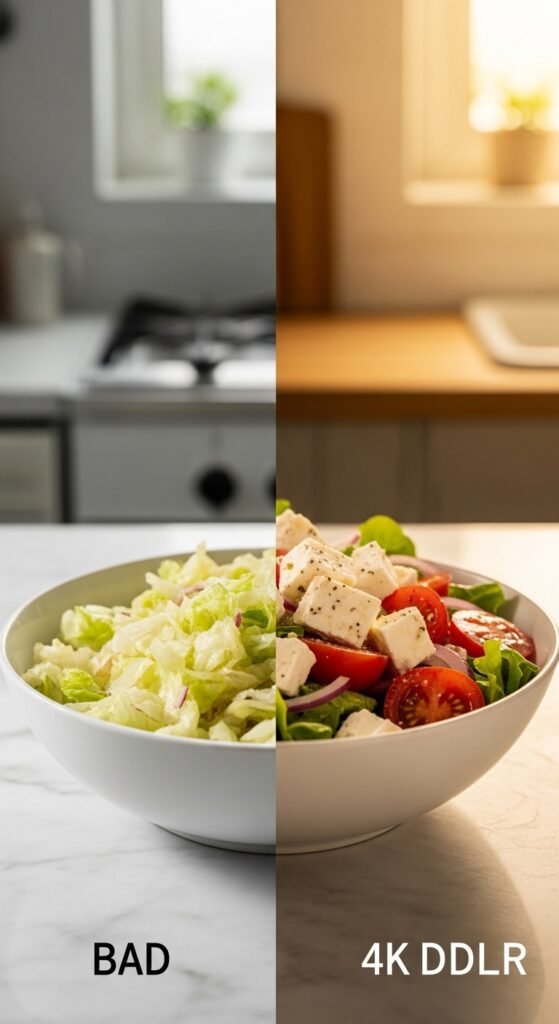
Before we dive into the step-by-step guide, let us address the elephant in the room. Have you ever ordered a Greek salad at a restaurant and received a bowl of chopped iceberg lettuce with a few crumbles of dry feta? I certainly have. Honestly, it is heartbreaking.
Here is the truth: Authentic Greek salad contains NO lettuce. Never. Not a single leaf. The word “salad” here is a bit of a trick. In Greece, it is called Horiatiki, which simply means “village food.” It is a rustic chopped salad designed to be eaten with a fork and a piece of bread to soak up the juices.
To build confidence in your cooking, you must start with the right foundation. Consequently, the success of this greek salad recipe relies entirely on the quality of four specific components. If you get these right, you do not even need to measure anything.
The Holy Quartet of a Greek Salad
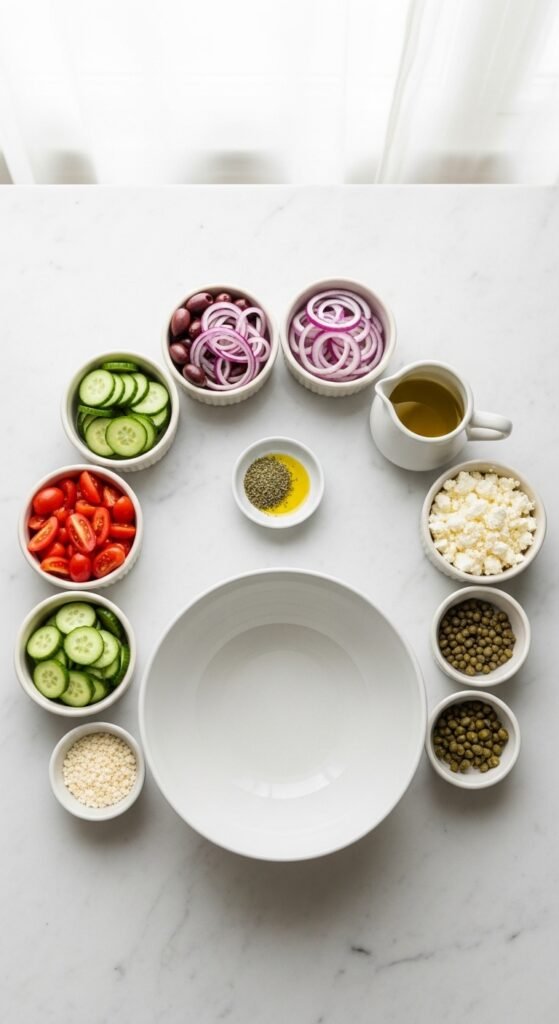
- The Tomatoes: They must be ripe but firm. Avoid pale, mealy winter tomatoes.
- The Feta: You need block feta preserved in brine, not pre-crumbled.
- The Olive Oil: This is the dressing. Use high polyphenol extra virgin olive oil.
- The Oregano: Dried Greek oregano is preferred over fresh here.
Also Read: Beef and Noodles Recipe: The Ultimate Comfort Food That Will Warm Your Soul
Step-by-Step Guide: Building the Perfect Greek Salad
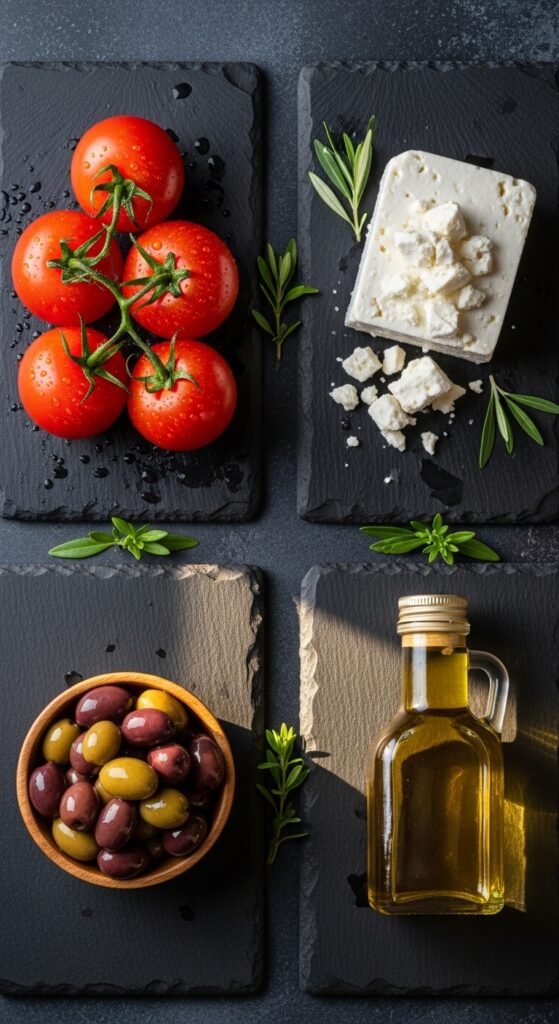
This greek salad recipe is incredibly forgiving. However, the order of operations matters. If you toss everything together like a normal salad, the feta will dissolve into a white mush. We do not want that. We want glorious, creamy chunks.
Let us get our hands dirty. I recommend grabbing a large wooden board or a shallow ceramic bowl.
Step 1: Prepare the Tomatoes (The Juicy Base)
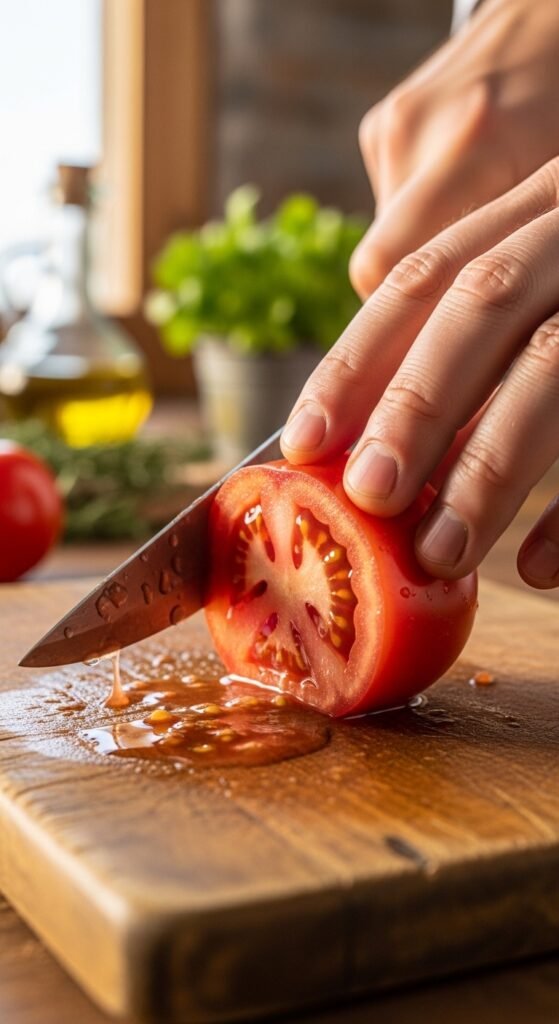
Take 4 large, ripe tomatoes. Do not use cherry tomatoes unless absolutely necessary; they lack the juicy interior needed for the dressing.
- Action: Cut the tomatoes into irregular, bite-sized wedges. Some large, some small.
- Pro Tip: Place the tomatoes in your serving bowl first. Sprinkle a tiny pinch of sea salt on them. Let them sit for 2 minutes. This draws out the tomato water, which will mix with the olive oil to create a natural emulsion.
Step 2: Slice the Cucumber (The Crunch)
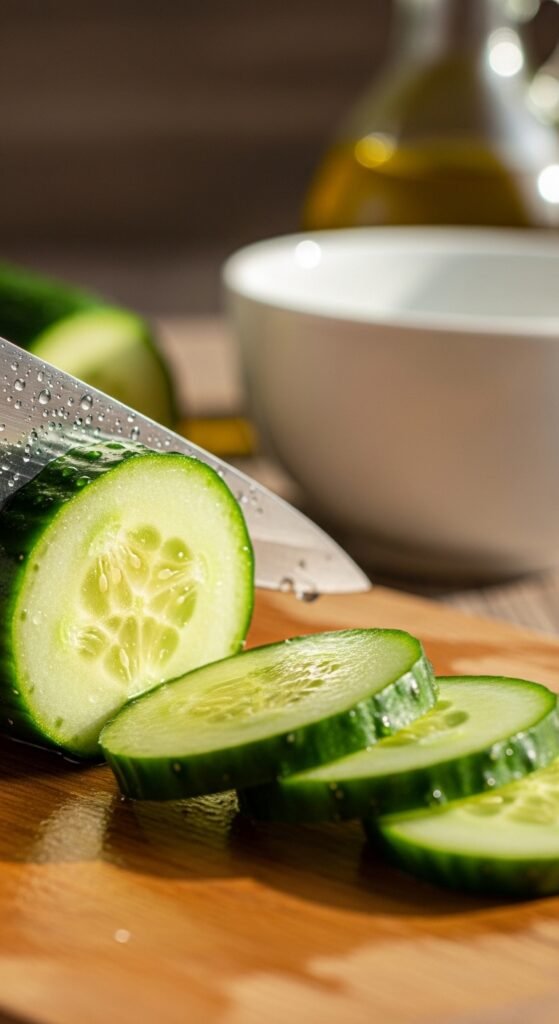
Take 1 long English cucumber (or 2 small Persian cucumbers). If the skin is thick and waxy, peel it in stripes.
- Action: Slice the cucumber into half-moons about ½ inch thick.
- Anecdote: Eleni in Naxos actually peeled her cucumbers completely and then smashed them with her fist before chopping. She said, “The knife makes the cucumber shy. The hand makes it brave.” I do not know if that is scientifically true, but the texture was incredible. Try smashing a few slices.
Step 3: The Red Onion (Tamed, Not Wild)
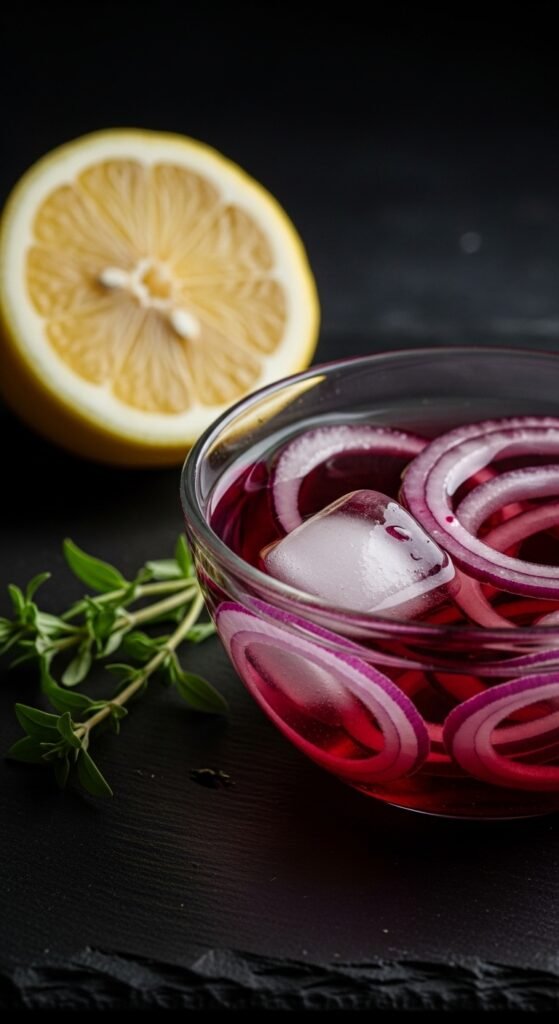
Red onion is traditional. However, raw onion can bully the other flavors. We need to tame it.
- Action: Slice ½ a red onion into very thin rings.
- The Trick: Place the onion rings in a small bowl of ice water with a splash of vinegar for 5 minutes. Drain them. This removes the bitter sting while leaving the sweet crunch. Then, scatter them over the tomatoes and cucumber.
Step 4: The Kalamata Olives (A Briny Kiss)
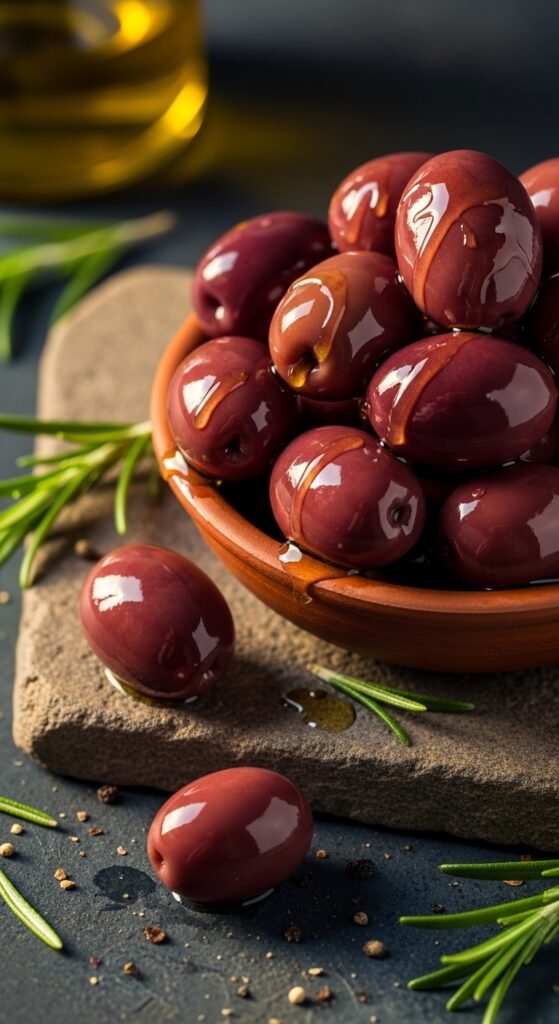
You need Kalamata olives. The dark purple, almond-shaped ones. Do not use canned black olives; they are flavorless sponges.
- Action: Add a generous handful (about ½ cup) of whole or pitted Kalamata olives.
- Note: If they have pits, warn your guests. Eating around pits slows you down, which is actually how Greeks eat—slowly, with conversation.
Step 5: The Feta Cheese (The Crown Jewel)
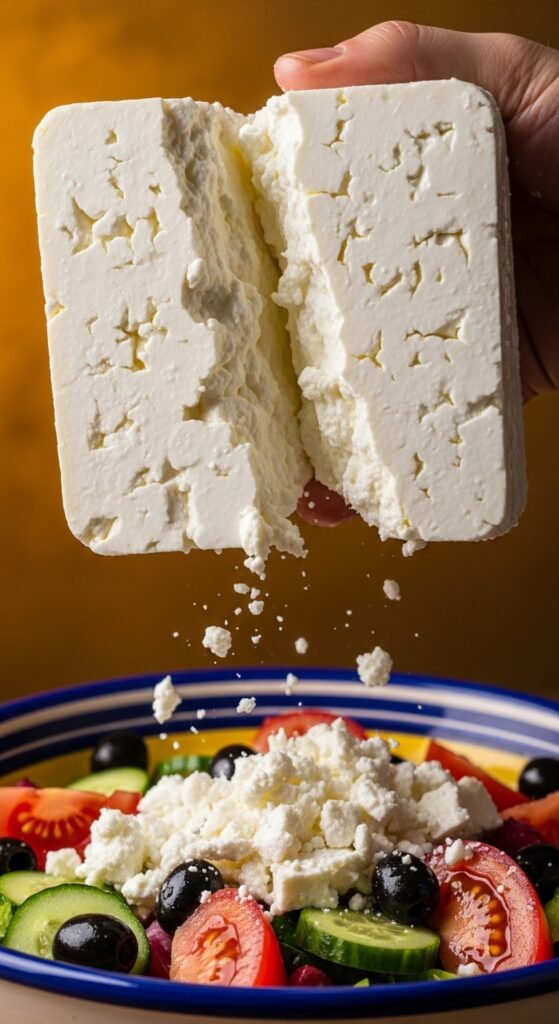
This is the most critical step. Do not crumble the feta with your hands.
- Action: Take a 200g (7oz) block of authentic Greek feta (goat and sheep milk). Slice it into 4 thick slabs. Place the slabs on top of the vegetables, not mixed in.
- Why? By keeping the feta on top, the olive oil and oregano cling to it. The warm tomatoes underneath soften the bottom of the cheese slightly, making it creamy, while the top stays firm.
Step 6: The Dressing (Less is More)
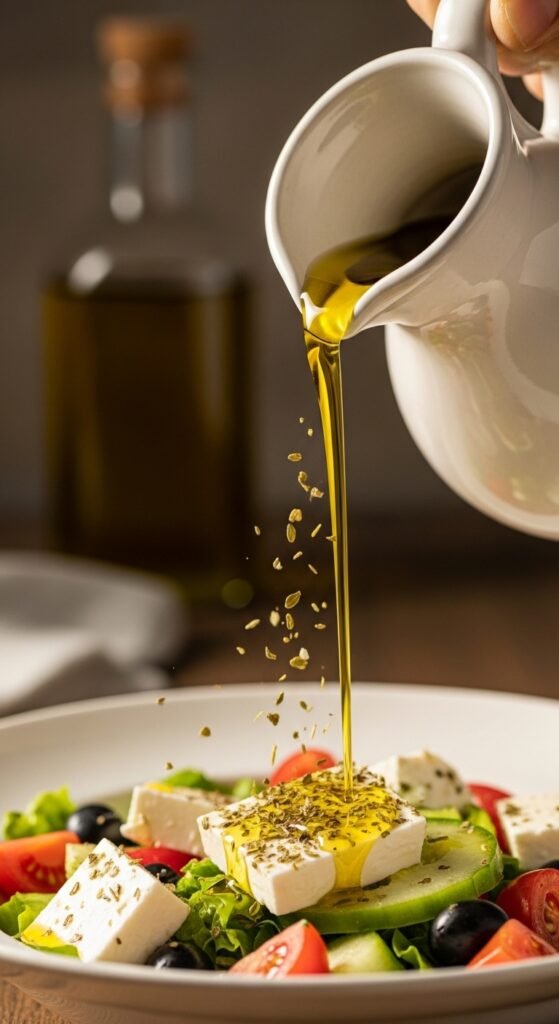
Put down the bottle of red wine vinegar. I mean it. An authentic greek salad recipe uses only three things for the dressing.
- Action: Drizzle a generous amount (about ½ cup) of high-quality extra virgin olive oil over the entire dish.
- Action: Sprinkle 1 heaping tablespoon of dried Greek oregano over the feta.
- Action: A final crack of black pepper (optional, but lovely).
- Do not add vinegar. The acid comes from the tomato juice and the brine of the olives and feta.
Step 7: The Final Touch (Capers)
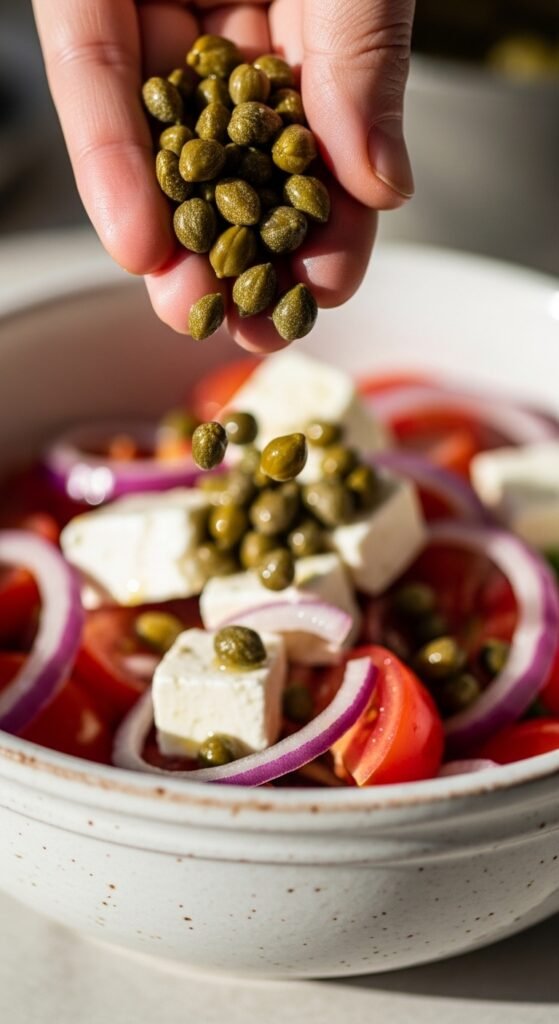
If you want to feel like you are eating on a cliff overlooking the Aegean Sea, add a small spoonful of capers (rinsed if packed in salt). They add a floral, salty pop.
Convincing You to Buy the Right Products
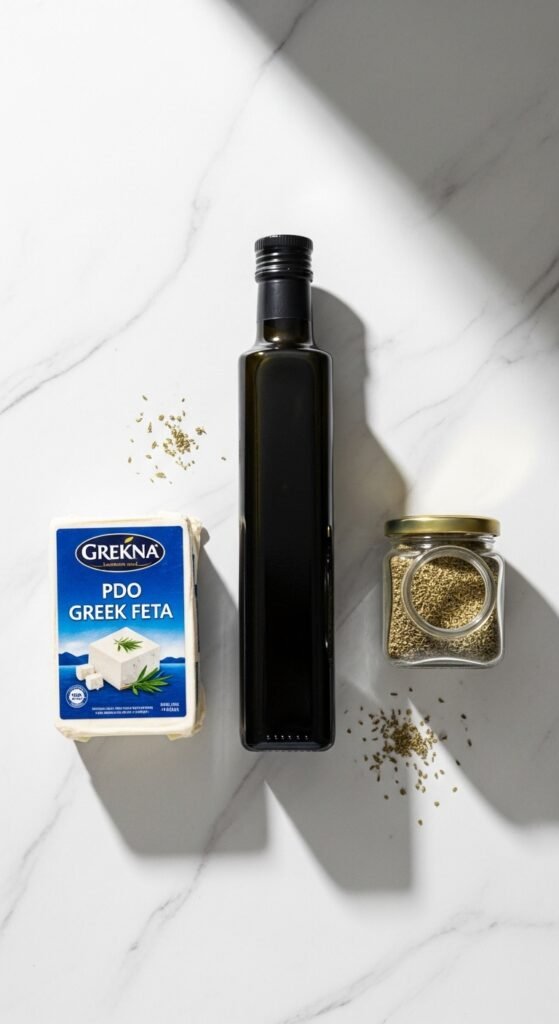
Now, you might be thinking, “I have olive oil and feta at home.” And you are right. But will they work? Let me be blunt. If you use pre-shredded parmesan-style feta or light olive oil, this recipe will taste like regret.
To help you buy with confidence, I have broken down exactly what you need to look for on the label. When you go to the store, look for these specific markers.
1. The Feta Cheese (The Non-Negotiable)
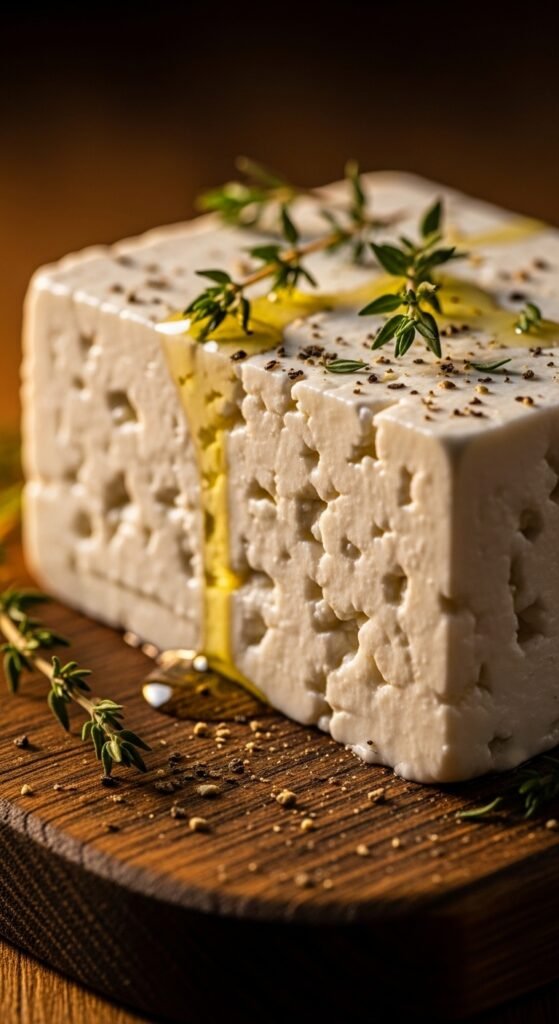
Do not buy “salad cheese” or “white cheese.” You need PDO (Protected Designation of Origin) Greek Feta.
- What to buy: Dodoni, Arahova, or Mt. Vikos brands.
- Why to buy it: PDO Feta must be made from 70% sheep’s milk and 30% goat’s milk. Cow’s milk feta is rubbery and lacks that tangy, creamy, slightly salty bite.
- Confidence booster: Real feta melts in your mouth, not your hand. It will turn a simple meal into a feast.
2. The Extra Virgin Olive Oil (The Dressing)

You are going to eat this oil raw. Therefore, it must taste like fruit, not like engine lubricant.
- What to buy: Cold-pressed, single-origin Koroneiki olives from Greece (or Kalamata variety). Look for a harvest date on the bottle (within the last 18 months).
- Why to buy it: Cheap olive oil is often diluted with vegetable oils. Real Greek olive oil has a peppery kick at the back of your throat. That “pepperiness” is polyphenols, which are incredible for your heart.
- Anecdote: My father-in-law used to say, “If the oil does not make you cough a little, it is not oil; it is fat water.” Buy the good bottle. Your salad deserves it.
3. The Dried Greek Oregano (The Soul)
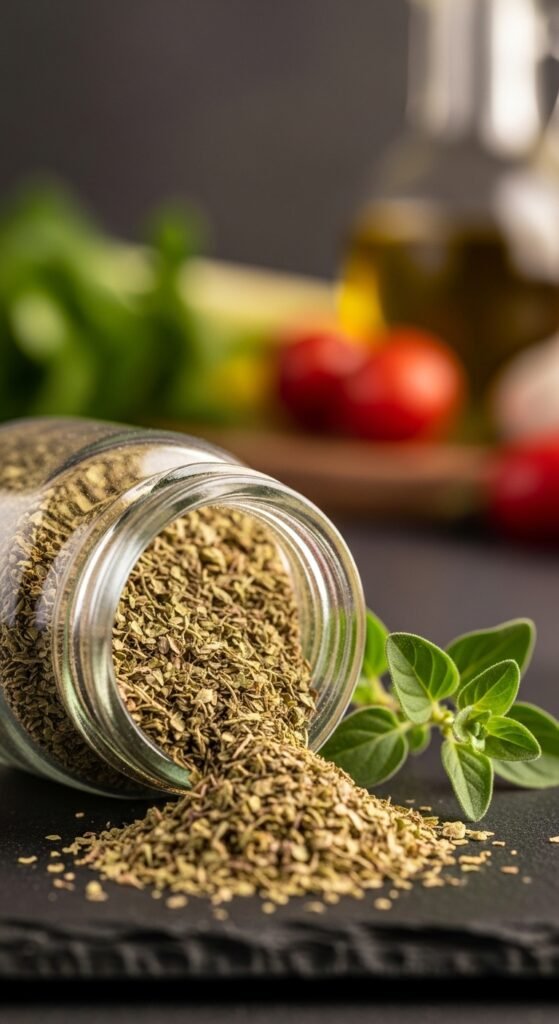
Dried Greek oregano is a different beast from the dusty jar in your spice rack.
- What to buy: Rigani (Greek oregano) from the mountains. Usually sold in a small bag, not a jar.
- Why to buy it: It smells like thyme, pine, and earth. When it hits the olive oil, it rehydrates slightly and releases a perfume that defines summer.
Variations to Keep Things Exciting
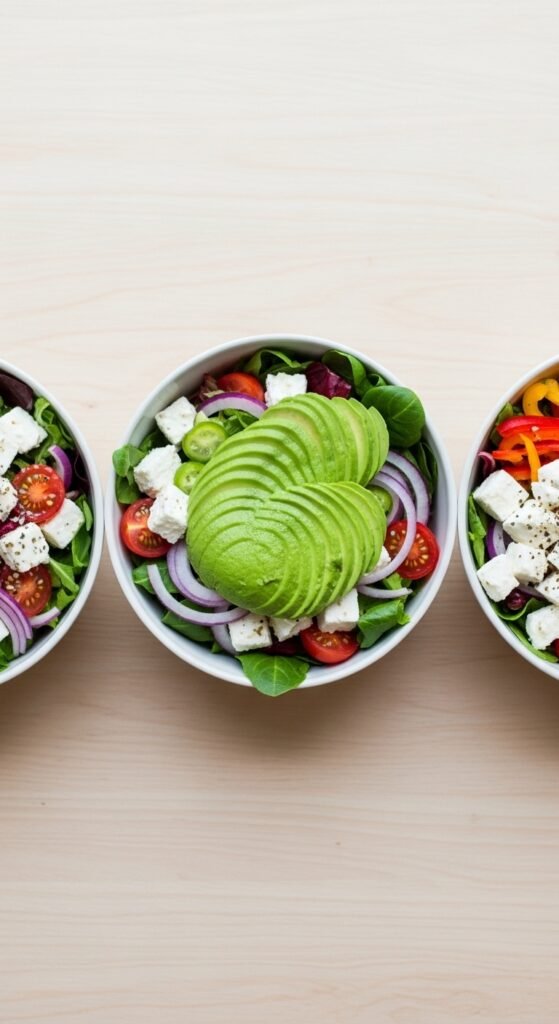
While I am a purist at heart, I understand that sometimes you need to adapt. Here are a few semantically relevant variations of this greek salad recipe that still honor the original.
Greek Salad with Avocado
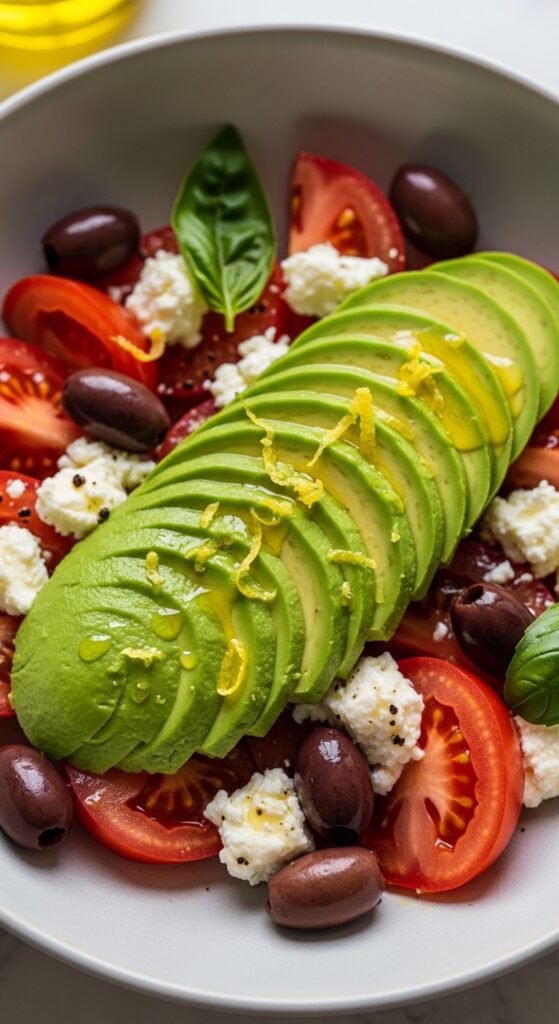
This is a modern twist that has become popular in Athens. Add 1 diced ripe avocado right before serving. The creaminess pairs shockingly well with the vinegar-less dressing.
Marinated Greek Salad (For Meal Prep)
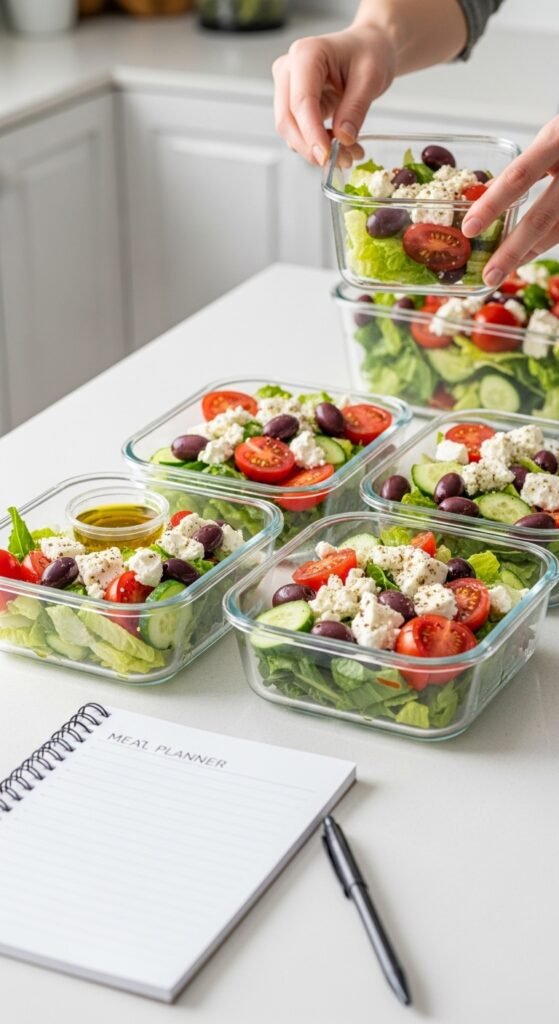
If you want to make this ahead, do not add the feta or cucumber until serving. Instead, marinate the tomatoes, olives, onions, and oregano in the olive oil for 2 hours. The tomatoes will absorb the oil and become explosively flavorful.
Farmers Greek Salad (With Peppers)
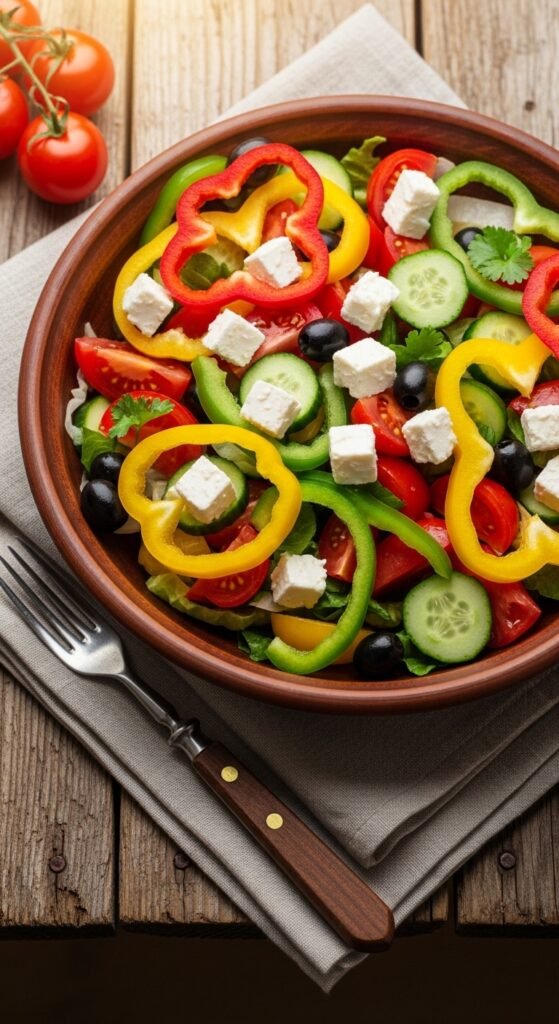
Add 1 sliced green bell pepper. This is very common in Crete. The slight bitterness of the green pepper balances the sweet tomato.
Common Mistakes (And How to Fix Them)
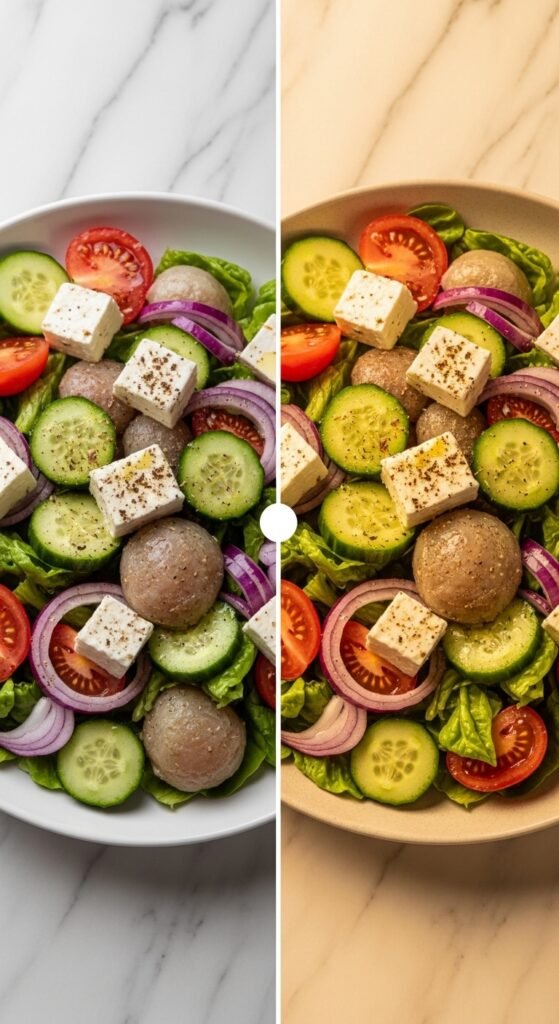
Let us troubleshoot before you even start. I want your first attempt at this greek salad recipe to be a triumph.
Mistake #1: A watery puddle at the bottom of the bowl.
- The Fix: You did not salt your tomatoes first. Salt draws out water. If you want to eat it immediately, the water is delicious (soak it up with bread). If you want it to sit for an hour, drain the tomato juice before adding the oil.
Mistake #2: The feta crumbled into a white paste.
- The Fix: You stirred the salad like a maniac. Place the feta on top. When you serve, break the feta with your fork at the table. Do not pre-mix.
Mistake #3: It tastes bland.
- The Fix: You need more salt or more oregano. Because there is no vinegar, the salt must come from the feta, olives, and a final sprinkle of flaky sea salt on the tomatoes.
The Perfect Pairing: What to Serve With This Greek Salad
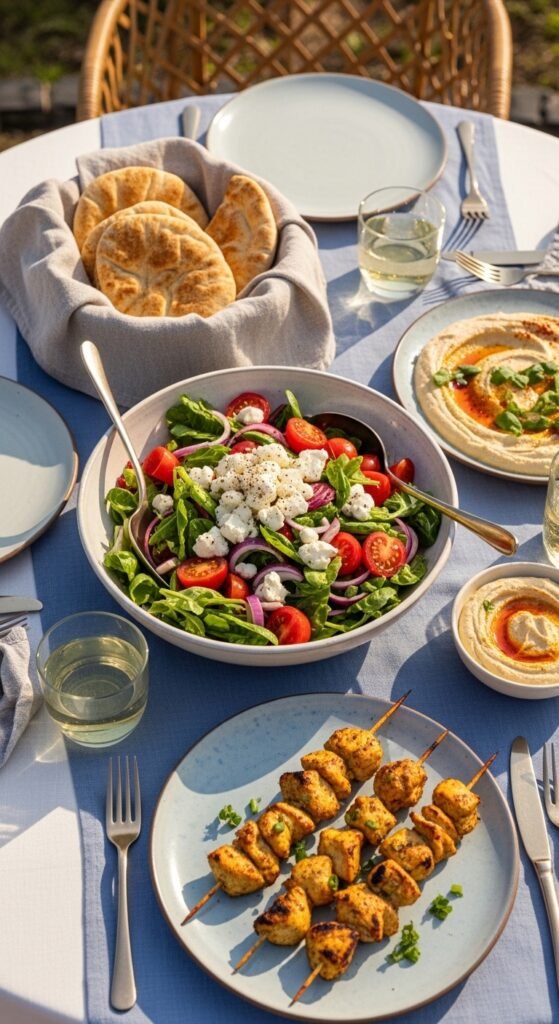
This greek salad recipe is a complete side dish, but it can also be a light lunch. Here is how to turn it into a dinner.
- With Grilled Meat: Serve it next to souvlaki (grilled pork skewers) or lamb chops. The acidity of the tomatoes cuts through the fat of the meat.
- With Bread: This is non-negotiable. Buy a crusty country loaf or a bag of pita bread. Use the bread to swipe the olive oil and tomato juice off the plate. This is called papara, and it is a religious experience.
- With Seafood: Grilled octopus or shrimp love the briny notes of the olives and feta.
Nutritional Benefits (The Guilt-Free Pleasure)
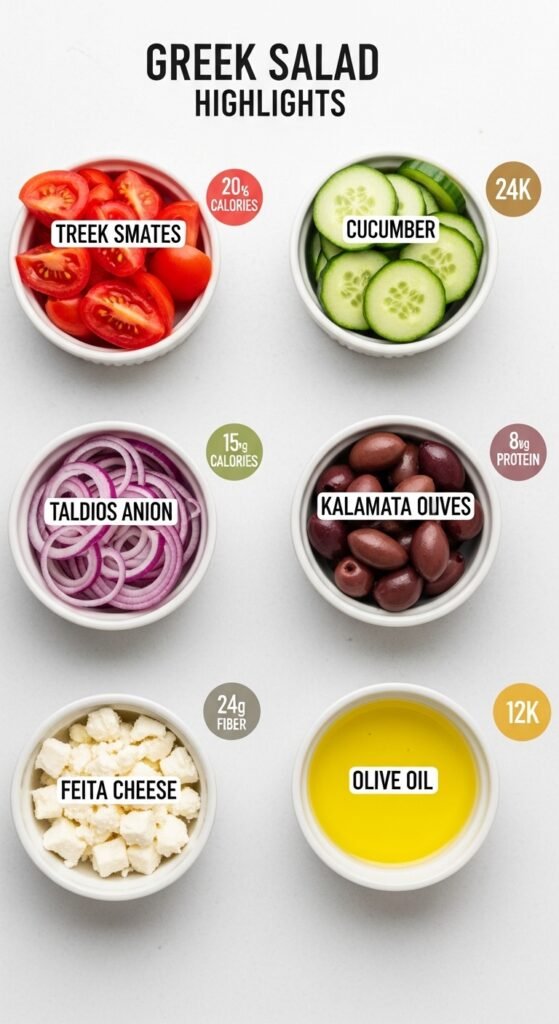
Because we use whole, unprocessed ingredients, this greek salad recipe is a nutritional powerhouse. You can eat a massive bowl of this and feel energized, not sluggish.
- Heart Health: The extra virgin olive oil is rich in monounsaturated fats that lower bad cholesterol.
- Bone Health: Feta cheese contains more calcium than many other cheeses, plus protein.
- Hydration: Tomatoes and cucumbers are over 90% water, making this a perfect post-workout meal.
- Gut Health: The natural brine from the olives and feta acts as a mild probiotic.
A Final Anecdote to Inspire You

Let me take you back to that taverna in Naxos. After I finished my salad, Eleni came to clear the plate. There was nothing left except a smear of oil and a few oregano flakes. She looked at the clean plate, nodded approvingly, and sat down with me. She told me that during the war, her grandmother made this same salad with only tomatoes, onions, and a drop of oil because olives and feta were too expensive. “We were poor,” Eleni said, “but we ate like kings because we had the sun in our tomatoes.”
She then pointed to a shelf in her kitchen. On it were just three things: a bottle of dark green oil, a wooden bowl of dried oregano, and a clay pot of feta in brine. “You do not need a recipe,” she said. “You need good friends and good ingredients. The rest is just chopping.”
That is the philosophy I want you to take away today.
Your Shopping List (Buy With Confidence)
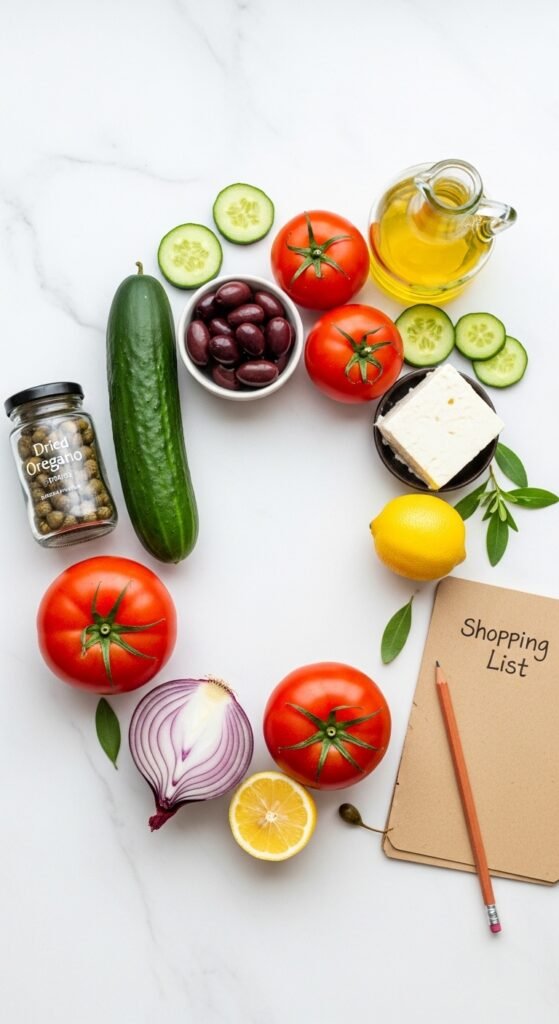
To make this the best greek salad recipe you have ever tried, here is your exact shopping list. Purchase these items knowing that you are buying authenticity.
- Produce:
- 4 Ripe Heirloom or Vine Tomatoes (Avoid hothouse)
- 1 Large English Cucumber
- 1 Red Onion
- 1 Green Bell Pepper (optional)
- The Pantry Staples:
- High Polyphenol Extra Virgin Olive Oil (Look for a dark glass bottle)
- Greek Dried Oregano (Rigani)
- Sea Salt flakes (Maldon or similar)
- The Stars (Buy these specifically):
- PDO Greek Feta in Brine (Block, not crumbled)
- Kalamata Olives (In brine, not canned)
Putting It All Together (The 5-Minute Recipe Recap)
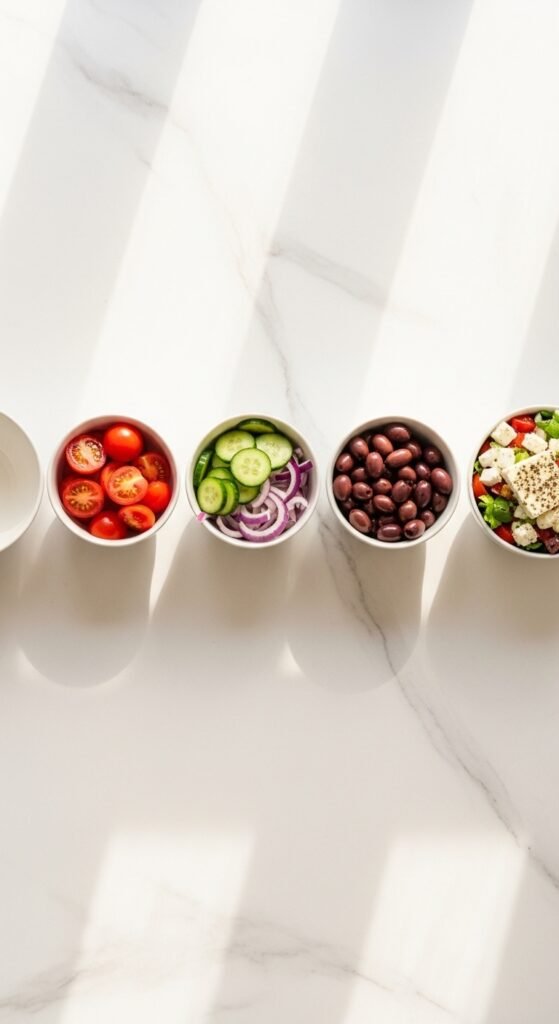
Because I promised you a step-by-step guide, here is the fastest recap you will ever read. Set a timer for 5 minutes.
- Chop tomatoes into wedges. Place in bowl. Salt them.
- Chop cucumber into half-moons. Add to bowl.
- Slice red onion (rinse in cold water). Add to bowl.
- Add olives and optional green pepper.
- Place the block of feta right on top in large slabs.
- Drown it in olive oil. (Be generous!)
- Sprinkle oregano like it is snowing.
- Do not toss. Serve immediately with a spoon to scoop the feta and a fork for the veggies.
Conclusion: Your Kitchen, The Greek Island

You do not need a plane ticket to taste the Mediterranean. You just need a sharp knife, a willingness to ignore the lettuce, and the confidence to buy the right feta and olive oil.
This greek salad recipe is more than food. It is a pause button. It is the taste of salt air and hot rocks. It is the flavor of sitting still and enjoying the moment.
So, go ahead. Buy the good oil. Get the real feta. Chop those tomatoes like you mean it. And when you take that first bite—the one where the creamy cheese meets the juicy tomato and the peppery oil—I promise you, you will hear the waves crashing on the shore.
Kali Orexi! (Enjoy your meal!)